

The Authority in Global Agricultural Chemistry & Bio-Resources
Aquaculture & Fishery pumps: what causes oxygen transfer losses?
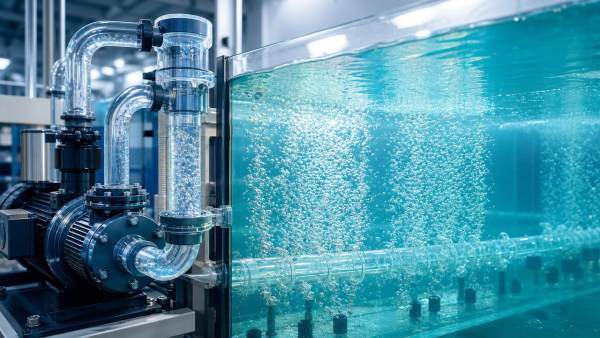
In Aquaculture & Fishery operations, oxygen transfer losses can quietly erode system efficiency, fish health, and operating margins. For technical evaluators assessing pump performance, understanding how hydraulic design, gas dispersion, pressure variation, and installation conditions influence oxygen delivery is essential. This article examines the core causes of oxygen transfer loss and highlights the engineering factors that matter most in high-demand aquaculture environments.
What oxygen transfer loss means in Aquaculture & Fishery systems
In practical Aquaculture & Fishery engineering, oxygen transfer loss refers to the gap between the oxygen theoretically introduced into water and the oxygen that remains dissolved and biologically available after pumping, mixing, and distribution. This distinction matters because many systems appear adequately aerated on paper while underperforming in the pond, raceway, recirculating aquaculture system, or transport tank.
For technical assessment teams, the issue is not only how much gas a pump moves, but how effectively that gas is converted into stable dissolved oxygen under real operating conditions. A pump may generate high turbulence, impressive flow rates, or strong visible aeration, yet still deliver poor oxygen transfer efficiency if bubbles are too large, retention time is too short, or pressure conditions force oxygen back out of solution.
This is why oxygen transfer loss has become a central evaluation topic across modern quaculture & Fishery projects, especially where stocking density, feed conversion, water reuse, and energy intensity are under close review. In these environments, small inefficiencies can cascade into reduced growth, stress events, or avoidable power costs.
Why the industry is paying closer attention
Across the broader primary industries landscape, Aquaculture & Fishery operators are under pressure to produce more protein with tighter environmental control. Higher biomass densities, stricter discharge expectations, and wider adoption of recirculating technology all increase dependence on precise oxygen management. At the same time, energy prices and compliance requirements make inefficient pumping harder to ignore.
For institutions, OEMs, and engineering consultants, oxygen transfer is no longer treated as a secondary pump characteristic. It is now tied directly to survival margins, feeding windows, nitrification stability, and total system economics. This is especially true in intensive finfish, shrimp, smolt, hatchery, and live-holding operations where dissolved oxygen can change rapidly and localized dead zones can develop despite acceptable average readings.
Because of that, technical evaluators increasingly review pump curves, gas-liquid contact mechanisms, hydraulic losses, diffuser compatibility, suction conditions, and field installation quality together rather than in isolation. A pump in Aquaculture & Fishery service must be assessed as part of an oxygen delivery system, not merely as a water-moving device.
Core mechanisms behind oxygen transfer losses
Several physical mechanisms explain why oxygen transfer performance declines between design intent and field reality. Understanding these mechanisms helps technical teams identify whether the limitation comes from equipment design, process conditions, or installation choices.
1. Bubble size is too large
Smaller bubbles provide a much larger surface area for gas exchange. When pumps or injectors create coarse bubbles, the oxygen-water contact area falls and bubbles rise too quickly to dissolve efficiently. In Aquaculture & Fishery applications, large bubbles are often a sign of suboptimal venturi geometry, poor shear conditions, low gas dispersion quality, or fouled injection components.
2. Contact time is too short
Even if oxygen is introduced successfully, it still needs residence time in the water column or contact chamber. High-velocity flow, shallow tanks, abrupt discharge configurations, or direct venting paths can shorten retention time and allow gas to escape before dissolution occurs. This is a common source of hidden loss in transfer channels and open distribution loops.
3. Pressure changes strip oxygen back out
Dissolved gas behavior changes with pressure. Oxygen dissolves more readily under pressure, but sudden pressure drops downstream of the pump can trigger degassing. Where piping transitions, elbows, elevation changes, or poorly controlled outlets create localized pressure release, part of the transferred oxygen may come back out of solution. In high-performance Aquaculture & Fishery systems, this can make a well-designed oxygenation stage appear ineffective.
4. Temperature and salinity reduce solubility
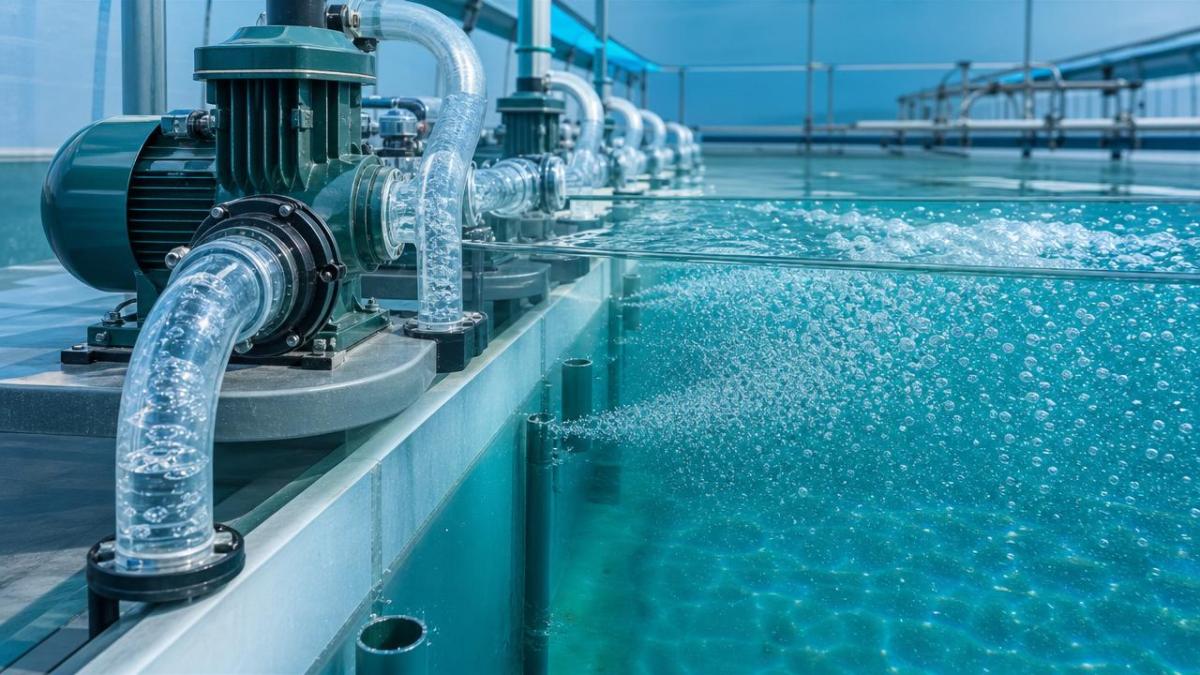
Warm water holds less oxygen than cold water, and saline water generally holds less than freshwater. As a result, the same pump and gas injection setup may perform very differently in shrimp ponds, marine cages, freshwater hatcheries, and warm-water grow-out systems. Technical evaluators in quaculture & Fishery projects should always interpret oxygen transfer data in the context of actual water chemistry and thermal profile.
5. Hydraulic inefficiency disrupts gas-liquid mixing
Pump impeller design, rotational speed, casing geometry, and internal recirculation all affect how thoroughly oxygen is dispersed. Poor hydraulic matching can create vortex formation, cavitation risk, unstable gas loading, and uneven mixing. Rather than improving oxygenation, these conditions can lower net transfer and increase wear. In Aquaculture & Fishery duty, stable hydraulic behavior is often more valuable than headline flow alone.
A practical overview of loss drivers
The table below summarizes the most common oxygen transfer loss drivers that technical evaluators encounter in Aquaculture & Fishery installations.
Where losses appear in typical Aquaculture & Fishery scenarios
Not every Aquaculture & Fishery operation loses oxygen in the same way. The dominant cause usually depends on system layout, production intensity, and whether the process is open, semi-closed, or fully recirculating.
Ponds and open grow-out systems
In ponds, transfer losses often come from shallow contact depth, warm water, solids loading, and uneven circulation. Mechanical pumps may move water effectively yet fail to distribute dissolved oxygen uniformly, leading to nighttime deficits and localized biomass stress. Wind, algae swings, and sludge zones further complicate interpretation.
RAS and closed-loop facilities
In recirculating systems, oxygen transfer losses are frequently linked to pressure transitions, gas supersaturation management, and interaction with biofiltration stages. Because system control is tighter, even small hydraulic inefficiencies can show up clearly in energy use and fish behavior. Evaluators should check whether pump operation remains stable across variable biomass loads and feeding peaks.
Hatcheries and juvenile systems
Larval and juvenile units demand gentle but effective oxygenation. Excess turbulence can damage sensitive stock, while under-transfer rapidly affects survival and growth. Here, oxygen transfer loss is often tied to over-aggressive pumping, poor injector scaling, or unstable microbubble formation.
Live fish transport and holding
In transport tanks, losses are intensified by changing temperature, biomass respiration, and limited water volume. A pump that performs well in a static test may underdeliver during transit if head conditions change or gas dispersion deteriorates under motion and variable loading.
Engineering factors that matter most during technical evaluation
For technical evaluators in Aquaculture & Fishery, a credible review should move beyond nominal oxygenation claims and focus on measurable engineering factors.
First, review the pump operating point against the actual duty range rather than the best-case catalog point. Many oxygen transfer losses emerge because the pump is selected too close to a narrow efficiency island and then runs off-design for much of the production cycle.
Second, examine gas handling capability. Not all pumps tolerate gas entrainment equally. Some lose hydraulic stability at moderate gas fractions, producing erratic flow, vibration, or reduced head. In Aquaculture & Fishery service, reliable two-phase performance is often more important than peak hydraulic efficiency.
Third, evaluate the complete flow path. Pipe diameter, fitting density, elevation profile, outlet geometry, and contact vessel design all influence whether oxygen remains dissolved. A strong oxygenation device can still underperform when paired with restrictive or poorly staged downstream piping.
Fourth, consider fouling and maintenance behavior. Biofilm, mineral scale, suspended solids, and organic matter gradually alter injector performance and flow patterns. Long-term transfer efficiency matters more than day-one numbers, especially in continuous Aquaculture & Fishery operations.
Business value of reducing oxygen transfer losses
The commercial value of better oxygen transfer extends well beyond dissolved oxygen readings. In Aquaculture & Fishery operations, efficient transfer supports more stable feeding, improved growth consistency, lower stress incidence, and better resilience during hot periods or high biomass events. It can also reduce the need for emergency aeration and minimize wasted oxygen in systems using purchased gas.
For managers and institutional buyers, this translates into lower specific energy consumption, stronger survival performance, and clearer justification for capital expenditure. For OEMs and system integrators, demonstrating control over oxygen transfer loss also strengthens technical credibility in a market where environmental compliance and process transparency increasingly influence procurement decisions.
Practical steps to reduce loss in the field
A practical improvement plan for Aquaculture & Fishery oxygenation systems should begin with measurement, not assumptions. Field teams should compare dissolved oxygen before and after the oxygenation stage, log pressure conditions, confirm real flow rates, and observe bubble behavior under different loads and temperatures.
After baseline testing, useful interventions often include resizing injectors, improving contact chamber design, smoothing pressure transitions, reducing unnecessary elbows, correcting suction issues, and matching pump selection more closely to the operating envelope. In some cases, a lower-flow but hydraulically stable pump can outperform a larger unit that introduces turbulence without effective dissolution.
Preventive maintenance should also be treated as part of oxygen transfer strategy. Cleaning gas entry components, verifying seals, monitoring vibration, and checking for partial blockage can recover transfer performance that might otherwise be mistaken for seasonal water quality variation.
A clear framework for technical decision-makers
For technical evaluators, the most reliable approach is to view Aquaculture & Fishery oxygen transfer as an integrated outcome of pump design, gas dispersion, water chemistry, pressure control, and installation discipline. Losses rarely come from a single cause. More often, they result from several moderate inefficiencies that combine into significant biological and financial impact.
Organizations that evaluate oxygenation equipment with this systems perspective are better positioned to improve fish welfare, protect process stability, and justify equipment decisions with defensible engineering logic. In a sector where performance claims are common, careful assessment of oxygen transfer loss remains one of the most practical ways to separate visual aeration from real dissolved oxygen delivery.
If your team is reviewing quaculture & Fishery pump configurations, prioritize field-verified transfer performance, not just nameplate data. That discipline will produce more resilient designs, better operating efficiency, and stronger long-term results across demanding aquatic production systems.
Related Intelligence
- Aeration & Water TechGlobal Shipping Alliance Launches Green Corridor Asia-Europe Cold Chain RouteGreen Corridor Asia-Europe cold chain route launched: 22% lower surcharges, –25°C to +15°C control for agri-tech exports. Book now!
- Aeration & Water TechCommercial protein skimmers: what foam quality tells youCommercial protein skimmers reveal more than waste removal—foam quality helps operators spot loading shifts, imbalance, and maintenance needs early for steadier performance.
- Aeration & Water TechDissolved oxygen controller alarms that point to sensor driftDissolved oxygen controller alarms may signal sensor drift, not process upset. Learn key alarm patterns, faster field checks, and service tips to reduce downtime and protect compliance.
The Morning Broadsheet
Daily chemical briefings, market shifts, and peer-reviewed summaries delivered to your terminal.
