
Live Seafood Holding Tanks That Reduce Stress During Transport
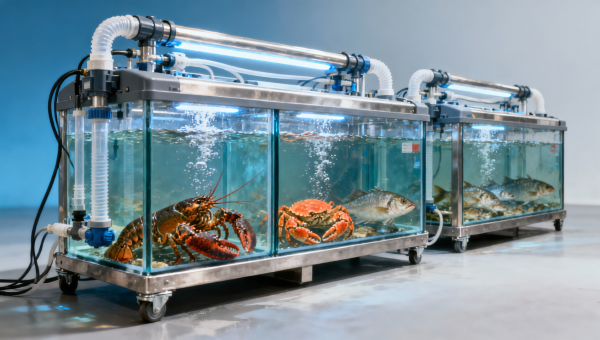
For seafood operators and procurement teams, live seafood holding tanks are no longer just storage equipment—they are critical systems for reducing transport stress, preserving survival rates, and meeting compliance goals. As aquaculture supply chains modernize with smart buoys for aquaculture, water quality online monitor aquaculture tools, aquatic oxygen generators, and uv sterilizers for fish farms, selecting the right tank solution has become a strategic investment.
In practical B2B operations, transport stress is not a minor handling issue. It directly affects mortality, shell damage, muscle quality, odor control, and delivery acceptance rates. For exporters, wholesalers, supermarkets, live seafood restaurants, and aquaculture logistics contractors, the difference between a well-designed holding system and a basic water container can mean a 5% to 20% variation in post-transport survival, depending on species, distance, and water management discipline.
This makes live seafood holding tanks a cross-functional procurement category. Operators care about ease of use, technicians focus on oxygen transfer and biofiltration, quality managers review sanitation and traceability, finance teams assess lifecycle cost, and decision-makers compare delivery reliability with compliance risk. The right system must perform as transport support equipment, temporary conditioning infrastructure, and quality assurance control point at the same time.
For institutional buyers evaluating aquaculture and fishery technology, the key question is no longer whether a tank can hold live seafood. The real question is whether the system can reduce stress during transport windows of 6, 12, 24, or even 48 hours while maintaining stable dissolved oxygen, temperature, waste load, and sanitation conditions across changing logistics environments.
Why Transport Stress Control Has Become a Procurement Priority
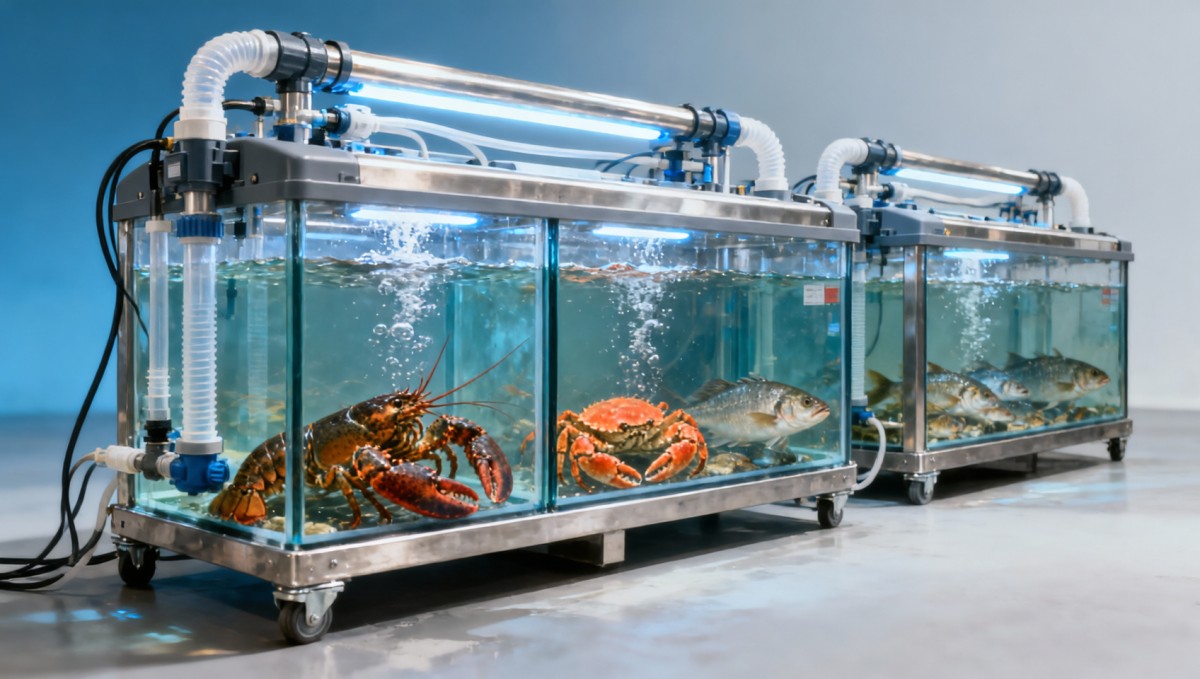
Live seafood experiences stress from multiple sources during collection, staging, loading, and transit. The most common triggers are oxygen fluctuation, temperature swing, ammonia buildup, crowding density, vibration, and rapid salinity change. Even short disruptions of 15 to 30 minutes can affect crab, lobster, shrimp, eel, and live reef species differently, which is why holding tank design must match species behavior rather than rely on one universal layout.
In commercial supply chains, stress control is closely linked to product value retention. A lobster that arrives alive but physiologically weakened may still underperform in resale value because of sluggish movement, shell discoloration, or shortened secondary holding life. For procurement teams, this means total landed cost must include more than the purchase price of the tank. It should also account for reduced shrinkage, fewer rejected deliveries, and lower labor intervention during transit.
Another critical issue is compliance. Seafood transport increasingly intersects with food safety, water discharge management, and sanitation protocols. Tanks that support monitored water circulation, UV treatment, removable liners, and documented cleaning routines provide stronger audit readiness. This matters in facilities operating under FDA-aligned food handling programs or local environmental discharge restrictions, especially where transport water is reused or partially recirculated over several cycles.
Well-engineered live seafood holding tanks typically aim to stabilize 4 core factors: dissolved oxygen, temperature, water clarity, and waste concentration. In many commercial applications, dissolved oxygen should remain above 5 mg/L for hardy species and closer to 6–8 mg/L for more sensitive stock. Temperature drift is often best kept within ±1°C to ±2°C during the transport window. Those thresholds are not universal rules, but they are practical operating targets used in many professional systems.
Common stress points during transport operations
- Overloading the tank beyond biomass capacity, which accelerates oxygen depletion and ammonia accumulation within 2 to 6 hours.
- Using static water without adequate circulation, causing uneven temperature layers and localized waste concentration.
- Failing to pre-condition seafood before loading, especially after harvest, grading, or long handling exposure.
- Ignoring vibration and sloshing effects in mobile transport units, which can increase animal agitation and collision injury.
- Running disinfection devices without balancing flow rate and dwell time, reducing actual sterilization effectiveness.
For buyers comparing suppliers, stress reduction claims should be verified through system logic rather than marketing language. Ask how the tank controls flow distribution, how oxygen is introduced, what backup protection is available during power loss, and whether the design simplifies cleaning between batches. A tank that looks robust externally but lacks these fundamentals can create hidden operating costs over a 12- to 24-month period.
Core Design Features That Improve Survival Rates
Not all live seafood holding tanks are designed for transport-related stress management. Systems intended for stress reduction usually combine mechanical durability with water quality control. That means insulated walls, rounded internal corners, stable rack or basket arrangements, controlled inlet flow, and modular support equipment such as oxygen cones, diffusers, degassing chambers, or protein skimmers, depending on the species and transport duration.
Material selection also matters. Food-contact polyethylene, fiberglass-reinforced plastic, and marine-grade stainless steel are common choices, but each serves different operating priorities. Polyethylene is often preferred for corrosion resistance and easier cleaning. Fiberglass may suit custom shapes and insulation needs. Stainless steel can support hygienic environments but requires careful design to avoid thermal transfer and unnecessary weight in mobile applications.
Oxygen management is one of the most decisive features. Basic aeration may be sufficient for short holding periods under light biomass, but higher-density transport often requires oxygen injection support. In practice, procurement teams should evaluate whether the system is designed for air aeration, pure oxygen supplementation, or hybrid control. The target is not just visible bubbling. The target is consistent oxygen availability across the full tank volume, including lower layers and dense holding compartments.
Water treatment architecture should be assessed as a full chain. A useful setup often includes mechanical solids capture, biological stabilization where recirculation periods are longer, and UV sterilization where pathogen pressure is a concern. In mobile or short-cycle transport, the most valuable feature may be fast-clean access and reliable particulate management rather than a large biofilter. Selection depends on whether the tank is used for 4-hour domestic routes or 36-hour export staging.
Key configuration elements to review
The table below helps technical and commercial teams compare the design elements that most directly influence survival, sanitation, and operating consistency in live seafood transport systems.
The main conclusion is that tank performance depends on system integration, not on one feature alone. A large-capacity tank without proper oxygen distribution may underperform compared with a smaller but better-balanced module. Likewise, adding UV sterilizers for fish farms can improve microbial control, but only if flow rate, water clarity, and maintenance access are properly matched.
Species-specific considerations
Crustaceans often benefit from compartmentalized layouts that reduce fighting and shell abrasion, while finfish typically require smoother circulation and lower collision risk. Bivalves may tolerate denser packing but remain sensitive to prolonged temperature abuse. Procurement specifications should therefore define target species, expected transit time, and load density before requesting quotations. Without those three inputs, supplier comparisons are often misleading.
How to Select the Right Tank for Transport, Staging, and Retail Handover
Selection should begin with the operating scenario, not the catalog. A tank used in a harvest vessel, a truck-mounted distribution loop, an airport consolidation hub, and a supermarket backroom will face different constraints in power availability, floor loading, sanitation workflow, and access for unloading. Many procurement mismatches happen because buyers specify only volume in liters but not the exact process stage the tank must support.
A practical evaluation model uses 5 dimensions: species compatibility, transport duration, water management method, site utility conditions, and sanitation requirements. If one of these is ignored, the system may look cost-effective on paper but fail under live conditions. For example, a 1,000 L unit may seem suitable for a distributor, yet become inefficient if the operator needs frequent batch separation, rapid draining, or forklift movement between zones.
Commercial teams should also review total ownership cost over 12 to 36 months. Lower-price systems may involve higher replacement rates for pumps, seals, hoses, or sensor probes. In addition, operator labor matters. Tanks that require 45 minutes of manual cleaning per cycle may generate a larger annual cost burden than a higher-priced system with tool-free access and 15-minute turnaround. For multisite buyers, standardization of spare parts can further improve budget predictability.
The integration of digital monitoring is becoming more relevant. A water quality online monitor aquaculture package can track dissolved oxygen, temperature, pH, and in some cases salinity or ammonia trends. In mobile operations, alerts linked to threshold breaches can reduce response time. Combined with smart buoys for aquaculture in upstream production environments, these tools support a more continuous water quality record from farm to live market channel.
Procurement comparison matrix
The following table can be used by technical evaluators, finance approvers, and quality managers when comparing live seafood holding tanks across suppliers.
The table highlights an important purchasing principle: a live seafood holding tank should be selected as an operating system, not as a standalone container. Buyers who evaluate installation conditions, cleaning workflow, and alarm functionality early tend to avoid later retrofit costs and operational compromise.
A simple 4-step selection process
- Define species, average batch size, and target survival rate at delivery.
- Map the longest realistic transport cycle, including staging, delays, and unloading.
- Review available utilities such as power, oxygen, chill capacity, and washdown access.
- Compare suppliers on service support, spare parts, and documented cleaning protocol.
Implementation, Maintenance, and Risk Control in Daily Operations
Even a high-quality tank can underperform without disciplined implementation. Commissioning should include leak testing, flow balancing, oxygen verification, sensor calibration, and operator training. In many facilities, the first 7 to 14 days of use are critical because staff are still learning biomass limits, cleaning cycles, and alarm interpretation. A structured startup plan reduces avoidable early losses.
Preventive maintenance should focus on the small components that often interrupt transport readiness: pump impellers, diffusers, valves, probes, UV sleeves, and drain seals. A monthly inspection schedule is common for fixed-site systems, while mobile transport units may need checks every 1 to 2 weeks depending on route frequency. The cost of one missed oxygen delivery event can exceed the annual price of a basic spare-parts kit.
Cleaning routines must be species- and workflow-aware. Overuse of chemicals can leave residues or destabilize water conditions, while under-cleaning allows organic buildup and microbial pressure. Quality and safety managers should define 3 layers of sanitation control: between batches, end-of-day, and deep maintenance. Removable baskets, quick-drain geometry, and accessible pipe runs make these routines more practical and more likely to be followed consistently.
Risk control also includes contingency planning. Backup oxygen supply, battery-supported alarms, and emergency transfer procedures are especially important for high-value loads or overnight staging. If live seafood holding tanks are integrated with aquatic oxygen generators and UV sterilizers for fish farms or distribution facilities, operators should know which functions are essential during failure events and which can be temporarily bypassed without compromising stock welfare.
Common operational mistakes to avoid
- Loading newly harvested seafood directly into transport tanks without rest or temperature equalization.
- Using one cleaning protocol for all species despite different mucus, waste, and shell debris profiles.
- Relying on visual water clarity instead of checking oxygen, temperature, and waste indicators.
- Ignoring calibration drift in digital monitors for more than 30 to 60 days.
- Running tanks at peak biomass continuously without a safety buffer for route delays.
Maintenance planning for procurement teams
When negotiating supply contracts, ask for maintenance documentation, recommended consumables list, and expected replacement intervals. It is reasonable to request a service matrix covering startup support, remote troubleshooting response, and parts availability. For distributors and agents, this information is commercially valuable because it affects after-sales credibility and customer retention as much as initial equipment performance.
FAQ for Buyers, Engineers, and Quality Managers
How do live seafood holding tanks differ from ordinary water tanks?
Ordinary tanks mainly provide containment. Live seafood holding tanks are designed to manage biological stress. They typically include controlled circulation, oxygen support, drainage logic, and easier sanitation access. In commercial use, that difference becomes clear when transport lasts longer than 6 hours or when biomass density rises beyond light retail holding levels.
What transport duration requires active oxygen support?
There is no single threshold for all species, but active oxygen support becomes increasingly important as duration moves from short local runs into the 8- to 24-hour range, especially under higher stocking densities. Sensitive species, warm conditions, and repeated loading events all shorten the safe window for passive aeration alone.
Are online monitoring tools necessary for every installation?
Not every small installation requires full digital monitoring, but for multi-batch commercial transport, export staging, or premium species handling, online monitoring offers strong value. A water quality online monitor aquaculture setup improves response time, supports traceability, and helps standardize operations across multiple operators or sites.
What delivery and implementation timeline is typical?
For standard modular systems, commercial lead times often fall in the 2- to 6-week range, depending on capacity, accessories, and region. More customized systems with integrated chillers, oxygen controls, or specialized transport framing may require 6 to 10 weeks. Buyers should also allow time for commissioning, operator training, and trial runs before peak season deployment.
Which indicators should financial approvers focus on?
Financial reviewers should look beyond acquisition price and compare mortality reduction potential, labor savings, cleaning time, consumable replacement frequency, and spare-parts standardization. In many cases, a system that cuts losses by even a few percentage points can justify a higher capital cost over one or two operating seasons, particularly for high-value live seafood channels.
Live seafood holding tanks have become a strategic operating asset for businesses that depend on survival rate, quality retention, and consistent delivery performance. The strongest solutions combine oxygen management, temperature stability, practical sanitation design, and monitoring capability in a format aligned with species, route length, and site conditions.
For information researchers, technical evaluators, commercial teams, and decision-makers, the most effective purchasing approach is to assess the full operating system: transport window, biomass load, cleaning workflow, backup readiness, and support service. That is where real risk reduction and long-term value are created.
If you are comparing live seafood holding tanks for aquaculture logistics, staging facilities, or live retail supply chains, now is the right time to review your specification against current operational demands. Contact us to discuss application details, request a tailored configuration roadmap, or explore more aquaculture technology solutions for transport stress control.
Related Intelligence
- RAS SystemsEU REACH Adds 3 RAS Biofilm Inhibitors to SVHC ListEU REACH adds 3 RAS biofilm inhibitors to SVHC list—urgent compliance action needed for exporters, component makers & chemical suppliers targeting the EU market.
- RAS SystemsEU REACH Adds 3 Biofilm Inhibitors to SVHC List for RAS SystemsEU REACH adds 3 biofilm inhibitors to SVHC list for RAS systems—urgent SCIP & SDS compliance needed by Oct 2026. Act now!
- RAS SystemsEU REACH Adds 3 Silane Coupling Agents for RAS Systems to SVHC ListEU REACH adds 3 silane coupling agents for RAS systems to SVHC list—urgent compliance actions for exporters, integrators & suppliers. Act before 1 Oct 2026.
The Morning Broadsheet
Daily chemical briefings, market shifts, and peer-reviewed summaries delivered to your terminal.
