
Aquaculture systems: when higher automation adds hidden costs
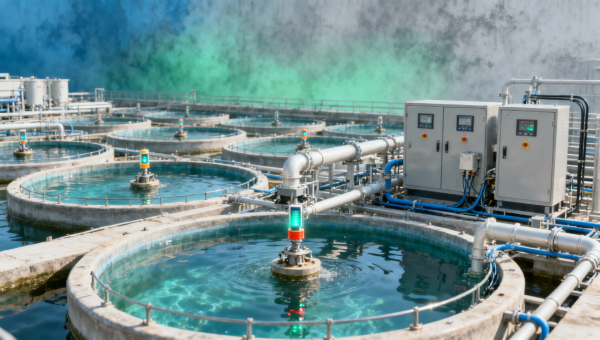
As Aquaculture Systems evolve toward higher automation, many operators and Industrial Buyers discover that smarter control does not always mean lower total cost. From Aqua Tech integration and Feed Formulation precision to maintenance demands, Fishery Supplies compatibility, and compliance risks, hidden expenses can reshape investment outcomes. This article examines where advanced agricultural tech creates value, where it adds operational friction, and how decision-makers in industrial agriculture can assess automation with greater financial and technical clarity.
For research teams, plant operators, technical evaluators, project managers, financial approvers, and safety or quality personnel, the central question is no longer whether automation matters. The more practical question is where automation improves biological stability, labor efficiency, traceability, and feed conversion, and where it introduces new layers of vendor dependency, software complexity, calibration work, and compliance exposure.
In commercial aquaculture, a feeding robot, dissolved oxygen controller, sensor network, or centralized dashboard can look efficient at the quotation stage. Yet over a 3-year to 7-year operating cycle, hidden costs often emerge in installation rework, operator training, spare parts, connectivity failures, cybersecurity controls, and the need to reconcile data from incompatible subsystems. A disciplined evaluation framework is therefore essential before capital is approved.
Where automation creates value and where hidden costs begin
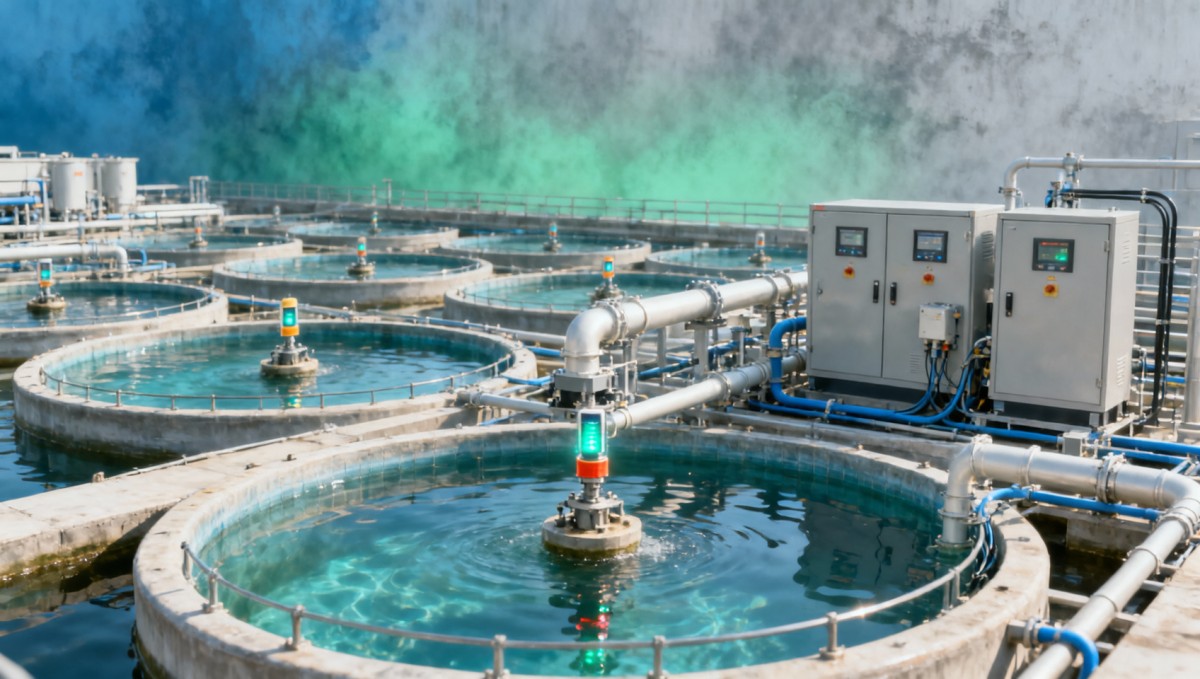
Higher automation in aquaculture systems generally targets 4 measurable goals: tighter environmental control, lower labor intensity, more consistent feeding, and stronger reporting for audits or customer requirements. In recirculating aquaculture systems, hatcheries, and intensive pond operations, automated monitoring of oxygen, pH, temperature, and water flow can reduce reaction time from hours to minutes. That matters when stock density is high and biological stress escalates quickly.
However, the cost problem starts when buyers compare only equipment price versus labor savings. In practice, the total cost structure includes at least 6 additional layers: systems integration, electrical upgrades, calibration consumables, software licensing, service contracts, and downtime risk during faults. A feeder that reduces one labor shift may still require quarterly recalibration, firmware support, and proprietary spare parts with lead times of 2–8 weeks.
The economic outcome also depends on farm type. A high-density RAS site with 24/7 technical staff may justify advanced control logic because one water-quality event can affect a large biomass within 30–60 minutes. By contrast, a medium-scale pond farm may gain more from partial automation, such as automated aeration triggers and feed dispensing, rather than a fully integrated supervisory control stack.
The difference between visible and hidden automation costs
Visible costs are easy to budget: sensors, feeders, cabinets, software seats, pumps, and installation labor. Hidden costs are less obvious because they show up after commissioning. Typical examples include signal interference in wet environments, replacement probes every 6–12 months, technician call-outs, and productivity losses when only one trained operator understands the control interface.
Another hidden cost sits in process redesign. When automation is added, standard operating procedures often need revision across feeding, sanitation, water treatment, emergency response, and quality documentation. That may require 3–5 new SOPs, retraining sessions for multiple shifts, and validation of alarm thresholds to avoid nuisance alerts or unsafe delays.
The table below separates common cost categories that are frequently underestimated during procurement reviews.
The key lesson is that automation cost should be modeled as a lifecycle issue rather than an equipment issue. If a project team evaluates only acquisition cost and headline labor reduction, the business case can be distorted by 15%–30% once maintenance, retraining, and integration support are included.
Integration complexity across feed, water quality, and fishery supplies
Many aquaculture projects fail to capture true system cost because they treat automation modules as standalone assets. In reality, performance depends on whether feed systems, water treatment devices, blowers, pumps, dosing skids, alarms, and fishery supplies can exchange data or operate without conflict. A technically advanced controller may still create friction if it cannot communicate with existing motors, legacy sensors, or third-party telemetry.
Feed formulation is a good example. Automated feeding is often promoted as a route to better feed conversion ratio and lower waste. Yet the result depends on pellet size consistency, moisture sensitivity, dispense speed, and timing logic. If feed characteristics vary from batch to batch, the feeder may require repeated tuning. Over time, this can increase supervision hours instead of reducing them, especially during seasonal transitions or species changes.
Water quality control creates another layer of hidden interdependence. Dissolved oxygen, ammonia management, temperature control, and flow rates interact biologically. When one sensor drifts outside tolerance, the system can trigger unnecessary aeration, overdosing, or false alarms. That not only raises energy consumption but may also affect fish stress and downstream quality management. For high-intensity sites, even a 1–2 hour control anomaly can have material consequences.
Common compatibility problems during expansion projects
Retrofit projects usually carry more hidden cost than greenfield installations. Existing cable routes, panel capacity, pipe layout, and wet-area protection may not support the automation level proposed in the bid. The result is additional civil work, shutdown windows, and unplanned procurement of adaptors, relays, or communication gateways.
- Legacy pumps or blowers may require variable frequency drive upgrades before central control is possible.
- Different sensor brands may output incompatible signals, forcing integration through extra I/O modules or middleware.
- Feeding systems may not handle all pellet formats, leading to segregation, dust, or clogging under humid conditions.
- Emergency backup logic may be absent, exposing the site if cloud access or the main PLC fails.
A practical screening matrix for technical teams
Before final approval, project teams should test compatibility in 5 areas: electrical, mechanical, software, biological process, and compliance documentation. Even a basic pre-award review can prevent change orders later.
The matrix shows why technical evaluation should include operations, maintenance, quality, and procurement together. Integration problems often appear at the boundaries between departments, not within one equipment specification sheet.
Maintenance, training, and compliance costs that reshape ROI
One of the most underestimated expenses in automated aquaculture systems is maintenance intensity. More automation usually means more sensors, more cable terminations, more software versions, and more preventive service tasks. A manual valve may be crude, but a motorized valve introduces actuator checks, enclosure inspections, and possible firmware issues. The hidden cost is not simply spare parts; it is the cumulative labor needed to keep the automated layer trustworthy.
Training has similar implications. If a farm runs 2 or 3 shifts, every automated workflow must be understood consistently by all relevant staff. That includes alarm acknowledgment, manual override, cleaning procedures, calibration intervals, and escalation steps. A site may need 8–16 training hours per operator during commissioning, followed by refreshers every 6–12 months. Without this, the operation becomes overly dependent on a small number of technicians or the supplier’s service team.
Compliance and audit readiness add another dimension. In regulated supply chains, documentation of water treatment, chemical dosing, sanitation, and process deviation response can become just as important as production efficiency. Automation can help create digital records, but only if timestamps, calibration logs, alarm history, and user access records are properly configured. Poor setup can leave a business with more data but weaker audit defensibility.
Why preventive maintenance schedules matter
Operators often focus on breakdown response, but preventive routines are what protect the economics of automation. A basic schedule should define daily checks, weekly cleaning, monthly testing, and quarterly calibration or inspection points based on equipment criticality. Critical control loops for oxygen or dosing should never depend on an ad hoc maintenance culture.
- Daily: verify alarms, visual sensor condition, feeder discharge behavior, and network status.
- Weekly: inspect moisture ingress, cable supports, biofouling, and actuator movement.
- Monthly: test backup power response, manual override, data export, and user access integrity.
- Quarterly: recalibrate key probes, replace wear parts where needed, and review trend deviations.
Compliance checkpoints for industrial buyers
Buyers serving export-oriented or tightly regulated markets should check whether the automation design supports practical documentation, not just machine control. Quality and safety managers typically need a clear chain of evidence when alarms occur, water parameters exceed thresholds, or additives are dosed.
- Calibration records should be retained in a searchable format for at least one internal review cycle.
- User permissions should separate operators, supervisors, and administrators to limit unauthorized changes.
- Alarm history should show date, time, value, and response action instead of only showing a reset state.
- Manual interventions should be logged to explain deviations during audits or customer inquiries.
When these controls are absent, automated systems can create compliance blind spots. The farm may appear digital, yet still depend on handwritten workarounds and fragmented records, increasing both risk and administrative burden.
How to evaluate automation financially before capital approval
For enterprise decision-makers and finance approvers, the right question is not whether a system is advanced. The right question is whether the proposed automation improves performance enough to justify its full lifecycle cost. This means comparing acquisition cost, installation cost, operating cost, risk reduction, and recoverable value over a defined period, often 36, 60, or 84 months depending on the project scale.
A sound financial model should include at least 5 categories: capital expenditure, commissioning and integration, annual maintenance, training and labor impact, and biological or quality-related upside. If feed waste is expected to decline by 3%–8% and mortality events become less frequent, those gains should be modeled conservatively rather than assumed as guaranteed. Sensitivity analysis is especially useful when feed prices, energy costs, or stocking density may change.
Financial review should also distinguish between mission-critical automation and convenience automation. Mission-critical functions usually include oxygen management, backup alarms, and core circulation controls. Convenience features may include advanced dashboards, mobile reporting layers, or nonessential analytics modules. This distinction helps teams phase investments and avoid over-automating before the biological process is stable.
A practical procurement checklist
The following decision framework helps cross-functional teams compare proposals beyond the headline equipment list.
This framework helps finance teams challenge optimistic vendor proposals without dismissing automation entirely. In many operations, phased implementation delivers a better return than a single high-complexity rollout.
When phased automation is the smarter option
A 3-step deployment is often more resilient than a full-site transformation. Step 1 covers mission-critical monitoring and alarms. Step 2 adds feed automation and trend reporting. Step 3 introduces advanced analytics or broader remote management once the site has stable maintenance routines and proven operator competence. This approach spreads capital exposure and reveals weak points earlier.
Implementation guidance and common mistakes to avoid
Successful automation projects in aquaculture usually share one trait: they are managed as operational change programs, not just equipment purchases. Engineering, production, quality, maintenance, and finance should align before installation begins. The project manager needs a clear acceptance plan covering hardware, software, training, safety, and biological performance, not only mechanical completion.
One common mistake is commissioning too quickly. A system may be electrically live but not biologically tuned. Feeding algorithms, alarm thresholds, and dosing sequences often need observation across at least 2–4 weeks of real operation. Skipping this optimization phase can cause false confidence, recurring overrides, and increased operator resistance.
Another mistake is failing to define responsibility after handover. Farms need clarity on who owns calibration, who reviews trend data, who authorizes parameter changes, and who escalates vendor support tickets. Without role clarity, automated systems gradually degrade into mixed manual control, which preserves cost but loses the intended value.
Implementation priorities for project teams
- Document the existing process baseline before automation so post-installation performance can be measured realistically.
- Run a spare-parts assessment for critical sensors, actuators, and control modules before go-live.
- Define acceptance criteria that include alarm testing, manual fallback operation, and data export verification.
- Schedule operator training by role rather than offering one general session for all departments.
- Review wet-area protection, corrosion risk, and cleaning chemistry compatibility during design, not after failure.
FAQ for buyers and technical evaluators
How much automation is usually enough for a medium-scale farm?
In many medium-scale operations, partial automation is often the best balance. Core monitoring, alarm logic, and controlled feeding usually deliver more practical value than full digital integration. The right scope depends on stock density, labor availability, and whether water-quality shifts can become critical within 30–90 minutes.
What hidden cost should buyers investigate first?
Service dependency is often the first issue to test. Ask about spare part lead times, software support terms, calibration frequency, and whether local technicians can handle first-line troubleshooting. If support relies on one external specialist, downtime risk can outweigh efficiency gains.
How long should commissioning and stabilization take?
Simple upgrades may stabilize within 7–15 days, while integrated systems involving feed, water treatment, and remote dashboards may require 2–6 weeks before alarm thresholds and operational routines are fully reliable. Projects should budget this period instead of assuming instant optimization.
What should quality and safety teams check?
They should verify calibration records, user permissions, alarm logs, manual override tracking, and sanitation compatibility. If automated equipment cannot support clean documentation and safe intervention procedures, it may create more audit work rather than less.
Higher automation in aquaculture systems can produce strong gains in control, consistency, and traceability, but only when the full cost of integration, maintenance, training, and compliance is understood from the start. The strongest business cases usually come from targeted automation that protects biological stability and operational resilience rather than from buying the most feature-rich platform available.
For industrial buyers, project leaders, and technical evaluators, the most effective path is a lifecycle-based review that tests compatibility, service support, and practical usability under real farm conditions. If you are assessing aquaculture automation, feed handling systems, or integrated fishery technology for a new project or retrofit, contact us to discuss a tailored evaluation framework, request a customized solution review, or learn more about procurement-focused technical guidance.
Related Intelligence
- RAS SystemsSASO Opens Direct VOC Path for RAS Systems in Saudi ArabiaSASO opens direct VOC pathway for RAS systems in Saudi Arabia — fast-track certification for CNAS + ISO 22000-compliant exporters. Act now!
- RAS SystemsSASO Opens Fast VOC Channel for RAS Systems in Saudi ArabiaSASO RAS VOC fast track now live: Get Saudi VOC certification in 10 days with CNAS reports & ISO 22000 — accelerate exports of integrated aquaculture systems.
- RAS SystemsSASO Accelerates RAS Systems Local Certification for Chinese FirmsSASO accelerates RAS systems local certification for Chinese firms—leverage CNAS & ISO 22000 to skip retesting and get VOC in 7 days!
The Morning Broadsheet
Daily chemical briefings, market shifts, and peer-reviewed summaries delivered to your terminal.
