
Longline Fishing Gear Failures Often Start at One Weak Point
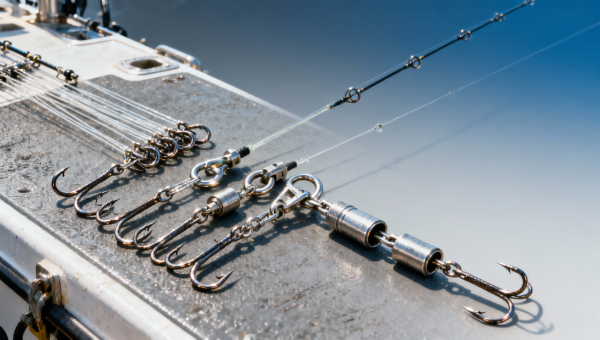
In longline fishing gear, costly failures often trace back to a single overlooked weak point—one that can compromise catch quality, crew safety, and operating margins. For buyers and technical teams evaluating commercial fishing hooks bulk, fish processing machinery, or integrated fishery systems such as block ice machine for fishery setups, understanding where breakdowns begin is essential to smarter procurement, maintenance, and long-term performance.
Where Do Longline Fishing Gear Failures Usually Begin?
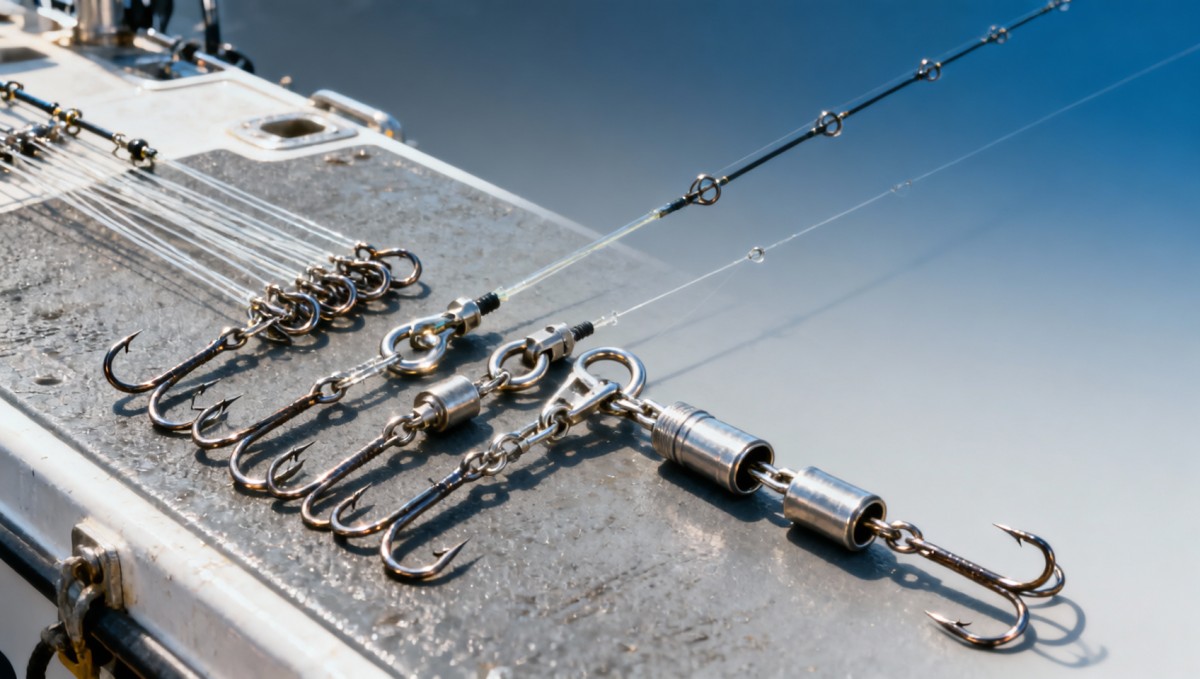
In commercial longline operations, gear failure rarely starts as a dramatic system-wide event. It usually begins at one weak point: a corroded swivel, an underspecified branch line, a poorly matched crimp, a hook with inconsistent temper, or a connection exposed to repeated shock loading. When vessels run 6–12 hour deployment cycles and repeat hauling across weekly schedules, those small weaknesses accumulate into lost hooks, broken snoods, reduced catch retention, and unplanned deckside repairs.
For operators, the immediate concern is uptime and safe handling. For procurement teams, the issue is broader: whether the selected commercial fishing hooks bulk package, line hardware, and downstream chilling support were specified as a system rather than as isolated items. A weak point in fishing gear often affects more than the gear itself. It can delay sorting, overload fish processing machinery, and reduce the value of landed product if icing or chilling falls behind schedule.
Technical evaluators should separate failures into three categories: material fatigue, assembly mismatch, and maintenance neglect. Material fatigue appears after repeated tensile loading and saltwater exposure. Assembly mismatch occurs when line diameter, hook eye geometry, swivels, and crimps are not dimensionally compatible within acceptable tolerances. Maintenance neglect becomes visible when inspection intervals stretch beyond 7–14 days in high-use fleets or when worn consumables remain in circulation past practical service life.
This matters across the broader fishery technology chain. A vessel that loses catch efficiency due to weak branch lines may try to compensate by extending soak time, which can reduce product quality. That creates pressure on ice availability, onboard handling, and block ice machine for fishery planning. In integrated procurement, the weak point is not just a small component; it is the trigger for margin leakage across gear, labor, fuel, processing, and cold-chain timing.
The 5 inspection points that deserve priority
When longline gear is reviewed before purchase or before a seasonal campaign, five checkpoints usually identify the majority of preventable weaknesses:
- Hook consistency: verify point sharpness, barb formation, eye closure, and coating condition across sample batches rather than only one carton.
- Connection integrity: inspect the match between line diameter, sleeves, crimps, swivels, and thimbles to reduce stress concentration at the joint.
- Corrosion behavior: evaluate stainless and coated components under realistic saltwater exposure, especially when storage humidity fluctuates during 2–4 week voyages.
- Shock-load tolerance: confirm the gear can tolerate sudden force peaks during hauling, rough weather, or aggressive target species activity.
- Maintenance access: ensure replacement parts and inspection steps fit actual deck workflow, not just catalog specifications.
For enterprise decision-makers, this framework improves budget discipline. A lower unit price on hooks or branch lines may look attractive, but if connection failures increase replacement frequency from quarterly to monthly, the total cost picture changes quickly. ACC’s sector coverage is valuable here because procurement decisions in aquaculture and fishery tech increasingly overlap with compliance, cold-chain planning, and equipment lifecycle management rather than simple line-item price comparison.
How Should Buyers Evaluate Weak Points Before Ordering Commercial Fishing Hooks in Bulk?
Bulk procurement creates a specific risk: sample quality can differ from production consistency. That is why purchase teams should move beyond catalog claims and define acceptance criteria before issuing orders. In practical B2B sourcing, the core decision is not only hook style or line type. It is whether the supplier can support batch traceability, stable dimensional control, and replacement planning over 3–6 month operating windows. That discipline is especially important for distributors, fleet managers, and project leaders handling multi-vessel procurement.
A structured evaluation model helps finance approvers and technical staff work from the same baseline. Operators often focus on handling behavior and catch security. Quality and safety managers focus on corrosion, breakage patterns, and storage risks. Commercial evaluators focus on lead time, packaging reliability, and claims handling. Combining those viewpoints prevents a common mistake: approving the cheapest gear package without examining the cost of disruption, reordering, or delayed landings.
The table below can be used when comparing suppliers of commercial fishing hooks bulk packages and related longline assemblies. It focuses on procurement questions that reduce weak-point failures before deployment.
This matrix helps buyers avoid a narrow price-first decision. If a supplier offers a short lead time but cannot document batch identification, the risk moves to the buyer. If hook geometry is acceptable but connection hardware is inconsistent, the apparent savings may disappear after one heavy-use cycle. For cross-functional teams, the strongest orders are those where technical and commercial review happen before contract approval, not after the first field failure.
A practical 4-step pre-order process
Before placing a high-volume order, project managers and procurement leads can use a four-step workflow that is easy to audit and repeat across seasons.
- Define the operating profile: target species, expected soak time, water conditions, vessel handling method, and planned replacement interval.
- Request a technical package: confirm material description, dimensions, recommended pairing parts, and packing details.
- Run a sample inspection: check at least 3 critical dimensions or fit points that affect assembly integrity and deck handling.
- Approve a replenishment plan: align minimum stock, emergency reorder capacity, and spare ratio for 1–2 operating cycles.
ACC’s editorial value is especially relevant for teams that buy across machinery, raw materials, and operational systems. In highly regulated supply environments, technical due diligence and procurement discipline are no longer separate tasks. They are part of one risk-management process, whether the purchase concerns hooks, feed processing equipment, or fishery support systems.
Why Do Gear Failures Affect Fish Processing Machinery and Ice Planning?
A weak point in longline gear can quickly become a processing bottleneck. When catch comes aboard inconsistently, crews often face bursts of handling demand instead of a smoother working rhythm. That can overload sorting stations, slow gutting or washing lines, and create uneven input into fish processing machinery. The operational issue is not only mechanical. It is about preserving product condition within a short handling window, often measured in 30–90 minutes from landing to adequate icing or chilled storage.
This is where integrated fishery systems matter. If gear failures reduce catch predictability, the vessel or landing site may compensate with more ice consumption, faster transfer cycles, or additional labor. A block ice machine for fishery use is often evaluated as a separate capital item, yet in practice it is part of resilience planning. Facilities typically assess daily ice requirement ranges, storage handling, and recovery time after peak unloading periods. A mismatch between harvest pattern and ice output can amplify quality loss rather than solve it.
Quality control and safety teams should therefore review gear, handling, and chilling as one chain with three critical transition points: hauling to deck, deck to sorting, and sorting to ice or refrigeration. If any one step is delayed repeatedly, bruising, temperature rise, and sanitation pressure can increase. In commercial settings, the consequences may include downgraded product lots, extra washdown cycles, or reduced throughput across an entire shift.
The table below outlines how longline weak points can influence downstream equipment and support systems. It is useful for project teams planning upgrades in both fishing gear and post-harvest infrastructure.
For financial approvers, the takeaway is clear: gear reliability influences asset utilization beyond the gear budget. When fish processing machinery sits underfed for part of a shift and overloaded later, efficiency falls. When a block ice machine for fishery operations must cover unpredictable spikes, planners may oversize capacity or increase operational buffer. Better gear selection can reduce those indirect costs even when the unit price of components is slightly higher.
What integrated planning looks like in practice
For vessel operators and site managers
Align replacement intervals for hooks, branch lines, and connectors with actual voyage length or weekly landing volume. In many operations, a review every 1–2 weeks is more realistic than waiting for visible failures.
For engineering and procurement teams
Model the relationship between expected haul variability, ice output, and processing throughput. Even a modest reduction in handling delays can stabilize equipment loading across a full shift.
For distributors and commercial evaluators
Bundle technical support with supply. End users buying commercial fishing hooks bulk often also need guidance on spare parts ratios, compatibility, and replenishment timing, not only product cartons.
Which Standards, Maintenance Routines, and Risk Controls Matter Most?
Not every fishery component falls under one specific global certification regime, but buyers still need a compliance mindset. For longline gear and related fishery systems, practical governance usually combines material suitability, safe operating procedures, hygiene management, and equipment traceability. For plants or vessels linked to regulated export chains, documentation discipline becomes even more important. This does not mean every hook carton requires complex certification, but it does mean procurement records, supplier declarations, and inspection logs should be orderly and reviewable.
Maintenance routines should be simple enough to execute under real operating pressure. A strong baseline uses daily visual checks, weekly functional reviews, and monthly trend analysis for high-use fleets or processing sites. Daily checks look for corrosion, deformation, burrs, cracked sleeves, or missing hardware. Weekly reviews compare failure counts, replacement frequency, and damage patterns. Monthly analysis identifies whether one weak point is recurring because of supplier variation, poor storage, or assembly practices.
Safety managers and quality teams should also monitor storage conditions. Salt exposure, residual moisture, and mixed-metal contact can shorten practical service life. Where fish processing machinery and gear spares are stored in adjacent utility areas, clean segregation and dry storage matter. The same logic applies to ice system components. A block ice machine for fishery use may be operationally robust, but if maintenance parts, tools, and consumables are not managed systematically, emergency repairs become slower and more expensive.
A practical risk-control checklist can be embedded into tendering, receiving, and operating procedures. This helps align operators, purchasing staff, and project owners around a shared standard.
- Receiving inspection: confirm lot identification, count accuracy, visible finish condition, and packaging damage before warehouse entry.
- Assembly verification: test fit 3–5 sample assemblies from each batch to confirm hooks, swivels, sleeves, and line ends work together without forcing.
- Use-phase monitoring: record breakage location, not just breakage quantity, because the failure point guides corrective action.
- Storage control: keep consumables dry, segregated, and rotated by batch or receipt date to avoid mixed-age inventory in critical operations.
- Supplier review: after each 2–3 purchase cycles, assess consistency, complaint response speed, and spare availability.
For organizations operating across agricultural machinery, aquaculture systems, and fine chemical supply chains, this level of discipline is no longer optional. ACC’s role as an industry intelligence journal is valuable because complex procurement increasingly demands cross-domain judgment: engineering logic, trade compliance awareness, and operational practicality all at once. That is exactly where weak-point analysis becomes commercially useful rather than merely technical.
FAQ: What Do Procurement and Technical Teams Ask Most Often?
How do we know whether the weak point is the hook or the connection?
Track the exact failure location for at least 2–4 operating cycles. If deformation appears at the eye or point, the hook specification may be the issue. If failure repeats at the crimp, sleeve, or swivel interface, the connection system is more likely underspecified or mismatched. This is why receiving inspection should include assembly-fit checks, not only standalone visual checks of commercial fishing hooks bulk cartons.
What is a reasonable lead time for commercial fishing hooks bulk orders?
In many B2B sourcing scenarios, typical lead time ranges from 2–6 weeks depending on quantity, packaging format, and whether the specification is standard or customized. Buyers should also ask about emergency replenishment, partial shipment options, and spare support. Lead time planning is particularly important for fleets operating remote routes or seasonal campaigns with limited port access.
How should a block ice machine for fishery projects be evaluated alongside gear purchases?
Evaluate it against actual harvest variability, not only average daily tonnage. Ask how much ice is needed during peak unloading windows, how quickly the system recovers after heavy demand, and how storage and handling fit the site layout. If gear failures create irregular landing patterns, the ice system needs enough flexibility to support product quality during those peaks.
What should quality teams review when fish processing machinery performance becomes inconsistent?
Check upstream rhythm first. Uneven loading often begins with haul irregularity, delayed sorting, or repair interruptions on deck. Review whether damaged longline components are affecting product flow into fish processing machinery. Then examine sanitation timing, washdown intervals, and exposure time before icing. In many cases, the equipment is not the original cause; it is absorbing variability created earlier in the chain.
Why Work With AgriChem Chronicle When Evaluating Fishery Supply and Processing Decisions?
For industrial buyers, the problem is not a lack of product information. It is a lack of reliable interpretation. AgriChem Chronicle helps procurement teams, technical evaluators, and executive decision-makers connect component-level choices to operational outcomes across aquaculture and fishery technology, machinery investment, and regulated supply environments. That means looking beyond the item price of commercial fishing hooks bulk orders and asking how reliability, traceability, and service support affect total operating performance.
ACC’s editorial framework is built for industries where technical precision and compliance awareness matter. Across fishery systems, fine chemicals, and primary processing sectors, procurement teams face the same recurring challenge: multiple stakeholders need one decision that is technically sound, commercially workable, and documentable. Our approach supports that decision process with industry-grounded analysis rather than generic marketing claims.
If you are comparing longline gear packages, reviewing fish processing machinery options, or planning a block ice machine for fishery installation, you can use ACC as a decision support partner. We can help frame the right questions around parameter confirmation, compatibility review, supply continuity, maintenance logic, and documentation expectations before you commit budget or issue a tender.
Contact us to discuss specific procurement topics such as hook and connector matching, batch traceability requirements, typical delivery windows, integrated fish handling and ice planning, custom solution evaluation, sample review priorities, or quotation comparison logic. For distributors, OEMs, and industrial suppliers seeking stronger visibility among institutional buyers, ACC also provides a credible publishing environment for technical capabilities, validated manufacturing information, and market-facing thought leadership.
Related Intelligence
- Commercial FishingGaode Launches First Quadruped Robot, ABot-M0 Open-Source Model for Aquaculture & Poultry InspectionABot-M0: Gaode's open-source quadruped robot for aquaculture & poultry inspection—80.5% task success, field-tested in Brazil & Vietnam. Discover how it transforms autonomous farm inspections.
- Commercial FishingGaode Launches First Quadruped Robot, Open-Sources ABot-M0 for Aquaculture & PoultryGaode launches first quadruped robot & open-sources ABot-M0 — an embodied AI model for aquaculture and poultry automation, with 80.5% Libero-Plus task success.
- Commercial FishingLobster Creels Bulk Orders: Where Shipping Costs Get HiddenLobster creels bulk costs can hide in freight, packing, and compliance. Compare suppliers smarter across fish processing machinery, longline fishing gear, and block ice machine for fishery projects.
The Morning Broadsheet
Daily chemical briefings, market shifts, and peer-reviewed summaries delivered to your terminal.
