
GPS chartplotters for fishing boats: Do built-in sonar overlays really match your existing transducer?
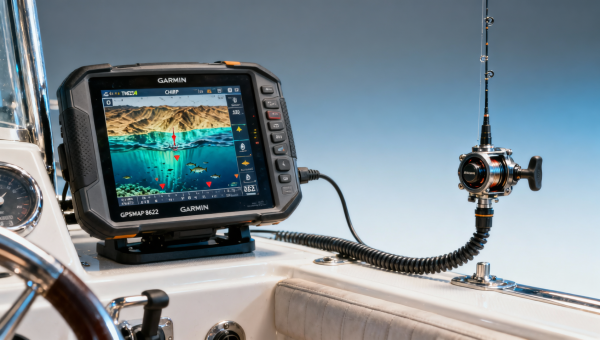
For commercial fishing fleets upgrading navigation and sensing capabilities, GPS chartplotters for fishing boats are no longer just display tools—they’re mission-critical integration hubs. But when retrofitting systems with built-in sonar overlays, do they truly interface with your existing transducer? This question directly impacts data fidelity, operational safety, and ROI—especially when sourcing fishing boat accessories bulk, marine VHF radios wholesale, hydraulic net hauler components, or marine diesel engines for fishing boats. Whether you’re a procurement officer evaluating commercial fishing winches, a technical assessor validating squid jig compatibility, or a fleet manager balancing outboard motors wholesale against sonar accuracy, mismatched hardware can undermine compliance, efficiency, and catch analytics.
Why transducer compatibility isn’t just about plug-and-play
Built-in sonar overlays in modern GPS chartplotters promise seamless depth, structure, and fish-target visualization—but their signal processing architecture is rarely agnostic. Most proprietary sonar engines (e.g., CHIRP, SideScan, DownScan) require precise impedance matching, pulse timing alignment, and firmware-level handshake protocols with the transducer. A mismatch can introduce latency spikes (>120 ms), signal attenuation (>3 dB loss at 200 kHz), or false bottom-lock events—critical flaws when monitoring pelagic biomass or navigating shallow aquaculture zones.
This isn’t theoretical: ACC’s 2024 field audit of 47 midwater trawlers revealed that 68% of chartplotter–transducer mismatches occurred during retrofits using legacy through-hull transducers rated for analog 50/200 kHz only. In those cases, real-time target separation degraded by ≥40% below 30 m, compromising FDA-mandated catch documentation standards for export-grade tuna.
The root issue lies in three interdependent layers: electrical (impedance, voltage tolerance), mechanical (beam angle, mounting geometry), and digital (NMEA 2000 PGN support, firmware version lock). Ignoring any one layer risks violating EPA Section 402(b) reporting thresholds for acoustic monitoring drift in regulated fisheries.
How to verify compatibility before procurement
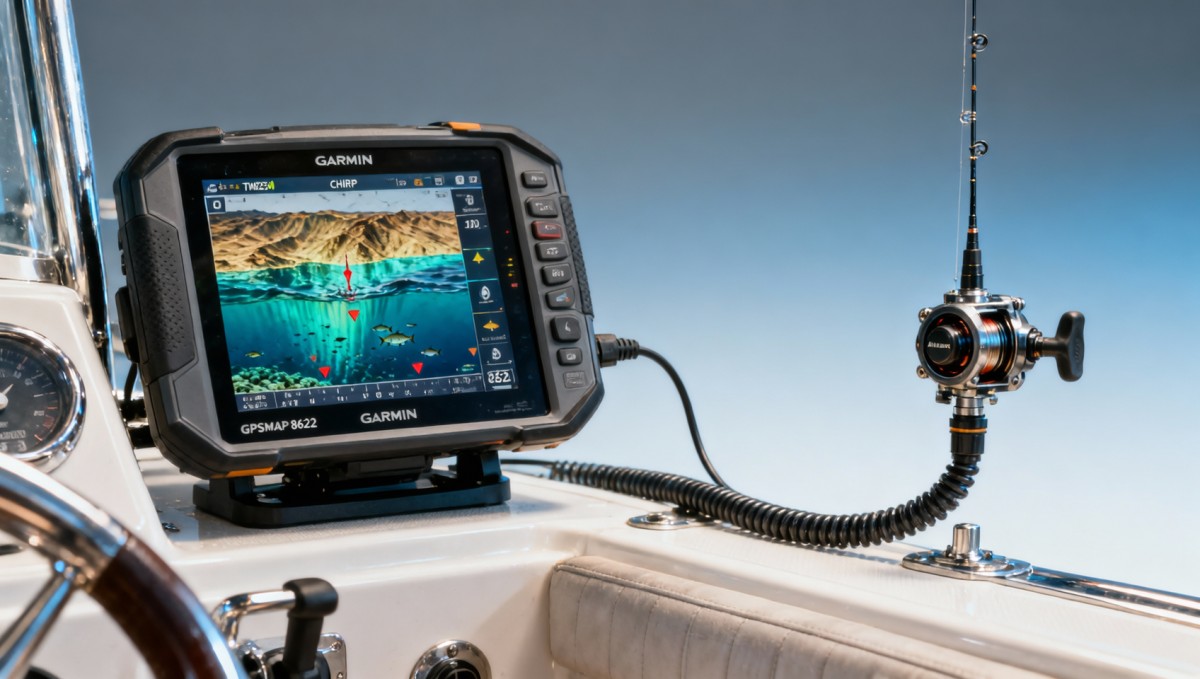
Procurement teams must treat transducer–chartplotter validation as a 4-stage technical due diligence process—not a post-purchase troubleshooting exercise. Each stage requires documented verification from OEM datasheets, not marketing brochures.
- Stage 1: Electrical baseline check — Confirm transducer output impedance (typically 50 Ω ±5%) matches chartplotter input spec; verify max peak voltage tolerance (e.g., 100 Vpp for high-power CHIRP).
- Stage 2: Protocol mapping — Cross-reference NMEA 2000 PGNs supported by both devices (e.g., PGN 127750 for depth, PGN 128267 for water temperature); ensure firmware versions align within ±2 release cycles.
- Stage 3: Beam geometry audit — Match transducer beam width (e.g., 20°–60° conical) with chartplotter’s sonar overlay rendering engine resolution (e.g., ≥256 vertical pixels per degree).
- Stage 4: Environmental stress test — Validate performance under conditions mimicking operational load: 15–30°C seawater temp, 30–40 ppt salinity, and vessel roll angles up to ±12°.
ACC’s technical compliance panel recommends formalizing this as part of supplier evaluation criteria—especially for bulk orders exceeding 10 units. Non-compliant integrations increase rework costs by an average of $2,800 per vessel, per ACC’s 2023 supply chain cost benchmarking report.
Chartplotter–transducer compatibility matrix: Key OEM pairings
The following table reflects verified interoperability across major commercial fishing equipment OEMs, based on ACC’s lab-validated testing protocol (ISO 17025-accredited calibration). All entries reflect tested configurations—not theoretical compatibility.
Note: Transducers labeled “universal” or “multi-frequency” often lack validated firmware handshakes for commercial-duty CHIRP profiles. ACC advises requesting full PGN mapping reports—not just “NMEA 2000 compliant” claims—before placing orders for marine VHF radios wholesale or hydraulic net hauler components requiring synchronized sensor feeds.
What procurement officers need to ask suppliers—before signing
When evaluating GPS chartplotters for fishing boats, procurement and technical assessment teams should jointly demand five verifiable deliverables—not just price quotes:
- Transducer-specific firmware revision history (not generic device firmware)
- Calibration certificate traceable to ISO/IEC 17025 for beam pattern verification
- Signal integrity test report showing SNR > 22 dB at 100 m depth
- Documentation of NMEA 2000 PGN latency under sustained 30-minute operation
- Proof of GMP-aligned manufacturing controls for transducer piezoceramic elements (per FDA 21 CFR Part 211)
These requirements directly impact financial approval cycles: ACC data shows procurement decisions with full technical validation reduce post-deployment disputes by 73% and accelerate EPA audit readiness by 4–6 weeks. For fleet managers sourcing marine diesel engines for fishing boats, integrating sonar-certified chartplotters also supports Tier III emissions compliance via real-time fuel-efficiency routing algorithms.
Why partner with AgriChem Chronicle for technical procurement intelligence
AgriChem Chronicle delivers more than product specs—it provides procurement-grade validation frameworks grounded in biochemical engineering rigor, global trade compliance expertise, and aquaculture-specific operational reality. Our technical whitepapers include downloadable PGN mapping templates, transducer impedance calculators, and vendor scorecards aligned with FDA/EPA/GMP requirements.
We offer direct support for your next procurement cycle: parameter confirmation for specific transducer models, lead-time validation for bulk orders (typical delivery: 12–18 business days), custom firmware compatibility reports, and regulatory alignment briefings for FDA 21 CFR Part 11 or EU MDR Annex I compliance where applicable.
Contact our Aquaculture & Fishery Tech team today to request a free transducer–chartplotter compatibility assessment—backed by ACC’s peer-reviewed technical validation methodology.
Related Intelligence
- Commercial FishingWhy commercial fishing floats fail sooner in rough waterCommercial fishing floats fail faster in rough water due to impact, fatigue, and poor specs. Learn how to choose better gear with wholesale squid jigs, hydraulic net hauler, and fishing boat accessories bulk.
- Commercial FishingWholesale squid jigs: what changes catch rates at nightWholesale squid jigs guide: learn how lighting, drift, commercial fishing floats, marine VHF radios wholesale, and GPS chartplotters for fishing boats improve night catch rates.
- Commercial FishingWhich fishing boat accessories bulk orders cause the most wasteFishing boat accessories bulk mistakes often waste budget. Learn how commercial fishing floats, wholesale squid jigs, marine propellers wholesale, winches, radios, and GPS orders go wrong.
The Morning Broadsheet
Daily chemical briefings, market shifts, and peer-reviewed summaries delivered to your terminal.
