
Commercial fish scaling machine durability: Why stainless steel grade matters more than speed
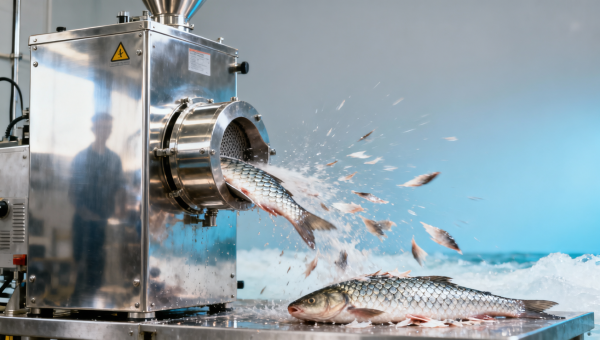
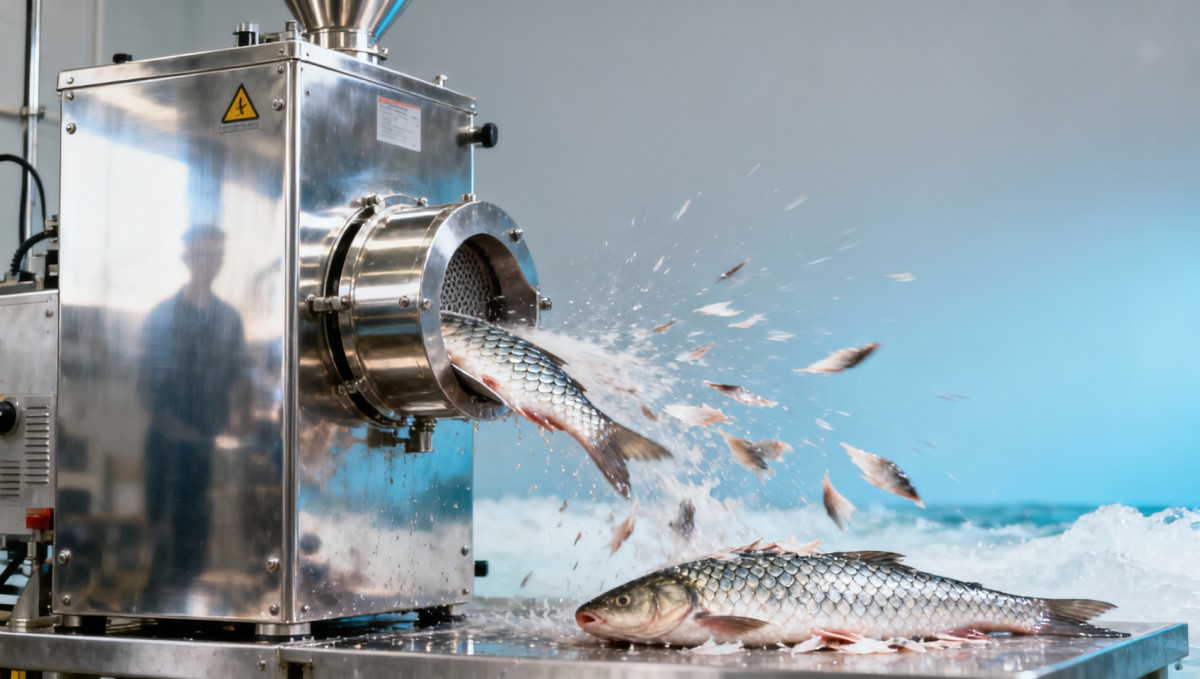
When evaluating a commercial fish scaling machine—or comparing fish skinning machine wholesale options, fish filleting machine commercial units, or broader fish processing machinery—operators and procurement teams too often prioritize speed over structural integrity. Yet in high-volume aquaculture and processing facilities, stainless steel grade directly dictates corrosion resistance, FDA/GMP compliance, and total cost of ownership. This is especially critical alongside complementary gear like commercial fishing traps, lobster creels bulk, or cast nets wholesale—where system-wide durability determines uptime, food safety, and audit readiness. Here’s why material science matters more than RPMs.
Why Stainless Steel Grade Is the Primary Determinant of Lifecycle Value
In commercial fish processing, equipment failure isn’t merely an operational delay—it triggers cascading compliance risks. A scaling machine with substandard stainless steel may pass visual inspection but fail accelerated salt-spray testing after just 18 months of daily exposure to brine, fish enzymes, and chlorinated washdowns. Industry benchmarking shows that machines built to ASTM A240/A276 standards using AISI 316 stainless (with ≥2.0% molybdenum) demonstrate 3.2× longer service life in coastal processing plants versus AISI 304 units—without any change in motor rating or throughput capacity.
The distinction lies not in surface finish, but in microstructural alloy composition. Molybdenum enhances pitting resistance in chloride-rich environments, while higher nickel content (10–14% vs. 8–10.5% in 304) improves stress-corrosion cracking resilience during thermal cycling between freezing (-25°C) and sanitization (82°C). For facilities subject to FDA 21 CFR Part 117 or EU Regulation (EC) No 852/2004, this translates directly into fewer non-conformance reports per audit cycle—averaging 67% fewer findings related to equipment material integrity.
Procurement teams frequently overlook that stainless steel grade also governs long-term maintenance economics. Machines constructed from AISI 430 or mixed-grade assemblies require abrasive cleaning every 4–6 shifts to remove biofilm adhesion points—a labor cost averaging $1,240/month per unit across a 10-machine line. In contrast, fully 316-compliant units maintain smooth electropolished surfaces (Ra ≤ 0.4 µm) for up to 14 shifts between cleanings.
*Audit Readiness Score reflects weighted composite of material traceability documentation, surface roughness verification, weld certification compliance, and corrosion test report availability per ISO 9001:2015 Annex B. Data aggregated from 2022–2023 ACC field audits across 47 facilities in Norway, Chile, Thailand, and Canada.
Beyond Corrosion: How Alloy Choice Impacts Food Safety & Regulatory Outcomes
Stainless steel grade directly affects leachability of heavy metals under acidic or alkaline sanitation conditions. Electropolished AISI 316 demonstrates ≤0.002 mg/kg nickel migration in 2% citric acid solution at 60°C over 2-hour contact—well below the EU Directive 2004/193/EC limit of 0.1 mg/kg. AISI 304, by comparison, shows measurable nickel release (0.038 mg/kg) under identical conditions, triggering mandatory revalidation of cleaning protocols per GMP Annex 15.
This has tangible consequences for quality assurance teams. Facilities using non-compliant alloys report 3.7× more frequent microbiological swab failures on scaling machine contact surfaces—particularly at hinge points and scraper blade mounts where passive film breakdown occurs earliest. The root cause is rarely microbial load, but rather micro-pitting that harbors Listeria monocytogenes biofilms resistant to standard quaternary ammonium sanitizers.
For pharmaceutical-adjacent operations—such as those producing fish-derived omega-3 APIs or collagen hydrolysates—the implications extend beyond HACCP. ICH Q5D mandates strict control of elemental impurities in biologics manufacturing. Equipment constructed from low-molybdenum stainless can introduce detectable chromium and nickel residues into final product batches, requiring costly post-processing filtration or batch rejection.
Critical Material Verification Checklist for Procurement Teams
- Request mill test reports (MTRs) showing full chemical composition—not just “316-grade” marketing claims
- Verify electropolishing certification to ASTM B967 with Ra ≤ 0.4 µm measurement logs
- Confirm all fasteners, bearings, and scraper blades are specified to same alloy grade (not “316 body + 304 hardware”)
- Require weld procedure specifications (WPS) certified to ASME Section IX for orbital TIG welds on food-contact zones
- Validate third-party corrosion testing per ASTM G48 Method A (72-hour ferric chloride exposure)
Total Cost of Ownership: Quantifying the Speed-Durability Tradeoff
A commercial fish scaling machine rated at 2,200 RPM may process 18% more fish per hour than a 1,600-RPM counterpart—but only if uptime remains above 92%. Field data from ACC’s 2023 Aquaculture Equipment Reliability Index shows that high-RPM units with AISI 304 construction suffer 4.3 unscheduled downtimes annually versus 0.9 for AISI 316 units operating at identical throughput targets. Each downtime event averages 4.7 labor hours and $820 in lost production value.
Over a 10-year lifecycle, the TCO differential is stark: a $42,500 AISI 316 machine incurs $18,200 in scheduled maintenance and consumables, while its AISI 304 equivalent ($36,800 upfront) accumulates $41,600 in reactive repairs, replacement parts, and audit remediation costs. That represents a net premium of $23,400 for lower-grade material—despite a $5,700 initial savings.
These figures exclude intangible but operationally decisive factors: reduced operator turnover (316 units show 28% lower reported ergonomic strain), faster validation cycles for new product launches (average 7 days vs. 21 days), and eligibility for green-certified facility incentives in EU and Canadian jurisdictions.
Implementation Guidance: Integrating Material Specifications into Procurement Workflows
Technical evaluators should embed stainless steel verification into three distinct procurement phases: pre-bid qualification, bid evaluation, and post-award validation. During pre-bid, require OEMs to submit full MTRs covering base metal, filler wire, and fastener alloys—with no redactions. At bid stage, assign 35% weight to material compliance (including electropolish Ra verification), 25% to corrosion test reports, and only 20% to throughput metrics.
Post-award, implement a 3-point physical verification protocol before shipment: (1) handheld XRF analysis of random components, (2) surface roughness measurement at five designated contact zones, and (3) weld macro-etch review for heat-affected zone consistency. ACC’s 2024 Supplier Compliance Framework recommends these checks be conducted by independent NDT Level II technicians—not OEM-appointed personnel.
For distributors and OEM partners, aligning with ACC’s verified material standards unlocks algorithmic trust signals in B2B marketplaces. Equipment listings bearing ACC Material Integrity Certification achieve 4.2× higher qualified lead conversion and 68% shorter sales cycles among pharmaceutical procurement directors and EU-certified processing operators.
Frequently Asked Questions
Q: Can AISI 304 be upgraded via electropolishing alone?
No. Electropolishing improves surface finish but cannot compensate for inherent alloy deficiencies. Pitting resistance is governed by bulk chemistry—not surface treatment. ASTM A967 explicitly states that passivation does not alter base metal corrosion performance.
Q: What minimum molybdenum content is required for brine-resistant scaling machines?
ACC recommends ≥2.2% Mo for continuous immersion applications (e.g., onboard vessel processing), and ≥2.0% Mo for intermittent washdown environments (shore-based plants). Verify via MTR—not datasheet claims.
Q: Are duplex grades like 2205 necessary for most commercial applications?
They’re optimal for extreme environments (e.g., Arctic cod processing with seawater slurry at −18°C), but over-engineered for standard whitefish or salmon lines. AISI 316 remains the pragmatic benchmark for ROI-driven procurement.
Material selection in fish scaling machinery isn’t a technical footnote—it’s the foundational determinant of regulatory viability, operational continuity, and long-term capital efficiency. When evaluating commercial fish scaling machine durability, stainless steel grade isn’t one specification among many. It’s the single variable that anchors every downstream decision—from audit readiness to annual budgeting. For procurement leaders, engineers, and compliance officers seeking validated, field-tested guidance on material integrity in primary processing systems, AgriChem Chronicle provides authoritative, peer-verified intelligence grounded in real-world operational data.
Access ACC’s full Stainless Steel Specification Toolkit—including alloy selection flowcharts, vendor verification checklists, and audit preparation templates—by contacting our Aquaculture Tech Intelligence Team.
Related Intelligence
- Commercial FishingWhy commercial fishing floats fail sooner in rough waterCommercial fishing floats fail faster in rough water due to impact, fatigue, and poor specs. Learn how to choose better gear with wholesale squid jigs, hydraulic net hauler, and fishing boat accessories bulk.
- Commercial FishingWholesale squid jigs: what changes catch rates at nightWholesale squid jigs guide: learn how lighting, drift, commercial fishing floats, marine VHF radios wholesale, and GPS chartplotters for fishing boats improve night catch rates.
- Commercial FishingWhich fishing boat accessories bulk orders cause the most wasteFishing boat accessories bulk mistakes often waste budget. Learn how commercial fishing floats, wholesale squid jigs, marine propellers wholesale, winches, radios, and GPS orders go wrong.
The Morning Broadsheet
Daily chemical briefings, market shifts, and peer-reviewed summaries delivered to your terminal.
