
The Authority in Global Agricultural Chemistry & Bio-Resources
What makes compact utility tractors OEM programs hard to compare
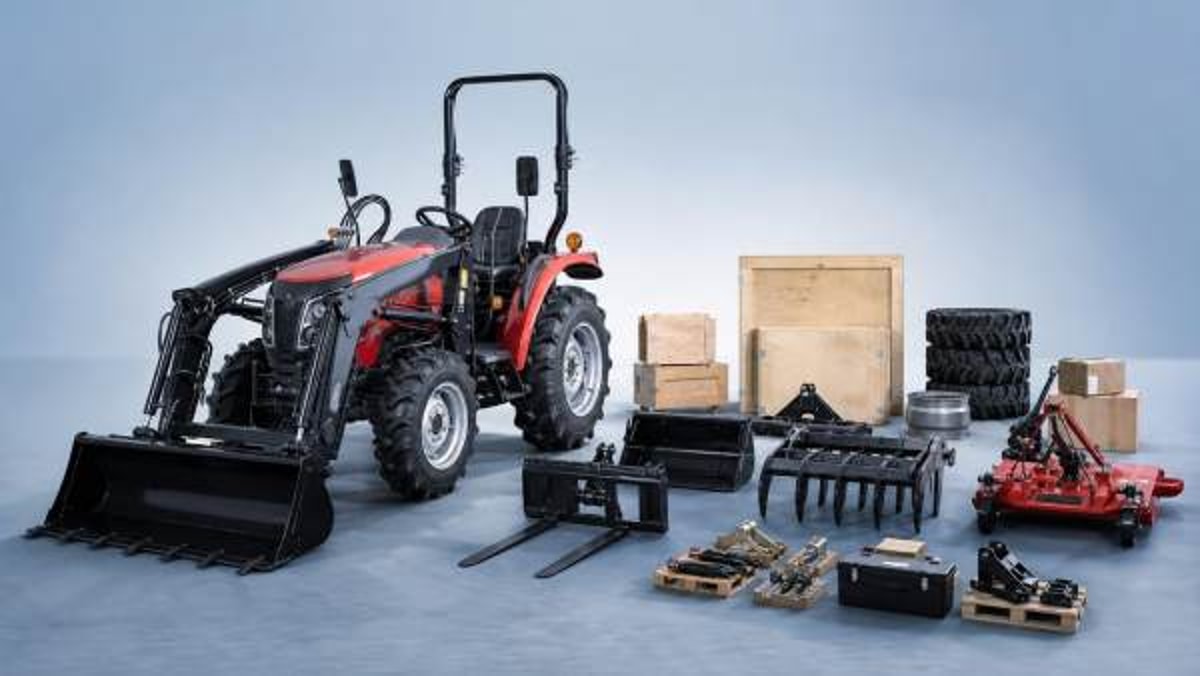
For dealers, distributors, and agents, evaluating compact utility tractors OEM programs is rarely straightforward. Differences in specifications, compliance standards, production capacity, private-label flexibility, and after-sales support can make side-by-side comparisons misleading. Understanding what truly separates compact utility tractors OEM options is essential for reducing procurement risk, protecting margins, and choosing partners that can support long-term market growth.
Why are compact utility tractors OEM programs so difficult to compare in the first place?
At first glance, many compact utility tractors OEM offers look nearly identical. Power ratings may sit in the same range, dimensions appear comparable, and brochures often highlight similar attachments, transmission options, and comfort features. However, dealers quickly discover that the visible specification sheet tells only part of the story. A compact utility tractors OEM program is not just a machine offer; it is a bundle of engineering choices, manufacturing discipline, documentation quality, supply reliability, branding flexibility, and long-term support commitments.
The difficulty increases because different OEMs emphasize different strengths. One manufacturer may offer aggressive pricing but weaker parts availability. Another may provide excellent regulatory documentation yet require large minimum order quantities. A third may allow private-label customization but have long lead times during seasonal demand spikes. For distributors and agents, these differences matter more than headline horsepower because they directly affect inventory turns, warranty cost, dealer reputation, and end-user satisfaction.
In other words, comparing compact utility tractors OEM programs is hard because buyers are not comparing tractors alone. They are comparing business systems. The winning partner is rarely the one with the cheapest base unit; it is the one whose capabilities fit the target market, compliance needs, service expectations, and sales model.
What should dealers compare beyond engine power and tractor size?
A serious compact utility tractors OEM assessment should move well beyond simple technical specs. Dealers and distributors should compare at least six operational areas: platform design consistency, component sourcing, certification readiness, attachment compatibility, assembly quality control, and service documentation. These factors determine whether the product will perform well in the field and remain commercially manageable after launch.
Platform design consistency matters because two tractors with the same engine output may differ significantly in frame durability, hydraulic responsiveness, loader integration, and ease of service. Component sourcing also matters because OEMs using reliable suppliers for transmissions, axles, seals, and electronics generally provide fewer claims and more stable spare parts support. Certification readiness can be decisive in export markets where emissions, safety, and labeling rules must be documented clearly.
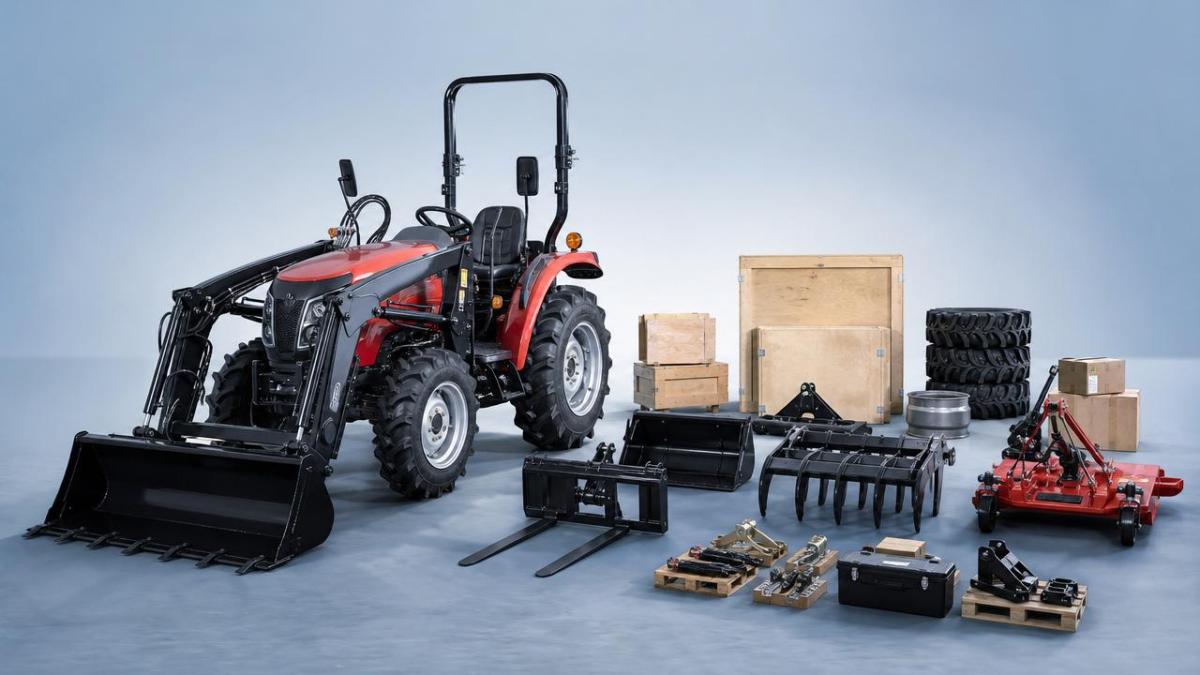
Attachment compatibility is another hidden differentiator. Compact utility tractors are often sold as versatile work platforms, not stand-alone units. If front loaders, mowers, tillers, backhoes, or cabs are poorly integrated, the dealer may face installation delays, customer complaints, or field failures. Finally, assembly quality control and service manuals affect whether technicians can diagnose and repair machines efficiently. A low initial purchase price can become expensive very quickly when every service issue requires factory clarification.
How do compliance standards and export requirements make one compact utility tractors OEM program very different from another?
Compliance is one of the biggest reasons compact utility tractors OEM programs are hard to compare fairly. Some manufacturers are technically capable of building good tractors but are weak in certification paperwork, test records, traceability, or market-specific adaptation. For a dealer or agent serving regulated markets, that gap can delay launch or create legal exposure.
Depending on the destination market, buyers may need evidence related to emissions standards, operator safety, rollover protection structures, lighting requirements, labeling rules, noise limits, and country-specific import approvals. An OEM that already exports to similar regions often has a major advantage because it understands not only the machine requirements but also the documentation process. That reduces time to market and lowers the risk of shipment holds.
For institutional buyers, this is especially important. If a compact utility tractors OEM partner cannot provide a clean compliance package, the burden shifts to the distributor. That means more engineering review, more legal checks, and more unexpected cost. A program that looks cheaper at quotation stage may be more expensive once local homologation work, relabeling, or corrective modifications are included.
Quick comparison checklist for OEM evaluation
Are production capacity and supply chain stability more important than price?
In many cases, yes. For distributors, an unreliable supply chain can erase any price advantage. Compact utility tractors often sell in seasonal cycles tied to planting, landscaping, grounds maintenance, municipal budgeting, or rural property purchasing patterns. If a compact utility tractors OEM cannot ship consistently during demand peaks, the dealer may lose customers permanently to competing brands.
Production capacity should be assessed in practical terms, not just annual volume claims. Buyers should ask how many units can be allocated monthly, whether key components come from single-source suppliers, how the factory handles rush orders, and what happens when ports, steel inputs, or engines face disruption. A manufacturer with moderate pricing and predictable allocation can be a better partner than a low-cost source that constantly revises delivery schedules.
Dealers should also study packaging quality, shipping damage rates, and spare-parts logistics. These details may seem secondary during negotiations, but they directly affect landed cost and customer satisfaction. A compact utility tractors OEM program that arrives with missing hardware, poorly translated manuals, or incomplete kits creates hidden labor cost in the distributor’s warehouse and workshop.
How much does private-label flexibility really matter for agents and distributors?
Private-label flexibility can be a major competitive advantage, but only if it is backed by process discipline. Many agents enter a compact utility tractors OEM relationship expecting logo changes, custom colors, branded operator manuals, and market-specific accessory bundles. In reality, OEM capabilities vary widely. Some offer only basic decal replacement, while others can support structured private-label programs with packaging changes, specification tailoring, and even exclusive model configurations.
The key question is not whether customization is available, but whether it can be delivered consistently without harming quality or lead time. A mature compact utility tractors OEM partner should have clear approval procedures for branding assets, bill-of-material changes, carton labeling, and serial number traceability. Without that discipline, private-label projects may create confusion in spare-parts ordering, warranty identification, and compliance records.
For distributors building long-term channel value, branding control also affects margin strategy. When the product identity is distinct and documentation is aligned, the distributor is less vulnerable to direct price comparison with generic imports. That said, private-label success still depends on service capability. Branding alone does not create loyalty if field support is weak.
What are the most common mistakes buyers make when comparing compact utility tractors OEM options?
One frequent mistake is treating all 25 to 60 horsepower platforms as interchangeable. This overlooks important differences in hydraulic flow, transmission durability, rear lift performance, operator ergonomics, and attachment integration. End users may notice these differences immediately, especially in loader work, mowing, orchard use, or municipal maintenance applications.
Another mistake is relying too heavily on sample quality without reviewing process consistency. A polished demonstration unit does not guarantee stable production quality across larger orders. Dealers should ask for quality control procedures, incoming component inspection methods, end-of-line testing practices, and claim-rate data if available. A compact utility tractors OEM relationship becomes risky when the evaluation stops at a single showroom sample.
Buyers also underestimate the importance of after-sales structure. Warranty terms may look acceptable on paper, but the real issue is response speed, technical escalation, and parts fill rate. If the OEM disputes common failures or requires excessive approval steps, the dealer absorbs the customer frustration. Finally, some distributors focus only on unit price and ignore total program economics, including spare-parts stocking, technician training, assembly labor, promotional materials, and market launch timing.
Common warning signs during OEM screening
- Vague answers on emissions or safety certification for target markets
- No clear parts stocking policy for fast-moving service items
- Customization promises without written process control
- Large pricing gaps unsupported by manufacturing explanation
- Inconsistent documentation across quotations, manuals, and labels
What questions should be asked before selecting a compact utility tractors OEM partner?
Before moving from supplier review to commercial commitment, dealers, distributors, and agents should ask a more strategic set of questions. First, what end-user segment is the platform truly built for: hobby farms, professional landscaping, municipalities, orchard work, light construction, or mixed-duty agricultural use? A compact utility tractors OEM may be strong in one segment and weak in another, even if the basic machine category looks the same.
Second, what level of exclusivity, branding control, and channel protection is realistically available? Third, what are the exact service obligations on both sides, including pre-delivery inspection, field failures, labor reimbursement, and training support? Fourth, how transparent is the OEM about production planning, engineering changes, and component substitutions? Fifth, what spare-parts investment is required to maintain acceptable uptime in the target market?
These questions help shift the decision from product comparison to partner evaluation. That is the real challenge in compact utility tractors OEM procurement. The objective is not to find the most attractive catalog. It is to identify a manufacturer whose operational behavior, compliance readiness, and support model align with the distributor’s growth plan.
So how should a dealer or distributor make a final decision?
A practical decision framework starts with market fit, then moves to risk control, and only after that to price. If the compact utility tractors OEM program does not match the intended customer profile, no amount of discounting will fix slow sell-through or high warranty cost. Once market fit is confirmed, buyers should score each OEM on compliance, production stability, customization discipline, service support, and parts logistics. This creates a more realistic comparison than unit price alone.
For many distributors, the strongest compact utility tractors OEM partner is the one that can support repeatable business, not just a first shipment. A dependable supply schedule, complete documentation, consistent build quality, and responsive technical backing usually generate better margins over time than an apparently cheaper offer with weak operational support. That is especially true in markets where dealer reputation and machine uptime influence repeat purchases.
If you need to confirm a specific compact utility tractors OEM program, the best next step is to discuss a focused set of issues: target market compliance, monthly supply capacity, private-label scope, recommended spare-parts package, warranty workflow, training resources, and attachment compatibility. Clarifying those points early makes quotations more comparable, reveals hidden risk, and helps dealers, distributors, and agents choose an OEM relationship that can scale with confidence.
Related Intelligence
- Heavy Agri MachineryPrecision farming systems: where farms see gains firstPrecision farming systems deliver early gains through tighter input control, better field visibility, and faster decisions. See which farm scenarios create the quickest ROI first.
- Heavy Agri MachineryHeavy duty tractors wholesale: which warranty terms deserve a closer lookHeavy duty tractors wholesale buyers should review warranty terms closely. Compare powertrain coverage, exclusions, response times, and cross-border support to reduce risk and protect uptime.
- Heavy Agri MachineryCorn picker machines bulk orders: what changes after harvest seasonCorn picker machines bulk orders change fast after harvest—compare pricing, lead times, customization, and regional demand to secure smarter deals and stronger margins.
The Morning Broadsheet
Daily chemical briefings, market shifts, and peer-reviewed summaries delivered to your terminal.
