

The Authority in Global Agricultural Chemistry & Bio-Resources
4WD agricultural tractors: when extra power becomes extra cost
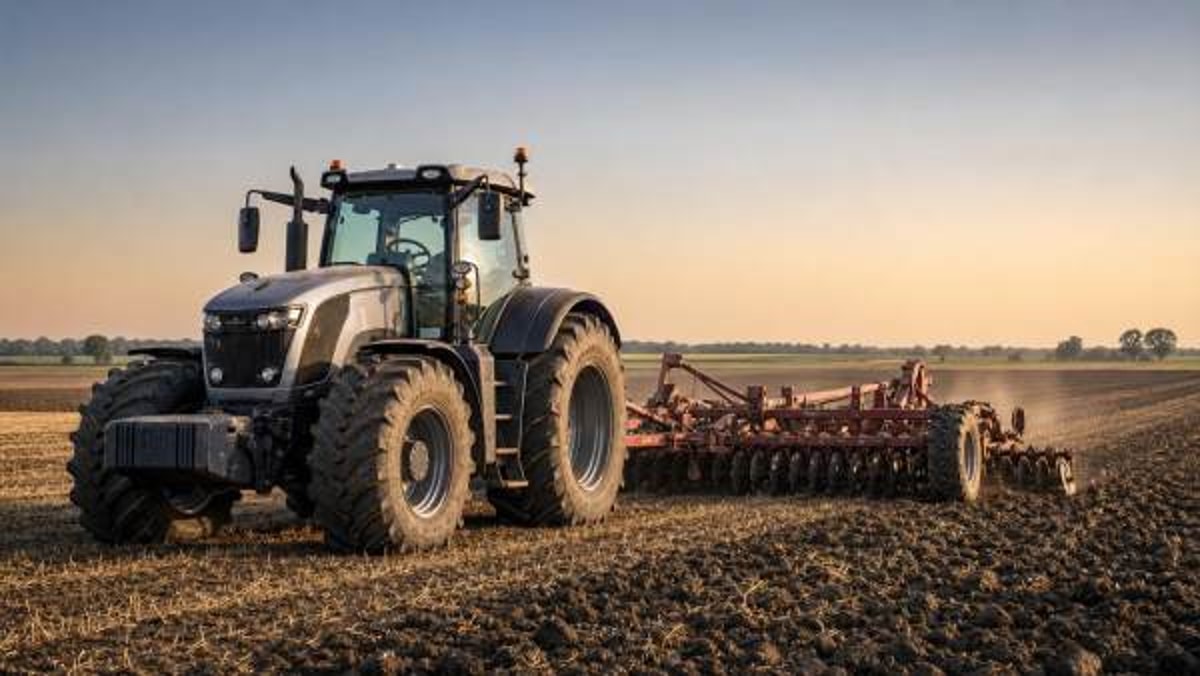
For financial decision-makers, 4WD agricultural tractors can look like a straightforward productivity upgrade, but the real question is whether added traction delivers measurable return or simply inflates total ownership cost. In capital-intensive farming operations, understanding when extra power supports field efficiency, fuel performance, and long-term asset value is essential before approving the investment.
What 4WD agricultural tractors actually represent
In practical terms, 4WD agricultural tractors are machines that deliver engine power to all four wheels instead of relying mainly on rear-wheel traction. That sounds like a technical detail, yet for finance teams it changes the economics of field operations. More traction can mean stronger pull, lower slippage, more stable draft performance, and better ability to work in wet, uneven, or heavy-soil conditions. It can also mean a higher purchase price, more complex driveline components, and potentially higher maintenance exposure over the machine’s life.
That dual nature is why the subject matters. In many operations, the discussion around 4wd agricultural tractors is often framed as a power upgrade. In reality, it is better understood as a capacity and utilization decision. The financial value of 4WD does not come from the badge alone. It comes from whether the machine reduces bottlenecks in tillage, planting, hauling, spraying support, or seasonal turnaround, and whether those gains outweigh extra acquisition and operating cost.
For large growers, mixed-farm operators, forestry-linked agricultural businesses, and contract field service providers, this distinction is especially important. A machine with excess capability can become an underutilized fixed asset. A machine with insufficient traction can create hidden losses through delayed field entry, poor implement matching, and inefficient fuel use under load.
Why the industry keeps revisiting the 4WD question
Across primary industries, machinery investment is under pressure from three directions: tighter input margins, more volatile weather windows, and stronger expectations around operational efficiency. In that context, 4WD agricultural tractors draw attention because they promise resilience. If the workable field window is shorter due to rainfall or labor constraints, the ability to enter fields earlier, pull wider implements, and maintain steadier performance becomes economically meaningful.
At the same time, the market for agricultural and forestry machinery has become more data-driven. Procurement leaders and financial approvers are no longer evaluating tractors only on horsepower or dealer familiarity. They are reviewing cost-per-hectare, expected utilization, repair intervals, residual value, financing structure, telematics compatibility, and operator productivity. That broader lens explains why 4wd agricultural tractors can appear attractive in one operation and excessive in another.
For readers of specialist industrial journals such as AgriChem Chronicle, the deeper issue is strategic capital discipline. Equipment decisions now sit within supply chain risk, compliance planning, and multi-year operational budgeting. A tractor is not merely a machine purchase; it is a platform decision that affects labor scheduling, implement fleet matching, fuel demand, service planning, and asset depreciation.
A finance-first framework for evaluating value
The most useful way to evaluate 4WD is not to ask whether it is better, but whether it is better for a defined workload. Financial decision-makers should start with five measurable variables: annual operating hours, soil and terrain difficulty, implement size, seasonal time pressure, and revenue sensitivity to delays. When those factors are high, 4WD often supports a real return. When they are low, the additional cost may be difficult to justify.
This framework helps separate operational need from aspirational buying. Many cost overruns arise not from poor equipment quality, but from weak alignment between asset capability and actual field demand.
Where 4WD agricultural tractors create measurable business value
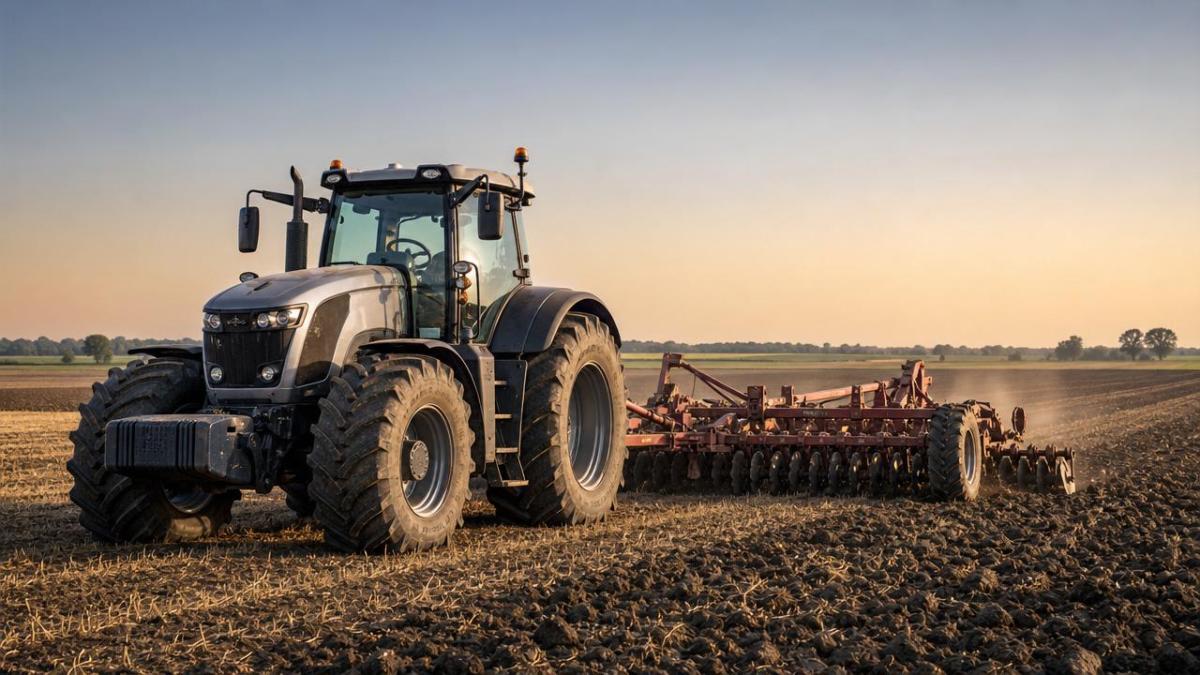
The clearest business case for 4wd agricultural tractors appears in high-load, time-sensitive applications. In these settings, improved traction is not just about pulling power; it can reduce wheel slip, preserve working speed, and improve the productive output of both operator and implement. Over a season, those small gains can translate into fewer machine hours, lower labor pressure, and less risk of delayed operations.
Fuel performance is another area where financial teams should look carefully. A 4WD machine may consume more fuel in absolute terms than a lighter alternative, yet it can be more fuel-efficient per hectare or per ton moved when working under heavy draft. The right question is not liters per hour alone, but useful work completed per hour and per unit of fuel. If the machine cuts slippage and sustains load more effectively, the cost profile may be stronger than it first appears.
There is also asset longevity to consider. Tractors that are properly matched to workload often experience more stable operating conditions than units that are constantly stretched at the edge of capability. Excessive slippage, overballasting, and repeated high-strain operation on under-specified equipment can create maintenance consequences elsewhere in the fleet. In that sense, some 4wd agricultural tractors are not simply more expensive assets; they can be better load-management tools when the duty cycle justifies them.
Typical operating scenarios and their decision profile
Not every agricultural business experiences the value of 4WD in the same way. The strongest decisions usually emerge from understanding the operating profile rather than focusing on brand or headline specifications.
For financial approvers, this classification is useful because it connects machine capability to business model. A broadacre enterprise may monetize time and traction directly. A lower-intensity operation may struggle to convert those advantages into enough additional output or savings.
The hidden costs behind “extra power”
The case against unnecessary 4WD investment is not theoretical. Higher purchase cost is only the first layer. Depending on model, 4wd agricultural tractors may bring added driveline complexity, tire replacement expense, service specialization, and insurance implications. If financing is used, the opportunity cost of capital also matters. Funds committed to an oversized tractor are funds not available for irrigation upgrades, precision application systems, storage improvements, or working capital resilience.
There is also a utilization trap. If a machine is acquired for peak-season confidence but sits underused for much of the year, effective cost per operating hour rises quickly. This is especially relevant in businesses that could instead outsource selected heavy operations, share equipment across entities, or rent seasonally. In such cases, ownership may satisfy operational preference while weakening capital efficiency.
Another risk is false economy in implement matching. Some buyers approve 4WD without reviewing whether the broader fleet can fully exploit the tractor’s capability. If the existing implements are too small or too light to make use of improved traction, the operation carries the cost of a premium powertrain without gaining corresponding productivity.
Practical due diligence before approval
A disciplined approval process should combine agronomic reality with financial analysis. First, establish the machine’s expected annual task mix by percentage: tillage, seeding support, transport, loader use, land preparation, and seasonal standby. Second, model cost per hour and cost per hectare under realistic field conditions rather than brochure assumptions. Third, test the sensitivity of the investment to weather delays, fuel prices, labor availability, and resale assumptions.
It is equally important to ask whether 4WD solves a primary constraint or merely improves comfort. If the main operational bottleneck is labor skill, implement maintenance, road logistics, or weak agronomic planning, then buying more capable machinery may not correct the root problem. Capital should target the limiting factor with the strongest expected return.
Financial teams should also request documented support on parts availability, dealer response times, warranty scope, telematics reporting, and likely residual market demand. In industrial procurement terms, these are trust variables. A technically sound tractor with poor support infrastructure can become a costly asset if downtime hits critical seasonal windows.
How to decide when 4WD is justified
A sound approval case for 4wd agricultural tractors usually includes several signals at once: regular heavy-draft work, frequent difficult soil conditions, measurable revenue impact from timing delays, high annual utilization, and a fleet strategy that supports resale and serviceability. If only one of those conditions is present, the case is weaker. If most are present, the premium often becomes defensible.
For finance leaders in primary industries, the goal is not to avoid advanced equipment. It is to ensure that extra power converts into extra productive output, lower seasonal risk, or stronger lifecycle economics. The best decisions come from matching traction capability to operating reality, not from treating 4WD as an automatic upgrade path.
In that sense, 4wd agricultural tractors become a strategic asset only when they improve throughput, protect timing, and sustain value over years of use. Where those conditions are absent, extra power can indeed become extra cost. Where they are present, the investment can support a more resilient and financially disciplined farm operation. For organizations evaluating machinery at institutional scale, a structured review grounded in workload, ownership cost, and downstream value remains the most reliable path to a confident decision.
Related Intelligence
- Heavy Agri MachineryPrecision farming systems: where farms see gains firstPrecision farming systems deliver early gains through tighter input control, better field visibility, and faster decisions. See which farm scenarios create the quickest ROI first.
- Heavy Agri MachineryHeavy duty tractors wholesale: which warranty terms deserve a closer lookHeavy duty tractors wholesale buyers should review warranty terms closely. Compare powertrain coverage, exclusions, response times, and cross-border support to reduce risk and protect uptime.
- Heavy Agri MachineryCorn picker machines bulk orders: what changes after harvest seasonCorn picker machines bulk orders change fast after harvest—compare pricing, lead times, customization, and regional demand to secure smarter deals and stronger margins.
The Morning Broadsheet
Daily chemical briefings, market shifts, and peer-reviewed summaries delivered to your terminal.
