

The Authority in Global Agricultural Chemistry & Bio-Resources
How to size a fruit washing and waxing machine correctly
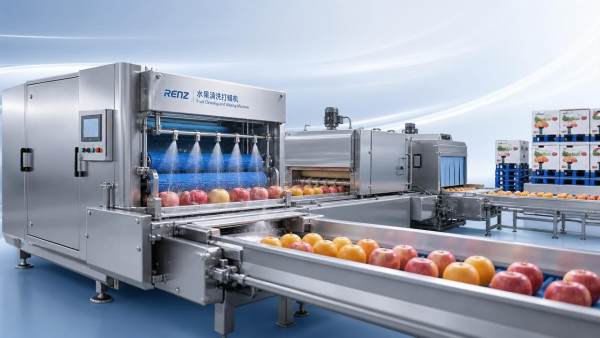
Choosing the right fruit washing and waxing machine is not just about matching capacity—it directly affects product quality, labor efficiency, compliance, and long-term operating costs. For procurement professionals evaluating equipment for commercial packing lines, accurate sizing requires a clear understanding of throughput, fruit type, processing goals, and plant layout. This guide explains the key factors that help buyers select a system that fits both current production needs and future growth.
For most buyers, the core question is simple: what machine size will reliably support daily production without creating bottlenecks, excessive downtime, or unnecessary capital cost? The best answer is rarely based on headline throughput alone. A properly sized system must match actual line conditions, including fruit variability, washing intensity, waxing requirements, operator availability, upstream grading speed, and downstream drying or packing capacity.
In practice, procurement teams care less about theoretical maximum output and more about usable output under real operating conditions. They also want to know whether a machine can handle seasonal peaks, whether it will protect fruit finish, and whether the supplier’s configuration claims reflect real plant performance. That is where sizing decisions become commercial decisions, not just technical ones.
Start with the real sizing objective: stable line performance, not the biggest machine
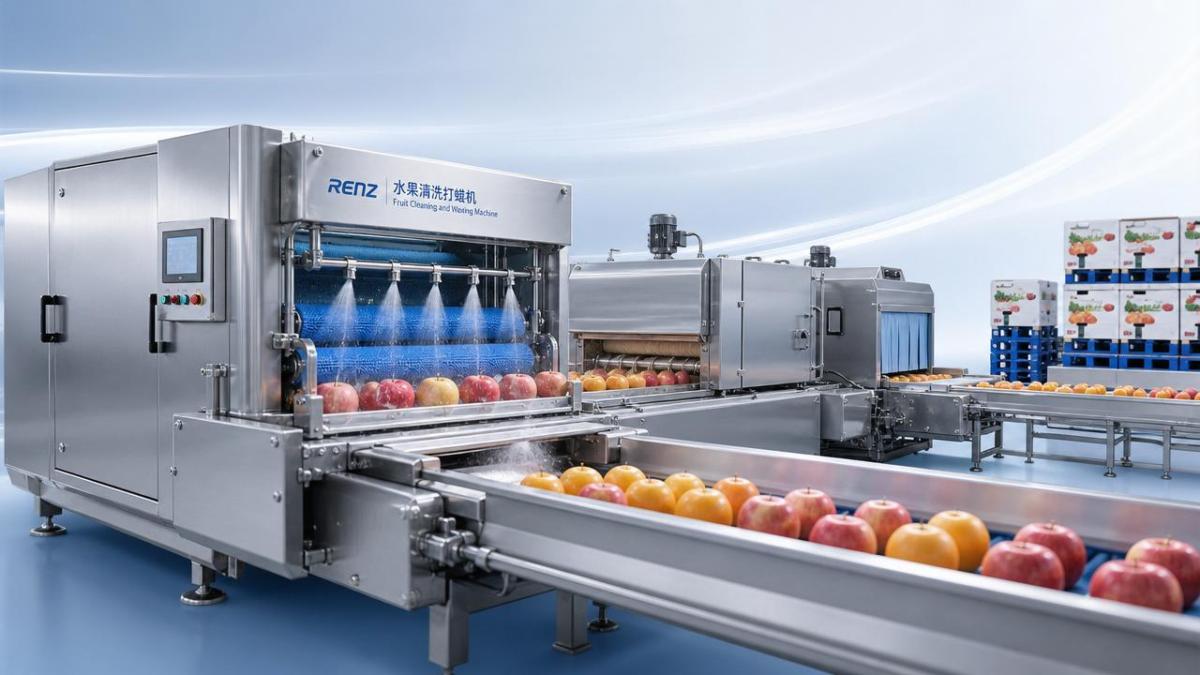
A common purchasing mistake is to size a fruit washing and waxing machine according to peak promotional specifications rather than actual packhouse requirements. Oversized machines can raise capital expenditure, increase water and chemical consumption, require more floor space, and complicate maintenance. Undersized machines, however, can be even more expensive if they slow the line, increase handling damage, or force overtime during harvest peaks.
The correct sizing objective is to achieve stable throughput at acceptable fruit quality and labor efficiency. For procurement professionals, this means assessing the machine as part of a system. Washing, waxing, drying, sorting, and packing are interdependent stages. If one section is oversized but the next stage cannot keep up, total line output will still be constrained.
As a rule, buyers should calculate required machine size around sustained hourly throughput, not short-duration peak throughput. A supplier may quote high hourly capacity based on ideal fruit flow, limited contamination, and minimal changeover. Your operating reality may include mixed fruit sizes, field dirt, delicate skins, sanitation pauses, and variable labor on the packing side. Those factors reduce effective throughput and must be built into the sizing decision.
Define throughput in operational terms before requesting quotations
Before comparing equipment, procurement teams should establish a clear throughput profile. Start with the average tons or cartons processed per hour, then identify peak harvest volume, operating shifts, and weekly processing windows. A line that handles 3 tons per hour over two shifts has very different sizing needs from a facility that must process 6 tons per hour within one shift because of labor constraints or cold-chain timing.
It is also important to distinguish between infeed capacity and saleable output. Some suppliers rate capacity by raw fruit entering the machine, while others describe packed fruit leaving the waxing and drying section. If dirt load is high or waxing requires slower handling, the difference can be significant. Buyers should ask for both figures and require clarification on the assumptions behind the rating.
A practical method is to calculate four numbers: average hourly throughput, peak hourly throughput, daily total volume, and required recovery time after stoppages. If a line loses 45 minutes per shift to sanitation or product changes, the machine must process more than the simple daily average to stay on schedule. This often changes the final machine width, brush count, tunnel length, or conveyor speed specification.
For procurement documentation, it is helpful to prepare a sizing brief that includes expected fruit type, average fruit size range, contamination level, target throughput, number of shifts, and seasonal peak profile. This reduces ambiguity in supplier proposals and makes bid comparison more meaningful.
Fruit type and surface sensitivity have a direct impact on machine size
Not all fruit behaves the same inside a washing and waxing line. Apples, citrus, mangoes, avocados, pears, and stone fruit each have different skin strength, wax adhesion characteristics, bruise sensitivity, and cleaning requirements. A machine sized correctly for robust citrus may be entirely unsuitable for softer fruit, even if the nominal throughput appears adequate.
Fruit size distribution is especially important. If the operation handles a narrow size range, fruit movement through brushes, rollers, and spray zones is more predictable. But if the plant receives highly variable fruit dimensions, capacity may need to be derated to avoid uneven cleaning, poor wax coverage, or product jams. Wide size variability often justifies a more flexible machine design rather than simply a larger one.
Surface condition matters as well. Fruit coming directly from orchards after wet weather may carry more soil, leaves, residue, or microbial load than fruit from cleaner supply conditions. Higher contamination generally requires more washing contact time, stronger spray arrangements, or additional stages. In that case, correct sizing may mean a longer processing path instead of a faster conveyor.
For delicate or premium fruit categories, buyers should prioritize gentle handling over aggressive throughput claims. A slightly lower rated capacity can produce better commercial results if it reduces skin damage, preserves bloom where relevant, or ensures consistent finish in export-grade packs.
Size the machine around the full process: washing, waxing, drying, and transfer
Many purchase decisions focus too narrowly on the washing section. In reality, a fruit washing and waxing machine should be sized as an integrated sequence. Washing may remove debris effectively, but if the waxing applicator is too narrow, or if the drying tunnel is too short for the line speed, the system will not deliver consistent results. The bottleneck simply moves downstream.
Waxing performance is particularly sensitive to sizing. Proper application depends on fruit presentation, coverage control, metering consistency, and sufficient post-application drying or curing time. If the conveyor speed is pushed beyond the optimal range just to meet throughput targets, wax distribution can become uneven, leading to poor appearance, customer complaints, or reduced shelf-life performance.
Drying capacity is another area where undersizing is common. In high-humidity environments or when heavy wax coating is required, dryers must remove residual moisture and help set the wax film before packing. If fruit exits the line too wet or tacky, cartons may become contaminated and the finished product may lose visual appeal. For this reason, buyers should always verify how quoted machine capacity changes with different wax loads and ambient conditions.
Transfer points also affect effective line size. If fruit accumulates between washers, waxers, and graders, it may indicate mismatched conveyor speeds or insufficient buffer design. A good supplier should evaluate machine sizing in relation to infeed singulation, inspection tables, grading systems, and final packing stations.
Build in realistic allowance for peak season and future expansion
Procurement teams often face pressure to buy only for current output. That approach can be risky in fresh produce operations, where crop fluctuations, contract wins, or export expansion can quickly change line requirements. A correctly sized machine should support not just today’s production, but also a realistic growth path over the next three to five years.
That does not automatically mean buying the largest system available. Instead, buyers should look for scalable sizing. This may include modular brush beds, adjustable conveyor speed, expandable drying sections, or control systems that support additional downstream equipment later. A machine with moderate installed capacity but strong upgrade potential can provide better return on investment than a fully oversized line with underutilized assets.
Peak-season planning should also consider maintenance resilience. If the machine will operate near full load during harvest, there must be enough design margin to absorb minor interruptions without collapsing the day’s packing schedule. Ask suppliers what percentage of rated capacity is considered optimal continuous operation and what derating is recommended for seasonal heavy dirt conditions.
Where future product diversification is likely, flexibility becomes part of sizing. A machine that can handle both citrus and apples, or both domestic and export finish requirements, may justify a different specification than a dedicated single-fruit line. Buyers should evaluate whether adjustable settings, quick cleaning access, and recipe-based controls will reduce future replacement cost.
Do not ignore utilities, labor, and plant layout constraints
Correct sizing is not only about fruit volume. It is also about whether the machine fits the facility operationally. Water supply, drainage, compressed air, power load, chemical dosing systems, and ventilation all influence what size of equipment a plant can support efficiently. A larger machine may appear attractive on paper but create hidden infrastructure costs that alter the procurement decision.
Floor space is a major constraint in many packing houses. Buyers should assess not only the machine footprint but also service clearance, operator access, sanitation zones, and product flow. If installation forces awkward turns, cross-traffic with forklifts, or inaccessible maintenance points, the practical capacity of the system may fall below expectations. Layout compatibility should therefore be part of machine sizing evaluation, not a later engineering detail.
Labor is another overlooked factor. A machine capable of very high throughput still requires matching staffing for inspection, reject handling, packing, and quality control. If labor availability is inconsistent, the correct machine size may be one that supports smoother, more automated flow rather than maximum nominal speed. In many cases, procurement value comes from reducing labor dependency per packed unit, not merely increasing line speed.
Cleaning and sanitation time should also be reviewed. If a larger and more complex machine takes significantly longer to wash down, the net production benefit may shrink. Buyers in regulated export environments or food safety-sensitive operations should compare not just productivity but cleanability and inspection access.
Key supplier questions that reveal whether capacity claims are credible
To size a fruit washing and waxing machine correctly, procurement professionals need more than brochures. They need evidence. The most useful supplier discussions focus on performance assumptions, fruit conditions, and operating references. Ask for throughput validation by fruit type, contamination level, and finish requirement, rather than accepting generic capacity labels.
Important questions include: What fruit and size range was used to determine rated output? Does the quoted figure assume continuous feed? What wash quality standard was achieved at that speed? How does waxing performance change when conveyor speed increases? What is the expected throughput loss during sanitation, maintenance, or product changeover? Can the supplier provide installations running similar profiles?
It is also wise to ask for utility consumption at different operating loads. Water use, wax consumption, energy draw, and brush wear can vary substantially between designs. For a procurement team, this data is essential for comparing total cost of ownership, especially when selecting between similar-capacity machines from different manufacturers.
Site references are highly valuable. A machine that performs well in a pilot test may behave differently in a high-volume commercial packhouse. Speaking with operators using the same or similar configuration can reveal whether the line consistently meets throughput, whether fruit quality is preserved, and how often maintenance interrupts production.
Use a practical sizing framework for procurement decisions
A useful procurement framework is to score each candidate machine against six criteria: sustained throughput, fruit compatibility, finish quality, utility efficiency, layout fit, and expansion potential. This approach helps teams avoid overemphasizing a single metric such as hourly capacity while overlooking operational risk.
For example, a smaller machine with better fruit handling and lower utility demand may outperform a larger machine in cost per packed unit. Conversely, a higher-capacity model may be justified if the business regularly faces concentrated harvest peaks and expensive overtime. The right choice depends on the economics of the operation, not on capacity alone.
When possible, request trial data or sample processing using your own fruit. This helps verify wash effectiveness, wax appearance, drying behavior, and bruise incidence under realistic conditions. It also enables more accurate line balancing with upstream dumping and downstream grading or packing sections.
Finally, convert technical sizing into business terms. Estimate how the selected machine will affect labor hours, packout consistency, reject rates, maintenance cost, and ability to meet shipment schedules. Procurement decisions are strongest when machine size is linked directly to operational outcomes and commercial performance.
Conclusion: the correct size is the one that fits your real production system
Choosing the right fruit washing and waxing machine is not about buying the fastest or largest model available. It is about selecting a system that delivers reliable throughput, protects fruit quality, fits plant constraints, and supports future growth without unnecessary operating cost. For procurement professionals, the best sizing decisions come from evaluating sustained output under real conditions, not brochure maximums.
If you define throughput clearly, account for fruit characteristics, assess the full wash-wax-dry sequence, and challenge supplier assumptions with practical questions, you will be in a far stronger position to select equipment that performs in the field. In commercial packing operations, correct sizing is ultimately a risk-management decision—one that affects product quality, labor efficiency, compliance, and long-term return on investment.
Related Intelligence
- Heavy Agri MachineryHow to shortlist Agri & Forestry machinery manufacturersAgri & Forestry machinery manufacturers: learn how to shortlist reliable suppliers by comparing capability, compliance, service, and delivery strength for smarter, lower-risk sourcing.
- Heavy Agri MachineryWhy onion grading machine accuracy changes during peak seasonOnion grading machine accuracy can shift during peak season due to higher throughput, dust, crop variability, and sensor drift. Learn the causes and smart fixes to protect quality.
- Heavy Agri MachineryHow to read Agri & Forestry machinery specifications betterAgri & Forestry machinery specifications explained clearly: learn how to compare power, hydraulics, weight, safety, and compliance to choose equipment smarter and avoid costly mistakes.
The Morning Broadsheet
Daily chemical briefings, market shifts, and peer-reviewed summaries delivered to your terminal.
