

The Authority in Global Agricultural Chemistry & Bio-Resources
Agri & Forestry Machinery Manufacturers: What Signals Long Term Support?
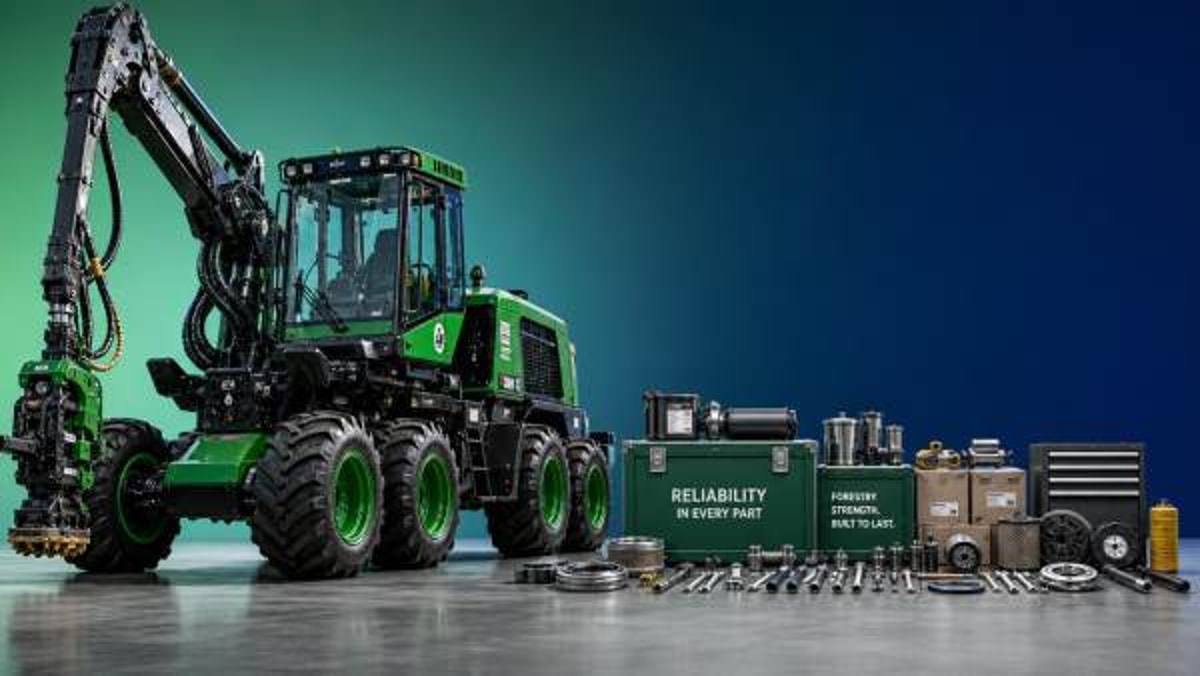
Choosing among Agri & Forestry machinery manufacturers is no longer just about equipment performance or price. For enterprise buyers, the real differentiator is long term support: parts availability, technical service, compliance readiness, and supply chain resilience. This article examines the key signals that reveal whether a manufacturer can remain a dependable partner through market shifts, regulatory pressure, and demanding field operations.
Why are long term support signals now a top priority when evaluating Agri & Forestry machinery manufacturers?
For enterprise buyers, machinery is rarely a one-time purchase. A harvester, forwarder, wood chipper, sprayer, baler, or site-prep machine becomes part of a larger operating system that includes labor planning, maintenance cycles, safety management, seasonal productivity targets, and financing assumptions. That is why long term support matters as much as engine power, precision controls, or purchase price.
The strongest Agri & Forestry machinery manufacturers understand that uptime drives total value. If a supplier cannot provide replacement parts within predictable lead times, offer trained field technicians, maintain software support, or issue documentation required for inspections and audits, the buyer’s risk rises quickly. In agriculture, missed days can affect yield windows. In forestry, machine stoppages can disrupt contractor schedules, haulage coordination, and safety compliance.
This is also why procurement teams increasingly assess manufacturers beyond brochures and demos. They want evidence of aftermarket depth, distributor quality, digital diagnostics capability, and resilience under disruption. In other words, the market is moving from “Who makes a good machine?” to “Who can support the machine for years across different operating conditions and business cycles?”
What specific signals show that Agri & Forestry machinery manufacturers can deliver reliable long term support?
Several signals tend to separate stable partners from short-cycle vendors. The first is parts continuity. Serious Agri & Forestry machinery manufacturers publish spare parts policies, maintain regional inventory, and can explain support timelines for both current and legacy models. They do not treat parts as a side business. They treat them as a core service commitment.
The second signal is service infrastructure. This includes factory-trained technicians, service manuals, remote troubleshooting tools, escalation paths for complex failures, and the ability to support fleets in multiple territories. Buyers should ask how service response differs for critical season breakdowns compared with standard maintenance calls.
The third signal is engineering continuity. Some manufacturers refresh products quickly but fail to support earlier generations properly. Others maintain modular platforms, stable component families, and documented upgrade paths. This matters because standardization reduces downtime, training complexity, and stocking burden for owner-operators or multi-site enterprises.
The fourth signal is transparency in compliance and documentation. Enterprise buyers often need machine certifications, operator safety files, emissions data, maintenance records, and traceable component information. Manufacturers that can provide these documents consistently are usually better prepared to support customers over the equipment lifecycle.
The fifth signal is financial and operational durability. A supplier may offer an attractive machine today, but if the business lacks manufacturing stability, supplier diversity, or regional service partnerships, support quality can deteriorate under stress. A dependable partner usually shows evidence of investment in production systems, technical training, and channel management rather than relying only on price competition.
How can enterprise buyers verify support claims instead of relying on sales language?
The most effective approach is to turn broad promises into measurable procurement questions. Ask for documented average parts lead times, target service response windows, warranty claim handling procedures, and inventory stocking locations. If Agri & Forestry machinery manufacturers cannot provide structured answers, support may be inconsistent in practice.
Reference checks are equally valuable. Speak with customers operating similar machine classes in similar climates, terrain, and workload patterns. A row-crop operator’s experience may not reflect the reality of a forestry contractor running heavy-duty machines in remote areas. Good reference questions include how often parts are backordered, whether service technicians resolve faults on the first visit, and how the manufacturer performs during peak season demand.
Buyers should also request evidence of support readiness before contract award. Examples include sample parts catalogs, telematics dashboards, training plans for operators and maintenance teams, and escalation contacts. When evaluating Agri & Forestry machinery manufacturers, the quality of these operational tools often reveals more than marketing materials do.
Another practical step is to compare total support architecture, not just product features. A machine with slightly lower output may still generate better long term value if its supplier offers stronger uptime guarantees, better component availability, and deeper regional coverage. For institutional buyers, this comparison is usually more meaningful than headline specifications alone.
Which support factors matter most for different application scenarios?
Support priorities vary by use case. Agricultural operations with narrow planting or harvesting windows often value rapid parts fulfillment and remote diagnostics above almost everything else. Forestry operators working in distant environments may prioritize rugged service logistics, technician mobility, and field repair capability. Buyers of sprayers or precision equipment may place more weight on software calibration, sensor support, and operator training.
For multi-country enterprises, distributor consistency becomes critical. Not all Agri & Forestry machinery manufacturers manage channel partners equally well. A strong brand in one region may have weak technical support in another. This is why procurement teams should map support quality by country, not assume uniform standards across the network.
Large fleet owners should also assess support from a systems perspective. Can the manufacturer provide centralized reporting, planned maintenance scheduling, training refreshers, and coordinated parts planning across sites? These features reduce operational friction and improve lifecycle control. Smaller operators, by contrast, may care more about accessible local service and practical maintenance simplicity.
Quick evaluation table: what should buyers ask first?
What are the most common mistakes buyers make when comparing Agri & Forestry machinery manufacturers?
One common mistake is overemphasizing acquisition price. Lower upfront cost can be attractive, but if it comes with weak technical backup, inconsistent spare parts supply, or poorly trained dealers, the total cost of ownership can quickly exceed that of a more expensive but better-supported alternative.
Another mistake is assuming brand size automatically guarantees support quality. Some large manufacturers have excellent core products but uneven distributor execution across regions. Conversely, some specialized Agri & Forestry machinery manufacturers may offer stronger service discipline in niche segments because they understand the workload and customer profile in more detail.
A third mistake is ignoring digital support capability. Increasingly, machine uptime depends on software updates, sensor integration, fault code analysis, and telematics-based maintenance planning. If the manufacturer cannot explain how digital support is delivered over time, the buyer may face service gaps even when hardware quality is acceptable.
Buyers also sometimes fail to review end-of-life support. A machine can perform well for years, but once a model is replaced, parts and software support may weaken. Responsible Agri & Forestry machinery manufacturers define support duration, compatible substitutions, and transition paths in advance. That clarity protects long term fleet planning.
How do compliance, supply chain resilience, and documentation affect long term support?
Support is not only mechanical. It is also regulatory and administrative. Enterprise procurement teams increasingly need machinery partners that can maintain documentation quality across safety, emissions, operator instructions, maintenance records, and component traceability. This matters for internal governance, insurance review, tender compliance, and cross-border deployment.
Supply chain resilience is equally important. The best Agri & Forestry machinery manufacturers do not rely excessively on a narrow set of vulnerable suppliers for critical components. They build redundancy where possible, communicate openly about lead-time risks, and help customers plan for high-failure or high-wear items. During disruption, transparency often matters as much as speed.
Documentation discipline is a particularly strong trust signal. Manufacturers that maintain clear manuals, revision control, service bulletins, parts references, and compliance files are usually better organized operationally. That organizational maturity tends to support stronger aftermarket execution, faster troubleshooting, and lower ownership friction across the full machine lifecycle.
Before selecting a supplier, what final questions should enterprise buyers ask?
Before signing, buyers should convert support expectations into commercial terms. Ask Agri & Forestry machinery manufacturers which parts are stocked locally, what service levels are contractually supported, how training is delivered, how warranty escalation works, and what happens if a dealer changes ownership or exits the market. These are not minor details. They shape operational continuity.
It is also wise to ask for a five-year support view rather than a delivery view. What upgrades are likely? Which consumables and wear components should be forecasted? What telematics or software subscriptions are required? Which compliance documents will be updated over time? These questions move procurement from short-term purchasing into lifecycle management.
For decision-makers comparing Agri & Forestry machinery manufacturers, the strongest choice is usually the one that combines technical fit with predictable support depth. If you need to confirm a specific sourcing direction, service model, implementation timeline, budget logic, or cooperation framework, start by clarifying parts policy, regional service accountability, documentation scope, digital support capability, and model lifecycle commitment. Those questions will reveal whether the manufacturer is simply selling equipment or building a long-term operating partnership.
Related Intelligence
- Heavy Agri MachineryAgri & Forestry Machinery Manufacturers: What Signals Long Term Support?Agri & Forestry machinery manufacturers: learn the signals of long-term support, from parts and service to compliance and supply resilience, so you can choose a dependable supplier with confidence.
- Heavy Agri MachineryAgri & Forestry Machinery Specifications That Affect Field OutputAgri & Forestry machinery specifications directly shape field output, uptime, and cost. Discover the key specs that improve performance, reduce downtime, and support smarter equipment decisions.
- Heavy Agri MachineryASEAN Launches e-CO for Agricultural Machinery Importse-CO for agricultural machinery is live across ASEAN—boost clearance speed by 3–5 days. Chinese exporters, certifiers & logistics firms must act before May 2026.
The Morning Broadsheet
Daily chemical briefings, market shifts, and peer-reviewed summaries delivered to your terminal.
