

The Authority in Global Agricultural Chemistry & Bio-Resources
ASEAN Launches e-CO for Agricultural Machinery Imports
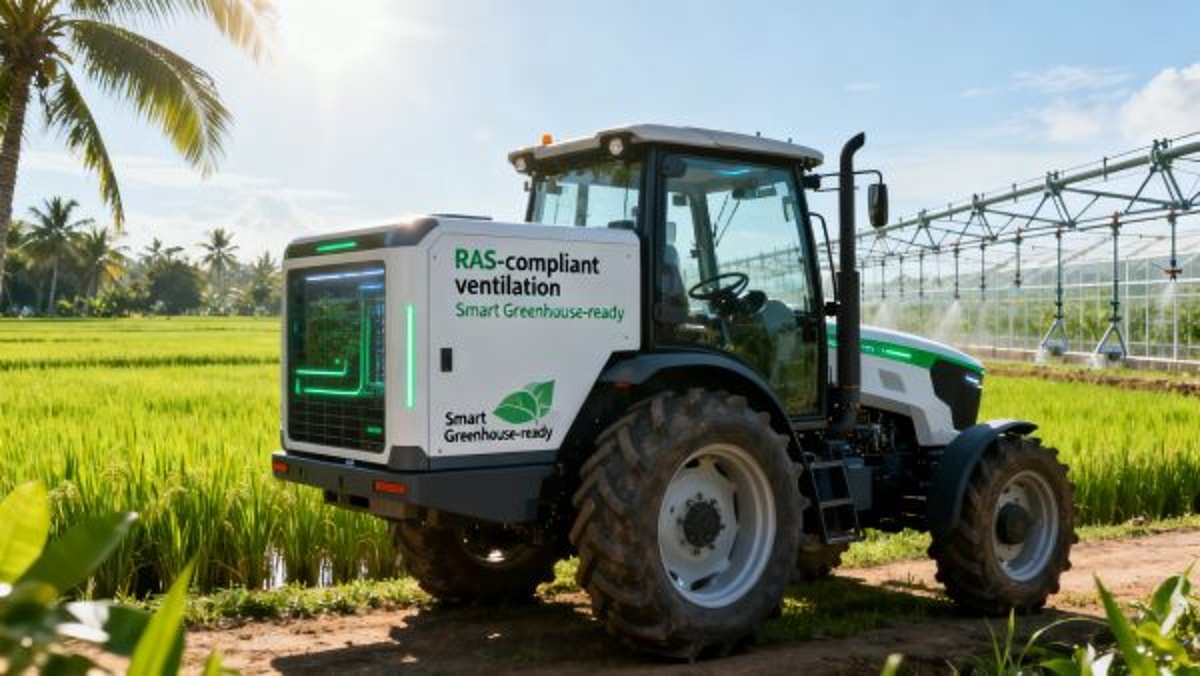
Starting May 1, 2026, Indonesia, Vietnam, Thailand, the Philippines, and Malaysia jointly implemented an electronic Certificate of Origin (e-CO) system specifically for agricultural machinery imports — replacing paper-based COs. This change directly affects Chinese exporters of tractors, harvesters, irrigation systems, and related equipment, as well as supporting logistics, certification, and compliance service providers. It signals a structural shift in ASEAN customs digitalization with measurable impact on clearance speed and documentation reliability.
Event Overview
Effective May 1, 2026, the five ASEAN member states — Indonesia, Vietnam, Thailand, the Philippines, and Malaysia — launched a unified electronic Certificate of Origin (e-CO) system for agricultural machinery imports. The system replaces physical CO documents entirely. Chinese exporters must submit applications via China’s International Trade Single Window, which interfaces with the ASEAN e-CO platform. The system automatically validates consistency among HS codes, commercial invoices, and packing lists. Pilot data indicates average port clearance time in Southeast Asia has shortened by 3–5 working days, and document rejection rates have dropped by 62%. To qualify for the expedited clearance channel, export documentation must explicitly include technical identifiers such as ‘RAS-compliant ventilation’ or ‘Smart Greenhouse-ready’.
Which Subsectors Are Affected
Direct Exporters of Agricultural Machinery
These companies face immediate operational adjustments: manual CO preparation is no longer accepted, and integration with China’s Single Window becomes mandatory. Impact manifests in updated internal workflows, staff training on e-CO submission protocols, and stricter pre-submission checks for technical labeling alignment with ASEAN requirements.
Manufacturers Producing ASEAN-Targeted Equipment
Manufacturers supplying OEM or branded agricultural machinery destined for ASEAN markets must ensure product specifications and factory documentation reflect required technical identifiers (e.g., ‘RAS-compliant ventilation’) before shipment. Failure to embed these labels in product literature, user manuals, or bill-of-materials records may block e-CO issuance or trigger manual review — negating the 3–5-day clearance benefit.
Export Documentation & Certification Service Providers
Firms offering CO processing, customs brokerage, or trade compliance support must upgrade their digital infrastructure to support real-time validation against ASEAN e-CO field rules. Their service scope now includes verifying label terminology consistency across invoices, packing lists, and technical annexes — not just origin criteria.
Supply Chain & Logistics Operators
Freight forwarders and integrated logistics providers handling agricultural machinery shipments to ASEAN need revised SOPs for document handover timelines. Since e-CO issuance is now tied to invoice/packing list validation, delays in receiving final commercial documents from exporters directly delay e-CO generation — affecting vessel cutoff and port release scheduling.
What Relevant Companies or Practitioners Should Focus On
Confirm technical labeling alignment before production planning
Exporters and manufacturers should audit current product naming conventions, spec sheets, and packaging drafts to verify whether terms like ‘RAS-compliant ventilation’ or ‘Smart Greenhouse-ready’ are already embedded — or whether minor but necessary wording updates are needed ahead of May 2026. These are not optional marketing phrases; they are functional triggers for the e-CO fast lane.
Test integration with China’s Single Window for e-CO submission
Companies should complete at least one end-to-end test submission using dummy data via China’s International Trade Single Window before Q1 2026. This confirms successful handshake with the ASEAN e-CO platform and identifies potential mismatches in HS code mapping or document formatting early.
Review contract terms with ASEAN importers on labeling responsibility
Since the e-CO fast lane depends on precise technical phrasing in export documents, contracts should clarify whether labeling specifications originate from the importer (e.g., based on local regulatory interpretation) or are defined unilaterally by the exporter. Ambiguity here may lead to last-minute rework or clearance delays.
Monitor ASEAN national implementation footnotes
Although the system is regionally coordinated, each country may issue supplementary guidance — for example, on acceptable synonyms for ‘Smart Greenhouse-ready’, or transitional allowances for legacy stock. Track official notices from national customs authorities (e.g., Indonesia’s DJBC, Vietnam’s General Department of Vietnam Customs) separately, not just ASEAN-level announcements.
Editorial Perspective / Industry Observation
Observably, this initiative reflects ASEAN’s broader push toward interoperable digital trade infrastructure — but it is not yet a fully harmonized regime. The requirement for specific technical terminology suggests a dual function: streamlining clearance *and* nudging product standardization toward climate-resilient or automation-integrated agriculture. Analysis shows the 3–5-day clearance gain is real and quantifiable in pilot ports, yet its scalability depends on consistent upstream data quality from Chinese exporters. From an industry standpoint, this is less a one-time compliance update and more an early indicator of how future ASEAN digital trade rules may embed technical performance expectations directly into customs processes — turning documentation into a de facto product compliance checkpoint.
Conclusion
This e-CO rollout for agricultural machinery is a concrete step in ASEAN’s customs modernization — delivering verified efficiency gains while introducing new documentation discipline requirements. It is best understood not as a standalone policy change, but as a precedent: one that links origin certification more tightly to product functionality and sustainability attributes. For stakeholders, readiness means aligning technical communication, digital submission capacity, and cross-border contractual clarity — all before May 2026.
Source Attribution
Main source: Official joint announcement issued by the ASEAN Secretariat and the Ministry of Commerce of the People’s Republic of China, dated April 2026. Additional details drawn from pilot performance reports published by the Port of Laem Chabang (Thailand) and Tanjung Priok (Indonesia). Note: National-level implementation guidelines from individual ASEAN members remain pending publication and are subject to ongoing observation.
Related Intelligence
- Heavy Agri MachineryASEAN Launches e-CO for Agricultural Machinery Importse-CO for agricultural machinery is live across ASEAN—boost clearance speed by 3–5 days. Chinese exporters, certifiers & logistics firms must act before May 2026.
- Heavy Agri MachineryAgri and Forestry machinery manufacturers: what after-sales terms revealAgri & Forestry machinery manufacturers reveal their true value in after-sales terms. Discover how warranties, parts support, and service response expose supplier reliability.
- Heavy Agri MachineryAgri and Forestry machinery specifications that affect field efficiencyAgri & Forestry machinery specifications shape fuel use, traction, hydraulics, and uptime. Learn which specs improve field efficiency and support smarter equipment decisions.
The Morning Broadsheet
Daily chemical briefings, market shifts, and peer-reviewed summaries delivered to your terminal.
