

The Authority in Global Agricultural Chemistry & Bio-Resources
Agri and Forestry machinery specifications that affect field efficiency
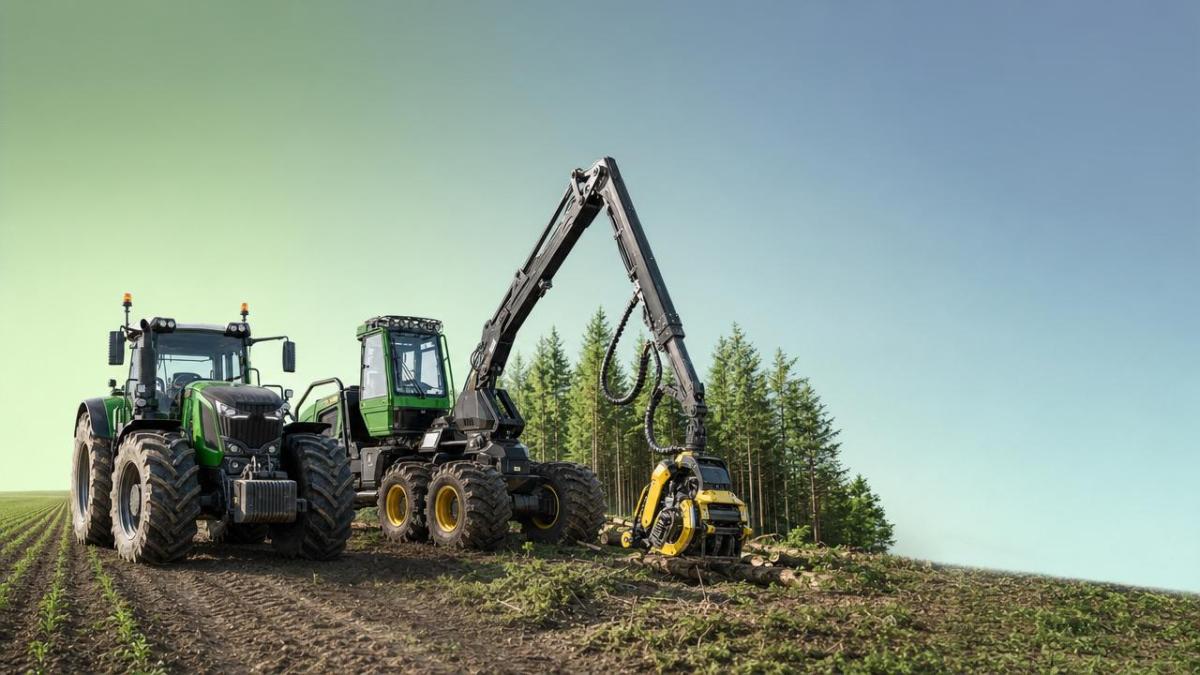
Field efficiency depends on more than operator skill—it starts with understanding Agri & Forestry machinery specifications that directly shape fuel use, output, maneuverability, and downtime. For users and machine operators, knowing which technical parameters truly matter can improve daily performance, reduce operating costs, and support better equipment decisions in demanding agricultural and forestry environments.
In both row-crop agriculture and forestry operations, machines are often judged by brand reputation or engine size alone. In practice, field performance depends on a wider set of measurable factors: power-to-weight ratio, hydraulic flow, transmission configuration, ground pressure, turning radius, header or implement compatibility, and service access intervals. For operators working 8 to 12 hours per shift, these specifications are not abstract technical details. They directly influence how much land can be covered per day, how safely the machine handles slopes or soft soil, and how often work is interrupted by refueling or maintenance.
For B2B users, contractors, and machinery teams evaluating Agri & Forestry machinery specifications, the goal is not to find the largest machine, but the right specification package for the job. A machine that is oversized by 15% to 20% may burn more fuel and compact soil unnecessarily, while an underspecified unit may lose productivity, overheat under load, or suffer faster wear. The sections below explain which specifications affect field efficiency most, how to read them in a practical way, and what operators should check before daily use or before recommending equipment for purchase.
Core Agri & Forestry machinery specifications that determine real-world efficiency
The most useful way to assess Agri & Forestry machinery specifications is to connect each specification with one field outcome: hectares per hour, tonnes per hour, liters of fuel per hour, downtime frequency, or operator fatigue. A 90 kW tractor, a 180 kW harvester, and a forwarder used in forestry all face different operating loads, but the same principle applies: efficiency is the result of matching specification to task.
Engine power, torque curve, and load stability
Rated engine power is important, but operators should pay closer attention to usable torque across the working range. In field conditions, machines rarely operate at ideal laboratory RPM. Implements encounter variable resistance from wet soil, dense crop, or uneven timber loads. A flatter torque curve allows the machine to recover from sudden load spikes without constant gear changes or excessive throttle input.
As a practical guide, machines used for heavy draft work often perform best when 70% to 85% of rated engine output is used during normal operation, leaving reserve power for peaks. If a tractor regularly works above 90% load, fuel consumption rises sharply and component stress increases. In forestry, when extraction machines climb with loaded trailers, torque reserve can matter more than peak horsepower.
Operator check points
- Observe whether RPM drops significantly when entering heavy crop or wet ground.
- Check if frequent downshifting is needed during normal load cycles.
- Monitor fuel burn per hour over 3 to 5 consecutive working days, not just one shift.
- Review cooling performance when ambient temperatures reach 30°C to 40°C.
Machine weight, ballast, and ground pressure
A heavier machine can improve traction, but too much machine mass reduces efficiency in soft fields and increases compaction. In forestry, excessive ground pressure can damage extraction routes, especially after rainfall. The key is not just total weight, but how the load is distributed across axles, tires, or tracks.
For many agricultural operations, lower ground pressure helps preserve soil structure and reduces slippage. A wheel slip range of roughly 8% to 15% is often workable for draft applications; above that, operators may see rising fuel use with little gain in output. In woodland operations, flotation becomes critical on soft ground where ruts quickly increase rolling resistance and delay cycle times.
The table below links common specification groups to the field efficiency effect that operators notice first during daily work.
These ranges are not fixed rules, but they show why operators should interpret Agri & Forestry machinery specifications as a system. A machine with excellent power but poor traction setup, or strong hydraulics but limited maneuverability, may still underperform in the field.
Hydraulic capacity and implement response time
Hydraulic performance is one of the most overlooked parts of Agri & Forestry machinery specifications. For loaders, grapples, booms, folding implements, and modern planters, insufficient hydraulic flow creates slower cycle times even when engine power is adequate. In forestry cranes, a few seconds of delay in each grab-and-place cycle can reduce daily throughput across 200 to 300 cycles.
Operators should compare both flow rate and operating pressure. High liters per minute without suitable pressure may still limit lifting or penetration force. Auxiliary hydraulic outlets, hose routing, and contamination control also matter because real efficiency falls when couplers leak, oil overheats, or fine debris shortens valve life.
Transmission type, speed matching, and maneuverability
Transmission choice affects usable speed, traction continuity, and operator fatigue. Manual and powershift systems may work well in repetitive draft tasks, while continuously variable transmissions can offer smoother speed matching for planting, spraying, and transport work. In forest thinning, shuttle response and low-speed control are especially important where visibility, tree spacing, and slope change quickly.
Turning radius and steering geometry also influence output more than many users expect. If every headland turn or forest trail reposition takes 8 to 12 seconds longer, the lost time accumulates rapidly over a 10-hour shift. Compact maneuverability is often more valuable than extra power in fragmented plots, orchards, plantation rows, or selective logging zones.
How operators should evaluate specifications by application and terrain
Specifications only become useful when tied to a real task. The right machine for broadacre tillage may be inefficient in mixed woodland, and a forestry unit optimized for extraction may be too heavy for sensitive agricultural land. Users should evaluate Agri & Forestry machinery specifications through four filters: terrain, duty cycle, implement match, and maintenance conditions.
Application-based specification priorities
The specification priorities for tillage, seeding, harvesting, timber extraction, and roadside loading differ in predictable ways. The comparison below helps operators focus on the parameters that usually have the biggest effect on daily output and machine reliability.
This comparison shows why a specification sheet should always be read against the intended duty cycle. One machine can appear superior on paper yet still deliver lower productivity if its setup is mismatched to terrain, crop system, or extraction distance.
Terrain, climate, and shift length change the specification priority
Flat dry ground allows a wider machine selection window, but sloped, wet, or fragmented land narrows it quickly. On slopes above 10° to 15°, center of gravity, braking control, and axle stability become more important than top transport speed. In hot climates or dusty harvesting seasons, radiator access, filtration quality, and engine derating behavior deserve close attention because thermal stress and blocked cooling packages can cut productivity before a failure even occurs.
Long shifts also expose weak specification choices. A unit that feels acceptable for 2 hours may become inefficient after 10 hours if visibility is poor, controls are heavy, or cab vibration is excessive. Operator comfort is not a luxury metric. Better visibility, lower noise, and easier control layouts reduce errors, shorten reaction time, and support more consistent performance over full-day operations.
Four field questions before equipment selection
- What percentage of time will the machine run under heavy load: below 50%, around 70%, or above 90%?
- How many implement changes occur per week, and does hydraulic compatibility support them without adapters or delays?
- What is the average turning space at field ends or forest tracks: under 6 m, 6–10 m, or above 10 m?
- Can routine maintenance points be reached within 15 to 30 minutes during daily inspections?
Specification mistakes that increase fuel use, downtime, and operator frustration
Many efficiency losses do not come from major breakdowns. They come from common mismatches between machine specification and operating reality. For users and operators, recognizing these mistakes early can prevent months or years of higher running cost.
Mistake 1: choosing peak power instead of usable system balance
A larger engine may seem safer, but if tire setup, hydraulic capacity, and transmission ratios are not matched, extra power does not translate into more output. It can simply create higher fuel burn and increased purchase cost. In many cases, a balanced machine with a slightly lower power rating delivers better hourly productivity because it stays in its efficient operating range more often.
Mistake 2: ignoring service access and maintenance intervals
Daily inspection time matters. If grease points, filters, strainers, and radiators are difficult to reach, maintenance quality often drops. That leads to contamination, overheating, and preventable stoppages. Operators should check routine service intervals such as 10-hour, 50-hour, 250-hour, and 500-hour tasks before accepting a machine into a demanding schedule.
Downtime cost is rarely only the repair bill. In harvest or logging windows, even 4 to 6 hours lost can affect labor scheduling, transport coordination, and customer delivery timing. This is why serviceability is a working specification, not just a workshop issue.
Mistake 3: underestimating attachment and implement compatibility
Agri & Forestry machinery specifications should always be read together with attachment requirements. PTO power, hydraulic couplers, lifting capacity at the correct linkage points, and electronic control compatibility all affect actual performance. A machine may technically lift an implement but still operate poorly if front ballast, stability, or oil flow are insufficient during turns and transport.
The following table highlights common specification errors and the field-level consequences operators usually experience first.
The key lesson is that specification errors usually appear first as small inefficiencies: slower cycles, more slip, higher temperatures, or extra maneuvering. Over a season, those small losses can outweigh the original price difference between machines.
A practical operator framework for better equipment decisions
Users do not need to be engineers to make better specification decisions. They need a repeatable review method that converts technical information into operational questions. For Agri & Forestry machinery specifications, a five-step approach is usually enough to separate useful capacity from expensive overdesign.
Five-step review process
- Define the main duty cycle in measurable terms: hectares per day, cubic meters per shift, average haul distance, or hours under PTO load.
- Match power and hydraulics to the heaviest 20% of tasks, not only the average workload.
- Check traction and ground interaction for wet-season and shoulder-season conditions, not just dry demonstrations.
- Confirm attachment compatibility, service access, and parts availability within realistic maintenance windows.
- Review operator comfort and visibility for shifts lasting 8 to 12 hours.
What to record during a field trial
If a demonstration or short-term test is available, operators should record fuel use per hour, task completion time, slip or rutting behavior, hydraulic cycle speed, turning time at headlands, and ease of daily checks. Even a 1-day to 3-day trial can reveal whether specifications that look strong on paper translate into smoother performance in local conditions.
For organizations with multiple operators, collecting trial feedback from at least 2 to 3 users often produces a more reliable decision than relying on one opinion. Different operators notice different issues, especially in visibility, fatigue, control logic, and implement hookup speed.
Efficient operations begin with informed specification choices. When Agri & Forestry machinery specifications are evaluated through output, terrain, maintenance, and operator workload, users can reduce waste, improve uptime, and support safer, more productive field performance. For equipment OEMs, procurement teams, and industrial operators seeking deeper technical guidance, AgriChem Chronicle provides a professional platform for turning complex machinery data into practical decision support. To explore tailored machinery insights, compare configuration options, or discuss application-specific requirements, contact us today and get a solution aligned with your operating conditions.
Related Intelligence
- Heavy Agri MachineryASEAN Launches e-CO for Agricultural Machinery Importse-CO for agricultural machinery is live across ASEAN—boost clearance speed by 3–5 days. Chinese exporters, certifiers & logistics firms must act before May 2026.
- Heavy Agri MachineryAgri and Forestry machinery manufacturers: what after-sales terms revealAgri & Forestry machinery manufacturers reveal their true value in after-sales terms. Discover how warranties, parts support, and service response expose supplier reliability.
- Heavy Agri MachineryAgri and Forestry machinery specifications that affect field efficiencyAgri & Forestry machinery specifications shape fuel use, traction, hydraulics, and uptime. Learn which specs improve field efficiency and support smarter equipment decisions.
The Morning Broadsheet
Daily chemical briefings, market shifts, and peer-reviewed summaries delivered to your terminal.
