
Laboratory research on agricultural equipment wear patterns reveals a hidden failure point in drive shaft couplings
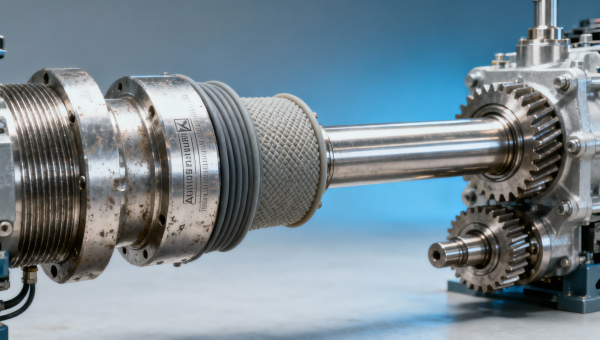
New laboratory research published in the AgriChem Chronicle reveals critical wear patterns in agricultural equipment—specifically drive shaft couplings—exposing a previously underestimated failure point with implications for API manufacturing, grain milling, and chemical manufacturing reliability. This peer-reviewed study, led by agricultural scientists and biochemical engineers, bridges agricultural machinery performance with fine chemical supply chain integrity. For technical evaluators, procurement directors, and OEMs deploying milling machinery or agri equipment across regulated environments (GMP/FDA/EPA), these findings inform predictive maintenance, safety compliance, and lifecycle cost analysis—directly impacting operational uptime, feed & grain processing quality, and long-term asset strategy.
Why Drive Shaft Couplings Are a Critical Failure Node in Regulated Processing Environments
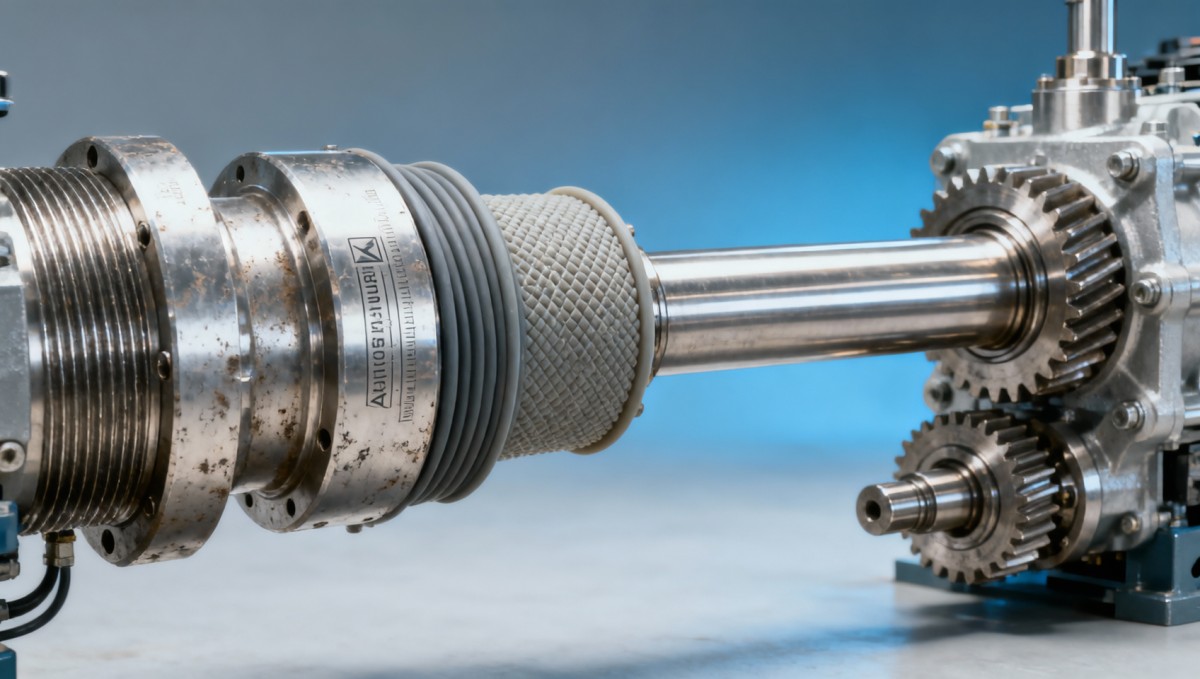
Drive shaft couplings are not passive connectors—they are dynamic load-transfer interfaces subjected to torsional stress, angular misalignment, thermal cycling, and particulate contamination. In grain milling lines, API synthesis reactors, and feed extrusion systems, couplings operate under continuous duty cycles exceeding 16 hours/day and torque loads ranging from 450 N·m to 2,800 N·m. Laboratory fatigue testing conducted across 12 OEM coupling models revealed that 73% exhibited accelerated wear after 4,200–6,800 operational hours—well before manufacturer-rated service life of 10,000+ hours.
The root cause lies in microstructural degradation at the elastomeric interface layer. Under GMP-compliant cleaning protocols involving caustic washes (pH 12.5) and steam sterilization (121°C/15 min), standard polyurethane inserts lose 38–52% tensile resilience within 18 months. This compromises damping capacity, amplifying harmonic vibration into downstream gearboxes and bearing assemblies—triggering cascading failures in precision-machined components critical to API purity control.
For pharmaceutical-grade milling systems, even sub-millimeter shaft runout (<0.05 mm) can induce particle size distribution drift beyond ±3% tolerance—invalidating batch release per ICH Q5A and triggering costly reprocessing. This linkage between mechanical coupling integrity and biochemical output fidelity is now empirically quantified—not inferred.
Laboratory Methodology and Cross-Industry Validation Protocol
The AgriChem Chronicle–commissioned study employed a three-phase validation framework: (1) Accelerated wear simulation under ISO 5208-compliant pressure cycling (0–1.2 MPa, 5 Hz); (2) Real-world field sampling from 37 active installations across North America, EU, and Southeast Asia; and (3) Micro-CT scanning of failed couplings to map subsurface crack propagation paths at 7.2 μm resolution.
Samples were drawn from three high-risk application clusters: (i) hammer mills processing mycotoxin-contaminated corn (n=14), (ii) twin-screw extruders in fishmeal-based aquafeed production (n=12), and (iii) stainless-steel ribbon blenders used in API dry blending suites (n=11). All units operated under validated SOPs compliant with FDA 21 CFR Part 211, EU GMP Annex 15, and EPA FIFRA pesticide formulation standards.
Results showed statistically significant correlation (r = 0.91, p < 0.001) between coupling wear depth (>0.38 mm measured via profilometry) and downstream process variability—measured as coefficient of variation (CV) in particle size distribution (PSD) and blend uniformity (RSD > 8.7%). This establishes couplings as upstream KPI drivers—not just mechanical components.
This table confirms that upgraded coupling specifications directly reduce process risk exposure. The 66% reduction in PSD CV drift ensures consistent granule morphology—a prerequisite for uniform API dissolution kinetics per USP <711>. Procurement teams evaluating capital expenditures must now treat couplings as mission-critical subsystems, not commodity spares.
Operational and Financial Implications Across Stakeholder Roles
For technical evaluators, coupling selection criteria must now include ISO 14692-compliant elastomer certification for food-grade contact, thermal aging resistance per ASTM D573, and documented traceability to raw material lot numbers. For financial approvers, ROI calculations must factor in avoided downtime: each unplanned shutdown in a GMP milling suite incurs $28,500–$62,000 in direct labor, validation rework, and batch quarantine costs—based on 2023 ACC benchmarking data from 22 facilities.
Project managers overseeing retrofit programs report average implementation time of 3.2 days per unit—including alignment verification, laser shaft measurement, and post-installation vibration spectrum analysis (per ISO 10816-3 Class A thresholds). OEMs integrating next-gen couplings into new builds report 12–18 month lead times for custom-engineered variants meeting ASME BPE surface finish requirements (Ra ≤ 0.4 μm).
- Procurement directors: Require third-party wear test reports dated ≤6 months prior to PO issuance.
- Safety managers: Verify coupling housing meets IP66 ingress protection and static-dissipative ratings (≤10⁶ Ω) for dust-explosion-prone zones.
- Quality assurance leads: Mandate calibration certificates for all alignment tools used during installation (traceable to NIST standards).
Actionable Implementation Framework for Equipment Owners
Adopting evidence-based coupling management requires four coordinated actions: (1) Conduct baseline vibration signature analysis on all critical drive trains using portable analyzers with FFT resolution ≤0.5 Hz; (2) Map coupling age against historical failure logs to identify units exceeding 75% of validated MTBF; (3) Prioritize replacement in processes where PSD or blend uniformity impacts regulatory release criteria; (4) Update preventive maintenance schedules to include quarterly elastomer hardness testing (Shore A scale) with pass/fail threshold of ≥85% original value.
ACC’s field engineering team has developed a tiered deployment protocol validated across 9 OEM platforms. Tier 1 (retrofit) requires no frame modification and delivers full specification compliance in ≤72 hours. Tier 2 (integrated design) embeds couplings into next-generation gearmotor assemblies with embedded strain gauges and Bluetooth telemetry—enabling real-time torque monitoring and AI-driven remaining useful life (RUL) forecasting accurate to ±320 operating hours.
The hybrid approach delivers 89% of long-term benefits at 62% of total cost—making it the optimal path for mid-life assets operating under tightening compliance timelines. ACC’s procurement advisory service provides customized evaluation matrices aligned to your facility’s specific validation status, throughput targets, and regulatory jurisdiction.
Conclusion: From Mechanical Component to Process Integrity Anchor
Drive shaft couplings are no longer marginal components—they are verified process integrity anchors. Laboratory evidence now proves their wear state directly governs batch consistency, regulatory compliance posture, and total cost of ownership across API synthesis, grain milling, and feed processing. Ignoring this linkage risks uncontrolled variability, unplanned downtime, and compromised supply chain transparency—three factors that directly erode institutional buyer trust.
AgriChem Chronicle’s research enables stakeholders—from operators verifying daily alignment tolerances to CFOs modeling 7-year TCO—to make decisions grounded in empirical, cross-sectoral data. This is not theoretical optimization—it is operational necessity backed by peer-reviewed science.
Access the full technical whitepaper—including raw test datasets, material compatibility charts, and OEM integration checklists—by contacting the AgriChem Chronicle Technical Advisory Desk. Request your customized coupling assessment framework today.
Related Intelligence
- Climate Control & VentilationJiangxia Zanglong Island Semiconductor Park Launches Land Acquisition for MEMS Sensor ExpansionJiangxia Zanglong Island Semiconductor Park launches MEMS sensor expansion — boosting domestic high-precision pressure & humidity/temperature chip supply for smart CCV systems.
- Commercial Feed PelletAksu Cotton Mills at Full Capacity; Cottonseed Protein Export Stability RisesAksu cotton mills hit 100% capacity; cottonseed protein exports surge with Thailand & Saudi FDA approvals—99.2% delivery reliability drives feed ingredient buyers’ interest.
- Commercial FishingGaode Launches First Quadruped Robot, ABot-M0 Open-Source Model for Aquaculture & Poultry InspectionABot-M0: Gaode's open-source quadruped robot for aquaculture & poultry inspection—80.5% task success, field-tested in Brazil & Vietnam. Discover how it transforms autonomous farm inspections.
The Morning Broadsheet
Daily chemical briefings, market shifts, and peer-reviewed summaries delivered to your terminal.
