
Jiangxia Zanglong Island Semiconductor Park Launches Land Acquisition for MEMS Sensor Expansion
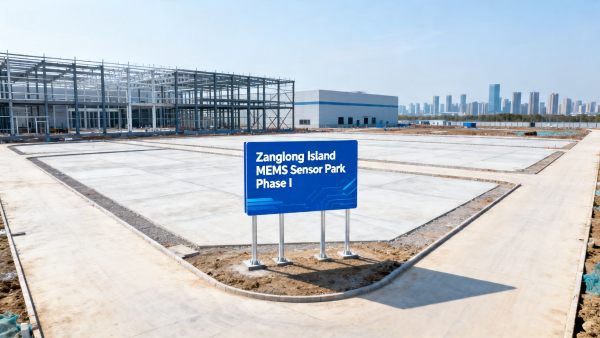
On April 10, 2026, Jiangxia District of Wuhan issued the land acquisition notice for Phase I of the Zanglong Island Semiconductor Industrial Park — a development directly tied to scaling domestic production of high-precision MEMS pressure and humidity/temperature sensor chips. The project signals near-term capacity growth for climate control and ventilation (CCV) equipment manufacturers, especially those integrating PID adaptive algorithms and IoT-based remote calibration capabilities.
Event Overview
On April 10, 2026, Wuhan’s Jiangxia District publicly announced the land acquisition for Phase I of the Zanglong Island Semiconductor Industrial Park. The plan focuses on establishing MEMS pressure and temperature/humidity sensor chip production lines, with an intended monthly output capacity of 20 million units by end-2026. This capacity expansion has received preliminary technical validation intent from Priva (Netherlands) and Hort Americas (U.S.) for integration into Climate Control & Ventilation systems.
Industries Affected
Direct Export-Oriented CCV Equipment Manufacturers
These firms rely on high-accuracy, programmable sensors to meet evolving functional requirements in global agricultural and commercial HVAC markets. The new domestic MEMS capacity reduces dependency on imported sensor modules, potentially shortening lead times and enabling faster firmware iteration for features like PID self-tuning and cloud-connected calibration.
Domestic Sensor Module Assemblers & Integrators
Companies that integrate bare MEMS dies into packaged sensor modules or embedded subsystems may face intensified price competition and tighter delivery windows as upstream wafer-to-die supply stabilizes. Their ability to align packaging, testing, and calibration workflows with the new Jiangxia output will influence time-to-market for next-gen CCV products.
IoT Platform Providers Supporting CCV Systems
Providers offering cloud infrastructure, OTA update services, or edge analytics for ventilation systems may see increased demand for interoperability with newly standardized sensor data formats and calibration protocols — particularly those validated under Priva and Hort Americas’ joint technical assessment framework.
What Relevant Enterprises or Practitioners Should Focus On
Monitor official implementation timelines and product qualification milestones
The land acquisition notice marks the start of infrastructure development — not immediate production. Enterprises should track subsequent announcements regarding cleanroom construction progress, pilot run schedules, and formal qualification reports (e.g., AEC-Q200 or ISO/IEC 17025 certification status), rather than assuming volume availability before Q4 2026.
Assess compatibility with emerging sensor interface and calibration specifications
Since the capacity is explicitly aligned with PID adaptive control and IoT remote calibration use cases — and backed by validation intent from two major international CCV integrators — suppliers should review current signal chain architecture (e.g., I²C vs. SPI, analog vs. digital output, built-in ADC resolution) and calibration metadata handling (e.g., NIST-traceable coefficients, over-the-air update support).
Prepare for potential shifts in procurement strategy for sensor subcomponents
With localized die supply expected to scale, buyers may begin requesting dual-sourcing documentation or evaluating cost-performance trade-offs between legacy offshore suppliers and new domestic partners. Early engagement with Jiangxia-based foundry service providers (once publicly named) could inform long-lead material planning — especially for ceramic substrates, ASIC companion chips, or hermetic packaging materials.
Editorial Perspective / Industry Observation
This land acquisition is best understood not as an immediate supply shift, but as a structural signal: China’s semiconductor infrastructure is now targeting application-specific, mid-volume, high-reliability sensor nodes — not just logic or memory. From industry perspective, the alignment with Priva and Hort Americas’ validation intent suggests these chips are being engineered to meet functional safety and field-upgrade expectations typical of European and North American CCV deployments. Analysis来看, this reflects a maturing phase in domestic MEMS development — moving beyond basic parameter replication toward system-level interoperability. Observation来看, it is still too early to treat this as de facto import substitution; actual yield rates, test coverage, and long-term reliability data remain unconfirmed. Current more appropriate interpretation is that it expands optionality — not certainty — for CCV supply chains.
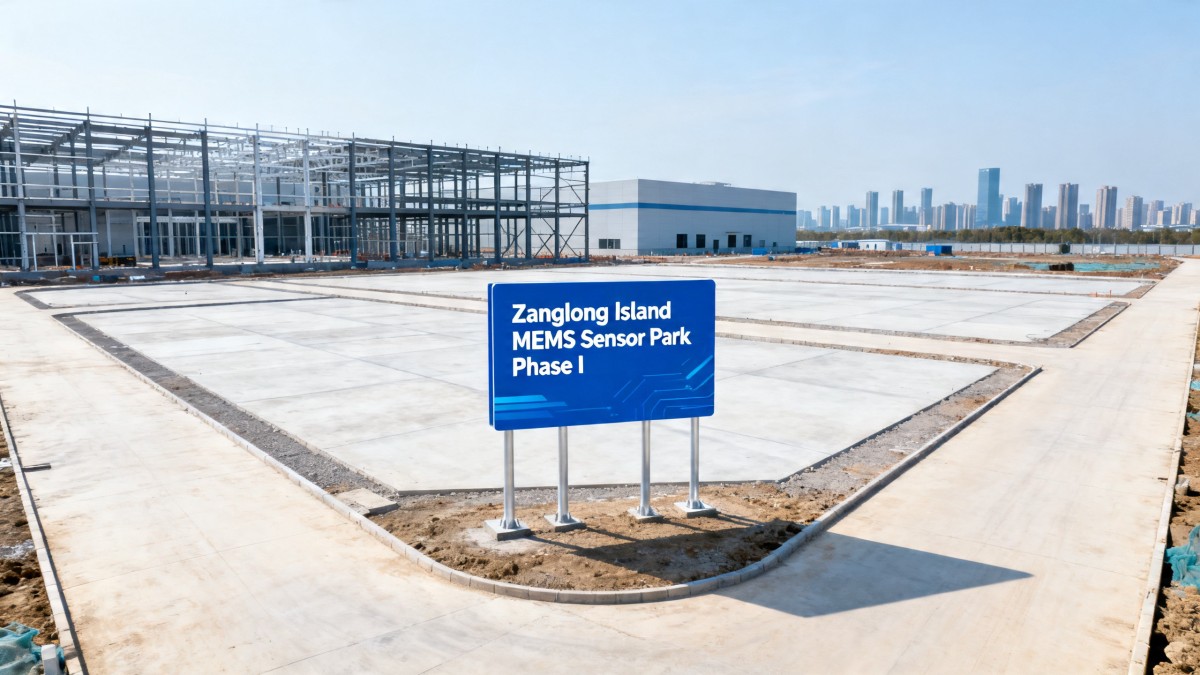
In summary, the Jiangxia Zanglong Island Semiconductor Park land acquisition represents a deliberate step toward strengthening domestic capability in a critical enabler for intelligent climate control systems. Its significance lies less in immediate output and more in the coordinated focus on application-driven specs, international validation pathways, and vertical integration within the CCV value chain. For stakeholders, it is better understood as an inflection point in supply chain optionality — one requiring measured monitoring, not reactive procurement changes.
Source: Official land acquisition notice published by Jiangxia District Government (Wuhan), April 10, 2026. Note: Technical validation status with Priva and Hort Americas remains at 'intent' stage; full qualification outcomes and production ramp timelines are pending further public disclosure.
Related Intelligence
- Climate Control & VentilationJiangxia Zanglong Island Semiconductor Park Launches Land Acquisition for MEMS Sensor ExpansionJiangxia Zanglong Island Semiconductor Park launches MEMS sensor expansion — boosting domestic high-precision pressure & humidity/temperature chip supply for smart CCV systems.
- Climate Control & VentilationJiangxia Zanglong Island Semiconductor Park Land Acquisition BeginsJiangxia Zanglong Island Semiconductor Park land acquisition begins—boosting domestic MEMS sensor supply for AI-enabled CCV systems. Exporters gain cost & lead-time advantages starting H2 2026.
- Climate Control & VentilationSilo temperature monitoring system: Why single-point sensors miss hot spots in large-capacity binsSilo temperature monitoring system: Why single-point sensors fail in commercial grain silos, hopper bottom & flat bottom steel silos—discover distributed thermal intelligence.
The Morning Broadsheet
Daily chemical briefings, market shifts, and peer-reviewed summaries delivered to your terminal.
