
Jiangxia Zanglong Island Semiconductor Park Land Acquisition Begins
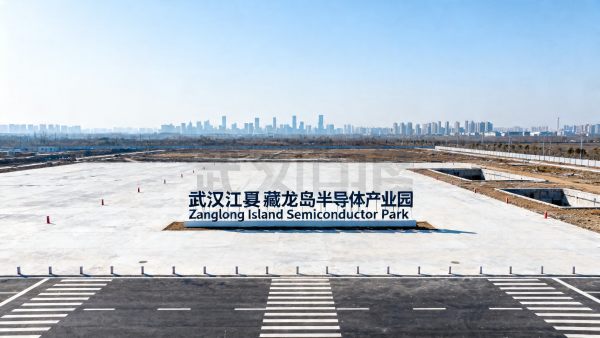
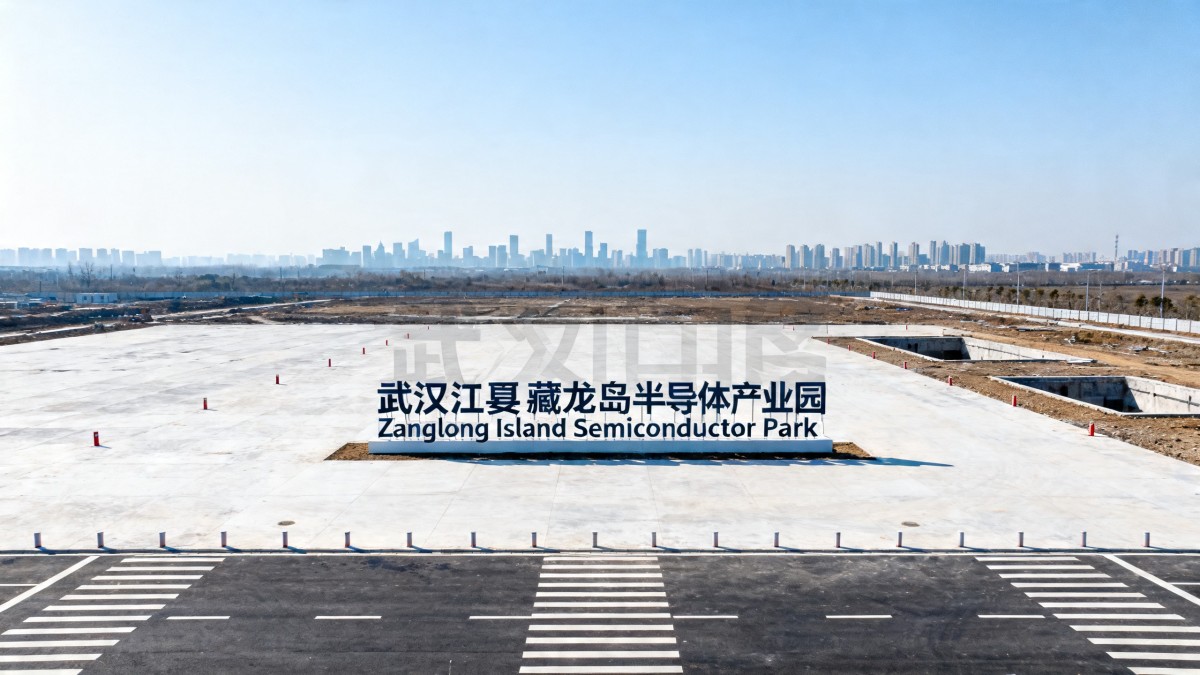
On April 15, 2026, Jiangxia District of Wuhan announced the collective land expropriation for the Zanglong Island Semiconductor Industrial Park (approx. 461 mu), targeting power devices and MEMS sensor R&D/manufacturing. This development carries implications for manufacturers of Climate Control & Ventilation (CCV) systems—especially those exporting AI-enabled, self-calibrating units with国产 high-reliability multi-parameter sensing modules.
Event Overview
On April 15, 2026, the Jiangxia District Government published an official notice on the expropriation of collective land for the Zanglong Island Semiconductor Industrial Park in Wuhan. The project covers approximately 461 mu (about 30.7 hectares). According to the public notice, the park will focus on research, development, and manufacturing of power semiconductor devices and MEMS-based sensors—including temperature, humidity, and CO₂ sensing modules. Multiple Chinese OEMs supplying climate control and ventilation equipment have already begun integrating domestically produced multi-parameter sensor modules into their systems, replacing prior imported solutions.
Industries Affected
Direct Exporters of Climate Control & Ventilation Systems
These companies supply AI-enhanced CCV systems to overseas markets including the EU, North America, and Southeast Asia. With domestic sensor sourcing now scaling up, export lead times are expected to shorten by 20% and unit costs to decline by 12–15% starting in H2 2026. The impact is most direct on delivery scheduling, landed cost competitiveness, and responsiveness to regional regulatory updates (e.g., EU Ecodesign requirements).
OEM Component Procurement Teams
Procurement units sourcing sensing modules—particularly those previously reliant on Swiss, German, or Japanese suppliers—are facing a material shift in vendor qualification timelines and validation protocols. Domestic MEMS sensor modules now entering volume production require updated reliability testing benchmarks (e.g., long-term drift under cyclic humidity/temperature stress), which may affect internal BOM approval cycles.
Contract Manufacturers for Smart HVAC Equipment
EMS/ODM providers assembling CCV systems must adapt to new module form factors, calibration interfaces, and firmware integration requirements tied to AI-based self-calibration features. These changes affect line setup, test fixture design, and firmware flashing workflows—not just component substitution.
Supply Chain Logistics & Trade Compliance Providers
Firms supporting export documentation, tariff classification, and customs clearance for CCV systems may see increased volume in H2 2026—but also heightened scrutiny on origin declarations, especially where domestic sensor content exceeds 40% of bill-of-materials value. Harmonized System (HS) code reclassification for ‘intelligent ventilation units with embedded AI calibration’ remains pending at WCO level, but national customs guidance may emerge ahead of schedule.
What Enterprises and Practitioners Should Monitor and Act On
Track official implementation milestones for the semiconductor park
Monitor announcements from Jiangxia District Natural Resources Bureau and Wuhan Municipal Development and Reform Commission regarding phased land handover, infrastructure readiness, and first pilot production timelines. These signals—not just the initial expropriation notice—indicate when domestic sensor capacity becomes operationally scalable.
Validate technical compatibility before committing to full-scale module substitution
Confirm interoperability of newly qualified domestic sensor modules with existing CCV firmware stacks, especially regarding I²C/SPI register mapping, calibration data storage formats, and AI model inference latency. Pilot integration should include accelerated life testing across climatic zones relevant to target export markets.
Distinguish between policy intent and near-term capacity reality
The land acquisition is a necessary administrative step—but does not equate to immediate sensor yield ramp-up. Current domestic MEMS output remains concentrated in low-to-mid complexity variants (e.g., single-axis humidity + temperature). High-accuracy, low-drift CO₂ sensing—critical for premium CCV applications—may still rely partially on imported die or packaging until late 2026.
Update procurement and logistics contingency plans
Reassess minimum order quantities, safety stock levels, and dual-sourcing thresholds for sensing modules. Where feasible, align supplier transition timelines with product revision cycles—not calendar quarters—to avoid mid-cycle BOM disruptions. Flag any pending export license renewals that reference specific foreign sensor part numbers.
Editorial Perspective / Industry Observation
From industry perspective, this land expropriation is less an immediate production inflection point and more a structural signal: China’s MEMS sensor supply chain is transitioning from prototype validation to industrial-scale infrastructure commitment. Analysis来看, the timing—coinciding with tightening EU energy labeling rules for ventilation equipment—suggests strategic alignment between domestic semiconductor capacity expansion and export-oriented CCV system upgrades. Observation来看, the emphasis on AI self-calibration in the reported performance gains points to a broader shift: sensor value is increasingly tied to embedded intelligence and system-level integration—not just raw accuracy specs. It更适合理解为一个 capacity enablement milestone rather than a finished-product market shift. Continuous monitoring of park commissioning progress and OEM adoption reports will be essential to gauge real-world traction.
Conclusion
This land acquisition reflects a deliberate step toward localized, high-reliability sensor manufacturing for intelligent climate control systems. Its significance lies not in immediate output, but in signaling sustained upstream investment behind export-competitive CCV hardware. For stakeholders, the priority is pragmatic: treat it as a capacity-building enabler—not a trigger for wholesale redesign—and calibrate response timelines to actual pilot production milestones, not policy announcements alone.
Information Sources
- Jiangxia District Government Official Notice on Collective Land Expropriation (April 15, 2026)
- Public statements from participating OEMs on domestic sensor module integration (as cited in event summary)
- Note: Actual production ramp-up timelines, yield rates, and export certification status for AI-calibrated CCV systems remain subject to ongoing verification and are not yet publicly confirmed.
Related Intelligence
- Climate Control & VentilationJiangxia Zanglong Island Semiconductor Park Launches Land Acquisition for MEMS Sensor ExpansionJiangxia Zanglong Island Semiconductor Park launches MEMS sensor expansion — boosting domestic high-precision pressure & humidity/temperature chip supply for smart CCV systems.
- Climate Control & VentilationJiangxia Zanglong Island Semiconductor Park Land Acquisition BeginsJiangxia Zanglong Island Semiconductor Park land acquisition begins—boosting domestic MEMS sensor supply for AI-enabled CCV systems. Exporters gain cost & lead-time advantages starting H2 2026.
- Climate Control & VentilationSilo temperature monitoring system: Why single-point sensors miss hot spots in large-capacity binsSilo temperature monitoring system: Why single-point sensors fail in commercial grain silos, hopper bottom & flat bottom steel silos—discover distributed thermal intelligence.
The Morning Broadsheet
Daily chemical briefings, market shifts, and peer-reviewed summaries delivered to your terminal.
