
FAO Updates Global Climate Control & Ventilation White List
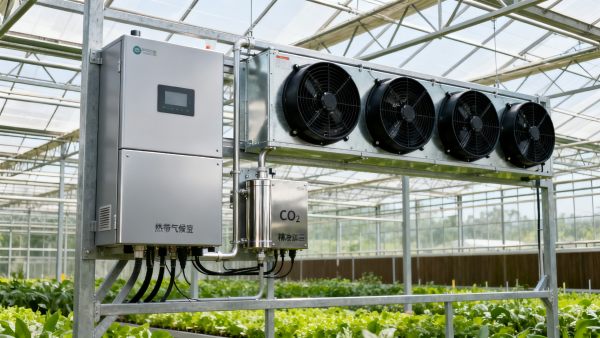
On 24 April 2026, the Food and Agriculture Organization of the United Nations (FAO) published the updated Global Recommended List of Agricultural Climate Control Equipment, listing 12 Chinese manufacturers specializing in climate control and ventilation systems. This development is directly relevant to international agricultural project developers, procurement agents, smart farm implementers in Africa and Latin America, and global suppliers of controlled-environment agriculture infrastructure.
Event Overview
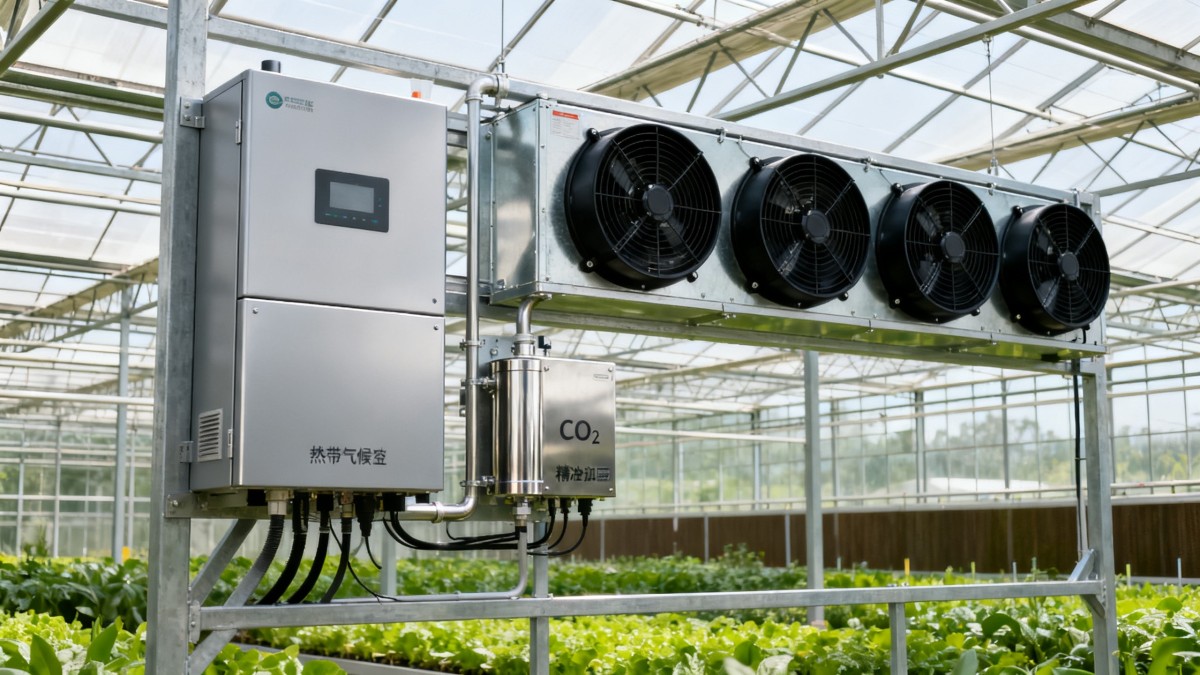
The Food and Agriculture Organization (FAO) released the latest edition of its Global Recommended List of Agricultural Climate Control Equipment on 24 April 2026. The list includes 12 Chinese companies providing climate control and ventilation solutions—including intelligent environmental control hosts, negative-pressure ventilation systems, and precision CO₂ supplementation modules. It will serve as a priority reference for equipment procurement under FAO-funded smart farm projects in Africa and Latin America. For international agricultural project developers and government procurement agencies, the list functions as an authoritative index to identify Chinese suppliers with high technical suitability for tropical and subtropical small-to-medium-scale farming contexts.
Industries Affected
Direct Export-Oriented Equipment Manufacturers
These are Chinese firms producing climate control and ventilation hardware for overseas markets. Their inclusion on the FAO list does not guarantee orders but signals formal technical recognition by a UN agency—potentially lowering due diligence barriers in public-sector tenders across FAO partner countries.
Procurement Agencies & Project Developers (Africa/Latin America)
Agencies managing FAO-supported smart farm initiatives may now prioritize listed vendors during sourcing phases. The list reduces technical evaluation overhead when selecting equipment for standardized greenhouse or poultry/pig housing modules deployed across multiple sites.
Supply Chain Integrators & System Solution Providers
Firms that bundle ventilation units with sensors, automation software, or energy management layers may find increased demand for interoperable configurations aligned with listed hardware. FAO’s emphasis on ‘precision CO₂ supplementation’ and ‘intelligent host integration’ implies preference for modular, data-ready components—not just standalone devices.
International Procurement Intermediaries & Trade Facilitators
Agents assisting foreign governments or NGOs in sourcing from China may use the list as a pre-vetted shortlist. Its existence adds a layer of third-party validation, potentially streamlining documentation requirements such as technical compliance statements or field performance summaries.
What Enterprises and Practitioners Should Monitor and Do Now
Track official FAO implementation guidance
The list is designated as a ‘priority reference’, not a mandatory procurement requirement. Stakeholders should monitor whether FAO issues supplementary documents—such as tender templates, minimum technical specifications, or regional adaptation notes—that define how strictly the list will be applied in upcoming project cycles.
Focus on three listed product categories
Smart environmental control hosts, negative-pressure ventilation systems, and CO₂ precision supplementation modules are explicitly named. Companies should verify alignment of their current models’ certifications (e.g., IP ratings, power efficiency, local voltage compatibility) with typical requirements in target regions—especially where grid stability or dust/moisture exposure are constraints.
Distinguish between policy signal and operational adoption
Inclusion reflects technical eligibility, not automatic contract award. Project developers may still require localized testing, after-sales service commitments, or bilingual technical documentation. Firms should avoid assuming market access is assured; instead, treat the listing as a qualifying step requiring follow-up capacity demonstration.
Prepare documentation for procurement workflows
FAO-funded procurements often require ISO certifications, test reports from accredited labs, and evidence of prior deployment in similar climatic zones. Listed manufacturers and their partners should compile these materials proactively—not as marketing assets, but as ready-to-submit compliance packages.
Editorial Observation / Industry Perspective
From an industry perspective, this update is best understood as a procedural milestone—not a commercial inflection point. It formalizes a vetting pathway rather than unlocks immediate volume. Analysis来看, the list strengthens the institutional legitimacy of certain Chinese climate control technologies within multilateral development frameworks, but actual procurement traction will depend on downstream factors: national budget cycles in recipient countries, local maintenance capacity, and interoperability with existing digital farm platforms. Current more appropriate interpretation is that it marks the start of a structured, standards-aligned engagement phase—not the onset of scaled deployment.
Observation来看, the emphasis on CO₂ supplementation modules stands out: this suggests FAO is shifting focus beyond basic temperature/humidity control toward yield-optimizing inputs in protected horticulture. That nuance may signal longer-term demand evolution—not just for hardware, but for calibrated agronomic support bundled with equipment.
Analysis来看, the geographic scope (Africa/Latin America) implies design priorities around cost-effectiveness, robustness in high-heat/high-humidity conditions, and ease of technician-level maintenance. These traits are distinct from those prioritized in North American or EU markets—meaning the FAO list may catalyze product differentiation strategies among Chinese exporters.
Conclusion: This is a signal of growing institutional recognition—not yet a driver of near-term revenue. Its value lies in standardization, not scale.
Conclusion
The FAO’s updated white list represents a formal alignment between UN development criteria and specific Chinese climate control and ventilation capabilities. It does not constitute a market entry guarantee, nor does it replace country-specific regulatory or tender requirements. Rather, it offers a benchmarked reference point for stakeholders navigating complex, publicly funded agricultural modernization projects. Current more appropriate understanding is that this is a procedural enabler—one that lowers technical credibility barriers but still requires operational readiness, contextual adaptation, and responsive support infrastructure to translate into tangible project outcomes.
Source Attribution
Main source: Food and Agriculture Organization of the United Nations (FAO), Global Recommended List of Agricultural Climate Control Equipment, published 24 April 2026.
Parts requiring ongoing observation: FAO’s subsequent guidance on list application in procurement procedures, regional rollout timelines, and vendor performance reporting mechanisms (if any).
Related Intelligence
- Climate Control & VentilationFAO Updates Global Climate Control & Ventilation White ListFAO Updates Global Climate Control & Ventilation White List — discover the 12 certified Chinese manufacturers for smart farms in Africa & Latin America.
- Climate Control & VentilationFAO Adds 12 Chinese Climate Control Firms to Global ListFAO Adds 12 Chinese Climate Control Firms to Global List — gain fast-tracked import access & FAO-funded project eligibility. Discover impact now.
- Climate Control & VentilationFAO Adds 12 Chinese Ventilation Firms to Global Climate Control ListFAO adds 12 Chinese ventilation firms to its global climate control list — boosting export eligibility, tender access & credibility for agri-climate equipment.
The Morning Broadsheet
Daily chemical briefings, market shifts, and peer-reviewed summaries delivered to your terminal.
