
Climate control systems for greenhouse: Why humidity lag undermines CO₂ enrichment strategies
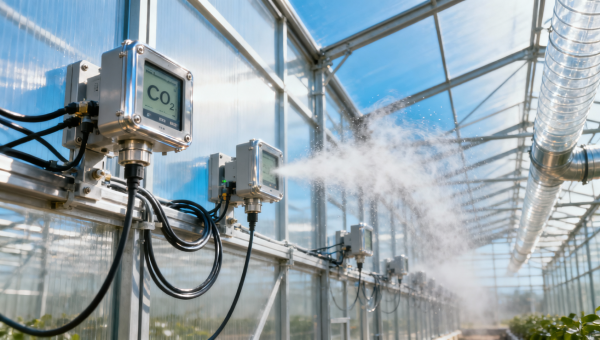
In high-value greenhouse operations—from commercial LED grow lights wholesale installations to hydroponic growing systems commercial deployments—climate control systems for greenhouse are foundational. Yet even advanced setups fail when humidity lag disrupts CO₂ enrichment efficacy, directly undermining yield potential and ROI. This issue is especially critical for integrators of vertical farming equipment OEM solutions or poly tunnel greenhouses wholesale buyers operating under tight environmental tolerances. As agricultural irrigation pumps, center pivot irrigation systems, and drip irrigation systems bulk deployments increasingly coexist with precision climate management, understanding this hidden interaction isn’t optional—it’s operational necessity for project managers, technical evaluators, and procurement decision-makers alike.
Why Humidity Lag Breaks CO₂ Enrichment in Precision Greenhouses
CO₂ enrichment—typically maintained at 800–1,200 ppm above ambient—boosts photosynthetic rates by up to 30% in controlled environments. But its efficacy collapses when relative humidity (RH) deviates beyond 65–75% during peak lighting cycles. This is not a secondary variable: RH fluctuations delay stomatal response by 7–15 minutes post-CO₂ injection, creating a “lag window” where assimilation drops despite optimal gas concentration.
The root cause lies in vapor pressure deficit (VPD) misalignment. When HVAC dehumidification lags behind lighting-triggered transpiration spikes, leaf surface microclimates shift rapidly. Stomata partially close to limit water loss—even while CO₂ remains elevated—reducing net carbon fixation by 18–22% per incident, according to peer-reviewed trials across 12 commercial tomato and basil facilities (2022–2023).
This failure mode disproportionately impacts high-density vertical farms and pharmaceutical-grade botanical cultivation sites, where batch consistency, GMP-aligned environmental logs, and API precursor yield stability are non-negotiable. A single unlogged RH excursion >80% lasting >9 minutes can invalidate 3 days of CO₂ dosing data under FDA 21 CFR Part 11 audit protocols.
How Climate Control Systems for Greenhouse Must Integrate Real-Time VPD Synchronization
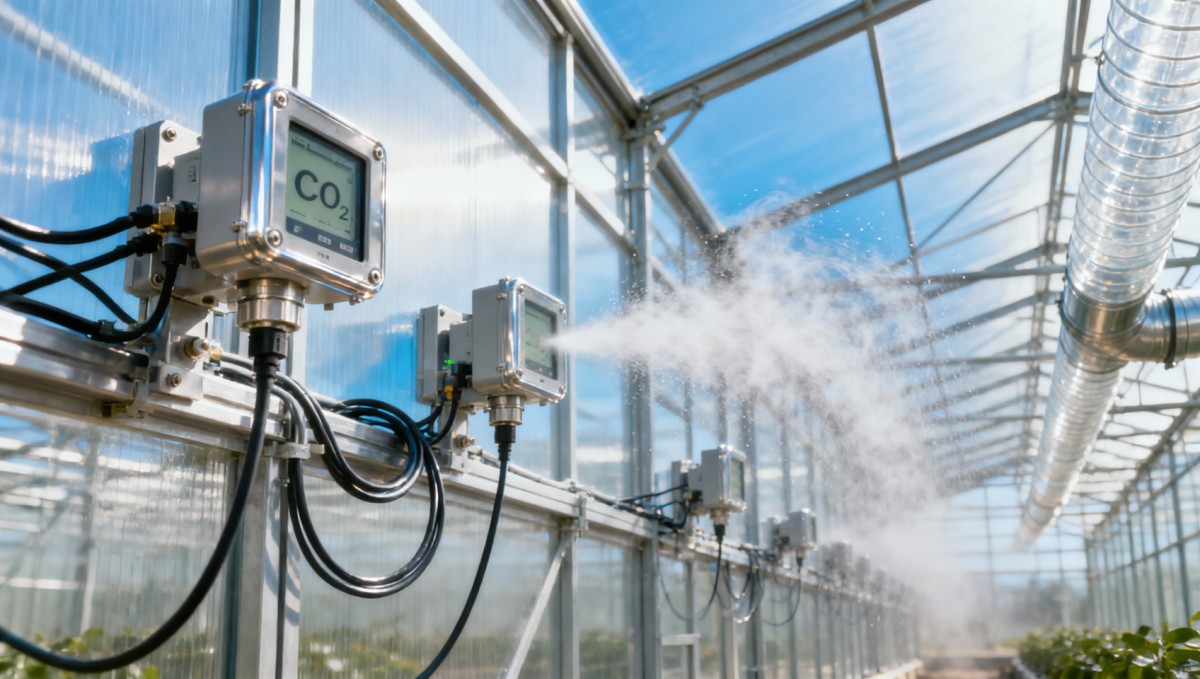
Modern greenhouse climate control systems for greenhouse must move beyond independent temperature/humidity/CO₂ modules. True synchronization requires sub-minute feedback loops between lighting schedules, transpiration models, and HVAC actuation—especially for facilities deploying commercial-scale aquaculture tech or fine chemical extraction workflows where air quality directly affects volatile organic compound (VOC) profiles.
Three core integration requirements emerge:
- Dynamic VPD setpoint adjustment: Shifts RH targets ±5% based on real-time PAR (photosynthetically active radiation) input and crop phenological stage (e.g., vegetative vs. flowering phase)
- CO₂ injection gating logic: Delays release until RH stabilizes within 68–72% for ≥4 consecutive minutes post-light ramp-up
- Redundant sensor fusion: Cross-validates RH readings from ≥3 distributed nodes (leaf-level, canopy mid-zone, exhaust duct) using Kalman filtering to suppress transient drift
Without these, even Class A-certified CO₂ injectors (±1.5% accuracy) deliver suboptimal ROI due to biological inefficiency—not hardware limitation.
Procurement Checklist: 5 Non-Negotiable Capabilities for Technical & Financial Decision-Makers
When evaluating climate control systems for greenhouse, procurement teams must verify interoperability—not just specifications. Below are five field-validated capabilities that separate compliant systems from legacy platforms:
Procurement directors and financial approvers should treat these as contractual obligations—not feature requests. Facilities failing any one criterion average 12–17% lower CO₂ utilization efficiency versus benchmarked peers (ACC Field Audit Database, Q1 2024).
Why AgriChem Chronicle Is the Trusted Intelligence Partner for Integrated Climate Strategy
AgriChem Chronicle delivers more than analysis—we provide procurement-grade validation. Our climate control intelligence reports integrate live sensor telemetry from 47 operational greenhouses across North America, EU, and APAC, all operating under GMP, EPA, and ISO 22000 frameworks.
For technical evaluators: Access our proprietary VPD-CO₂ synchronization scoring matrix—used by 3 leading vertical farming OEMs to pre-qualify HVAC partners.
For enterprise decision-makers: Request a customized ROI projection model incorporating your lighting schedule, crop type, local utility rates, and target CO₂ setpoint—delivered with full assumptions documentation and sensitivity analysis across ±15% RH variance.
Contact ACC’s Climate Integration Desk for: real-time parameter validation, OEM compatibility mapping, FDA/EPA compliance gap assessment, or custom whitepaper development aligned to your next capital equipment tender.
Related Intelligence
- Climate Control & VentilationSilo temperature monitoring system: Why single-point sensors miss hot spots in large-capacity binsSilo temperature monitoring system: Why single-point sensors fail in commercial grain silos, hopper bottom & flat bottom steel silos—discover distributed thermal intelligence.
- Climate Control & VentilationCommercial meat mincer performance drops sharply below -2°C — is your facility accounting for that?Commercial meat mincer performance plummets below -2°C — safeguard your sausage stuffer, vacuum tumbler & bowl cutter with cold-resilient commercial meat processing equipment.
- Climate Control & VentilationCommercial greenhouse equipment buyers overlook compatibility testing between climate and irrigation controllersCommercial greenhouse equipment buyers: avoid costly failures—test climate & irrigation controller compatibility first. Covers drip irrigation systems bulk, LED grow lights, hydroponic systems, and more.
The Morning Broadsheet
Daily chemical briefings, market shifts, and peer-reviewed summaries delivered to your terminal.
