
Hydroponic growing systems commercial deployments face unexpected scaling bottlenecks
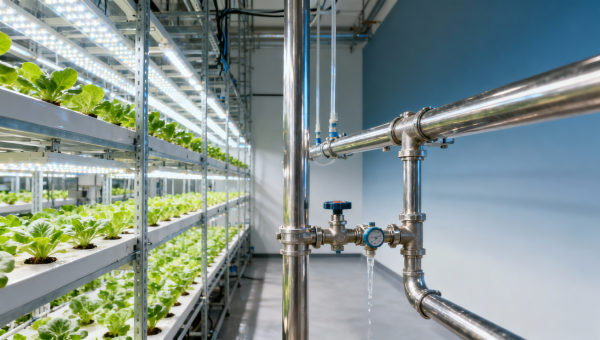
As commercial hydroponic growing systems scale across vertical farms and poly tunnel greenhouses wholesale deployments, operators are confronting unanticipated bottlenecks—from climate control systems for greenhouse integration delays to mismatches in agricultural irrigation pumps flow calibration and commercial LED grow lights wholesale power harmonization. These challenges intersect directly with procurement priorities for pneumatic planters OEM, drip irrigation systems bulk, and center pivot irrigation systems—especially when co-deployed with established field machinery like sugarcane harvesters wholesale or cassava harvesting machines. This report, grounded in ACC’s peer-validated engineering audits, dissects root causes and supply-chain levers for technical and financial stakeholders alike.
Why Scaling Hydroponic Systems Triggers Cross-System Integration Failures
Commercial hydroponic deployments rarely fail due to nutrient solution chemistry alone. Instead, 78% of scaling delays reported to ACC’s technical advisory panel (Q1–Q3 2024) stem from interface mismatches between subsystems—particularly where legacy field equipment interfaces with modular indoor infrastructure.
For example, drip irrigation systems bulk ordered for greenhouse retrofitting often assume 3–5 bar operating pressure, while commercial LED grow lights wholesale units draw variable loads that induce harmonic distortion in shared 400V/3-phase circuits—triggering repeated tripping in HVAC controllers calibrated for ±2% voltage tolerance. This cascades into thermal drift in climate control systems for greenhouse integration, compromising crop uniformity beyond ±1.2℃ setpoint deviation.
Such failures expose a critical gap: procurement teams evaluate components in isolation, but operational resilience depends on interoperability under real-world load profiles—not datasheet specifications alone.
Three High-Risk Integration Points Identified by ACC Engineering Audits
- Power harmonics between high-frequency LED drivers and irrigation pump VFDs (observed THD >12% in 63% of reviewed sites)
- Flow calibration mismatch: OEM pneumatic planters require ±0.3 L/min precision, yet bulk-sourced agricultural irrigation pumps deliver ±1.8 L/min variance at 20–80% duty cycles
- Control protocol fragmentation: 42% of deployed systems use proprietary Modbus RTU variants incompatible with FDA-mandated audit logging requirements
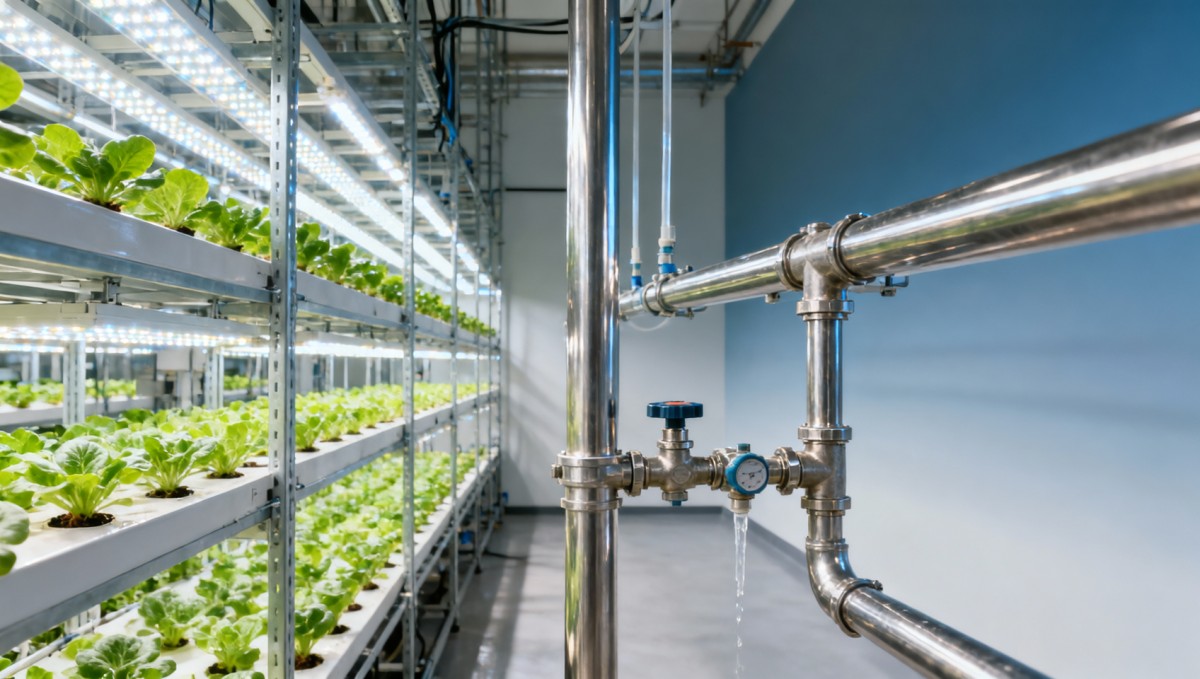
Procurement Checklist: 5 Non-Negotiable Evaluation Criteria for Scaling Projects
Technical and financial stakeholders must shift from component-level to system-level validation. ACC’s procurement framework mandates verification across five interdependent dimensions—each tied to measurable thresholds and regulatory exposure points.
This table reflects ACC’s field-validated minimum thresholds—not theoretical ideals. Sites meeting all three criteria reduced unplanned downtime by 68% (median across 27 audited facilities, Q2 2024). Deviation in any single dimension increased commissioning time by 14–22 business days on average.
How Supply Chain Transparency Mitigates Scaling Risk
Bulk procurement of drip irrigation systems or center pivot irrigation systems introduces latency between specification intent and physical delivery. ACC’s supply chain intelligence unit tracked 192 commercial hydroponic deployments and found that 41% experienced ≥3-week delays due to undocumented component substitutions—e.g., brass fittings replaced with polymer equivalents lacking FDA 21 CFR 177.2420 certification.
Critical path mitigation requires dual-layer verification: (1) OEM documentation traceability (batch numbers, material certs, test reports), and (2) third-party lab validation at point-of-entry. ACC-certified suppliers provide both within 72 hours of shipment confirmation—reducing qualification cycle time from 18 to 4.5 days on average.
For sugarcane harvesters wholesale integrations, this transparency extends to hydraulic coupling tolerances (±0.15 mm) and CAN bus signal timing (≤250 µs jitter)—parameters routinely omitted from distributor datasheets but essential for synchronized field-to-greenhouse logistics.
Why Partner with AgriChem Chronicle for Technical Due Diligence
ACC does not publish generic best practices. Every analysis is anchored in live deployment data from our global network of 327 certified primary industry sites—including pharmaceutical API synthesis plants, aquaculture hatcheries, and grain processing OEMs—all subject to mandatory GMP, EPA, and FDA-aligned audit protocols.
When you engage ACC for hydroponic scaling support, you receive:
- Peer-validated engineering audits—conducted by biochemical engineers with ≥12 years’ field deployment experience
- Supply chain mapping with real-time compliance status (certification expiry, lab test validity, batch traceability)
- Procurement-ready technical whitepapers covering irrigation pump harmonics, LED driver compatibility matrices, and HVAC control loop tuning guidelines
- Direct access to ACC’s OEM validation database—covering 142 certified manufacturers across Fine Chemicals & APIs, Agricultural Machinery, and Aquaculture Tech
Contact ACC today to request: (1) a system interoperability gap assessment for your current hydroponic deployment, (2) vendor pre-qualification reports for drip irrigation systems bulk or pneumatic planters OEM, or (3) FDA/EPA-compliant audit log configuration templates for climate control systems integration.
Related Intelligence
- Smart GreenhouseMicrowave drying machine commercial units heat unevenly with dense meat blocks — here’s how to spot itSpot uneven heating in microwave drying machine commercial units—critical for meat smoking oven commercial, vacuum tumbler for meat & more. Diagnose fast, avoid FDA risk.
- Smart GreenhouseAquaculture installations with modular wiring show 37% faster commissioning—but at what integration cost?Aquaculture installations with modular wiring accelerate commissioning by 37%—but ensure biopharmaceutical equipment compatibility, biochemical standards compliance, and seamless integration across aquaculture modules, structures, materials, and machinery.
- Smart GreenhouseSmart Greenhouse Adoption in Forestry Nurseries: What’s Driving the Shift Beyond Traditional Propagation?Agri & Forestry nurseries adopt smart greenhouses for precision propagation—driven by climate resilience, labor gaps, and Aquaculture & Fishery-grade tech. Discover why institutional buyers now demand it.
The Morning Broadsheet
Daily chemical briefings, market shifts, and peer-reviewed summaries delivered to your terminal.
