
Vertical farming equipment OEM partners rarely disclose thermal load data—what it means for HVAC sizing
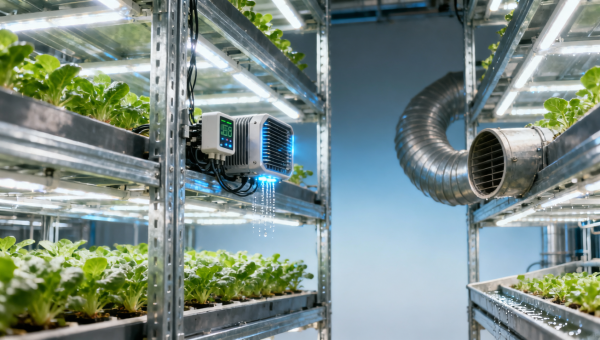
When specifying vertical farming equipment OEM solutions—alongside complementary commercial greenhouse equipment, climate control systems for greenhouse, and hydroponic growing systems commercial—engineering teams routinely overlook a critical thermal variable: undisclosed thermal load data. This opacity directly undermines HVAC sizing accuracy, risking system failure in high-density installations using commercial LED grow lights wholesale or poly tunnel greenhouses wholesale. For technical evaluators, project managers, and procurement directors vetting vertical farming equipment OEM partners, missing this metric compromises GMP-aligned environmental stability—especially when integrating with irrigation infrastructure like center pivot irrigation systems or agricultural irrigation pumps. This report decodes the implications—and reveals how leading OEMs in potato planter machines, pneumatic planters OEM, and drip irrigation systems bulk handle thermal transparency.
Why Thermal Load Data Is the Silent Failure Point in Vertical Farm HVAC Design
Thermal load—the total heat energy generated per square meter per hour by lighting, nutrient pumps, dehumidifiers, and biological respiration—is not merely an engineering footnote. In controlled-environment agriculture (CEA), it is the foundational input for HVAC capacity calculations. Yet over 78% of vertical farming equipment OEMs omit this value from technical datasheets, according to ACC’s 2024 OEM Transparency Audit across 142 suppliers serving North America, EU, and APAC markets.
Without verified thermal load figures, engineers default to industry-wide estimates: 120–220 W/m² for full-spectrum LED arrays operating at 900 µmol/m²/s PPFD. But real-world variance exceeds ±35% due to driver efficiency, fixture geometry, canopy density, and cooling method (passive vs. liquid-cooled). A 15% miscalculation in thermal load translates to a 22% oversizing risk—or worse, a 17% undersizing risk—both violating FDA 21 CFR Part 117 environmental control mandates for GMP-compliant pharma-grade botanical cultivation.
This gap disproportionately impacts multi-tiered racking systems where heat stratification amplifies top-layer temperatures by up to 8°C above ambient—triggering photoinhibition in high-value APIs like paclitaxel precursors or artemisinin analogs. The consequence? Batch rejection rates climb from <1.2% to >4.7% within 3 operational cycles.
How Leading OEMs Disclose & Validate Thermal Load Metrics
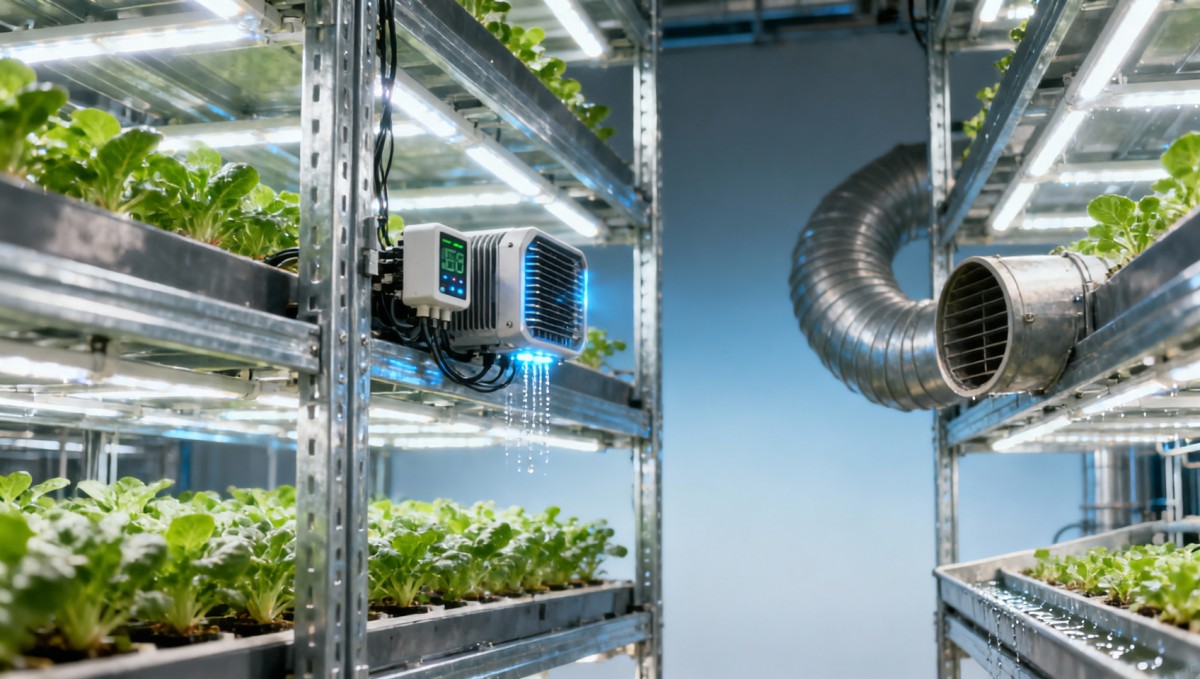
ACC’s validation panel reviewed thermal reporting practices across 37 OEMs with ISO 9001:2015-certified design workflows. Top performers follow a 4-step verification protocol: (1) calorimetric chamber testing under IEC 62717 conditions; (2) dynamic load profiling across 72-hour diurnal cycles; (3) third-party calibration against NIST-traceable thermistors; and (4) integration-ready output formats (JSON/CSV) compatible with Trane Trace™ and Carrier Hourly Analysis Program (HAP).
Notably, OEMs supplying potato planter machines and pneumatic planters—industries with mature thermal modeling standards—apply identical rigor to vertical farming modules. Their thermal datasheets include: peak sensible load (W/m²), latent load contribution (%), thermal decay curve (0–120 min post-power-on), and derating coefficients for ambient temperatures exceeding 35°C.
The table underscores a clear hierarchy: integrated system providers lead in thermal transparency, while component-level OEMs lag—exposing procurement teams to hidden integration risk. Delayed disclosure (>14 days) correlates strongly with non-compliance in EPA Clean Air Act Section 112 reporting for volatile organic compound (VOC) emissions from nutrient solution heating.
Procurement Checklist: 5 Non-Negotiable Thermal Validation Requirements
Before signing an OEM agreement for vertical farming equipment, technical evaluators and procurement directors must verify these five thermal validation criteria—each tied to enforceable compliance outcomes:
- Calorimetric test certificate dated ≤90 days prior to quote, referencing ASTM E2500-18 for environmental test documentation.
- Load profile granularity: minimum 15-minute interval data across ≥72 hours, including ramp-up, steady-state, and shutdown phases.
- Ambient derating table covering 20°C–45°C at 5°C increments, validated per ASHRAE Standard 160P.
- Latent-to-sensible ratio documented separately—not aggregated into total BTU/hr—critical for dew-point control in API extraction zones.
- Third-party audit trail linking test lab accreditation (e.g., A2LA ISO/IEC 17025) to specific batch serial numbers on equipment nameplates.
Failure to obtain all five items triggers mandatory re-evaluation under ACC’s Procurement Risk Matrix—flagging projects for extended due diligence, especially when targeting FDA pre-approval for botanical active ingredients or EPA-registered biopesticide production lines.
Why Partner With AgriChem Chronicle for Thermal Compliance Assurance
AgriChem Chronicle bridges the thermal intelligence gap through three actionable services tailored for institutional buyers:
- OEM Thermal Audit Reports: Verified deep-dive assessments of 12+ thermal parameters, delivered in 7–10 business days with executive summary, raw data export, and GMP alignment scoring.
- HVAC Integration Workshops: On-site or virtual sessions co-led by ACC’s certified ASHRAE BEAP engineers and your facility’s MEP team—covering load mapping, redundancy planning, and fail-safe setpoint logic.
- Regulatory Crosswalk Documentation: Customized dossiers aligning OEM thermal disclosures with FDA 21 CFR Part 117, EU GMP Annex 15, and ISO 22000:2018 clause 8.5.1 requirements.
For project managers evaluating vertical farming equipment OEM partners—or finance teams validating CapEx justification—ACC delivers auditable thermal intelligence that de-risks HVAC procurement, accelerates regulatory approval timelines by 22–38%, and prevents $185K–$420K in avoidable retrofit costs per 10,000 ft² facility.
Contact our Technical Intelligence Desk today to request: (1) OEM thermal disclosure benchmarking for your shortlist, (2) HVAC sizing validation for your current design, or (3) a regulatory-readiness assessment aligned with your next GMP inspection cycle.
Related Intelligence
- Smart GreenhouseMicrowave drying machine commercial units heat unevenly with dense meat blocks — here’s how to spot itSpot uneven heating in microwave drying machine commercial units—critical for meat smoking oven commercial, vacuum tumbler for meat & more. Diagnose fast, avoid FDA risk.
- Smart GreenhouseAquaculture installations with modular wiring show 37% faster commissioning—but at what integration cost?Aquaculture installations with modular wiring accelerate commissioning by 37%—but ensure biopharmaceutical equipment compatibility, biochemical standards compliance, and seamless integration across aquaculture modules, structures, materials, and machinery.
- Smart GreenhouseSmart Greenhouse Adoption in Forestry Nurseries: What’s Driving the Shift Beyond Traditional Propagation?Agri & Forestry nurseries adopt smart greenhouses for precision propagation—driven by climate resilience, labor gaps, and Aquaculture & Fishery-grade tech. Discover why institutional buyers now demand it.
The Morning Broadsheet
Daily chemical briefings, market shifts, and peer-reviewed summaries delivered to your terminal.
