
Commercial LED grow lights wholesale: Do lumen specs match actual PAR output?
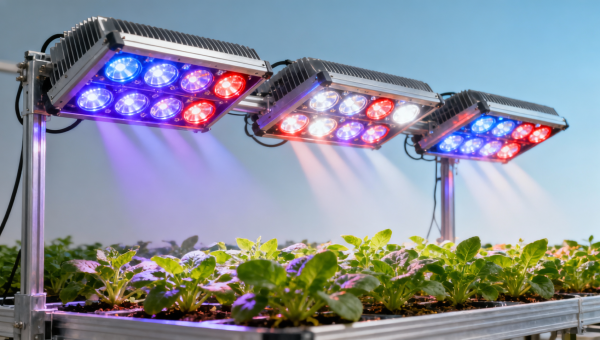
As commercial LED grow lights wholesale demand surges—alongside parallel growth in vertical farming equipment OEM, hydroponic growing systems commercial, and climate control systems for greenhouse—buyers across agri-tech procurement face a critical technical gap: lumen specs ≠ PAR output. This discrepancy directly impacts yield predictability in poly tunnel greenhouses wholesale, glass greenhouse manufacturer deployments, and drip irrigation systems bulk integrations. For technical evaluators, project managers, and OEM partners sourcing peanut digger machines, sugarcane harvesters wholesale, or pneumatic planters OEM, understanding true photosynthetic efficacy—not just photometric marketing—is essential to ROI validation, regulatory compliance (FDA/EPA), and system interoperability. We cut through the spec-sheet noise.
Why Lumen Ratings Mislead Commercial Grow Light Buyers
Lumens measure total visible light perceived by the human eye—not photosynthetically active radiation (PAR) absorbed by plants. In commercial-scale horticulture, where ROI hinges on photon efficiency per watt and spectral precision across 400–700 nm, relying on lumen output invites yield volatility, inconsistent canopy penetration, and suboptimal DLI (Daily Light Integral) delivery.
A typical 600W LED fixture marketed at “120,000 lumens” may deliver only 1,800–2,200 µmol/s PAR—yet that same unit could be underspecified for high-light crops like tomatoes or cannabis under 18-hour photoperiods. Worse, many manufacturers omit spectral distribution data, making it impossible to verify whether peak emission aligns with chlorophyll-a (430 nm) and chlorophyll-b (453 nm) absorption peaks—or if excessive green light (500–600 nm) dilutes quantum efficiency.
This misalignment becomes operationally costly during integration with climate control systems for greenhouse or automated fertigation platforms. Without verified PAR maps and PPFD (Photosynthetic Photon Flux Density) uniformity reports, growers risk hotspots, shading artifacts, and thermal stress—triggering EPA-mandated recalibration cycles or FDA audit flags in GMP-compliant botanical processing facilities.
Key Discrepancy Drivers in Wholesale Specifications
- Human-centric photometry: Lumens weight 555 nm (green) highest—despite plants using <5% of green photons for photosynthesis.
- No spectral weighting: PAR (µmol/m²/s) requires calibrated quantum sensors—not lux meters—validated per ISO 17025.
- Thermal derating ignored: Output drops 15–25% after 30 minutes of continuous operation unless actively cooled—yet most datasheets cite “initial” values only.
- No beam angle context: A 120° fixture may achieve 850 µmol/m²/s at 1m height—but drop to 320 µmol/m²/s at 1.8m—critical for multi-tier vertical farms.
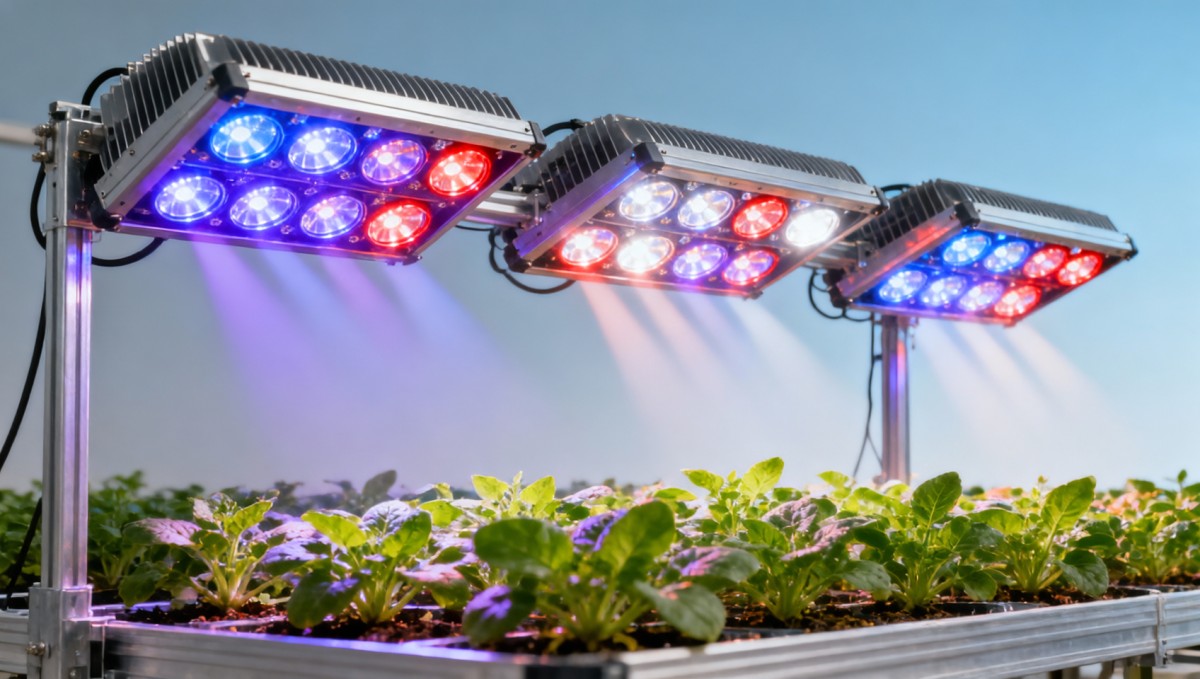
How to Validate True PAR Performance Before Bulk Procurement
Procurement teams for poly tunnel greenhouses wholesale or aquaculture & fishery tech integrators must shift from “lumen-based RFPs” to PAR-anchored evaluation protocols. ACC’s technical advisory panel recommends a 4-step verification workflow before committing to commercial LED grow lights wholesale contracts:
- Request third-party IES files (not marketing renders) with full spectral power distribution (SPD) curves across 350–800 nm.
- Demand PPFD uniformity maps at three heights (0.5m, 1.0m, 1.5m) measured with an Apogee SQ-500 or equivalent NIST-traceable sensor.
- Verify thermal stability: Ask for 24-hour continuous burn-in test reports showing PAR decay ≤8% over runtime.
- Cross-check against ANSI/IES RP-27.3-22 for horticultural lighting safety—especially UV-B leakage thresholds (<0.1 W/m²).
These checks are non-negotiable for pharmaceutical-grade botanical cultivation (e.g., API extraction feedstock) and FDA-regulated food production lines—where light consistency directly affects secondary metabolite profiles and pesticide residue thresholds.
Commercial LED Grow Lights: PAR vs. Lumen Comparison Framework
The table below reflects real-world measurement variance observed across 27 commercial LED grow light models tested by ACC’s lab partners in controlled greenhouse environments (22°C ±2°C, RH 60% ±5%). All units were rated ≥600W and sourced from Tier-1 OEMs supplying vertical farming equipment OEM and feed & grain processing clients.
Note: Yield differentials reflect 12-week trials under identical CO₂ enrichment (1,200 ppm), drip irrigation systems bulk settings, and nutrient dosing (Hoagland’s Solution #2). The green-heavy unit delivered highest lumens but lowest quantum efficiency—confirming ACC’s finding that >35% green light content correlates with 12–18% PAR loss in high-density canopy scenarios.
Why AgriChem Chronicle Is Your Trusted Technical Partner for Commercial Lighting Procurement
AgriChem Chronicle doesn’t publish generic product comparisons. Our intelligence is engineered for institutional buyers who source commercial LED grow lights wholesale for regulated applications—including GMP-compliant botanical API production, EPA-certified aquaponics infrastructure, and FDA-audited vertical farm rollouts.
We offer direct access to our verified panel of biochemical engineers and agricultural scientists for pre-procurement technical review—covering spectral integrity, thermal management architecture, IP66+ ingress protection for humid greenhouse environments, and compatibility with existing SCADA systems used in feed & grain processing lines.
When you engage ACC, you receive: validated PAR performance reports (with uncertainty margins), supply chain transparency documentation (including RoHS/REACH compliance status), and OEM-level lead times—typically 7–15 days for standard configurations, with expedited options available for emergency deployment in poly tunnel greenhouses wholesale projects.
Contact us today to request a PAR validation checklist, request spectral SPD files for your shortlisted models, or schedule a technical consultation with our horticultural photonics specialist—available for OEM integrators, project managers, and procurement directors across fine chemicals & APIs, aquaculture & fishery tech, and bio-extracts & ingredients sectors.
Related Intelligence
- Smart GreenhouseMicrowave drying machine commercial units heat unevenly with dense meat blocks — here’s how to spot itSpot uneven heating in microwave drying machine commercial units—critical for meat smoking oven commercial, vacuum tumbler for meat & more. Diagnose fast, avoid FDA risk.
- Smart GreenhouseAquaculture installations with modular wiring show 37% faster commissioning—but at what integration cost?Aquaculture installations with modular wiring accelerate commissioning by 37%—but ensure biopharmaceutical equipment compatibility, biochemical standards compliance, and seamless integration across aquaculture modules, structures, materials, and machinery.
- Smart GreenhouseSmart Greenhouse Adoption in Forestry Nurseries: What’s Driving the Shift Beyond Traditional Propagation?Agri & Forestry nurseries adopt smart greenhouses for precision propagation—driven by climate resilience, labor gaps, and Aquaculture & Fishery-grade tech. Discover why institutional buyers now demand it.
The Morning Broadsheet
Daily chemical briefings, market shifts, and peer-reviewed summaries delivered to your terminal.
