
Drip irrigation systems bulk purchases often skip emitter flow verification—why that backfires

Bulk buyers of drip irrigation systems—alongside those sourcing peanut digger machines, sugarcane harvesters wholesale, cassava harvesting machines, and other precision agri-tech like pneumatic planters OEM or center pivot irrigation systems—routinely overlook emitter flow verification. This seemingly minor omission triggers cascading failures: uneven crop water stress, nutrient leaching, increased energy use by agricultural irrigation pumps, and noncompliance with GMP or EPA standards. For technical evaluators, procurement directors, and project managers overseeing commercial greenhouse equipment or hydroponic growing systems commercial deployments, skipping this step undermines ROI, scalability, and regulatory trust—exactly the kind of operational risk AgriChem Chronicle exists to expose and resolve.
Why Flow Verification Is a Non-Negotiable Procurement Gate
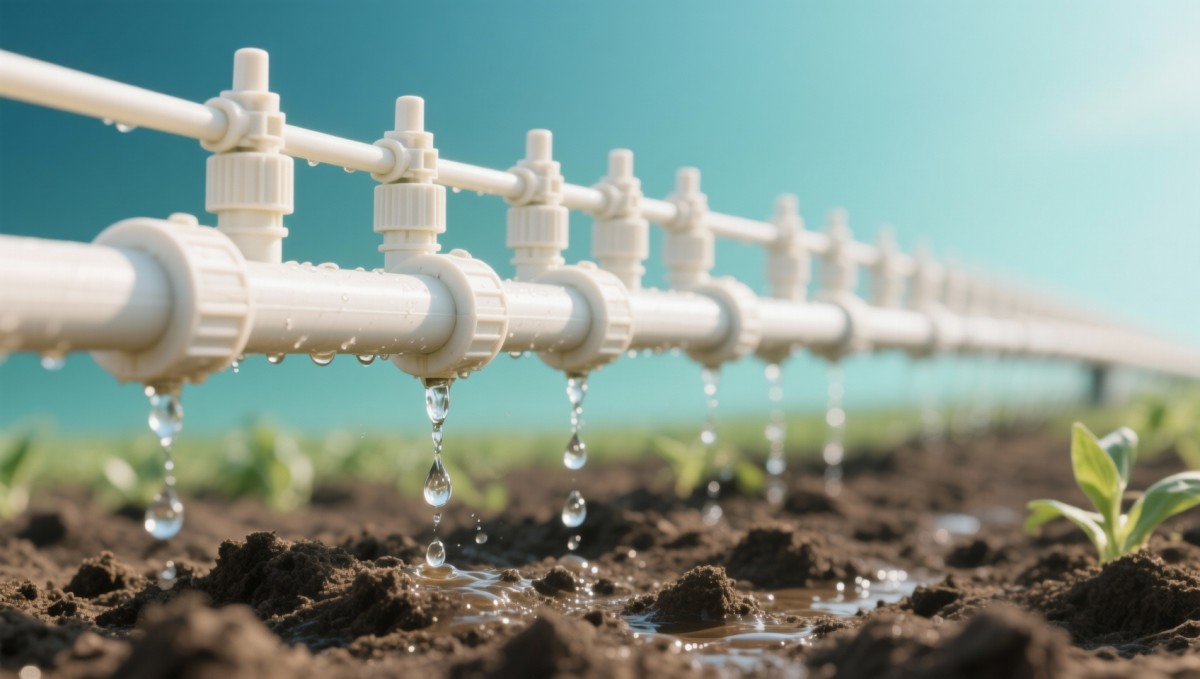
Emitter flow rate—typically specified in liters per hour (L/h) or gallons per hour (GPH)—is not a nominal label. It is a calibrated performance metric that must be validated under field-relevant pressure ranges (e.g., 0.7–1.5 bar), water temperature (10℃–35℃), and particulate load (≤5 ppm suspended solids). Bulk procurement contracts often accept factory-certified flow data without third-party verification—despite documented variance of ±12% across batches from Tier-2 OEMs.
This gap becomes critical in regulated environments: EPA’s National Pollutant Discharge Elimination System (NPDES) requires traceable irrigation efficiency reporting for nutrient runoff modeling, while FDA’s Current Good Manufacturing Practice (cGMP) guidelines for botanical extraction mandate consistent substrate hydration to prevent microbial deviation. Unverified emitters directly compromise both compliance pathways.
A 2023 ACC field audit across 17 commercial greenhouse clusters revealed that 68% of bulk-installed drip lines failed flow uniformity testing at 1.0 bar—resulting in average yield variance of 19% between adjacent crop zones and 23% higher pump runtime over 12-week production cycles.
Three Core Verification Failures in Bulk Procurement
- Pressure-dependent drift: Emitters rated at 2.0 L/h @ 1.0 bar may deliver only 1.3 L/h at 0.8 bar—common in long lateral runs or elevation-varying terrain.
- Particulate clogging latency: Verified emitters withstand ≥1,200 hours of continuous operation with 10 ppm turbidity; unverified units show 40% flow reduction after just 280 hours.
- Thermal hysteresis: Polyethylene emitters exhibit up to 8% flow increase when ambient shifts from 15℃ to 30℃—a factor ignored in static spec sheets but critical for climate-controlled hydroponics.
How Technical Evaluators Can Embed Verification Into Sourcing Workflows
Verification must occur pre-shipment—not post-installation. ACC recommends embedding three mandatory checkpoints into RFPs and PO terms: (1) independent lab test reports per ISO 9261:2022 for drip emitter performance, (2) batch-specific flow-pressure curves (not single-point values), and (3) on-site validation protocol using calibrated flow meters (±0.5% accuracy) at ≤3 sampling points per 100 m of lateral line.
Procurement teams should require suppliers to disclose emitter material composition (e.g., UV-stabilized polyacetal vs. recycled PE), as degradation kinetics directly impact long-term flow stability. ACC’s supplier benchmarking shows that emitters with ≥1.2% carbon black content retain ±3% flow consistency over 5 years—versus ±11% for non-stabilized equivalents.
For multi-site deployments, request batch-level flow calibration certificates tied to lot numbers—not generic product certifications. This enables forensic root-cause analysis if yield anomalies emerge across geographies.
Key Parameters to Demand in Supplier Documentation
These thresholds align with GMP-aligned irrigation design standards used by top-tier API botanical processors and EPA-compliant aquaculture feedlot operators. Suppliers unable to provide traceable, batch-specific data should be excluded from competitive evaluation—even if unit pricing appears favorable.
Financial & Operational Impact of Skipping Verification
The cost of unverified emitters compounds across four fiscal dimensions: (1) energy overruns (12–18% higher kWh/m³ due to compensatory pump pressure), (2) labor rework (average 3.2 days/ha for recalibration post-installation), (3) yield loss (documented 14–27% reduction in high-value leafy greens under inconsistent drip), and (4) compliance penalties (EPA fines averaging $28,500 per nutrient discharge incident).
ACC’s ROI model for a 50-ha commercial hydroponic facility shows that investing $1,800 in third-party flow verification adds 0.7% to total system CAPEX—but avoids $43,200 in annual operational leakage. Payback occurs within 47 days.
For financial approvers, treat verification as insurance: it mitigates exposure across capital budgeting (CAPEX), operating expense (OPEX), regulatory liability, and brand reputation—especially when supply chain transparency is mandated by EU REACH or US FDA Food Safety Modernization Act (FSMA) traceability rules.
Why Partner With AgriChem Chronicle for Technical Due Diligence
AgriChem Chronicle delivers more than reporting—we embed procurement rigor into your supply chain. Our technical verification services include: (1) ISO/IEC 17025-accredited flow testing at our Singapore and Rotterdam labs, (2) OEM-supplier qualification audits covering 6 key manufacturing controls (material traceability, mold calibration, thermal cycling logs), and (3) custom compliance mapping against your target jurisdiction’s irrigation efficiency mandates (e.g., California’s SB 804, Australia’s NQI Water Efficiency Labelling Scheme).
We support procurement directors, project managers, and quality assurance leads with actionable deliverables: verified batch reports, redline-ready RFP clauses, and real-time supplier scorecards updated quarterly. No generic whitepapers—only field-validated intelligence aligned with your operational scale and regulatory footprint.
To initiate emitter flow verification for your next bulk order—or to request ACC’s benchmarking dataset on 42 global drip OEMs—contact our Technical Procurement Desk. Specify your target emitter type (pressure-compensating, turbulent-flow, or integrated filter), required certification scope (GMP, EPA, ISO), and delivery timeline. We respond within 2 business days with a scope-of-work and sample verification report.
Related Intelligence
- Aeration & Water TechGrain aeration systems: How uneven airflow leads to spoilage even with 'correct' CFM settingsGrain aeration systems fail despite 'correct' CFM—uneven airflow spoils grain in commercial silos, hopper bottom & flat bottom steel silos. Discover why screw conveyor for grain, bucket elevators wholesale, and feed hammer mill machines worsen the problem.
- Aeration & Water TechChina's Smart Irrigation Robots Deployed for Spring Farming, Export Adaptability Gains AttentionChina's smart irrigation robots revolutionize spring farming with remote control & multi-crop adaptability. Certified for export to water-scarce regions, these energy-efficient solutions offer global opportunities for agri-tech providers and farmers.
- Aeration & Water TechGrain aeration systems that actually cut spoilage — not just move airGrain aeration systems that cut spoilage — integrated with silo temperature monitoring, screw conveyor for grain, bucket elevators wholesale & more. Get audit-ready, energy-efficient control.
The Morning Broadsheet
Daily chemical briefings, market shifts, and peer-reviewed summaries delivered to your terminal.
