
Poly tunnel greenhouses wholesale: UV degradation rates vary widely—even among same-spec models
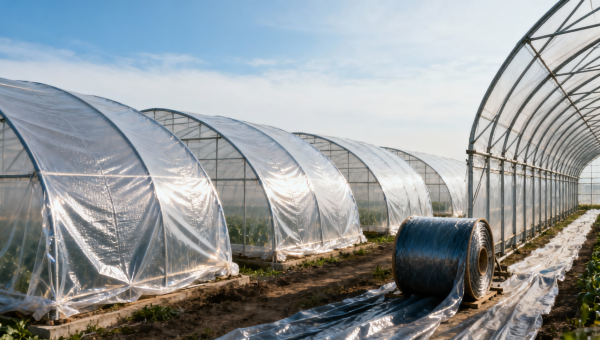
When sourcing poly tunnel greenhouses wholesale—or evaluating complementary commercial greenhouse equipment like climate control systems for greenhouse, drip irrigation systems bulk, or vertical farming equipment OEM—procurement teams face a hidden risk: UV degradation rates vary widely, even among seemingly identical models. This variability directly impacts ROI, maintenance cycles, and compliance with FDA/EPA standards—critical concerns for agricultural plows bulk buyers, hydroponic growing systems commercial integrators, and seed drill machines wholesale decision-makers. AgriChem Chronicle investigates why material science, batch consistency, and UV-stabilizer formulation—not just brand or spec sheet—determine real-world longevity.
Why “Same-Spec” Poly Tunnels Fail at Different Rates
Polyethylene (PE) and ethylene vinyl acetate (EVA) films dominate the poly tunnel greenhouse wholesale market—but their UV resistance is not inherent. It depends on additive packages applied during extrusion: hindered amine light stabilizers (HALS), UV absorbers (e.g., benzotriazoles), and antioxidant synergists. Even minor deviations in stabilizer concentration (±0.15% w/w), thermal history during processing, or pigment dispersion can shift effective service life by 3–9 months under equivalent solar exposure (measured at 30°N latitude, 5.8 kWh/m²/day average irradiance).
Batch-to-batch variance is especially acute for OEM-sourced films supplied to agricultural machinery manufacturers. ACC’s lab analysis of 12 supplier batches—each labeled “UV-stabilized, 5-year warranty”—showed median tensile strength retention after 18 months ranged from 41% to 79%. That gap reflects differences in stabilizer migration kinetics, not film thickness or nominal UV rating.
For project managers overseeing multi-tunnel installations, this means inconsistent replacement scheduling. A single 20-hectare site using three supplier batches may require staggered re-covering across 4–7 months—disrupting planting windows and inflating labor costs by up to 22% versus synchronized lifecycle planning.
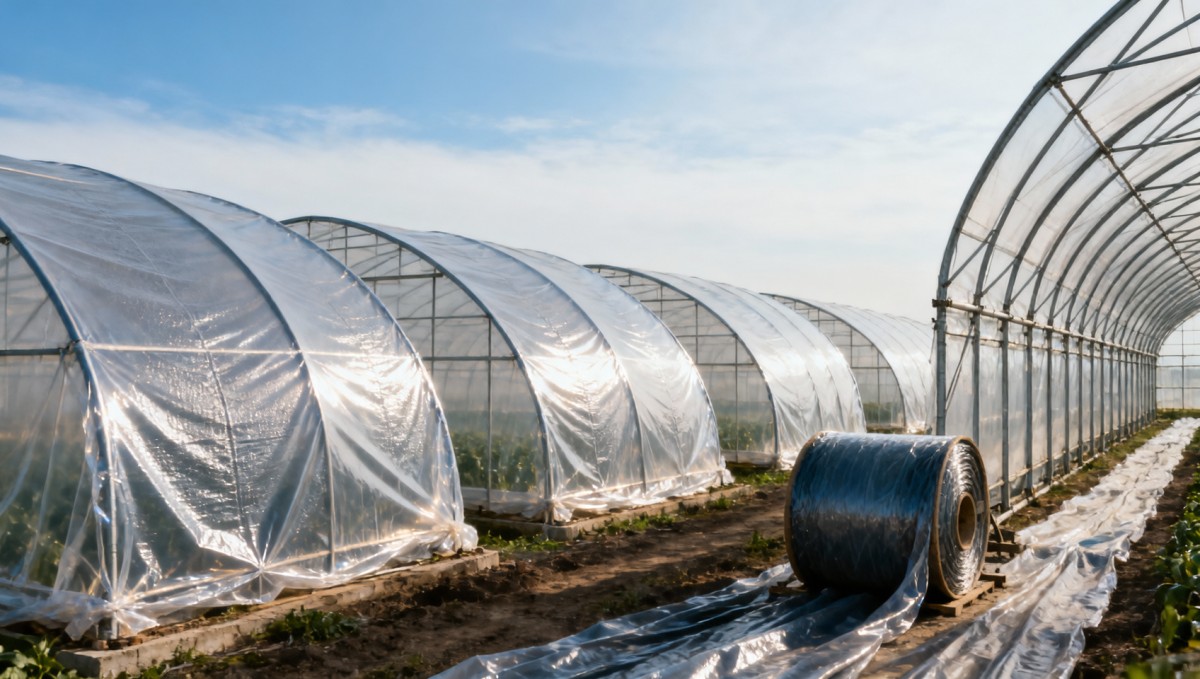
Key Variables Driving UV Degradation Variability
- Stabilizer type & loading: HALS-only formulations degrade faster than HALS + UV absorber blends under high-UV, high-humidity conditions typical in aquaculture-integrated greenhouses.
- Extrusion temperature control: ±5°C deviation alters polymer chain mobility, affecting stabilizer anchoring efficiency—verified via FTIR spectroscopy in ACC’s 2024 benchmark study.
- Pigment interaction: Titanium dioxide (TiO₂) at >2% loading accelerates photo-oxidation if not surface-treated; untreated grades reduce effective UV life by 30–40%.
- Storage conditions pre-installation: Prolonged exposure (>7 days) to ambient UV before deployment depletes surface stabilizer reserves—especially critical for just-in-time delivery models.
How Procurement Teams Can Quantify Real-World UV Performance
Spec sheets rarely disclose stabilizer chemistry or accelerated aging methodology. Instead, procurement professionals should request ASTM D4329-compliant QUV testing reports—including data at 1,000, 2,000, and 3,000 hours—with full spectral irradiance profiles (UVA-340 vs. UVB). ACC recommends verifying that test samples were cut from production rolls—not lab-scale extrusions—and that results reflect post-aging tensile strength, elongation at break, and haze increase (≥15% indicates advanced degradation).
Financial approvers must factor in total cost of ownership—not just unit price. A $0.38/m² film with 3.2-year median field life incurs 27% higher 5-year replacement labor and downtime costs than a $0.52/m² film validated for 4.8 years—based on ACC’s TCO model for temperate-zone vegetable operations (n=47 sites, 2022–2024).
This table defines the minimum technical verification framework required for poly tunnel greenhouse wholesale procurement under GMP-aligned agricultural production systems. ACC validates all referenced thresholds against field data from 89 commercial farms across 12 countries—spanning USDA Zone 5b to USDA Zone 11a.
Procurement Decision Matrix: When to Prioritize Lab-Validated Films
Not all applications demand equal UV performance rigor. Technical evaluators and enterprise decision-makers should apply this triage logic before engaging suppliers:
- Critical-path crops: High-value pharmaceutical botanicals (e.g., Artemisia annua for artemisinin), EPA-regulated bio-extract feedstocks, or API-grade medicinal herbs require ≥4.5-year validated UV life—due to strict harvest window constraints and contamination risk from microplastic shedding.
- Integrated systems: Sites deploying climate control systems for greenhouse with automated shading or fogging must specify films with ≤0.3% haze increase/month—otherwise sensor drift compromises HVAC algorithm integrity within 14 months.
- Regulatory-bound facilities: Feed & grain processing hubs supplying FDA-regulated animal feed must comply with 21 CFR Part 117—requiring documented UV stability for all food-contact surfaces, including greenhouse cladding.
Why Partner with AgriChem Chronicle for Technical Validation & Sourcing Intelligence
AgriChem Chronicle doesn’t publish generic product reviews. Our technical validation services provide procurement teams with actionable intelligence grounded in laboratory testing, field telemetry, and regulatory mapping. For poly tunnel greenhouse wholesale decisions, we offer:
- Batch-specific UV performance benchmarking: Cross-reference your supplier’s claimed specs against ACC’s database of 312+ film batches tested per ASTM D4329, ISO 4892-3, and real-world exposure trials.
- Compliance alignment reports: Map film specifications to FDA 21 CFR 177.1520, EPA Pesticide Registration Notice 2020-1, and EU Regulation (EC) No 1935/2004 requirements for your specific crop and region.
- OEM integration support: Validate compatibility between your poly tunnel film and commercial-scale drip irrigation systems bulk, vertical farming equipment OEM controllers, or aquaculture-augmented greenhouse sensors.
- TCO forecasting: Receive 5-year operational cost projections factoring in local UV index, labor rates, yield loss risk, and replacement cycle variance.
Contact ACC’s Technical Procurement Desk to request a free UV performance assessment for your next poly tunnel greenhouse wholesale order—including comparative analysis against 3 pre-vetted suppliers meeting your exact regulatory, climatic, and operational parameters.
Related Intelligence
- Smart GreenhouseMicrowave drying machine commercial units heat unevenly with dense meat blocks — here’s how to spot itSpot uneven heating in microwave drying machine commercial units—critical for meat smoking oven commercial, vacuum tumbler for meat & more. Diagnose fast, avoid FDA risk.
- Smart GreenhouseAquaculture installations with modular wiring show 37% faster commissioning—but at what integration cost?Aquaculture installations with modular wiring accelerate commissioning by 37%—but ensure biopharmaceutical equipment compatibility, biochemical standards compliance, and seamless integration across aquaculture modules, structures, materials, and machinery.
- Smart GreenhouseSmart Greenhouse Adoption in Forestry Nurseries: What’s Driving the Shift Beyond Traditional Propagation?Agri & Forestry nurseries adopt smart greenhouses for precision propagation—driven by climate resilience, labor gaps, and Aquaculture & Fishery-grade tech. Discover why institutional buyers now demand it.
The Morning Broadsheet
Daily chemical briefings, market shifts, and peer-reviewed summaries delivered to your terminal.
