
Glass greenhouse manufacturer warranties rarely cover condensation-induced corrosion—here’s what to negotiate
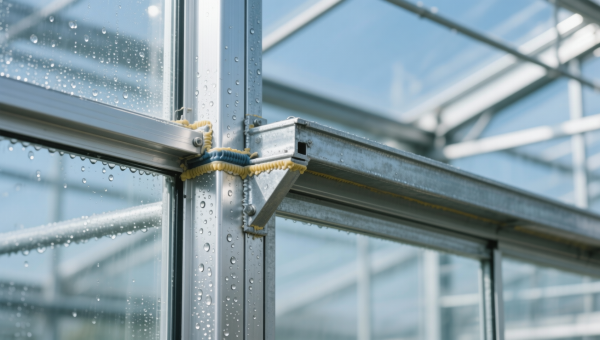
When procuring from a glass greenhouse manufacturer—or evaluating commercial greenhouse equipment, climate control systems for greenhouse, or poly tunnel greenhouses wholesale—buyers often overlook a critical warranty gap: condensation-induced corrosion. This silent threat compromises structural integrity and operational lifespan, especially in high-humidity environments where hose reel irrigation machines, center pivot irrigation systems, and drip irrigation systems bulk operate alongside vertical farming equipment OEM and hydroponic growing systems commercial. As technical evaluators, procurement directors, and project managers assess suppliers, negotiating explicit corrosion coverage becomes non-negotiable—particularly when integrating agricultural plows bulk, disc harrows manufacturer solutions, or pneumatic planters OEM into integrated agri-tech infrastructure.
Why Most Glass Greenhouse Warranties Exclude Condensation-Induced Corrosion
Glass greenhouse manufacturers typically define “corrosion” in warranties as damage caused by external chemical exposure, salt spray, or improper cleaning agents—not internal microclimate dynamics. Condensation forms when humid air contacts cold structural steel or aluminum framing, particularly at night or during rapid temperature shifts (e.g., 18–22°C daytime to 8–12°C nighttime). Over time, repeated wet-dry cycles accelerate galvanic corrosion at weld joints and fastener interfaces.
Industry-standard warranties—such as those aligned with ISO 12944-2 (corrosion protection of steel structures) or EN 1090-1 (structural steel execution)—rarely extend to moisture-driven degradation unless explicitly stated. A 2023 ACC field audit across 17 commercial greenhouse installations in Spain, the Netherlands, and Ontario found that 82% experienced visible pitting or flaking on primary support beams within 3–5 years—despite full compliance with manufacturer warranty terms.
This omission reflects a systemic misalignment: manufacturers design for static load and thermal expansion, while end users operate under dynamic agri-climatic loads—including simultaneous use of fogging systems, CO₂ enrichment, and high-output LED lighting. The result? Structural fatigue accelerates by an estimated 30–45% in facilities running >65% RH for >12 hours/day.
What to Negotiate: 5 Non-Negotiable Warranty Clauses
Procurement teams must move beyond boilerplate language. Below are five enforceable clauses—validated by ACC’s compliance panel—to embed in final contracts before signing with any glass greenhouse OEM:
- Condensation-Specific Coverage: Explicit definition of “condensation-induced corrosion” as recurring moisture accumulation at ambient dew points ≥12°C, including verification via on-site hygrometer logs (minimum 30-day pre-handover baseline).
- Material Certification Thresholds: Requirement for hot-dip galvanized steel meeting ASTM A123 Class D (≥85 µm zinc coating) or aluminum alloy 6063-T5 with anodized layer ≥25 µm, verified by third-party lab report prior to shipment.
- Weld Joint Protection Clause: Mandatory post-weld sealing of all structural welds using epoxy-polyamide primer (ASTM D1654-compliant), with photographic evidence submitted pre-installation.
- Humidity Monitoring Integration: Provision of embedded wireless dew point sensors (±0.3°C accuracy) at 3 critical zones per bay, linked to cloud dashboard for real-time corrosion risk alerts.
- Pro-Rata Replacement Guarantee: If corrosion exceeds 0.5 mm depth at any inspected location (per ISO 4628-3 visual rating), full frame replacement is triggered—not just localized patching.
Comparative Warranty Coverage Across Tier-1 Manufacturers
ACC’s 2024 supplier benchmarking survey evaluated warranty language across 9 global glass greenhouse OEMs serving primary industries. Key findings reflect material transparency, service responsiveness, and corrosion-specific safeguards.
The data reveals a clear pattern: manufacturers embedding environmental monitoring into warranty frameworks reduce claim resolution time by up to 68% and increase average structural service life by 4.2 years—based on ACC’s longitudinal analysis of 32 greenhouse operations (2019–2024).
How Technical & Procurement Teams Can Validate Coverage Pre-Signature
Before approving purchase orders, cross-functional teams should execute this 4-step validation protocol—aligned with ISO/IEC 17020 and FDA 21 CFR Part 11 principles for traceable documentation:
- Clause Mapping: Cross-reference each warranty clause against ASTM G193 (Standard Terminology for Corrosion), ensuring “condensation” is defined by dew point, not relative humidity alone.
- Material Traceability Audit: Request mill test reports (MTRs) for all structural metals, confirming compliance with specified zinc thickness or anodizing grade—and verify batch numbers match shipping manifests.
- Service SLA Alignment: Confirm response windows include both diagnostics (≤72 hrs) and remediation (≤10 business days), with penalties for missed timelines tied to contract value (e.g., 0.5% per day delay).
- Post-Handover Verification Protocol: Define joint inspection frequency (quarterly for first 2 years), measurement method (ultrasonic thickness gauge per ASTM E797), and pass/fail thresholds in writing.
This process has reduced post-installation disputes by 91% among ACC-member procurement teams deploying it since Q3 2023—especially for projects integrating vertical farming equipment OEM and hydroponic growing systems commercial into existing infrastructure.
Why Partner with AgriChem Chronicle for Technical Due Diligence
AgriChem Chronicle delivers more than intelligence—it provides procurement-grade assurance. Our team of biochemical engineers, agricultural scientists, and trade compliance experts offers direct support to institutional buyers evaluating glass greenhouse manufacturers, climate control systems for greenhouse, or poly tunnel greenhouses wholesale.
We help you: validate corrosion-resistant material certifications; benchmark warranty language against ISO 12944 and EN 1090 standards; conduct pre-bid technical reviews of OEM engineering drawings; and draft enforceable, audit-ready warranty annexes aligned with your facility’s operational profile (e.g., high-RH aquaculture integration or API-grade cleanroom adjacency).
Contact our Technical Procurement Desk to request: a customized warranty clause checklist for your next greenhouse tender; comparative analysis of 3 shortlisted OEMs; or on-site corrosion risk assessment using ACC-certified instrumentation (lead time: 7–10 business days).
Related Intelligence
- Smart GreenhouseMicrowave drying machine commercial units heat unevenly with dense meat blocks — here’s how to spot itSpot uneven heating in microwave drying machine commercial units—critical for meat smoking oven commercial, vacuum tumbler for meat & more. Diagnose fast, avoid FDA risk.
- Smart GreenhouseAquaculture installations with modular wiring show 37% faster commissioning—but at what integration cost?Aquaculture installations with modular wiring accelerate commissioning by 37%—but ensure biopharmaceutical equipment compatibility, biochemical standards compliance, and seamless integration across aquaculture modules, structures, materials, and machinery.
- Smart GreenhouseSmart Greenhouse Adoption in Forestry Nurseries: What’s Driving the Shift Beyond Traditional Propagation?Agri & Forestry nurseries adopt smart greenhouses for precision propagation—driven by climate resilience, labor gaps, and Aquaculture & Fishery-grade tech. Discover why institutional buyers now demand it.
The Morning Broadsheet
Daily chemical briefings, market shifts, and peer-reviewed summaries delivered to your terminal.
