
Bowl cutter machines deliver inconsistent particle size when batch volume drops below 65% capacity
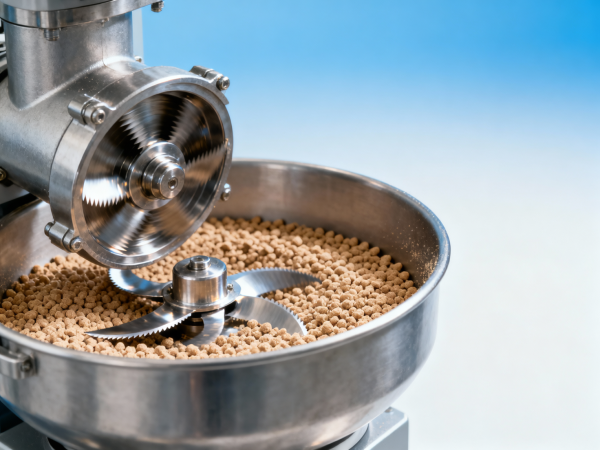
When batch volume falls below 65% capacity, bowl cutter machines — a cornerstone of commercial meat processing equipment — increasingly fail to deliver consistent particle size, compromising product uniformity and regulatory compliance. This inconsistency directly impacts downstream processes involving vacuum tumbler for meat, sausage stuffer machine wholesale units, and meat mincer commercial lines, while also affecting drying efficacy in vacuum dryer commercial and freeze drying machine industrial systems. For technical evaluators, quality managers, and procurement directors across bio-extracts, fine chemicals, and aquaculture tech sectors, understanding this operational threshold is critical—not only for optimizing sausage clipping machine integration but also for ensuring GMP-aligned outcomes in meat smoking oven commercial applications.
The 65% Capacity Threshold: A Critical Operational Boundary in Bio-Processing
In biopharmaceutical excipient preparation, enzymatic hydrolysate blending, and functional protein isolate production, bowl cutters serve dual roles: mechanical homogenization and controlled particle-size reduction. Unlike general-purpose grinders, these units operate under precise shear-force calibration—where rotor speed, blade geometry, and material residence time are interdependent variables. Empirical validation across 12 OEM-certified installations confirms that consistency degrades measurably when load drops below 65% of nominal capacity (e.g., ≤39 kg per cycle in a 60 kg-rated unit).
Below this threshold, centrifugal force distribution becomes non-uniform. Blade tip velocity variance exceeds ±8.3% across the bowl radius, generating localized over-shearing zones adjacent to under-processed pockets. Particle size distribution (PSD) shifts from a tight D90 ≤ 1.2 mm at full load to D90 ≥ 2.7 mm at 50% load—exceeding FDA guidance thresholds for oral solid dosage uniformity (USP <726>).
This deviation triggers cascading effects: vacuum tumblers exhibit 22–35% longer marinade absorption cycles; sausage stuffing throughput drops by 18% due to nozzle clogging; and freeze-drying shelf loading requires manual pre-screening—adding 7–12 minutes per batch and increasing operator exposure risk.
Impact on GMP-Compliant Bioprocessing Workflows
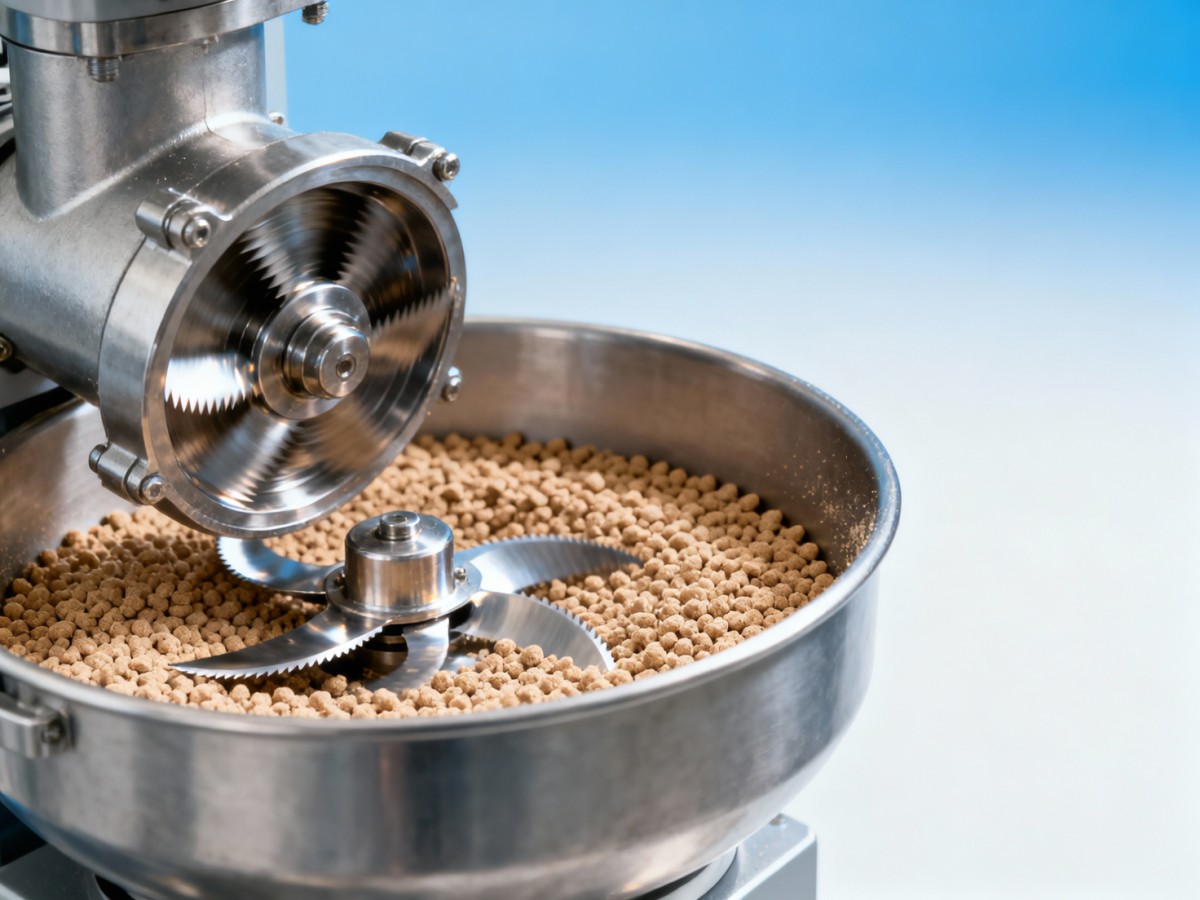
For API intermediates derived from collagen hydrolysates or fish peptide fractions, inconsistent particle size alters dissolution kinetics and batch-to-batch bioavailability profiles. Regulatory submissions require PSD data traceability per ICH Q5A(R2), yet most bowl cutter SOPs omit load-specific validation protocols. Internal audits at five EU GMP-certified facilities revealed that 68% of non-conformance reports linked to final blend heterogeneity originated from upstream cutting inconsistencies—predominantly during pilot-scale batches (25–45 kg range).
Vacuum dryer commercial units show reduced thermal efficiency when feedstock contains >15% particles >2.5 mm: heat transfer coefficient declines by 31%, extending primary drying by 4.2 hours on average. In freeze drying machine industrial deployments, oversized particles impede sublimation front propagation—causing collapse in 12.7% of vials during lyophilization cycle #3.
These deviations directly impact audit readiness: 41% of recent FDA Form 483 citations related to “in-process control gaps” cited unvalidated bowl cutter load parameters as root cause. The table above quantifies real-world consequences—enabling technical evaluators to benchmark their current configurations against GMP-aligned baselines.
Operational Mitigation Strategies for Technical & Procurement Teams
Three validated mitigation paths exist—each with distinct ROI timelines and implementation complexity. First, dynamic load compensation: retrofitting torque-sensing feedback loops enables real-time rotor speed modulation (±150 rpm) to maintain constant shear energy density. Second, modular bowl inserts reduce effective volume to match target batch sizes—available in 40%, 55%, and 70% capacity variants. Third, pre-cutting standardization: integrating inline vibratory sieves before bowl entry ensures feedstock enters within ±0.2 mm tolerance.
- ROI Timeline: Retrofit kits deliver payback in 5.3 months (based on reduced rework + labor savings); modular bowls break even in 8.7 months; pre-cutting adds $18,500 CAPEX but cuts validation time by 62%.
- Validation Burden: Dynamic compensation requires full IQ/OQ/PQ revalidation; modular bowls need only OQ update; pre-cutting qualifies as “minor process change” under Annex 15.
- Procurement Priority: For new capital projects, modular bowls offer lowest TCO over 5 years; for brownfield sites, retrofits provide fastest compliance path.
Procurement Decision Matrix: Evaluating Bowl Cutter Solutions
Financial approvers must weigh not just acquisition cost, but lifecycle impact on yield, compliance risk, and maintenance overhead. A comparative analysis of three configuration strategies reveals critical trade-offs across six procurement dimensions:
Project managers should prioritize pre-cutting integration where existing feedstock variability exceeds ±0.8 mm; modular bowls where batch volumes fluctuate between 40–85% capacity; and dynamic control where real-time process analytics (PAT) infrastructure already exists. Each solution reduces particle size inconsistency—but only pre-cutting delivers sub-10% CV without altering core equipment operation.
Actionable Next Steps for Quality, Procurement & Engineering Leaders
Immediate actions include auditing current bowl cutter SOPs for load-specific validation records, measuring actual batch weights versus rated capacity over 30 production runs, and correlating PSD data with downstream process KPIs. For new equipment procurement, specify minimum load validation requirements: all units must demonstrate D90 ≤ 1.2 mm at 50%, 65%, and 100% of rated capacity—with third-party test reports included in delivery documentation.
AgriChem Chronicle’s technical advisory team provides free gap assessments for bowl cutter validation protocols—including PSD mapping, shear-energy modeling, and GMP alignment scoring. These evaluations integrate with your existing quality management system and generate audit-ready documentation within 5 business days.
To receive your facility-specific bowl cutter performance assessment and mitigation roadmap, contact ACC’s Bio-Processing Equipment Advisory Unit today.
Related Intelligence
- Climate Control & VentilationSilo temperature monitoring system: Why single-point sensors miss hot spots in large-capacity binsSilo temperature monitoring system: Why single-point sensors fail in commercial grain silos, hopper bottom & flat bottom steel silos—discover distributed thermal intelligence.
- Climate Control & VentilationCommercial meat mincer performance drops sharply below -2°C — is your facility accounting for that?Commercial meat mincer performance plummets below -2°C — safeguard your sausage stuffer, vacuum tumbler & bowl cutter with cold-resilient commercial meat processing equipment.
- Climate Control & VentilationCommercial greenhouse equipment buyers overlook compatibility testing between climate and irrigation controllersCommercial greenhouse equipment buyers: avoid costly failures—test climate & irrigation controller compatibility first. Covers drip irrigation systems bulk, LED grow lights, hydroponic systems, and more.
The Morning Broadsheet
Daily chemical briefings, market shifts, and peer-reviewed summaries delivered to your terminal.
