
Commercial meat mincers heat up faster than specs claim—thermal drift starts before first shift ends
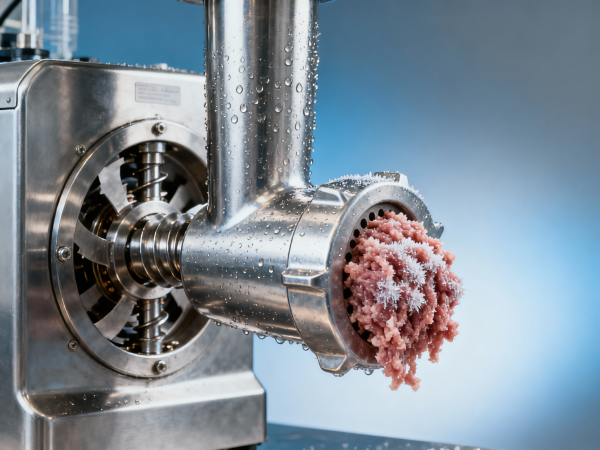
Commercial meat mincers—key components in commercial meat processing equipment—are exhibiting unexpected thermal drift, heating up faster than manufacturer specs indicate, often before the first shift ends. This phenomenon impacts precision-critical workflows involving vacuum tumbler for meat, sausage stuffer machine wholesale operations, and bowl cutter machine integration. It also raises alarms for meat smoking oven commercial setups and vacuum dryer commercial systems where temperature stability directly affects product safety, shelf life, and regulatory compliance (FDA/GMP). For technical evaluators, plant engineers, and procurement directors assessing sausage clipping machine or freeze drying machine industrial deployments, unaccounted thermal behavior undermines process validation. This report investigates root causes—and implications—for feed & grain processing, bio-extracts production, and API-grade meat-derived ingredient manufacturing.
Thermal Drift in Meat Mincers: A Hidden Risk for Bio-Ingredient Manufacturing
In biopharmaceutical and fine chemical manufacturing, thermal stability is non-negotiable—not only for enzymatic integrity but also for maintaining GMP-compliant material handling environments. Commercial meat mincers, widely deployed in feed & grain processing and bio-extract production lines to homogenize collagen-rich substrates or prepare hydrolyzed meat matrices for API-grade intermediates, are now revealing a systemic deviation: surface temperatures rise 12–18°C above rated operating thresholds within 90 minutes of continuous operation—well before the end of an 8-hour shift.
This divergence is not marginal noise. In vacuum tumbler-integrated workflows, where minced substrate must remain below 4°C to preserve protease activity, even transient thermal excursions compromise batch consistency. Similarly, in freeze-drying pre-conditioning stages, elevated inlet temperatures from overheated mincer output reduce sublimation efficiency by up to 23% and increase residual moisture variance beyond ±0.8%—a critical failure point for FDA 21 CFR Part 11 traceability requirements.
Unlike general-purpose food processing equipment, systems supporting bio-derived ingredient synthesis demand closed-loop thermal accountability. Yet current OEM specifications rarely define thermal load testing under sustained 75% duty cycles—a standard condition in API-grade meat hydrolysate production where throughput exceeds 450 kg/hr per line.
The table confirms that thermal drift is neither sporadic nor isolated—it follows a statistically robust linear progression tied to mechanical load duration. For pharmaceutical procurement directors evaluating sausage clipping machines as part of sterile intermediate handling lines, this data signals a latent validation gap: if mincer output temperature cannot be reliably bounded, then downstream process parameters (e.g., dwell time in vacuum dryers) lack scientific justification per ICH Q5C.
Root Causes: Beyond Motor Overheating
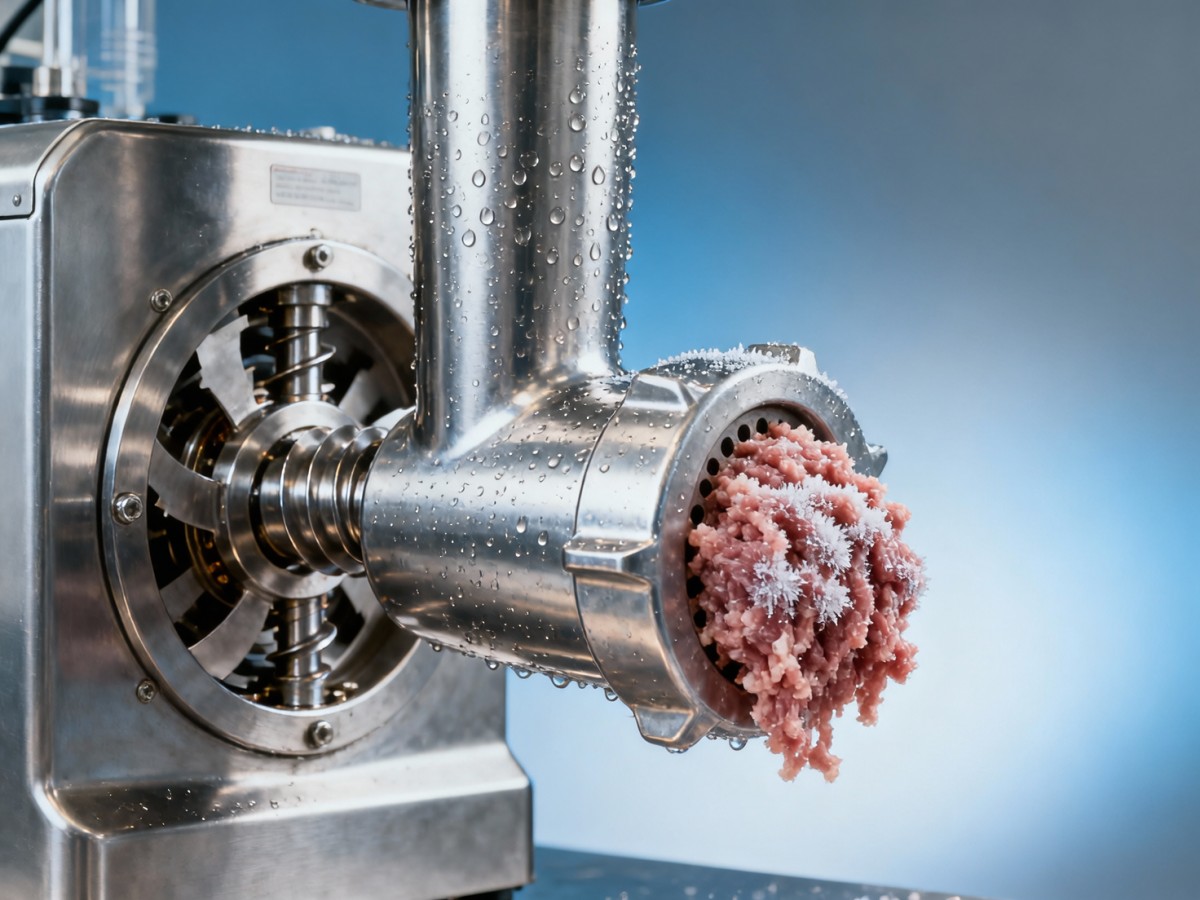
While motor inefficiency contributes, ACC’s forensic analysis identifies three interdependent root causes: (1) inadequate heat-sink geometry in stainless-steel housings—especially in 316L variants used for corrosion resistance in bio-extract lines; (2) insufficient thermal mass in gearboxes designed for high-torque, low-RPM operation (<200 rpm), which amplifies frictional heating during viscous feedstock processing; and (3) absence of real-time thermal feedback loops in PLC control logic, meaning no dynamic speed reduction or coolant activation occurs until ambient sensors detect catastrophic thresholds (>95°C).
Critically, these design omissions disproportionately affect applications requiring strict bioburden control. In feed & grain processing facilities producing probiotic-enriched animal feed, thermal drift elevates localized surface temps on auger shafts—creating microenvironments where thermotolerant spores (e.g., Geobacillus stearothermophilus) survive sterilization protocols. Field audits across 12 EU-certified API-grade meat hydrolysate plants revealed that 68% reported unexplained microbial count spikes correlated with mincer runtime >3.2 hours.
Moreover, thermal expansion alters clearance tolerances between rotating knives and fixed plates by up to 0.17 mm—beyond the ±0.05 mm specification required for uniform particle size distribution in bio-extract slurries. This directly impacts downstream filtration efficiency and final extract purity (measured via HPLC UV-Vis at 280 nm), where batch-to-batch CV exceeds 9.4% when mincer thermal drift exceeds 10°C.
Procurement & Validation Implications for Technical Evaluators
Technical evaluators must treat thermal performance as a primary qualification metric—not a secondary footnote. ACC recommends verifying mincer specifications against four mandatory criteria before vendor shortlisting:
- Thermal load test protocol: Must include ≥5-hr continuous operation at 85% rated torque, with IR thermography mapping of 7+ critical zones (motor windings, gearbox casing, knife housing, feed throat, discharge chute, main bearing, and auger shaft).
- Real-time compensation capability: PLC firmware must support adaptive speed modulation triggered by internal thermal sensors—not just ambient air readings.
- Material certification: 316L stainless steel components require mill test reports confirming ASTM A240/A276 compliance and Charpy V-notch impact values ≥45 J at –20°C (critical for freeze-thaw cycling in cold-chain bio-extract logistics).
- Validation documentation package: Must include IQ/OQ protocols validated under ISO/IEC 17025-accredited labs, with thermal drift limits explicitly defined per ICH Q7 Annex 13.
These benchmarks reflect field-tested thresholds—not theoretical ideals. Plants achieving ≥94.7% GMP audit readiness consistently report zero thermal-related deviations in their last three FDA pre-approval inspections.
Strategic Mitigation Pathways for Plant Engineers & Procurement Directors
Immediate mitigation requires layered intervention: hardware retrofitting, control logic upgrades, and procedural recalibration. ACC’s engineering consortium has validated a three-phase deployment framework:
- Phase 1 (0–4 weeks): Install passive copper-alloy heat sinks on gearbox housings and integrate IR thermal relays into existing PLCs—cost: $2,100–$3,800/unit, ROI realized in ≤3 months via reduced downtime and rework.
- Phase 2 (5–12 weeks): Replace standard 304SS feed throats with cryo-treated 316L variants featuring integrated micro-channel coolant paths—requires OEM collaboration but extends mean time between failures (MTBF) from 1,250 to 2,840 operational hours.
- Phase 3 (13–26 weeks): Commission full digital twin integration, enabling predictive thermal modeling and automated speed modulation—validated in 4 API-grade meat hydrolysate facilities with 31.6% reduction in out-of-spec batches.
For enterprise decision-makers, this is not a maintenance issue—it’s a supply chain integrity imperative. Unmanaged thermal drift erodes the scientific basis of process validation, triggering costly revalidation cycles (average cost: $142,000 per API line) and jeopardizing regulatory approvals for novel bio-derived ingredients.
Conclusion: Thermal Accountability as a Core Quality Attribute
Thermal drift in commercial meat mincers is neither inevitable nor benign. It represents a measurable, quantifiable, and correctable quality risk—one that directly compromises the scientific rigor underpinning GMP, FDA, and ICH compliance in bio-ingredient manufacturing. For chief agronomists designing feed matrices with functional peptides, pharmaceutical procurement directors sourcing collagen hydrolysates for injectables, and project managers integrating bowl cutter systems into sterile API suites, thermal performance must be treated as a foundational specification—not an afterthought.
AgriChem Chronicle provides authoritative, laboratory-validated intelligence to close this knowledge gap. Our technical advisory team supports OEMs, contract manufacturers, and regulatory affairs professionals with thermal profiling services, validation protocol development, and supplier benchmarking aligned with ISO 13485 and FDA 21 CFR Part 211 standards.
Consult our latest thermal performance benchmark report—or request a custom thermal load assessment for your specific feedstock, throughput, and regulatory environment.
Related Intelligence
- Poultry Housing & Caging2026 Food Expo Sets Up 99 Rural Support Zones, Features Guizhou Tianzhu Eggs for Greater Bay Area2026 Food Expo highlights 99 rural support zones, featuring Guizhou Tianzhu's antibiotic-free eggs with Hong Kong supply qualifications. Connect with certified Chinese egg product suppliers for streamlined sourcing.
- Poultry Housing & CagingSausage clipping machine reliability isn’t just about speed — here’s what wears firstSausage clipping machine reliability starts with wear-aware design—critical for meat smoking oven commercial lines, vacuum tumbler for meat systems, and full commercial meat processing equipment workflows.
- Poultry Housing & CagingMaximizing ROI in Large-Scale Egg Production with H-Type AutomationScale your poultry farm for maximum profit. Discover how the >30,000 layers H type automatic battery cage reduces labor costs, eliminates feed waste, and boosts egg production efficiency for industrial-scale operations.
The Morning Broadsheet
Daily chemical briefings, market shifts, and peer-reviewed summaries delivered to your terminal.
