

The Authority in Global Agricultural Chemistry & Bio-Resources
How to Compare Flame Retardants Manufacturers Beyond Compliance
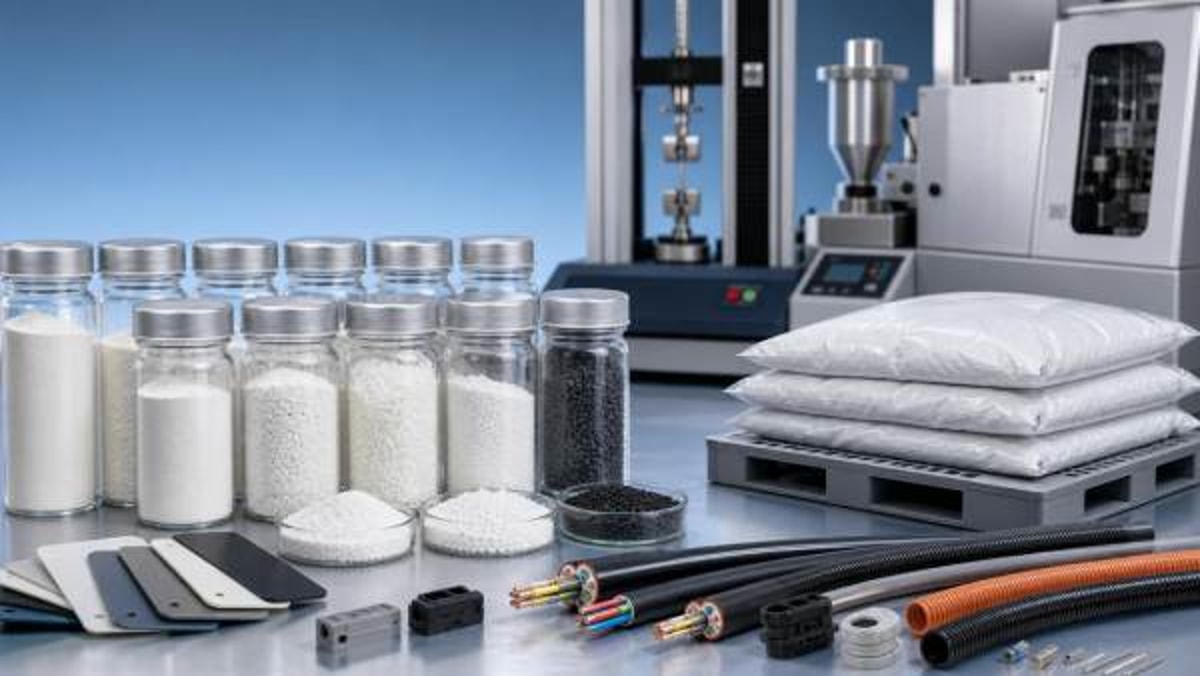
Choosing a flame retardants manufacturer should involve far more than checking regulatory certificates. For business evaluation teams, the real differentiators lie in formulation consistency, supply chain resilience, technical support, customization capability, and long-term cost performance. This guide explores how to assess manufacturers beyond baseline compliance so you can identify partners that reduce risk, support product innovation, and strengthen procurement decisions.
Why Scenario Differences Matter When Comparing Suppliers
A flame retardants manufacturer serving wire and cable compounds may not be the right fit for an electronics molder, a construction materials converter, or a textile finisher. Business evaluation teams often make the mistake of treating all compliant suppliers as interchangeable. In reality, the best partner depends on the end-use environment, processing method, certification pathway, and cost structure of the product being sold.
That is why a strong assessment framework should start with application context. The procurement criteria for halogen-free formulations in consumer electronics differ from the criteria for durable additive systems used in transportation interiors or insulation boards. A capable flame retardants manufacturer must demonstrate not only legal compliance, but also relevance to your actual production scenario, customer requirements, and commercialization timeline.
For evaluation teams, this scenario-led approach improves supplier shortlisting, reduces qualification delays, and helps prevent hidden costs such as rework, failed testing, unstable lead times, or excessive loading rates in the final formulation.
The Main Business Scenarios Where Supplier Differences Become Visible
The performance of a flame retardants manufacturer becomes easier to judge when the use case is clear. In practice, most commercial comparisons fall into several recurring scenarios:
- High-volume commodity plastics where price stability and lot consistency dominate.
- Engineering polymers where thermal stability, dispersion, and mechanical property retention are critical.
- Electrical and electronic applications where low smoke, halogen-free status, and strict test performance drive selection.
- Construction products where weather resistance, code compliance, and long product life matter.
- Textiles, foams, coatings, or adhesives where process compatibility and treatment durability vary widely.
A procurement team comparing two suppliers without mapping them to these scenarios may overlook decisive differences. One manufacturer may be technically strong but weak in documentation speed. Another may offer excellent pricing but limited formulation support when a customer changes resin type or fire rating targets.
Scenario Comparison Table for Business Evaluation Teams
Use the following table to align supplier selection criteria with the application setting. This makes it easier to compare each flame retardants manufacturer on practical rather than generic grounds.
A good flame retardants manufacturer should be able to explain where its products are strongest, where trade-offs exist, and what formulation window is realistic. Vague claims are usually a warning sign.
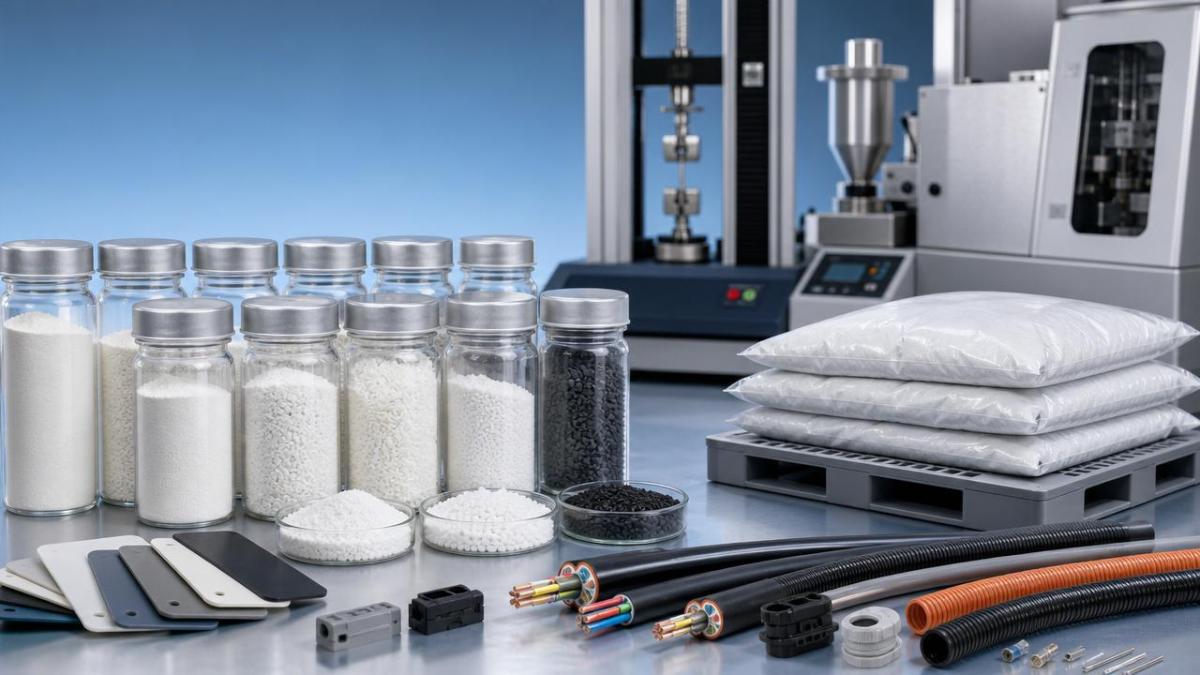
In High-Volume Commodity Applications, Consistency Beats Marketing Claims
For commodity plastics, standard foam systems, or broad industrial compounds, the core question is not whether the supplier has an attractive brochure. It is whether the flame retardants manufacturer can deliver uniform particle size, stable active content, predictable moisture profile, and repeatable behavior over many batches.
In these scenarios, even small deviations can create large operational losses. A loading increase of only a few percentage points may raise freight costs, reduce throughput, or weaken mechanical properties. Evaluation teams should request production-scale data, not just laboratory numbers. Ask for certificate-of-analysis trends across multiple lots, quality complaint history, and data on how often the manufacturer adjusts raw material sources.
The best supplier for this scenario usually has robust quality systems, backup raw material plans, and practical inventory discipline. Commercial reliability matters as much as technical acceptability.
In Engineering Plastics, Formulation Support Is a Major Differentiator
When the application involves nylon, PBT, polyolefin blends, TPU, or other engineering materials, a flame retardants manufacturer must do more than ship product. It should understand polymer interaction, processing temperature limits, hydrolysis sensitivity, color behavior, and the effect of additives on impact strength and flow.
This is where technical support becomes commercially valuable. A supplier that can co-develop formulations, suggest synergists, and troubleshoot mold deposits or screw slippage may reduce your qualification cycle by months. For a business evaluation team, that support has measurable value because it shortens development time and reduces the cost of failed trials.
A reliable flame retardants manufacturer in this scenario should provide processing guidelines, comparative data against common alternatives, and clear advice about target flame class versus property retention. If the supplier cannot discuss trade-offs in mechanical performance, compatibility, and dosage optimization, it may not be ready for advanced applications.
In Electronics and Electrical Uses, Documentation Speed Matters Almost as Much as Chemistry
Electrical and electronics projects often move under tight customer deadlines. Here, the strongest flame retardants manufacturer is not simply the one with compliant chemistry, but the one that can deliver traceable data packages quickly. That includes RoHS and REACH support, third-party test reports, substance declarations, and application-specific fire test documentation.
A common evaluation error is assuming technical performance alone secures approval. In reality, delayed paperwork can stall customer audits, postpone sample acceptance, and create revenue delays. For teams sourcing into export markets, document readiness is a genuine procurement criterion.
Ask how the flame retardants manufacturer manages regulatory updates, whether it has internal compliance specialists, and how quickly it responds to specification changes. A supplier with strong dossier management can reduce commercial friction throughout the account lifecycle.
In Construction and Long-Life Products, Supply Resilience Is Critical
Construction panels, insulation systems, sealants, and infrastructure materials usually have long qualification cycles and long service lives. In this scenario, the question is not only whether the flame retardants manufacturer can supply today, but whether it can support continuity over years of specification use.
Evaluation teams should examine raw material geography, factory redundancy, lead time volatility, and the manufacturer’s exposure to environmental policy changes. A low initial price means little if the supplier is vulnerable to a single-site disruption or feedstock shortage. Long-life sectors also benefit from suppliers that understand regional code pathways and can support retesting when standards evolve.
A resilient flame retardants manufacturer will have contingency planning, transparent change control, and a realistic communication process for reformulation risk. These factors help protect approved projects from unexpected supplier-driven disruption.
How to Evaluate Cost Performance Without Falling Into a Price Trap
Price per kilogram is one of the weakest ways to compare a flame retardants manufacturer. Business evaluation teams should instead model cost performance at system level. That means looking at effective loading, processing impact, reject rates, storage stability, freight profile, and any secondary additives needed to reach target performance.
For example, a lower-priced product may require higher dosage, reduce throughput, or create more frequent line cleaning. A more expensive alternative may provide better dispersion and lower total compounding cost. The same logic applies to post-sales support. If one supplier can solve formulation problems quickly, its total value may exceed a cheaper but less capable competitor.
The best flame retardants manufacturer for your business case is often the one that improves total operating economics rather than headline purchase price.
Common Misjudgments in Supplier Comparison
Several avoidable mistakes appear repeatedly in sourcing reviews. First, teams overvalue certificates and undervalue application history. Compliance is mandatory, but real-world fit is proven through repeat use in similar products. Second, teams compare data sheets from different test conditions as if they were directly equivalent. Third, they ignore the importance of communication quality during development.
Another common error is failing to segment suppliers by strategic role. A global multi-site manufacturer may be ideal for high-volume continuity, while a smaller specialist may be better for niche formulations that need close technical collaboration. The right answer depends on the scenario, not on supplier size alone.
Finally, many teams do not test how a flame retardants manufacturer behaves when something goes wrong. Ask for examples of complaint handling, reformulation notifications, and emergency shipment response. Supplier resilience is often revealed under pressure, not during sales presentations.
A Practical Shortlist Framework for Business Evaluation Teams
To make supplier comparison more actionable, score each flame retardants manufacturer across five weighted dimensions: application fit, formulation consistency, supply resilience, technical support, and total cost performance. Then adjust the weighting according to the business scenario. For example, electronics programs may place more weight on compliance response speed, while construction products may prioritize continuity planning and long-term supply assurance.
A sound review process should combine documentation review, sample validation, commercial negotiation, and stakeholder feedback from R&D, quality, procurement, and regulatory teams. This cross-functional view produces a more realistic supplier ranking than procurement-only scoring.
FAQ: Questions Buyers Commonly Ask
How many suppliers should be benchmarked?
For most projects, three to five qualified candidates are enough. More than that often creates noise unless the application is highly strategic or supply risk is elevated.
Should a flame retardants manufacturer be selected globally or regionally?
It depends on the product footprint. Global programs benefit from multi-region support, but regional specialists may be more agile and technically responsive for targeted markets.
What is the most overlooked capability?
Change management. A supplier that communicates formulation, sourcing, or regulatory changes early can save significant downstream cost and customer disruption.
Final Decision Guidance
The most suitable flame retardants manufacturer is rarely the one that simply passes compliance review at the lowest price. The better choice is the supplier whose strengths match your application scenario, business risk profile, and growth plans. For business evaluation teams, the smartest path is to compare suppliers through the lens of actual use: what product is being made, what tests matter most, how stable the supply must be, and how much technical partnership the project requires.
If you are building a shortlist, begin with your top three application scenarios and score each flame retardants manufacturer against those real operating conditions. That method leads to better sourcing decisions, faster qualification, and stronger long-term procurement outcomes.
Related Intelligence
- Custom SynthesisHow to Compare Flame Retardants Manufacturers Beyond ComplianceFlame retardants manufacturer selection goes beyond compliance. Learn how to compare consistency, supply resilience, technical support, and total cost to choose a stronger long-term partner.
- Custom SynthesisChoosing an Aroma Chemicals Manufacturer for Consistent SupplyAroma chemicals manufacturer selection is key to stable supply, quality, and compliance. Discover how to choose a reliable partner that supports growth and reduces sourcing risk.
- Custom SynthesisPeptide synthesis services: when purity targets raise the final costPeptide synthesis services can look affordable upfront, but higher purity targets often drive up cost through yield loss, extra purification, and stricter QC. Learn how to compare suppliers wisely.
The Morning Broadsheet
Daily chemical briefings, market shifts, and peer-reviewed summaries delivered to your terminal.
