
The Hidden Costs of Overusing Agrochemicals on Soil Health
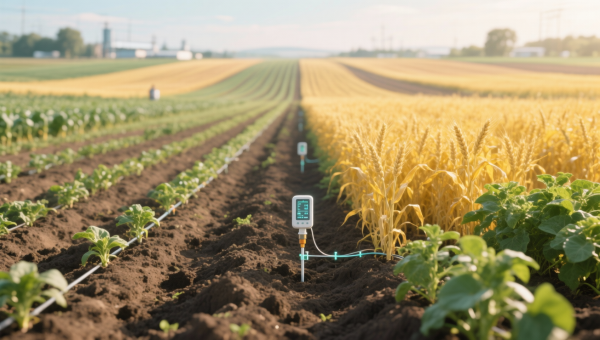
Intensive use of agrochemicals may appear to boost yields, yet hidden costs threaten long-term soil vitality, ecosystem balance, and production economics. In today’s era of agricultural tech and biochemical engineering integration, understanding these trade-offs is essential for industrial agriculture stakeholders—from aquaculture systems designers to feed formulation specialists and agri machinery manufacturers. For industrial buyers evaluating sustainability metrics, AgriChem Chronicle explores how strategic management of agrochemicals can safeguard both soil health and operational profitability.
Understanding the Invisible Impact of Excessive Agrochemical Use
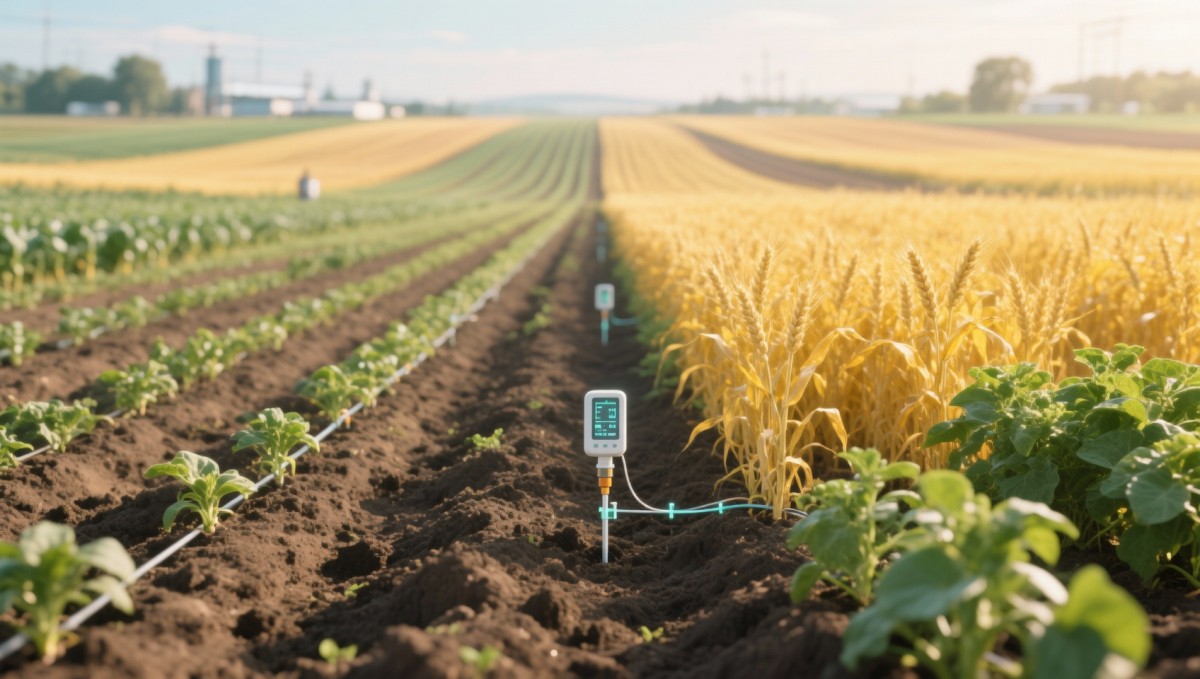
Over the past three decades, global agrochemical consumption has risen by more than 70%, driven by the demand for stable food production and disease control. While pesticides, herbicides, and synthetic fertilizers have accelerated yield gains of 15–20% in many crop systems, their overuse introduces complex soil chemistry imbalances. This degradation often occurs within 2–5 growth cycles, affecting cation exchange capacity, microbial diversity, and water retention properties.
At the biochemical level, excessive nitrogen input increases soil acidity, often dropping pH beyond the optimal 6.2–7.0 range for most crops. Phosphate lockup and micronutrient deficiency—especially zinc and iron—follow, forcing operators into a feedback loop of even greater chemical inputs. Agricultural machinery manufacturers observing soil compaction data (typically >1.6 g/cm³ bulk density) note parallel declines in field efficiency, estimated at 8–12% lower productivity after consecutive chemical exposure cycles.
For safety officers and quality controllers, recognizing early-stage soil fatigue indicators—such as reduced infiltration rates from 25 mm/h down to 10 mm/h—can prevent irreversible structure collapse. Integrating soil biosensor technologies and automated sampling systems ensures compliance with EPA and ISO 17025 standards, guiding precision dosing strategies.
In short, soil health acts as the unseen asset in industrial agriculture. By quantifying the biochemical thresholds of nutrient tolerance, enterprises can implement sustainable programs that extend soil productivity lifespans by 5–10 years while reducing input costs by 18–22%.
Comparative Analysis: Chemical Dependence vs. Biological Sustainability
Enterprises evaluating input strategies often struggle to measure the total cost of agrochemical dependence beyond direct procurement prices. A balanced analysis considers chemical purchase costs (USD 180–250 per hectare annually), soil restoration costs, regulatory compliance charges, and the environmental liability footprint. Conversely, biostimulant integration or organic amendment systems can initially cost 25–30% more, yet they yield higher long-term net returns due to improved soil resilience and reduced remediation requirements.
The following comparison illustrates key operational and financial contrasts across three typical farm management strategies adopted in primary industries and fine chemical supply chains:
Data reveal that operational total cost of ownership (TCO) evens out within 6–8 seasons, favoring bio-based inputs. Enterprises dealing in feed and grain processing report improved moisture stability in raw materials by up to 12%, emphasizing that sustainable soil systems also influence supply chain quality consistency.
Procurement and Compliance Guide for Industrial Operators
Business evaluators and procurement managers must assess both the technical and regulatory implications of agrochemical sourcing. For multinational players, a four-phase vetting process ensures full traceability and aligns with GMP, ISO 9001, and EPA soil safety benchmarks.
Four-Phase Evaluation Framework
- Phase 1 – Supplier Data Validation: Confirm CAS numbers, Safety Data Sheets, and lot trace records across a minimum of three consecutive production runs.
- Phase 2 – Environmental Risk Mapping: Quantify nutrient runoff potential (mg/L nitrate levels) and map buffer zones within a radius of 200–300 meters.
- Phase 3 – Residue Compliance Testing: Schedule ISO-certified lab audits every 6–12 months focusing on cumulative chemical load in soil media.
- Phase 4 – Continuous Monitoring & Reporting: Implement IoT-based soil sensors capturing temperature, humidity, and pH variance every 30 minutes.
For financial approvers, adopting these procedures standardizes investment risk across multiple sites, while project managers benefit from predictable ROI cycles of 24–36 months through controlled remediation planning. Integrated laboratory reports produced under ISO/IEC 17025 frameworks increase buyer confidence during long-term supply contracts.
A critical compliance comparison across certifications can aid decision-makers in aligning environmental benchmarks with cost efficiency:
Selecting the appropriate standard depends on target markets. For instance, GMP compliance ensures access to API-linked biofeed supply chains, while ISO 14001 underpins environmental disclosure for multinational clients seeking transparent ESG integration.
Strategic Alternatives and Future Outlook
Emerging alternatives combine biochemical precision and ecological intelligence. Enzyme-based fertilizers, nitrification inhibitors, and microbial consortia designed under controlled lab protocols demonstrate potential yield parity with 25–40% less synthetic nitrogen input. Over a 10-year cycle, adopting such hybrid-agrochemical systems can cut cumulative nutrient runoff by 50–65% and extend soil organic carbon recovery periods by up to threefold.
Moreover, digital agriculture platforms now synthesize satellite imagery, field IoT data, and machine learning prediction models to guide variable-rate applications. Feed and grain operators using these systems report input precision improvements of 10–15% and fertilizer ROI gains averaging USD 35 per hectare. These developments demonstrate that technological synergy—not chemical intensity—is the route to future soil health optimization.
Enterprises with mid- to large-scale operations (over 2,000 hectares) are transitioning toward integrated bioprocess frameworks linking production data to procurement algorithms. This enables automated selection of compliant chemical batches and real-time environmental calculations, ensuring audit readiness and predictive maintenance scheduling of agri-machinery fleets.
The next frontier in soil stewardship involves cross-sector collaboration—between chemical synthesizers, agritech developers, and aquaculture innovators—to foster a closed nutrient economy. AgriChem Chronicle actively curates such industry dialogues, providing readers with foresight-driven intelligence on bioextracts, precision enzymes, and mechanized soil analytics.
Frequently Asked Questions
How can industrial operators quantify soil degradation financially?
Most firms use a five-year amortization model linking lost productivity, higher fertilization requirements, and compliance penalties. Typically, every 1% drop in soil organic matter represents a 3–5% yield loss, translating to USD 80–120 reduction per hectare annually.
What are the early warning metrics of over-application?
Key red flags include a 20–25% decrease in microbial respiration rates, nitrate levels above 50 mg/kg, and persistent surface crusting. Routine sample scheduling every 3 months helps maintain proactive response systems.
Does organic substitution guarantee compliance?
Not necessarily. Although organic inputs lower residue risks, regulatory frameworks still enforce maximum nutrient load thresholds. Compliance depends on consistent monitoring—particularly when integrating bio-based emulsifiers or enzyme catalysts sourced across borders.
Why Partner with AgriChem Chronicle
For stakeholders navigating chemical procurement, sustainability audits, or soil health recovery programs, AgriChem Chronicle (ACC) functions as a trusted knowledge engine and peer-reviewed gateway. By accessing ACC intelligence, enterprises collaborate directly with biochemical engineers and agritech advisors who provide parameter confirmation, compliance roadmaps, and ROI simulations within 3–5 business days.
We invite manufacturers, chemical formulators, and agricultural machinery OEMs to connect with ACC’s editorial platform to:
- Confirm technical parameters and compatibility of agrochemical formulations across diverse soil environments.
- Receive customized procurement benchmarks linking cost indices to international environmental standards.
- Optimize supplier visibility through verified whitepaper publication and compliance case documentation.
- Initiate data-driven collaborations embedding environmental responsibility within core business architecture.
Through transparent analytical reporting and a rigorous editorial framework, ACC not only informs but empowers the global biochemical and agricultural community to achieve sustainable productivity. To discuss certification alignment, technical dossier publication, or integrated soil management strategy, contact AgriChem Chronicle’s technical board for consultation and partnership opportunities.
Related Intelligence
- AgrochemicalsEU REACH Adds 5 New SVHCs, Including Agrochem Intermediates & Natural Preservative PrecursorsEU REACH adds 5 new SVHCs including agrochemical intermediates & natural preservative precursors. Learn how this impacts exporters of botanical products & organic pesticides. Act now to avoid EU market risks.
- AgrochemicalsEU REACH Adds 5 New SVHCs, Including Pharma & Agrochem IntermediatesEU REACH adds 5 new SVHCs including key agrochemical & pharma intermediates. Learn how 2-chloro-5-methylpyridine and DMAC regulations impact your supply chain before Oct 2026 compliance deadline.
- AgrochemicalsU.S. Soybean Exports to China Plunge 48.5%, China Shifts to Brazil/ArgentinaU.S. soybean exports to China plummet 48.5% as China shifts to Brazil/Argentina sources. Discover how this trade realignment impacts global markets and key industries. Learn strategic adaptation tips for businesses.
The Morning Broadsheet
Daily chemical briefings, market shifts, and peer-reviewed summaries delivered to your terminal.
