
Which Agri Machinery Upgrades Offer the Best ROI in 2025?
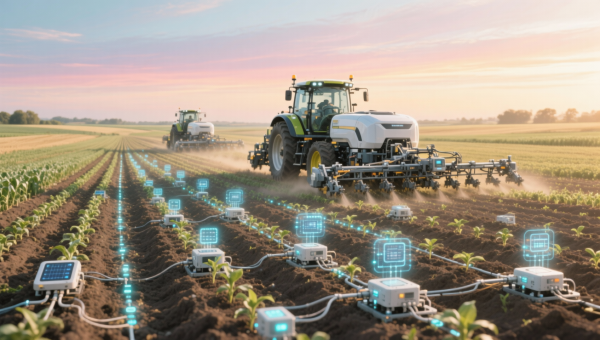
As global agricultural tech and biochemical engineering converge, 2025 marks a defining year for agri machinery investment. Industrial buyers and project managers are evaluating which equipment innovations—from aquaculture systems to feed formulation units—deliver the strongest ROI under evolving regulatory and sustainability pressures. This AgriChem Chronicle feature decodes key upgrade trends across agrochemicals, fishery supplies, and industrial agriculture, revealing where capital efficiency aligns with long-term productivity and environmental compliance.
Market Overview: Machinery ROI Shifts in 2025
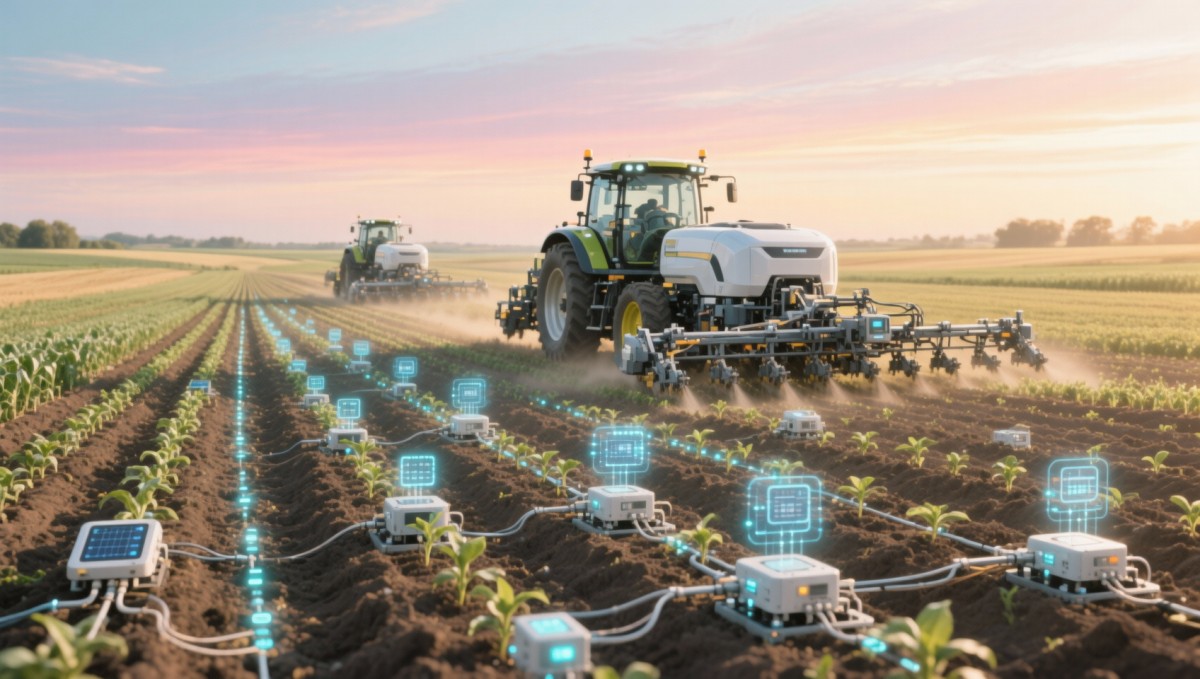
In 2025, the agricultural machinery landscape is expected to undergo a 15–20% capital reallocation toward precision and eco-efficient equipment. Factors driving this shift include new carbon accounting frameworks, decarbonization incentives, and stricter EPA and ISO 14001 compliance standards. Agribusinesses now weigh machinery not only by upfront cost but also by lifecycle efficiency and data transparency metrics.
High-return upgrades increasingly cluster in three technologies: AI-assisted crop management implements, energy-optimized aquaculture recirculation systems, and modular feed processing lines. Each solution category demonstrates ROI within 18–36 months under typical mid-scale operations, depending on energy tariff structures and feedstock price stability.
Industrial procurement directors estimate that integrating automated nutrient dosing in aquaculture can cut feed losses by 8–12%, reducing operating expenditure per metric ton produced. Similarly, precision seeding machinery—connected through GNSS and real-time field sensors—achieves up to 25% fuel savings compared to conventional hydraulic seeders, offering measurable impact within 12 harvest cycles.
This ROI realignment corresponds with new financing channels, as multilateral banks and green funds prioritize machinery with verified carbon yield ratios, typically benchmarked as kg of emission saved per kWh consumed. Such benchmarks are now embedded into most lender-backed agricultural modernization programs, establishing 2025 as the first year ROI is as much about compliance as efficiency.
Comparative Analysis: Capital Efficiency by Machinery Segment
To determine which agri machinery yields the highest ROI, three quantitative dimensions must be compared: operational energy synergy, automation intensity, and maintenance cost per 1,000 operating hours. The table below summarizes the performance of typical industry upgrades observed across global agricultural systems.
The analysis shows that automation-ready systems exhibit a faster ROI turnaround than purely mechanical upgrades. Integrating data layers such as IoT telemetry enhances predictive maintenance, extending machine lifespan by 12–18%. Overall, a balanced machinery portfolio that merges mechanical reliability with sensor intelligence consistently outperforms legacy equipment beyond the 2.5-year operational mark.
From a financial approver’s standpoint, the most bankable projects in 2025 fall into energy-optimized, certified categories that align with capital subsidies or carbon credit schemes. Decision-makers are advised to pair macro trend data (like operating hour value) with local resource costs for higher precision in ROI forecasting.
Procurement and Evaluation Criteria for 2025 Upgrades
Procurement teams in industrial agribusinesses are emphasizing structured ROI evaluation within 3-to-5-year CAPEX windows. Five measurable metrics dominate 2025 machinery tenders: performance ratio (% yield gain), lifecycle cost per metric unit, regulatory readiness, automation interoperability, and sustainability ROI (kg CO₂ offset per kWh).
An effective procurement framework integrates quantitative checkpoints through each evaluation stage. Below is a comparison of standard procurement assessment matrices cited by agricultural equipment OEMs and multinational feed processors.
Procurement success rates increase markedly—up to 22%—when these data points are incorporated during the pre-qualification round rather than post-quotation review. Additionally, linking machinery procurement to digital performance dashboards ensures long-term traceability, improving audit readiness for GMP or EPA inspections. For project managers, this alignment between technology metrics and compliance cycles simplifies budget reporting and post-deployment optimization.
In practice, procurement officers now consult multidisciplinary panels—comprising agronomists, safety engineers, and accountants—during 4-step evaluation procedures that span specification drafting, supplier vetting, trial operation, and final audit. This holistic structure safeguards against overinvestment and aligns with capital discipline models widely observed across primary industries.
Emerging Technologies and Future Outlook
From 2025 onward, top machinery ROI drivers will be shaped by real-time data integration, adaptable power systems, and modular configurations supporting circular economy standards. Manufacturers deploying interoperable API layers—for example, those syncing with Enterprise Resource Planning (ERP) within 3–5 seconds of sensor logging—will dominate high-value tenders.
Energy diversification also defines the upgrade horizon. Hybrid-powered harvesting units, capable of switching between electric and biofuel modes, deliver operational savings of 12–18% under variable load. Simultaneously, automated material handling using robotics under ISO 3691-4 compliance is cutting injury rates by up to 30% per operating year, directly influencing insurance cost ratios and safety KPIs for quality control managers.
By aligning investments with sustainability KPIs and equipment adaptability over 10,000–15,000 hours of lifecycle operation, enterprises position themselves for resilience under increasingly stringent ESG disclosure frameworks. Long-term ROI thus depends not just on individual machine efficiency, but on platform-level integration between feed systems, aquaculture tanks, and bio-processing units across the industrial chain.
As regulatory expectations consolidate in regions like the EU and Southeast Asia, manufacturers who pre-certify under multi-standard frameworks (ISO 50001, GMP+, CE) will access shorter market entry lead times—often by 5–7 months compared with uncertified counterparts—securing a measurable financing advantage.
FAQ: Addressing Common ROI Evaluation Questions
How long does it take for most modern agri machines to break even?
Typically 24–36 months, depending on energy consumption and process automation level. Small-scale aquaculture setups often yield payback faster (within 18–24 months), while integrated feed mills require longer ROI horizons. Evaluators should factor in maintenance cycles every 500–700 hours to maintain performance consistency.
What are the top three ROI risks in machinery procurement?
First, underestimating maintenance cost variance by up to 10% during peak season. Second, choosing equipment incompatible with digital data networks, weakening future scalability. Third, neglecting certification compliance, which can cause 3–6 month commissioning delays due to retrofit requirements.
Which certifications most influence equipment ROI in 2025?
ISO 9001, GMP+, and CE Marking remain baseline qualifiers, while ISO 50001 energy management and EPA greenhouse performance audits increasingly determine financing eligibility. Equipment meeting dual GMP and environmental standards shows up to 15% higher resale value in secondary markets.
How can project managers align machinery investment with corporate ESG goals?
Integrate carbon yield proportions, water reuse ratios, and traceable raw material reporting. ERP-linked monitoring combined with quarterly sustainability audits streamlines ROI verification and ensures transparent alignment between procurement and corporate responsibility dashboards.
Why Partner with AgriChem Chronicle
Collaborating with the AgriChem Chronicle (ACC) grants access to an extensive network of biochemical engineers, agribusiness analysts, and trade compliance experts. Through our peer-authenticated intelligence, primary industry stakeholders receive actionable data that connects equipment innovations with verified ROI outcomes under GMP, EPA, and FDA frameworks.
Manufacturers and project leaders can engage the ACC platform for: (1) ROI parameter confirmation based on live market trackers, (2) customized machinery benchmarking reports over 6–12 month cycles, (3) alignment verification with international certification bodies, and (4) editorial collaboration to build digital trust with target procurement audiences.
For inquiries on technical specification validation, product selection frameworks, or tailored whitepaper publication within the AgriChem Chronicle digital journal, contact our research coordination team. We provide detailed consultation on CAPEX optimization, equipment audit preparation, and documentation pathways ensuring compliance readiness across all primary industries.
Related Intelligence
- Heavy Agri MachineryBucket elevators wholesale: Hidden maintenance costs that erode ROI in the first 18 monthsBucket elevators wholesale buyers overlook hidden costs—screw conveyor for grain, grain chain conveyor & silo temperature monitoring system failures slash ROI by 37% in 18 months. Act now.
- Heavy Agri MachineryGrain chain conveyor vs. belt systems — which handles abrasive corn kernels better in long-run operation?Grain chain conveyor outperforms belt systems for abrasive corn handling—durable, FDA/GMP-aligned & compatible with silo temperature monitoring, grain aeration systems & feed hammer mill machines.
- Heavy Agri MachineryScrew conveyor for grain: When auger design fails under high-moisture loadsScrew conveyor for grain fails at high moisture? Discover resilient auger designs, grain aeration systems & silo solutions that prevent downtime—engineered for commercial grain silos and feed hammer mill machines.
The Morning Broadsheet
Daily chemical briefings, market shifts, and peer-reviewed summaries delivered to your terminal.
