
Key Factors That Make Feed Formulation More Sustainable
Sustainable Feed Formulation as a Strategic Imperative
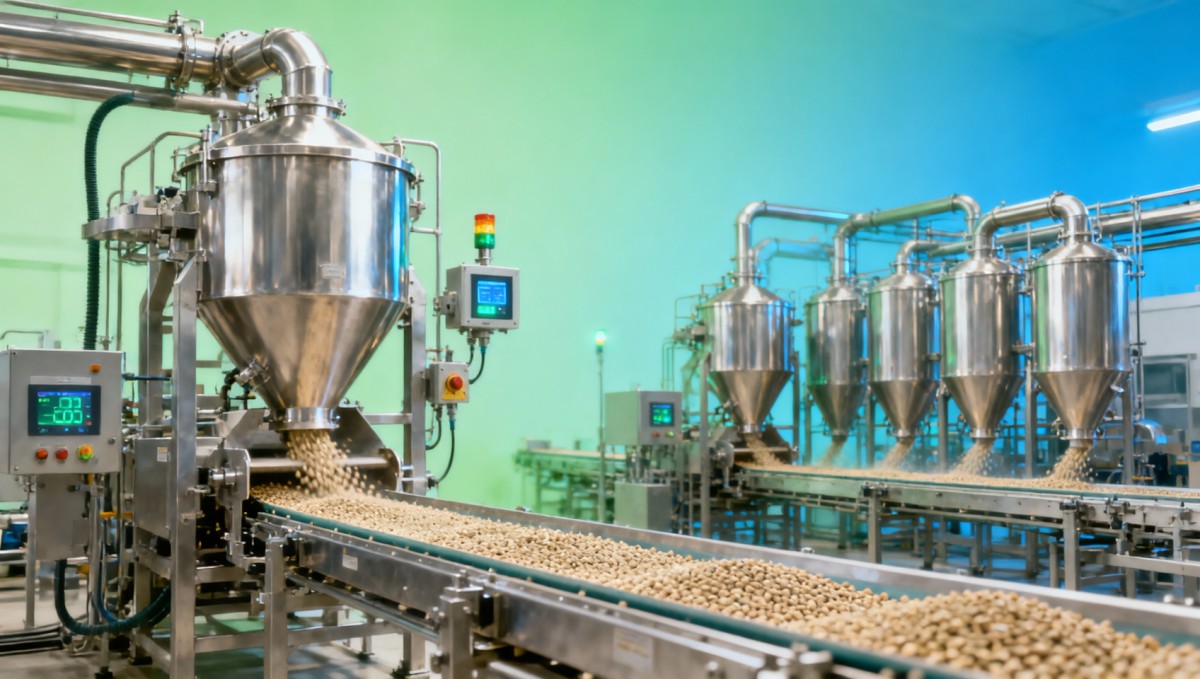
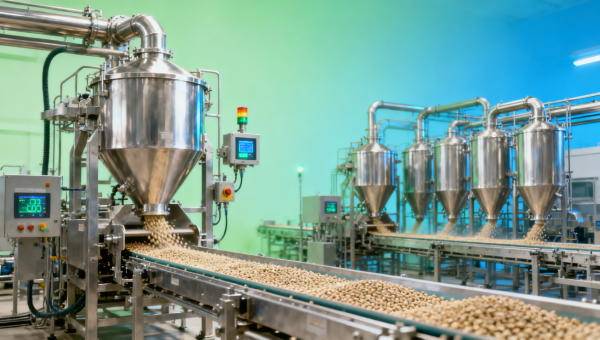
Sustainable feed formulation has become a strategic priority across agricultural tech, aquaculture systems, and biochemical engineering. In a sector driven by industrial agriculture and rising traceability demands, optimizing nutrient efficiency while reducing the environmental footprint defines competitive advantage. For industrial buyers, fishery supplies specialists, and agri-machinery leaders, understanding the key factors behind responsible feed formulation unlocks opportunities to align with global sustainability frameworks and enhance long-term profitability within the advancing agrochemicals and aqua tech markets.
The next generation of feed systems must balance at least three performance objectives: nutrient bioavailability (typically 80–95%), lifecycle cost reduction by 10–20%, and compliance with increasingly stringent environmental regulations such as EPA’s aquatic nutrient thresholds or EU feed additive directives. Each of these demands equal attention from both technical operators and corporate sustainability officers.
Feed formulation now represents not just an operational decision but a corporate governance metric. From ingredient sourcing and process optimization to carbon accounting, every component within the feed chain contributes to the sustainability index of a farming or aquaculture enterprise. Businesses integrating certified biochemical ingredients and high-efficiency milling systems report improved feed conversion ratios by 0.05–0.15 points, amplifying both yield and ecological credibility.
AgriChem Chronicle (ACC) emphasizes how multi-sector synergies—linking fine chemicals, bio-ingredients, and feed processing—enhance innovation pipelines. The role of precision formulation software, powered by metabolizable energy models and mineral bioavailability matrices, is expanding as companies pursue traceable ingredient transparency across supply nodes spanning 4–6 countries per sourcing cycle.
Market Context and Industry Shifts
Over the past five years, feed formulation sustainability has transitioned from niche R&D discussion to a primary procurement criterion. Between 2020 and 2024, global feed additive manufacturers reported a 25–35% increase in demand for plant-based proteins and enzymatic digestion enhancers. The primary drivers include raw material scarcity, escalating energy prices, and supply chain scrutiny intensified by government environmental accountability mandates.
Corporate procurement teams now evaluate feed inputs in terms of both nutritional metrics and lifecycle impact assessments (LCA). A standard review process often weighs three dimensions—carbon equivalence per ton, digestibility coefficients per species line, and certification compliance such as GMP+ or ISO 22000. Decision cycles range from 4–8 weeks, depending on cross-departmental review complexity.
From an economic standpoint, feed formulation optimization can reduce total feed costs by 7–15% across 12-month production periods when reformulated according to updated amino acid matrices and enzyme supplementation strategies. This savings directly translates to margin protection within intensive livestock and aquaculture operations subject to price volatility in maize, soybean, and fishmeal commodities.
The following table outlines how sustainability factors influence procurement value in different industrial settings, supporting technical benchmarking across production sectors.
Interpreting these metrics allows companies to align operational KPIs with ESG disclosure frameworks. Feed conversion efficiency and emission reduction reflect both nutritional science advancements and managerial discipline. As regulatory reporting cycles tighten to quarterly or semiannual submissions, adopting measurable sustainability parameters protects corporate valuation and client confidence.
Technical Parameters and Ingredient Optimization
In formulation science, nutrient precision depends on at least three control variables: ingredient digestibility coefficients (ranging 70–98%), moisture stability (target 10–12%), and processing temperature constraints (60–90°C during extrusion). These directly determine the durability and nutrient recovery rate of the final product. Technical operators rely on near-infrared spectroscopy (NIR) to validate protein quality in real time, reducing sampling delays by 20–30% compared with traditional assays.
Biochemical engineers prioritize the inclusion of alternative proteins—such as single-cell biomass and insect meal—at inclusion rates of 5–25%. When integrated with customized enzyme complexes, these formulations can sustain equivalent growth performance compared with fishmeal-based diets while cutting carbon equivalents per ton by approximately 1.5–2.0 kg CO₂e. Precision inclusion control is critical to achieving stable pellet density and uniform nutrient dispersion.
Feed formulators also track three essential mineral ratios—calcium-to-phosphorus (1.3–1.8:1), sodium-to-potassium (1:6–1:8), and zinc concentration (45–75 mg/kg). Maintaining these thresholds minimizes waste excretion by up to 12% and reduces effluent nutrient loading in recirculating aquaculture systems by nearly 20%. For safety managers, these adjustments directly support regulatory conformance and discharge permit maintenance.
Below is a summary of common ingredient optimization levers and corresponding process impacts used during sustainable feed formulation projects.
This data serves as an industrial reference for operators supervising extrusion lines or quality control teams calibrating equipment. When applied consistently across 3–6 production lines, the operational stability and resource efficiency gains often justify capital upgrades or enzyme procurement investments.
Procurement and Certification Considerations
Procurement professionals evaluating sustainable feed solutions must benchmark suppliers on four critical axes: nutrient equivalency, certification credibility, logistics transparency, and price-to-nutrient efficiency ratio. Each axis carries quantitative scoring potential during supplier qualification, typically using 5-point scales across 8–10 criteria within standard vetting templates.
Certification standards continue to evolve. Suppliers holding GMP+, ISO 9001, or ASC Feed certification gain immediate preference, as such accreditation aligns with global food safety and environmental accountability frameworks. Verification audits usually operate on 12–18 month renewal cycles and require evidence of batch traceability across raw material lots and emission controls.
Procurement cycles generally follow three procedural stages: technical specification validation (1–2 weeks), sustainability documentation exchange (2–3 weeks), and pricing/freight negotiation (1–2 weeks). These structured checkpoints reduce post-contract nonconformance by 10–15% and accelerate account approval for finance controllers.
AgriChem Chronicle supports procurement teams with analytical tools and verified research intelligence that benchmark supplier capabilities across regions. Enterprises accessing these evaluations can make more informed purchasing choices while maintaining compliance under international regulatory thresholds.
Common Misconceptions and Practical Insights
Despite the heightened focus on sustainability, several misconceptions persist. One is the assumption that plant-based or insect-based ingredients always outperform conventional proteins. Yet real-world test environments show performance variance of ±5% depending on species digestibility and processing technology. Another misconception lies in overestimating cost savings from ingredient substitution without accounting for micro-additive synergy losses or nutrient degradation risks.
For project managers overseeing feed reformulation, risk mitigation should focus on parallel pilot runs lasting 2–4 weeks within controlled production units before full rollout. This reduces cross-contamination chances and allows accurate yield forecasting. Safety officers must validate each formulation variant under temperature, humidity, and storage stress testing scenarios common in field operations.
Financial controllers evaluating investment returns should treat sustainability not solely as cost avoidance but as market differentiation. Enterprises demonstrating verified emissions tracking and certified sustainable inputs often experience customer acquisition rate increases by 8–12% within 6–10 months due to shifting B2B contracting norms emphasizing ESG credentials.
Understanding these operational realities allows business stakeholders—from formulation chemists to CFOs—to prioritize valid technical criteria and avoid misleading “greenwashed” claims that fail deeper audit scrutiny.
Future Trends and Implementation Pathways
The next five years will see deeper integration between feed formulation data and digital monitoring technologies. Cloud-based nutrient modeling, real-time NIR scanning, and blockchain traceability solutions will feature in 60–70% of new facility upgrades. These enable accountability of every micronutrient addition and regulatory documentation within seconds per batch rather than hours.
Precision fermentation ingredients, microalgae-derived lipids, and synthetic amino acids are forecast to expand inclusion share by 15–25% before 2030. Their controlled production cycles and predictable amino acid profiles enhance repeatability across feeds for salmonids, poultry, and swine alike. Scalability hinges on cost parity thresholds projected to stabilize within ±5% of current fishmeal prices by mid-decade.
Automation and machine learning-assisted formulation will shift operator roles from manual calibration to parameter supervision. For training managers, building literacy in digital feed analytics and sustainability quantification is critical, as algorithmic models rely on consistent historical performance data across at least 18–24 months to optimize output reliably.
Enterprises adopting these integrated approaches not only meet regulatory expectations but also strengthen brand positioning with institutional investors and government procurement programs prioritizing low-carbon agricultural value chains.
Why Partner with AgriChem Chronicle
For enterprises engaged in feed and biochemical production, AgriChem Chronicle provides a critical bridge between technical data, regulatory insights, and industrial credibility. Our editorial network synthesizes inputs from agricultural engineers, biochemical researchers, and trade compliance professionals to deliver peer-level intelligence suited for practical implementation within 4–6 business domains simultaneously.
Engaging with ACC allows procurement and technical teams to confirm parameter alignment, access verified whitepapers, and benchmark supplier innovation cycles—all while positioning the enterprise within a trusted publication ecosystem recognized by institutional buyers. For feed manufacturers, aquaculture managers, or industry OEMs, a consultation with ACC can support:
- Verification of ingredient sourcing consistency and sustainability documentation.
- Customized selection of nutrient optimization technologies and enzymatic complexes.
- Certification pathway mapping aligned with GMP+, FAMI-QS, or ISO frameworks.
- Feed efficiency modeling for cost forecasting and energy reduction targets.
To discuss specification confirmation, supplier vetting methodologies, or collaborative content partnerships, enterprises can contact AgriChem Chronicle’s editorial intelligence team. Our integrated data sets and technical review network ensure every sustainability decision is backed by traceable, verifiable, and commercially applicable analysis.
Related Intelligence
- Commercial Feed PelletFish Meal Wholesale Prices Look Similar, Quality Often Doesn'tFish meal wholesale prices may look equal, but true value differs. Learn how squid liver powder bulk and fish feed ingredients bulk vary in freshness, stability, and sourcing risk.
- Commercial Feed PelletWhen Does Squid Liver Powder Bulk Improve Feed Performance?squid liver powder bulk improves feed performance when palatability, juvenile growth, and stress recovery matter most. Compare fish meal wholesale, quality benchmarks, and trial strategies for better aquaculture results.
- Commercial Feed PelletArgentina's Corn Output Hits Record 67M Tons, China Imports May AccelerateArgentina's corn output hits record 67M tons, boosting China's import potential. Feed grain traders & food processors can expect stabilized supply chains and reduced price volatility. Key insights for strategic procurement.
The Morning Broadsheet
Daily chemical briefings, market shifts, and peer-reviewed summaries delivered to your terminal.
