

The Authority in Global Agricultural Chemistry & Bio-Resources
China Customs Mandates UN Numbers & GHS Pictograms for Agrochemical Exports
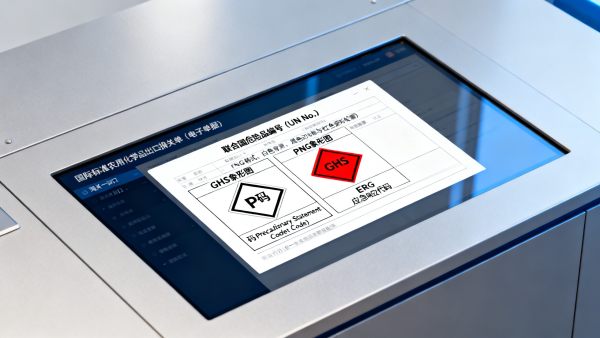
Effective May 8, 2026, China Customs has enforced new mandatory requirements for agrochemical exports via the Single Window system — requiring UN numbers, GHS pictograms (PNG), precautionary statements (P-Codes), and ERG codes. This change directly impacts exporters, formulators, distributors, and compliance officers in the agrochemical supply chain, as non-compliant declarations will be auto-rejected, delaying customs clearance.
Event Overview
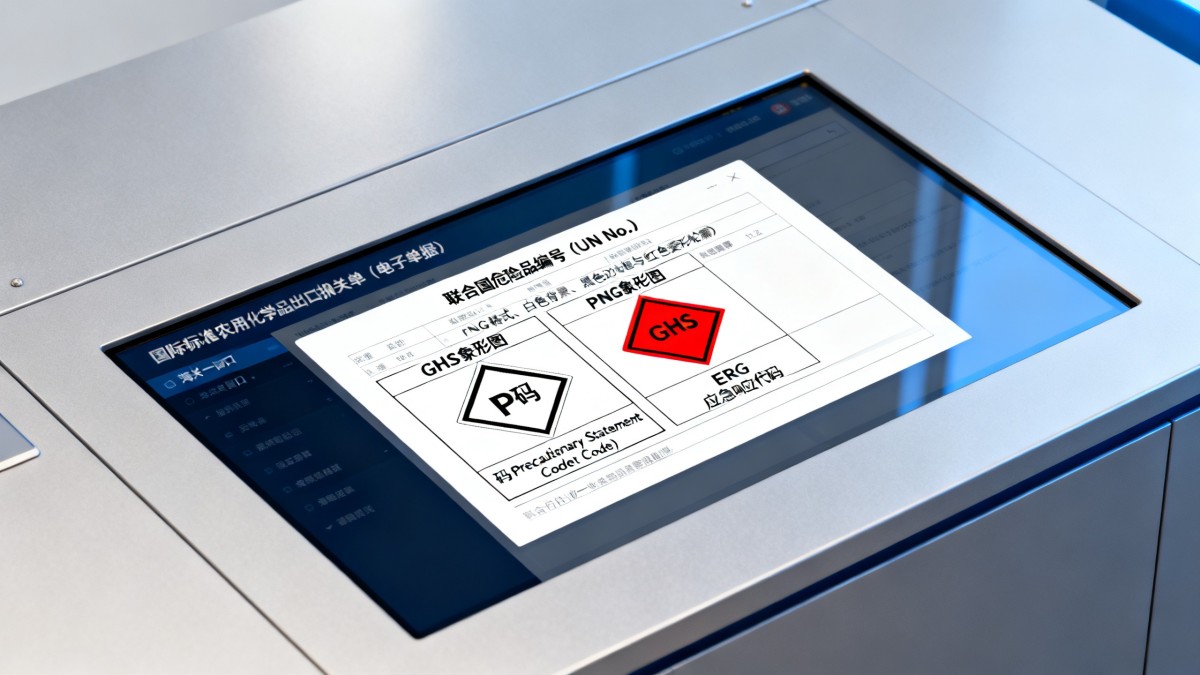
On May 7, 2026, China’s General Administration of Customs issued Announcement No. 38 (GACC [2026] No. 38), effective at 00:00 on May 8, 2026. Under this notice, all agrochemical export declarations submitted through the China International Trade Single Window must include: (1) United Nations dangerous goods identification number (UN No.), (2) GHS hazard pictogram in PNG format, (3) precautionary statement code (P-Code), and (4) Emergency Response Guide (ERG) code. Declarations missing any of these elements will be automatically rejected by the system.
Which Subsectors Are Affected
Direct Exporters (Trading Companies)
Exporters filing declarations on behalf of manufacturers or under their own name must now embed technical safety data into routine customs filings. This adds a new layer of pre-submission verification, increasing internal coordination time between regulatory affairs, logistics, and documentation teams — especially for multi-product shipments with varying hazard classifications.
Formulators & Manufacturing Enterprises
Companies that blend, formulate, or package agrochemicals are responsible for assigning correct UN numbers and generating compliant GHS pictograms. Since UN classification depends on formulation composition and physical state (e.g., liquid vs. solid, concentration thresholds), changes in raw material sourcing or batch specifications may trigger reclassification — requiring updated documentation for each export lot.
Distribution & Channel Operators
Third-party logistics providers, freight forwarders, and regional distributors handling export documentation on clients’ behalf must now validate GHS image format (PNG only), file size constraints (not specified but implied by system acceptance), and P-Code/ERG code alignment with the declared UN number. Misalignment risks rejection even if the underlying product is compliant.
What Relevant Enterprises or Practitioners Should Focus On and How to Respond Now
Verify official guidance on acceptable GHS pictogram specifications
While the announcement mandates PNG-format GHS pictograms, it does not specify resolution, color fidelity, background transparency, or minimum dimensions. Enterprises should monitor follow-up notices from GACC or local customs offices — particularly regarding validation rules applied during automated system checks.
Map UN numbers and ERG codes to current product SKUs — not just active ingredients
UN classification applies to finished formulations, not individual active ingredients. Companies must confirm classifications for each commercial product variant (e.g., emulsifiable concentrate vs. wettable powder of the same AI). Relying on ingredient-level SDS data alone is insufficient and may lead to mismatched UN/ERG assignments.
Distinguish between policy signal and operational readiness
The May 8 enforcement date reflects a hard deadline for declaration fields, but system-level validation logic (e.g., whether ERG codes are cross-checked against UN numbers in real time) remains unconfirmed. Enterprises should treat early May submissions as test cases — reviewing rejection reasons closely before scaling up volume.
Update internal SOPs and train frontline staff ahead of May 8
Documentation teams, regulatory affairs officers, and warehouse supervisors involved in export packing list generation must understand how to retrieve and embed required codes and images. Cross-functional alignment between R&D (formulation data), EHS (GHS classification), and trade compliance (Single Window input) is now operationally critical.
Editorial Perspective / Industry Observation
Observably, this requirement signals a structural shift toward harmonized, data-driven hazardous goods control at China’s export interface — moving beyond paper-based SDS submission to machine-readable, standardized safety metadata. Analysis shows it is less a one-off compliance update and more an early indicator of broader integration between China’s chemical regulatory framework (e.g., China GHS, MEPP Order No. 39) and international transport standards (UN TDG, IMDG Code). From an industry perspective, this is not yet a full implementation of digital twin traceability, but it establishes foundational data fields needed for future interoperability. Continued monitoring is warranted for potential extensions to domestic transport or upstream registration systems.
Conclusion
This measure formalizes technical safety information as a non-negotiable component of agrochemical export clearance in China. It does not introduce new hazard classification rules, but enforces stricter linkage between classification outcomes and customs data entry. Currently, it is best understood as a procedural tightening — one that tests existing classification discipline across the supply chain, rather than imposing novel scientific or regulatory obligations.
Information Sources
Main source: GACC Announcement No. 38 (2026).
Note: System-level validation criteria (e.g., PNG file size limits, ERG code lookup logic) remain unconfirmed and require ongoing observation.
Related Intelligence
- AgrochemicalsChina Customs Enforces GHS Label Embedding for Agrochemical ExportsChina Customs enforces GHS label embedding for agrochemical exports—mandatory UN-aligned labels & numbers required from May 8, 2026. Stay compliant, avoid delays.
- AgrochemicalsChina Customs Mandates UN Numbers & GHS Pictograms for Agrochemical ExportsChina Customs now mandates UN numbers & GHS pictograms for agrochemical exports—avoid auto-rejection! Learn compliance steps, deadlines, and how to prepare before May 8, 2026.
- Agrochemicalse-Phyto Mandate for Agrochemicals to Thailand/Vietnam from Jun 2026e-Phyto mandate for agrochemicals to Thailand & Vietnam starts Jun 2026 — avoid port detention! Register on ThaiPhyto/PlantVn by 31 May.
The Morning Broadsheet
Daily chemical briefings, market shifts, and peer-reviewed summaries delivered to your terminal.
