

The Authority in Global Agricultural Chemistry & Bio-Resources
FAO 2026 Smart Greenhouse Report Highlights China’s Role in Middle East
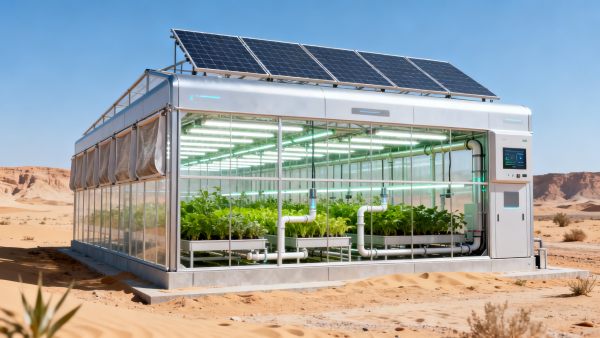
On May 6, 2026, the Food and Agriculture Organization of the United Nations (FAO) released the Global Smart Greenhouse Deployment Trends 2026 in Dubai. The report identifies a notable shift in smart greenhouse procurement for food security infrastructure — particularly in Saudi Arabia’s Phase II National Food Security Strategy — and signals implications for agritech exporters, climate-adaptive hardware suppliers, and greenhouse system integrators.
Event Overview
The FAO published the Global Smart Greenhouse Deployment Trends 2026 on May 6, 2026, in Dubai. According to the report, 72% of newly constructed smart greenhouses under Saudi Arabia’s National Food Security Strategy Phase II adopted integrated ‘photovoltaic + AI-controlled water-fertilizer-air-thermal’ solutions supplied by Chinese manufacturers. The report specifically notes Chinese firms’ leadership — relative to international benchmarks — in three technical areas: climate model adaptation, sand-dust filtration module design, and low-power LED spectral tuning.
Industries Affected
Smart greenhouse system integrators
Integrators engaged in turnkey greenhouse projects — especially those targeting arid or semi-arid regions — face increased competitive pressure to demonstrate localized climate adaptability. The FAO’s emphasis on sand-dust filtration and AI-driven thermal/water coordination implies that generic automation packages are no longer sufficient for high-priority public-sector tenders in Gulf markets.
Agritech hardware exporters (LED, sensors, controllers)
Exporters supplying core components — such as spectral-tunable LEDs or environmental sensors — may see rising demand for modules pre-validated against desert microclimates. The report’s benchmarking of Chinese suppliers’ low-power LED performance suggests regional buyers now prioritize energy efficiency and spectral precision over raw output metrics alone.
Renewable energy integration service providers
Providers offering photovoltaic–greenhouse co-location services must align technical documentation with FAO-endorsed deployment frameworks. The report’s framing of ‘PV + AI-controlled water-fertilizer-air-thermal’ as a single integrated solution elevates expectations for interoperability certification — not just power generation capacity.
Supply chain logistics & compliance specialists
Logistics partners handling equipment shipments to GCC countries may encounter tighter customs scrutiny for sand-dust filtration certifications and local climate validation reports. The FAO’s technical benchmarking provides a de facto reference point for regulatory alignment — even where formal standards remain pending.
What Relevant Enterprises or Practitioners Should Focus On
Monitor official tender specifications in Gulf Cooperation Council (GCC) member states
Current procurement documents for agricultural infrastructure — especially those referencing the Saudi National Food Security Strategy — are increasingly citing technical criteria aligned with the FAO report’s three highlighted capabilities. Track updates from Saudi Ministry of Environment, Water and Agriculture (MEWA) and UAE Ministry of Climate Change and Environment (MOCCAE).
Validate product performance against desert-specific climate models — not just general ‘arid zone’ labels
The report distinguishes between broad climatic categories and actual operational requirements in Gulf environments. Firms should prioritize third-party testing under simulated sand-load, diurnal temperature swing (>35°C), and low-humidity conditions — rather than relying on generic ‘desert-ready’ claims.
Distinguish between policy signaling and near-term procurement volume
The 72% adoption rate applies only to Phase II projects under active construction as of Q1 2026. It does not represent overall market share across all greenhouse deployments in the region. Companies should avoid extrapolating this figure to broader GCC expansion forecasts without verifying project pipeline status.
Prepare modular documentation packages for sand-dust filtration and LED spectral calibration
Given the FAO’s explicit recognition of these two features as differentiators, integrators and exporters should compile standardized, English-language technical dossiers — including test methodology, validation environment parameters, and comparative performance data — for rapid inclusion in bid submissions.
Editorial Perspective / Industry Observation
Observably, this FAO report functions less as a market forecast and more as a technical benchmarking instrument — one that validates specific engineering responses to extreme-environment agriculture. Analysis shows the report does not indicate a sudden market pivot, but rather confirms an ongoing consolidation around systems capable of managing simultaneous constraints: energy scarcity, water scarcity, particulate contamination, and thermal volatility. From an industry perspective, the significance lies not in China’s export success per se, but in how the FAO has codified functional requirements — turning previously vendor-defined features into widely referenced evaluation criteria. This makes the document a reference point for future public tenders, even outside the Middle East.
Current attention should focus on whether regional governments adopt the report’s technical indicators as formal procurement thresholds — a development that would elevate compliance from competitive advantage to baseline eligibility.
Conclusion
This FAO publication marks a step toward standardizing performance expectations for smart greenhouse systems deployed in challenging climates. It is best understood not as evidence of market dominance, but as institutional recognition of specific engineering capabilities required for scalable food production in arid zones. For industry participants, the immediate value lies in its utility as a diagnostic tool — helping firms assess whether their offerings align with internationally acknowledged technical baselines for next-generation controlled-environment agriculture infrastructure.
Information Sources
Main source: FAO Global Smart Greenhouse Deployment Trends 2026, released May 6, 2026, in Dubai.
Points requiring continued observation: Adoption of the report’s three cited technical metrics (climate model adaptation, sand-dust filtration, low-power LED spectral tuning) as mandatory criteria in upcoming GCC public tenders.
Related Intelligence
- Smart GreenhouseFAO 2026 Smart Greenhouse Report Highlights China’s Role in Middle EastFAO 2026 Smart Greenhouse Report highlights China’s leadership in Middle East smart greenhouse deployments—key for agritech exporters, system integrators & PV-greenhouse providers.
- Smart GreenhouseWorld's First 10,000-Car RoRo Delivered; Smart Greenhouse Cargo Gets Dedicated Cold-Chain SlotWorld's first 10,000-car RoRo vessel 'Yuanwang' delivers smart greenhouse cargo via dedicated cold-chain slots — optimized for precision agri-tech exports.
- Smart GreenhouseWorld's First 10,000-Car RoRo Delivered; Smart Greenhouse Cargo Gets Dedicated Cold-Chain SlotWorld's first 10,000-car RoRo vessel 'Yuanwang' delivers smart greenhouse cargo via dedicated cold-chain slots — optimized for precision agri-tech exports.
The Morning Broadsheet
Daily chemical briefings, market shifts, and peer-reviewed summaries delivered to your terminal.
