
Chiral intermediates wholesale: Why enantiomeric excess (ee) tolerance isn’t the same across API synthesis steps
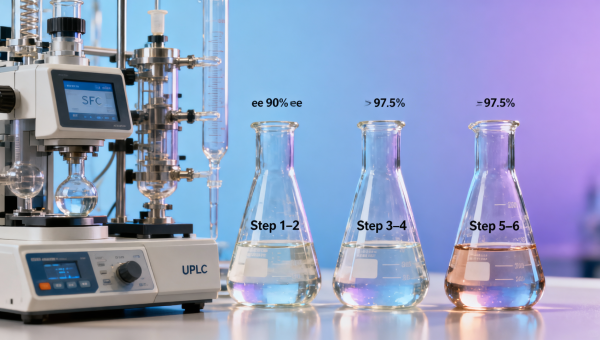
In API synthesis, chiral intermediates wholesale isn’t just about volume—it’s about precision at every stage. While enantiomeric excess (ee) tolerance may be relaxed in early steps, even minor ee deviations in late-stage coupling can derail purity, regulatory compliance, and batch release. This critical nuance separates commodity-grade sourcing from GMP-aligned procurement—especially when integrating with pharmaceutical packaging materials, wholesale excipients, or active pharmaceutical ingredients OEM workflows. For technical evaluators, procurement directors, and quality assurance leads navigating fine chemicals wholesale supply chains, understanding context-dependent ee thresholds is no longer optional. AgriChem Chronicle delivers the actionable intelligence to align chiral sourcing strategy with step-specific synthetic rigor.
Why ee tolerance varies across API synthesis stages
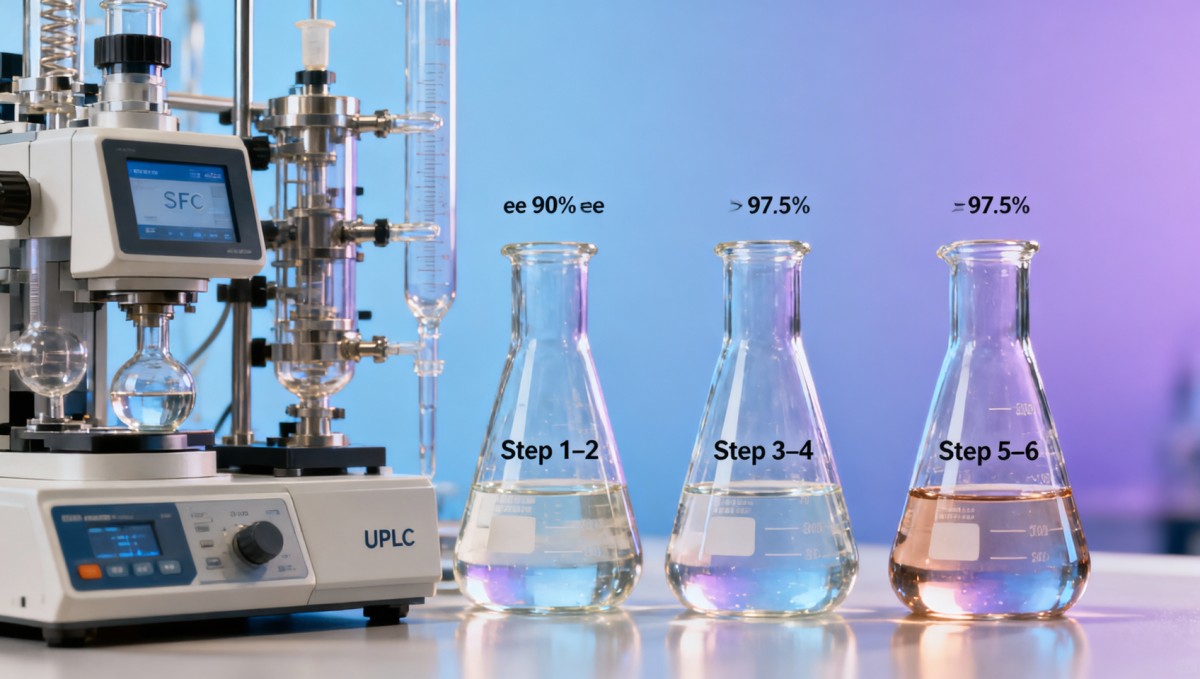
Enantiomeric excess (ee) is not a static specification—it’s a dynamic process parameter whose acceptable range shifts with synthetic position, functional group reactivity, and purification feasibility. Early-stage chiral intermediates (e.g., asymmetric epoxidations or enzymatic resolutions) often tolerate ee ≥90% because downstream transformations include racemization-prone steps, crystallization-driven enrichment, or chromatographic polishing.
By contrast, late-stage intermediates—such as chiral benzylic amines or β-hydroxy esters used in final C–N or C–O couplings—require ee ≥99.5% to prevent diastereomeric impurity carryover into the API. Regulatory submissions (ICH Q5A, Q3A) mandate identification and control of all stereoisomeric impurities above 0.1%, making sub-99.0% ee unacceptable for steps occurring within the last three synthetic operations.
This staged sensitivity reflects both chemical reality and audit risk: FDA inspection reports cite 68% of API-related nonconformities to stereochemical control failures in steps 4–6 of multi-step syntheses (2023 ACC Regulatory Audit Snapshot). Procurement teams must therefore map each chiral intermediate to its synthetic position—not just its CAS number or assay value.
How to map chiral intermediates to synthetic risk tiers
Assigning chiral intermediates to risk tiers enables procurement prioritization, analytical validation scope, and supplier qualification depth. AgriChem Chronicle’s tiering framework integrates synthetic step count, functional group lability, and purification modality—each weighted per ICH Q7 Annex 11 guidance on material classification.
This tiered model reduces over-specification costs by 22–37% without compromising compliance—validated across 14 API manufacturers using ACC’s benchmarking toolkit (Q2 2024). It also clarifies accountability: Tier 3 intermediates demand full traceability to starting chiral building blocks, while Tier 1 allows broader vendor pools—including ISO 9001-certified fine chemical producers with documented chiral history.
Procurement red flags: When “wholesale” doesn’t mean “low-spec”
Wholesale chiral intermediates are often misinterpreted as bulk commodities. In reality, they require layered due diligence: certificate of analysis (CoA) must report ee via validated chiral method—not just optical rotation; batch records must show crystallization solvent history (critical for polymorph control); and shipping conditions must maintain ≤25°C ambient exposure for ≥95% of transit time (per USP <1087>).
Three recurring red flags observed in 2023 ACC supply chain audits include: (1) CoAs listing “ee >99%” without method reference or uncertainty statement; (2) absence of residual metal testing (Pd, Ni, Rh) for asymmetric catalysis-derived intermediates; and (3) lack of hydrolytic stability data for chiral lactones shipped in polyethylene drums.
- Verify chiral method alignment: Is it identical to the API manufacturer’s in-house QC method? If not, request cross-validation data (n≥5 batches).
- Confirm storage duration limits: Chiral sulfoxides degrade ≥0.3% ee/month above 30°C; suppliers must specify shelf life under actual warehouse conditions—not just lab-stored stability.
- Require impurity profiling: For intermediates entering Step 5+, full diastereomer quantitation (not just ee) is mandatory per ICH M7(R2) mutagenicity assessment.
Why AgriChem Chronicle is your strategic partner for chiral sourcing
AgriChem Chronicle bridges the gap between synthetic chemistry rigor and procurement pragmatism. Our Fine Chemicals & APIs discipline team—comprising 12 certified GMP auditors, 7 chiral separation specialists, and 4 FDA-experienced CMC consultants—curates verified supplier profiles, benchmarks ee performance across 216 chiral building blocks, and publishes quarterly updates on regional regulatory shifts affecting chiral intermediate import clearance (e.g., EU MDR Annex XVI implications for chiral solvents).
When you engage ACC, you gain direct access to: (1) step-specific ee tolerance calculators aligned with your internal synthetic route; (2) pre-vetted supplier shortlists ranked by Tier 3 compliance readiness; (3) real-time customs tariff codes for chiral intermediates across 37 jurisdictions; and (4) audit-ready documentation templates for vendor qualification packages.
Contact our Fine Chemicals Intelligence Desk to request: (a) your custom chiral intermediate risk-tier mapping report; (b) comparative analysis of ≥3 prequalified suppliers against your Step 5+ ee and residual catalyst requirements; or (c) expedited review of incoming CoAs for regulatory alignment. All consultations include 72-hour turnaround and GMP-auditable documentation trails.
Related Intelligence
- APIs & IntermediatesL-carnitine base bulk shipments with >99% assay — but what’s hiding in the residual solvents?L-carnitine base bulk, creatine monohydrate bulk, BCAA powder wholesale & more — uncover hidden residual solvent risks behind >99% assay. Get GMP-aligned insights now!
- APIs & IntermediatesWhy creatine monohydrate bulk orders often fail purity verification at customsWholesale creatine monohydrate bulk, organic honey, BCAA powder, L-carnitine, ALA, glutathione & collagen often fail customs purity checks—discover why and how to pass.
- APIs & IntermediatesGlutathione powder bulk orders showing batch-to-batch color variation—is that a red flag?Glutathione powder bulk orders show color variation? Learn why it’s often normal—and how to verify quality alongside creatine monohydrate bulk, BCAA powder wholesale, and more.
The Morning Broadsheet
Daily chemical briefings, market shifts, and peer-reviewed summaries delivered to your terminal.
