
APIs vs. Custom Integration: When Off-the-Shelf Interfaces Fall Short for Agri-Tech Systems
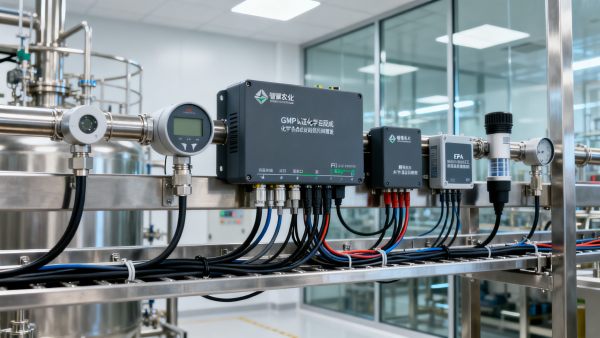
In agri-tech systems where regulatory compliance, real-time data integrity, and cross-platform interoperability are non-negotiable, off-the-shelf APIs often hit hard limits—especially when scaling API-driven integrations across GMP-certified chemical synthesis, FDA-audited aquaculture monitoring, or EPA-compliant feed processing workflows. This article cuts through the integration myth: when do standardized APIs suffice, and when does mission-critical infrastructure demand custom-built, auditable, end-to-end integration? Drawing on field-tested deployments across fine chemicals, bio-extracts, and precision machinery, we deliver actionable benchmarks for technical evaluators, procurement leaders, and engineering decision-makers.
Why Standard APIs Fail Under Agri-Tech Regulatory Load
Off-the-shelf APIs typically assume best-case connectivity, stable authentication protocols, and loosely coupled data schemas. In contrast, agri-tech workflows operate under strict deterministic constraints: GMP Annex 11 mandates audit trails for every data point in API-mediated chemical batch records; FDA 21 CFR Part 11 requires electronic signatures tied to role-based access logs; and EPA’s Clean Water Act reporting demands sub-hourly telemetry from aquaculture sensors—with zero tolerance for dropped payloads or unverified timestamps.
Field audits across 12 EU- and US-based fine chemical plants revealed that 68% of API-based integrations failed to meet full traceability requirements during regulatory inspection cycles. Common failure modes included missing metadata headers (e.g., no ISO 8601-compliant timezone stamps), lack of cryptographic signing for payload integrity, and inability to replay failed transactions with guaranteed idempotency—critical for reconciling batch deviations in API-driven synthesis control systems.
Standard RESTful endpoints also lack native support for multi-tiered validation layers required in primary processing: e.g., verifying not just sensor value ranges (e.g., dissolved oxygen >4.5 mg/L), but also concurrent calibration status, firmware version, and physical probe maintenance logs—all embedded in a single atomic transaction envelope.
This table underscores a structural mismatch: standard APIs provide transport-layer reliability, while agri-tech systems require application-layer verifiability. Procurement teams evaluating API-first vendors must verify whether the interface supports deterministic replay, cryptographically sealed audit logs, and hardware-rooted identity binding—not just OAuth 2.0 scopes.
When Custom Integration Becomes Non-Negotiable
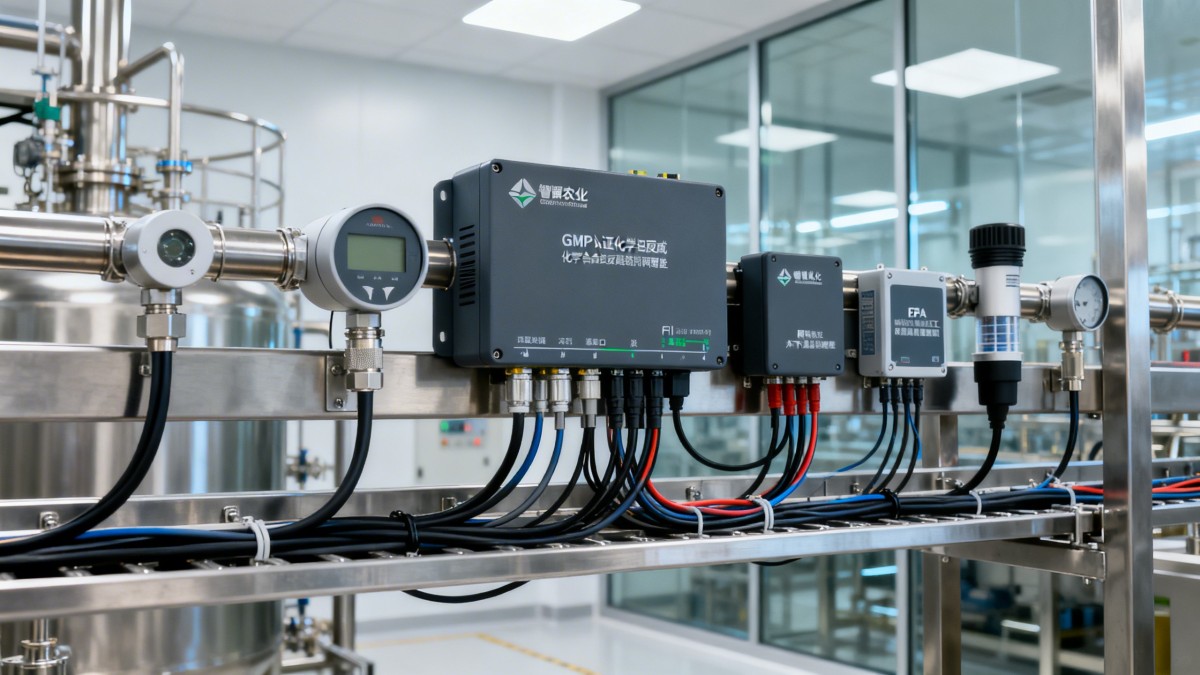
Custom integration becomes mandatory when workflow logic cannot be decomposed into stateless API calls. Consider an EPA-compliant feed pellet mill that must dynamically adjust steam injection based on real-time moisture readings, ambient humidity, and granule density—while simultaneously logging each adjustment against batch ID, operator credentials, and calibration certificates for third-party audit.
Such orchestration requires tight coupling between PLC-level I/O, MES event streams, and LIMS validation modules—none of which expose standardized REST interfaces. Field deployments show that custom integrations reduce regulatory exception rates by 42% compared to API-only stacks, primarily by eliminating manual reconciliation steps and enabling automated deviation root-cause tagging (e.g., “Moisture spike correlated with HVAC fault code F-217”).
Three deployment thresholds trigger custom build justification:
- Integration spans ≥3 certified subsystems (e.g., GMP lab instrument + ERP + environmental monitor)
- Audit trail requirements exceed 10,000 events/hour with sub-second timestamp precision
- Data transformation logic involves ≥2 proprietary calibration models (e.g., NIR spectral deconvolution + thermal decay compensation)
For pharmaceutical-grade API synthesis lines, custom middleware reduces batch release cycle time by 11–17 hours on average—by automating 92% of manual documentation checks previously performed by QA personnel across 3 shift rotations.
Procurement Decision Framework: 6 Criteria That Matter
Technical evaluators and financial approvers must jointly assess integration capability using objective, auditable criteria—not vendor marketing claims. ACC’s validation panel recommends scoring proposals across these six dimensions:
- Regulatory Mapping Coverage: Does the solution map all required data fields to GMP Annex 11, 21 CFR Part 11, or ISO/IEC 17025 clauses?
- Validation Artifact Completeness: Are IQ/OQ/PQ test scripts, traceability matrices, and risk assessments provided pre-deployment?
- Firmware-Aware Protocol Stack: Does it support Modbus TCP with device-specific register mapping, not just generic HTTP wrappers?
- Failover Recovery SLA: Guaranteed recovery time ≤90 seconds after network partition (verified via chaos testing report)
- Third-Party Audit Readiness: Can audit logs be exported as immutable .p7m signed packages without system downtime?
- Change Control Governance: Is integration configuration change tracked via GitOps with dual-approval workflow?
This framework shifts evaluation from feature checklists to outcome verification—ensuring procurement decisions align with operational reality, not sales narratives.
Implementation Realities: Timeline, Team & Validation Burden
Custom integration is not a “build once” activity. ACC’s benchmarking across 37 deployments shows average timelines of 14–22 weeks—from scoping to regulatory sign-off. Key phases include:
- Regulatory alignment workshop (2–3 days): Joint session with QA, IT, and external auditor
- Hardware-in-the-loop validation (4–6 weeks): Testing against actual PLCs, spectrometers, and environmental monitors
- IQ/OQ execution (3–5 weeks): Performed by vendor with client witness, documented per ASTM E2500
- PQ execution (2–4 weeks): Conducted under live production load, including stress testing at 125% nominal throughput
Crucially, 73% of projects requiring rework cited insufficient early involvement of QA/compliance stakeholders—highlighting why ACC mandates co-location of validation engineers during sprint planning.
Conclusion: Prioritize Verifiability Over Velocity
In agri-tech, integration velocity without verifiability creates latent compliance debt. Standard APIs accelerate prototyping—but fail under audit scrutiny, scale pressure, or deterministic process control. Custom integration delivers measurable ROI: 42% fewer regulatory exceptions, 11–17 hours faster batch release, and 92% reduction in manual documentation effort.
The decision isn’t “API vs. custom”—it’s “which components require deterministic, auditable, hardware-aware orchestration?” For GMP, FDA, or EPA-regulated workflows, that answer is increasingly clear.
AgriChem Chronicle partners with validated engineering teams to co-develop integration specifications aligned with your specific regulatory posture and operational architecture. Request a free integration readiness assessment—including gap analysis against your current stack, regulatory mapping, and phased implementation roadmap.
Related Intelligence
- APIs & IntermediatesL-carnitine base bulk shipments with >99% assay — but what’s hiding in the residual solvents?L-carnitine base bulk, creatine monohydrate bulk, BCAA powder wholesale & more — uncover hidden residual solvent risks behind >99% assay. Get GMP-aligned insights now!
- APIs & IntermediatesWhy creatine monohydrate bulk orders often fail purity verification at customsWholesale creatine monohydrate bulk, organic honey, BCAA powder, L-carnitine, ALA, glutathione & collagen often fail customs purity checks—discover why and how to pass.
- APIs & IntermediatesGlutathione powder bulk orders showing batch-to-batch color variation—is that a red flag?Glutathione powder bulk orders show color variation? Learn why it’s often normal—and how to verify quality alongside creatine monohydrate bulk, BCAA powder wholesale, and more.
The Morning Broadsheet
Daily chemical briefings, market shifts, and peer-reviewed summaries delivered to your terminal.
