

The Authority in Global Agricultural Chemistry & Bio-Resources
When does a wheat flour milling plant need automation upgrades?
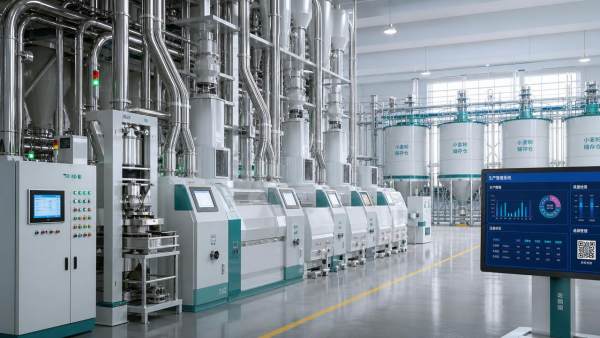
As capacity demands, energy costs, and food safety standards rise, many operators begin to ask when a wheat flour milling plant should move beyond manual controls. Automation upgrades become essential when inconsistent output, rising labor dependence, traceability gaps, or maintenance downtime start limiting profitability, compliance, and scalability in an increasingly competitive grain processing market.
Why the automation question is becoming more urgent
The discussion around upgrading a wheat flour milling plant is no longer only about modernization for its own sake. It is increasingly a response to external pressure. Grain processors are facing a tighter operating environment shaped by volatile wheat quality, rising electricity and labor costs, stricter food safety expectations, and stronger buyer demands for consistent flour performance. In this context, manual or semi-manual control models that once worked well can start to create hidden losses across yield, uptime, and customer trust.
For business decision-makers, the real issue is timing. Upgrade too early and capital may be underutilized. Upgrade too late and the wheat flour milling plant may suffer from avoidable downtime, quality deviations, compliance exposure, or inability to win larger contracts. The strongest signal is not a single breakdown or one difficult audit. It is a pattern: more variability, more firefighting, and less room to scale profitably.
Across feed and grain processing, buyers are increasingly evaluating suppliers on repeatability, documentation, responsiveness, and cost discipline. That changes the role of automation. It is no longer just an engineering upgrade; it becomes a strategic control system for throughput, traceability, and commercial competitiveness.
The market signals that suggest a wheat flour milling plant is approaching an upgrade point
Most milling businesses do not reach an automation threshold overnight. The need usually emerges through a cluster of operational signals. A wheat flour milling plant may still be running, but its current control model may no longer match the complexity of the market it serves.
When several of these signs appear together, a wheat flour milling plant is often already paying the price of delayed automation, even if production volumes still look acceptable on paper.
What is driving this shift now
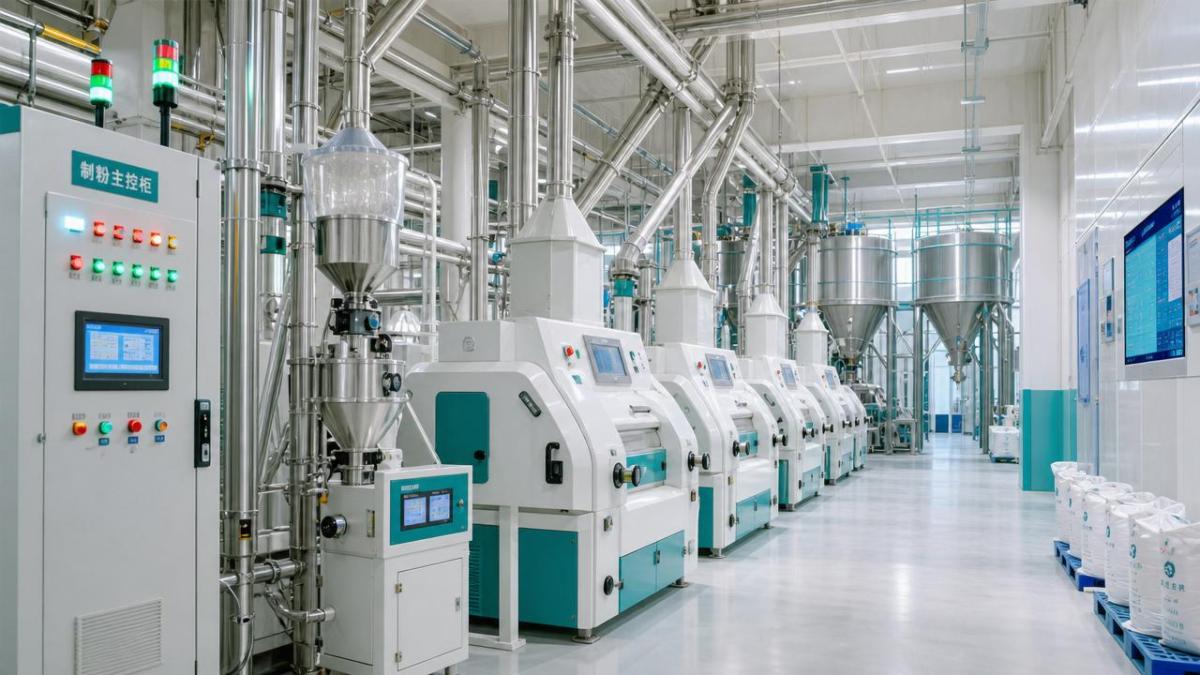
The push toward automation in flour milling is being shaped by a combination of technical, commercial, and regulatory forces. First, raw material variability is becoming harder to manage. Wheat quality can change by origin, season, storage condition, and procurement mix. A modern wheat flour milling plant must respond quickly to moisture, protein behavior, and extraction targets. Automated monitoring and control make those adjustments more repeatable than manual intervention alone.
Second, workforce dynamics are changing. Many plants still rely on highly experienced supervisors to stabilize production, but retaining such talent is becoming harder. When key process knowledge exists mainly in people rather than in control logic and data systems, scaling becomes risky. Automation helps standardize decisions that used to depend on individual judgment.
Third, customer expectations are moving upward. Industrial bakery clients, food manufacturers, and export buyers increasingly expect tighter product consistency and better lot-level records. A wheat flour milling plant that cannot prove process stability or provide clear traceability may struggle in higher-value supply relationships.
Fourth, energy economics are forcing a new level of scrutiny. Power consumption, pneumatic conveying efficiency, machine loading, and idle time all affect cost. In an environment where margins can be thin, automation is often justified not by labor reduction alone but by better control of the entire operating profile.
The biggest operational impact areas
For decision-makers evaluating a wheat flour milling plant, automation should be viewed by impact area rather than by equipment category alone. The most meaningful gains usually appear in five linked domains.
1. Product consistency and extraction control
Flour customers increasingly measure value through consistency, not just tonnage. Automated dosing, moisture control, roll monitoring, and blending logic can reduce variation between batches and shifts. This matters especially when the wheat flour milling plant serves industrial users who need stable baking or processing performance.
2. Traceability and audit readiness
Digital records support faster root-cause analysis, stronger quality documentation, and better compliance readiness. As food safety frameworks become more data-driven, a wheat flour milling plant with manual records may find itself spending too much time reconstructing events after deviations or inspections.
3. Maintenance and downtime reduction
Unexpected stoppages remain one of the clearest upgrade triggers. Sensors, alarms, and trend monitoring can reveal load imbalance, overheating, vibration issues, and bottlenecks earlier. The benefit is not simply fewer failures, but better maintenance planning and less disruption to delivery commitments.
4. Labor productivity and shift stability
A more automated wheat flour milling plant can reduce dependence on manual interventions, repetitive checks, and constant corrective actions. This does not eliminate the need for skilled people; it changes their value toward supervision, optimization, and quality assurance.
5. Energy and yield management
The connection between automation and energy performance is often underestimated. Better control of machine loading, airflow, and process timing can improve both efficiency and flour recovery. For larger facilities, even modest percentage gains can translate into meaningful annual savings.
Which businesses feel the pressure most strongly
Not every operator faces the same urgency. However, some business models are more exposed than others when a wheat flour milling plant remains under-automated.
How to judge whether the timing is right
The best upgrade decisions are usually based on business thresholds rather than technology enthusiasm. A wheat flour milling plant likely needs automation upgrades when one or more of the following conditions are becoming persistent: quality complaints are rising, operating data is difficult to trust, preventive maintenance is weak, expansion plans depend on adding too many people, or compliance readiness consumes excessive management time.
Another practical test is to compare how the plant performs during normal weeks versus stressed weeks. If output, flour uniformity, and downtime remain stable only when the best people are present and wheat conditions are favorable, the system is not resilient enough. Automation is valuable precisely because it helps the wheat flour milling plant perform more predictably under less-than-ideal conditions.
Why phased upgrades are replacing all-at-once projects
A notable industry trend is that many operators no longer wait for complete greenfield modernization. Instead, they pursue phased upgrades that target bottlenecks with the strongest return. This may begin with digital monitoring, automated batching, condition-based maintenance, or traceability integration before moving toward broader plant control architecture.
This staged approach reduces risk and makes business cases easier to defend internally. It also helps leadership learn where automation produces the clearest value inside a specific wheat flour milling plant rather than relying on generic assumptions. For many firms, the smartest question is not “Should we automate everything?” but “Which process constraints are already costing us enough to justify the next upgrade step?”
What leadership teams should monitor over the next 12 to 24 months
The direction of the market suggests that automation decisions will increasingly be tied to commercial positioning. Leadership teams should monitor a small set of indicators consistently: batch-to-batch variation, unplanned downtime hours, labor hours per ton, customer specification failures, audit findings, and energy intensity per unit of output. These metrics reveal whether the wheat flour milling plant is becoming more controllable or more fragile as demand evolves.
It is also worth watching buyer behavior. If procurement teams start asking more detailed questions about process control, digital records, contamination prevention, or supply assurance, that is not an isolated administrative request. It is a sign that supplier selection standards are moving upward across the value chain.
Decision framework for the next move
Before approving an upgrade, decision-makers should align technical changes with business outcomes. The most effective reviews link each automation investment in the wheat flour milling plant to a measurable objective such as lower deviation rates, fewer stoppages, stronger traceability, lower energy consumption, or support for new customer segments.
- Identify where variability is most expensive: quality, downtime, yield, or labor.
- Separate urgent compliance gaps from longer-term optimization goals.
- Assess whether current data systems can support reliable decisions.
- Prioritize upgrades that improve both operational control and customer confidence.
- Plan training early so process knowledge and digital systems evolve together.
Final outlook for operators and investors
A wheat flour milling plant does not need automation simply because the technology exists. It needs automation when market conditions, operating complexity, and risk exposure have outgrown manual control. That point is arriving sooner for many processors because the industry is moving toward tighter consistency, higher transparency, and more disciplined cost management.
For enterprise decision-makers, the most useful next step is to test the business in practical terms: where are margins leaking, where do audits feel fragile, where does performance depend too heavily on specific individuals, and where would growth become difficult under the current operating model? If those questions consistently point to variability, downtime, and weak visibility, the wheat flour milling plant is likely ready for an automation upgrade strategy built around phased, measurable improvement.
Related Intelligence
- Milling Machinery5 Milling Machinery Firms Approved for Belt and Road Smart Farm Machinery Cloud Platform5 milling machinery firms approved for Belt and Road Smart Farm Machinery Cloud Platform — enabling multilingual remote diagnostics, cross-border spare parts ordering & national API integration.
- Milling MachineryTea leaf rolling machine pressure settings and leaf appearanceTea leaf rolling machine pressure settings directly shape twist, appearance, and quality. Learn how to balance pressure for cleaner leaves, less breakage, and more consistent tea processing results.
- Milling MachineryTea processing machines wholesale and the spare parts questionTea processing machines wholesale buyers now focus on spare parts, uptime, and lifecycle support. Learn how to compare suppliers, reduce downtime risk, and protect tea quality.
The Morning Broadsheet
Daily chemical briefings, market shifts, and peer-reviewed summaries delivered to your terminal.
