

The Authority in Global Agricultural Chemistry & Bio-Resources
Grain grading machines and the sizing errors that hurt value
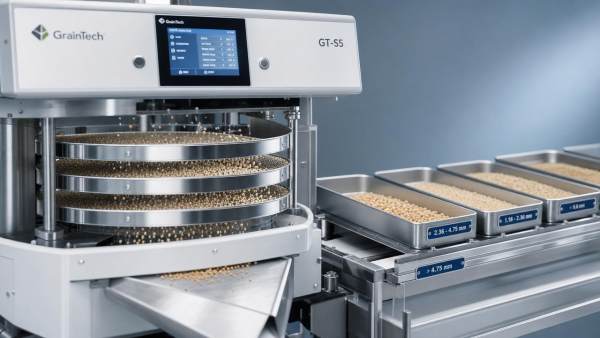
In feed and grain processing, small sizing errors can quietly erode product value, disrupt quality consistency, and raise compliance risks. Grain grading machines play a critical role in separating kernels accurately, yet improper calibration, wear, or poor data interpretation often leads to costly misclassification. For quality control and safety managers, understanding where these errors begin is essential to protecting margins, meeting standards, and improving downstream performance.
When buyers, auditors, or internal production teams question inconsistent lot quality, the root cause is often not dramatic equipment failure but subtle grading drift. A few tenths of a millimeter in screen variation, uneven feed rates, vibration instability, moisture changes, or poorly interpreted test data can shift a product from premium to discounted. For quality and safety teams, the practical question is not whether grain grading machines matter, but how to identify the sizing errors that most directly hurt value and compliance.
Why small sizing errors in grain grading create large commercial and compliance losses
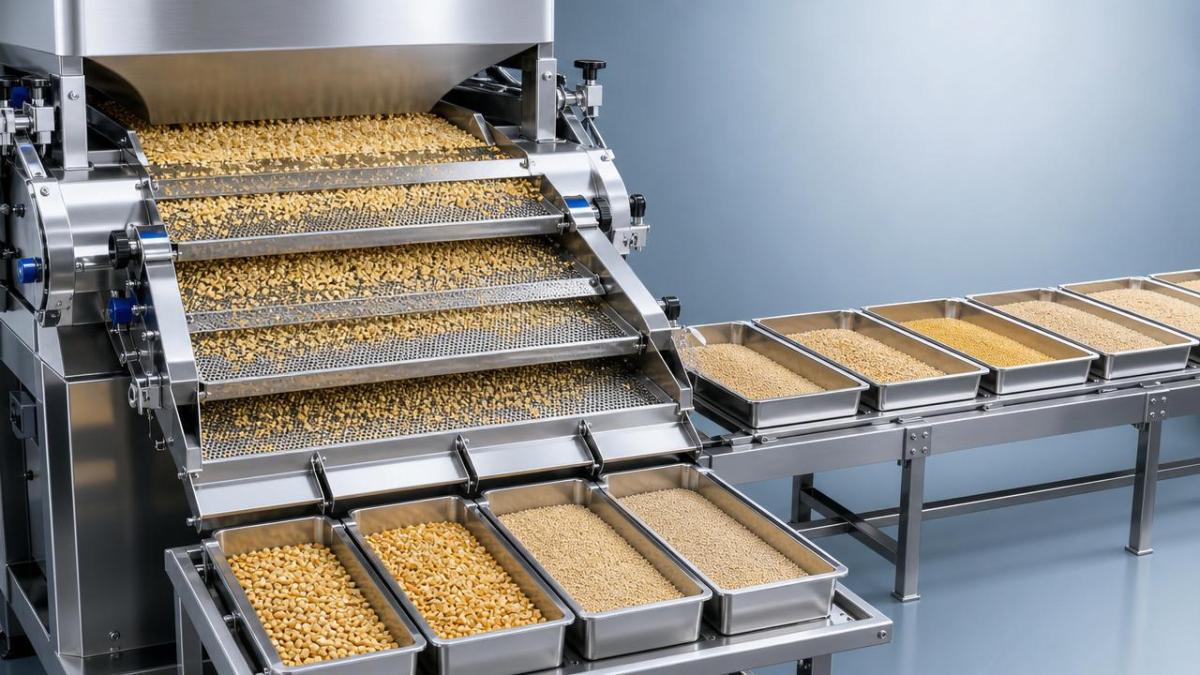
For quality control personnel, sizing accuracy is not just a mechanical performance issue. It affects saleable yield, grade consistency, downstream processing efficiency, contamination control, and customer confidence. In many grain and feed operations, grading outcomes determine whether a lot meets contract specifications, enters the right storage channel, or proceeds to milling, pelleting, or packaging without rework.
The commercial damage from grading error usually appears in four places. First, oversized and undersized fractions become mixed, lowering the average quality profile of the lot. Second, premium product may be lost into reject streams, directly reducing revenue. Third, downstream equipment such as dehullers, mills, and separators operate less efficiently when feedstock is not within the expected size distribution. Fourth, inconsistent grading can trigger disputes with customers or regulators if declared quality does not match delivered material.
Safety managers also have a separate concern: a grading system that performs inconsistently can hide broader process control weakness. If sizing drift is ignored, teams may also miss associated issues such as damaged kernels, foreign material carryover, dust generation, sanitation failures, or poor segregation between lots. In regulated or export-oriented operations, that becomes a traceability and risk-management problem, not merely a production nuisance.
What quality and safety managers are really trying to diagnose
Most readers searching for insight on grain grading machines are not looking for generic equipment definitions. They want to answer practical questions: Why has finished product variability increased? Why are customer complaints rising despite normal throughput? Why do manual sieve checks disagree with machine output? Why is the reject stream too high? And how can teams prove whether the machine, the grain condition, or the operating method is responsible?
In practice, the most important diagnostic issue is separating true machine error from process-related variation. A grading machine may be functioning exactly as configured, but still producing poor outcomes because incoming grain moisture has shifted, kernel shape has changed by variety, screen selection is inappropriate, or operators are pushing too much volume through the line. Without this distinction, teams often replace parts or adjust settings without solving the underlying value loss.
That is why the best evaluation approach combines equipment inspection, sample validation, trend analysis, and operating context. The question is not simply “Is the machine accurate?” It is “Is the machine delivering accurate and economically useful separation under actual plant conditions?”
The most common sizing errors that hurt value
Several recurring errors account for most grading-related financial loss. The first is using worn, damaged, or partially blocked screens. Even slight deformation in apertures changes the cut point and allows off-spec kernels to pass into the wrong fraction. Because wear develops gradually, teams may normalize poor output until a claim or audit exposes the problem.
The second common error is incorrect machine calibration. Vibration amplitude, deck angle, feed rate, air assistance, and dwell time must work together. If settings are changed for throughput without confirming separation efficiency, the operation may gain speed while silently reducing grade precision. This is especially common during peak season when production pressure overrides verification routines.
The third is poor alignment between grading parameters and actual grain characteristics. Grain is biologically variable. Moisture, density, kernel hardness, broken percentage, and varietal shape all affect how material behaves on screens. A setup that works well for one wheat lot or one corn harvest window may produce poor separation for another. Standard settings are useful, but they should never substitute for periodic validation against live product.
The fourth error involves sampling and data interpretation. Quality teams sometimes rely on composite samples that are not representative of line conditions, or they compare machine results with manual tests performed using different methods. If the verification protocol is weak, the organization may misdiagnose good grading as bad, or bad grading as acceptable. In both cases, decision quality suffers.
A fifth issue is inconsistent material feed. Surging flow, uneven distribution across the screen width, or bridging upstream can reduce residence time and separation quality. Operators may focus on the grading machine itself, even though the real cause lies in the feeder, elevator, hopper design, or upstream cleaning stage.
How to tell whether your grain grading machine is drifting out of control
Quality and safety managers need early warning signs that do not depend on a major failure event. One of the strongest indicators is growing disagreement between in-line grading results and laboratory sieve analysis. If those differences become more frequent or larger over time, something in the machine, sampling routine, or grain condition has changed.
Another sign is unexplained yield movement between premium, standard, and reject fractions. If the incoming material profile is broadly stable but output fractions shift meaningfully, teams should investigate screen condition, feed consistency, and calibration records. Sudden changes may suggest a mechanical issue, while slow trend drift often points to wear, contamination buildup, or inadequate maintenance intervals.
Customer-side evidence matters as well. More complaints about uneven kernel size, poor milling performance, inconsistent pellet quality, or unexpected fines can all trace back to grading precision. These signals are especially important when internal KPIs appear acceptable, because they may reveal that the wrong variables are being monitored.
Operational behavior offers further clues. Excessive vibration noise, unstable motor load, increased dust around the grading section, or frequent operator intervention may indicate that the machine is no longer separating material under controlled conditions. Teams should treat these not as maintenance nuisances alone, but as quality risk indicators.
A practical verification framework for quality control teams
A useful approach is to build a simple but disciplined verification routine around four checkpoints: input condition, machine condition, output distribution, and data credibility. Start with the input. Record moisture, broken percentage, foreign material content, and any varietal changes. If incoming raw material has changed, grading outcomes should not be interpreted in isolation.
Next, inspect the machine systematically. Confirm screen integrity, cleanliness, tension, alignment, and mounting. Review vibration settings, deck angle, air settings if applicable, and feed rate against the product specification. It is important to compare actual operating conditions with documented standard settings rather than relying on operator memory.
Then verify output quality through structured sampling. Take samples from each fraction at defined intervals, using a repeatable method and enough sub-samples to account for process variation. Compare these with standard laboratory tests. If discrepancies emerge, check whether the issue is repeatable, product-specific, or shift-specific.
Finally, assess data credibility. Ask whether the test method, sample size, sieve condition, and acceptance criteria are all consistent. A machine can only be judged well if the reference standard is trustworthy. Many plants discover that part of the problem lies not in the grader, but in inconsistent validation methodology between shifts or departments.
Where grain grading errors intersect with food safety and compliance
Although grading is usually discussed in terms of yield and quality, sizing errors can also affect safety outcomes. Poor separation may allow excess broken material, dust, or foreign matter to remain in streams where they increase spoilage risk, alter airflow behavior in storage, or create additional cleaning burdens later in the process. Fine material accumulation may also contribute to housekeeping and combustible dust concerns, depending on the facility environment.
From a compliance standpoint, inaccurate grading can compromise lot classification and documentation. If a shipment is labeled to a certain quality standard but the actual size distribution falls outside tolerance, the organization may face customer disputes, failed inspections, or reputational damage. For export programs and contract manufacturing relationships, that can have outsized consequences compared with the apparent smallness of the original sizing error.
Traceability is another concern. When rework, blending, or lot reassignment occurs because grading output is unreliable, the paper trail becomes more complex. Safety managers should therefore view grading accuracy as part of broader process integrity. Consistent, documented machine performance helps support defensible quality claims and smoother audit readiness.
What procurement and plant leaders should evaluate before upgrading or replacing equipment
Not every sizing problem requires a new machine. Before approving capital expenditure, managers should determine whether losses are caused by machine capability limits, maintenance gaps, unsuitable screen selection, upstream inconsistency, or weak operating discipline. Replacing equipment without correcting the process often recreates the same problem at higher cost.
That said, some operations do outgrow their current grading technology. If product mix has changed, quality tolerances have tightened, throughput has increased, or digital monitoring is now required, older grain grading machines may no longer provide sufficient control. In these cases, evaluation should focus on repeatability, adjustment precision, ease of sanitation, wear-part management, integration with plant data systems, and the supplier’s ability to support calibration and training.
For quality-driven facilities, the strongest business case for investment is usually not speed alone. It is reduced giveaway, lower reject rates, better specification compliance, more stable downstream processing, and faster root-cause analysis when problems arise. These value drivers are easier to defend internally than generic promises of modernization.
Best practices that reduce grading error without slowing production
The most effective plants treat grading accuracy as a managed process, not a machine setting. They establish validation frequency based on risk, not convenience. High-value or specification-sensitive products receive more frequent checks, especially when raw material origin, moisture, or variety changes.
They also maintain clear control limits. Instead of waiting for a shipment complaint, teams define acceptable variation bands between machine output and verification testing. When the trend approaches the limit, maintenance or recalibration is triggered before a major loss event occurs.
Operator training is equally important. Staff should understand not only how to run the equipment, but how feed consistency, cleaning, screen condition, and throughput interact with grading performance. Many costly errors begin when a well-intentioned adjustment is made to solve one immediate production issue without understanding the quality impact.
Finally, leading sites make grading data useful. They trend reject percentage, premium recovery, test agreement, and downtime by product type, shift, and raw material source. This allows quality teams to identify whether errors are equipment-driven, product-driven, or behavior-driven. Better data interpretation is often the fastest path to better value protection.
Conclusion: protect value by treating sizing accuracy as a control point, not a background task
Small sizing errors rarely look dramatic on the plant floor, but they can steadily damage revenue, consistency, safety assurance, and customer trust. For quality control and safety managers, the main takeaway is clear: grain grading machines should be monitored as critical process control assets, not just as routine mechanical equipment.
The highest-value response is not broad theory but disciplined practice: verify input conditions, inspect screens and calibration, compare machine output with reliable reference tests, investigate drift early, and connect grading performance to downstream quality and compliance outcomes. When plants do this well, they reduce hidden giveaway, improve specification confidence, and create a stronger foundation for both operational efficiency and audit readiness.
In a market where margins can narrow quickly and buyers expect consistency, the organizations that win are often those that notice the smallest errors first. With the right controls around grain grading machines, those small errors can be corrected before they become expensive ones.
Related Intelligence
- Milling Machinery5 Milling Machinery Firms Approved for Belt and Road Smart Farm Machinery Cloud Platform5 milling machinery firms approved for Belt and Road Smart Farm Machinery Cloud Platform — enabling multilingual remote diagnostics, cross-border spare parts ordering & national API integration.
- Milling MachineryTea leaf rolling machine pressure settings and leaf appearanceTea leaf rolling machine pressure settings directly shape twist, appearance, and quality. Learn how to balance pressure for cleaner leaves, less breakage, and more consistent tea processing results.
- Milling MachineryTea processing machines wholesale and the spare parts questionTea processing machines wholesale buyers now focus on spare parts, uptime, and lifecycle support. Learn how to compare suppliers, reduce downtime risk, and protect tea quality.
The Morning Broadsheet
Daily chemical briefings, market shifts, and peer-reviewed summaries delivered to your terminal.
