
Which feed ingredients work best for stable pellet quality?
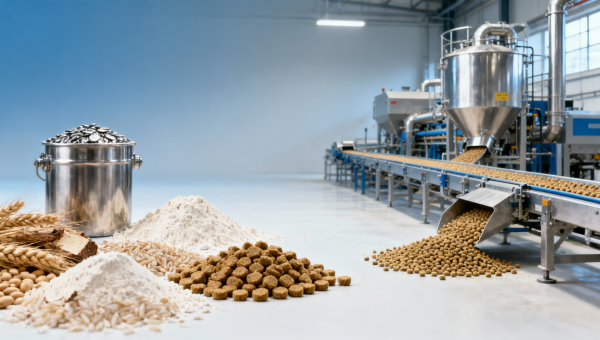
Stable pellet quality begins with the right Feed Ingredients and a process built for consistency. For professionals in aquaculture production, industrial milling, and aquaculture equipment operations, understanding how Bio Ingredients, formulation balance, and FDA Standards interact is essential to reducing fines, improving durability, and protecting output quality. This Peer Analysis explores practical ingredient choices that support reliable pellet performance across modern Aquaculture Tech and pharmaceutical processing environments.
In commercial feed and grain processing, pellet stability is rarely determined by one raw material alone. It is the result of how protein meals, starch sources, oils, binders, minerals, moisture, and thermal conditioning behave as one system under pressure. For plant managers, formulators, procurement teams, and quality supervisors, the commercial question is straightforward: which ingredients consistently produce pellets with the right hardness, water stability, durability, and nutrient integrity without driving unnecessary processing cost?
The answer depends on target species, pellet diameter, die specifications, conditioning temperature, and post-pellet handling. A 2 mm shrimp pellet designed for high water stability has different formulation priorities than a 6 mm fish grow-out pellet optimized for throughput. In most industrial settings, acceptable pellet durability index targets fall in the 90% to 96% range, while fines are often expected to remain below 3% to 5% after cooling and transfer. Ingredient choice directly affects whether those thresholds are realistic.
This article reviews the feed ingredients that most strongly support stable pellet quality, the formulation mistakes that undermine production, and the practical selection criteria used by B2B buyers and operators. It is intended for readers who need reliable technical guidance for process planning, supplier evaluation, cost control, and quality compliance.
Why pellet stability starts with ingredient functionality
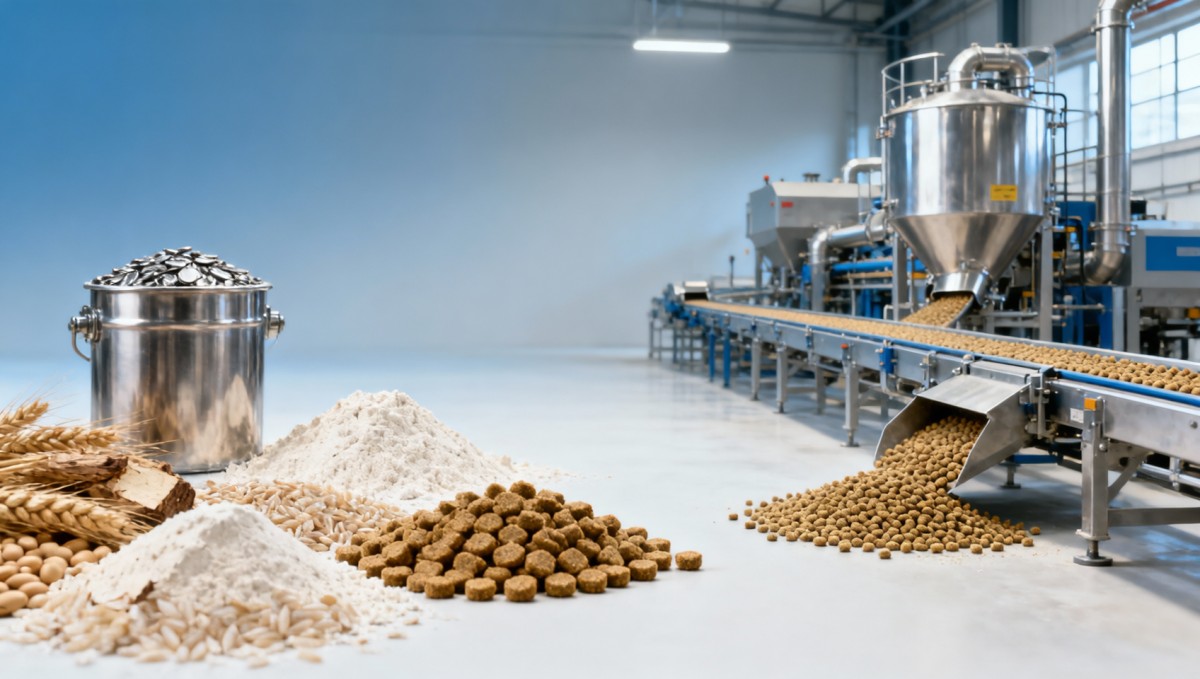
Pellet quality is not simply a mechanical output of the pellet mill. It begins with ingredient functionality, meaning the physical and chemical behavior of the formula during grinding, conditioning, pressing, drying, cooling, and storage. Even when the same equipment is used, two formulations with similar crude protein can deliver very different pellet strength because starch gelatinization, protein plasticity, fiber length, and oil distribution do not respond equally under heat and pressure.
In practical terms, stable pellets require enough cohesive force to resist cracking during transport, but not so much hardness that digestibility or intake is compromised. Most aquafeed processors monitor at least 4 core indicators: pellet durability index, fines percentage, bulk density, and water stability. For higher-value shrimp or specialty aquatic diets, a fifth indicator is often added: nutrient retention after 30 to 120 minutes of immersion, depending on feeding behavior and environmental conditions.
Ingredient functionality also influences line efficiency. A formulation with poor binding characteristics may require higher steam input, slower throughput, or more aggressive die compression to achieve acceptable pellet integrity. That can raise energy consumption by 5% to 15% and accelerate die wear. By contrast, balanced formulas with suitable starch and binder systems generally support more stable amperage, smoother extrusion or pelleting, and lower rework rates.
For decision-makers, this means ingredient selection should be evaluated not only by nutrient cost per ton, but also by process behavior, reprocessing loss, and downstream claims risk. A lower-cost raw material that increases fines from 2% to 6% may produce an unfavorable total cost once handling loss, dust management, and customer complaints are included.
The four functional roles that matter most
Feed ingredients contribute to pellet quality in four major ways. First, they provide structural binding through starch, protein, or hydrocolloid behavior. Second, they affect lubrication and friction inside the die through oils and particle texture. Third, they influence moisture absorption and heat transfer during conditioning. Fourth, they determine how the pellet behaves after cooling, especially under bagging, conveying, and aquatic immersion conditions.
- Structural materials: wheat, wheat flour, broken rice, tapioca, and some gelatinized starches improve cohesion.
- Protein matrix contributors: soybean meal, fish meal, wheat gluten, and some concentrates can improve compactness when properly conditioned.
- Lubricating materials: fats and oils support energy efficiency but can weaken pellet durability when inclusion exceeds typical process limits.
- Specialized binders: lignosulfonates, alginates, CMC, guar derivatives, and selected bio-based binders improve durability or water stability in targeted applications.
A formulation becomes unstable when one role dominates at the expense of another. Excess oil may improve throughput but reduce pellet binding. Excess fiber may lower formula cost but increase breakage. Excess mineral load can alter compaction and weaken the pellet surface. The best feed ingredients are therefore those that perform well nutritionally and mechanically within the intended process window.
Best-performing feed ingredients for durable pellets
Across aquaculture and industrial feed applications, several ingredient groups consistently support stable pellet quality when used in the correct range. Their value lies not only in nutrient content, but in how predictably they respond to grinding, steam conditioning, and compaction. The table below summarizes common ingredient types, their pellet-quality role, and typical operational considerations.
Among standard raw materials, wheat remains one of the most reliable ingredients for durable pellets because its starch and gluten-like protein fractions improve binding under moderate conditioning temperatures, often around 75°C to 90°C for conventional pelleting. Rice-based materials also perform well, particularly in fine aquatic feeds where uniform particle size supports a smoother pellet surface and lower breakage.
Tapioca starch is frequently used when water stability is a top priority. In shrimp and specialty aquatic feed, where pellets may need to remain intact for 30 minutes to 2 hours, tapioca can improve cohesion more effectively than some cereal flours. However, cost and supply consistency should be reviewed carefully, especially in multinational sourcing programs with variable crop quality.
Protein ingredients deserve equal attention. Soybean meal contributes more than nutrition; when ground to a controlled particle size, often below 600 microns for many aquatic applications, it helps produce a compact matrix. Fish meal can also support pellet structure, but quality varies significantly by fat content, ash, freshness, and grind uniformity. High-ash material may weaken pellet integrity if not balanced with stronger binders.
When specialized binders become necessary
Specialized binders are usually justified in three cases: very small pellets, high-fat formulations, or products requiring elevated water stability. In these scenarios, conventional cereal starch may not provide enough cohesion on its own. Typical binder inclusion can range from 0.3% to 2.0%, depending on chemistry and application. Selection should be validated through pilot runs rather than relying on supplier claims alone.
Common binder options
- Lignosulfonates: often used for mechanical durability in dry feed pellets and some industrial applications.
- Alginate or seaweed-derived binders: useful in aquatic formulations requiring stronger immersion resistance.
- Carboxymethyl cellulose and similar polymers: selected where pellet surface integrity and reduced fines are critical.
- Pregelatinized starches: practical for processors seeking a label-friendlier route to improved cohesion.
For regulated or sensitive production environments, including facilities that operate near pharmaceutical-grade hygiene expectations, the choice of binder should be screened for specification clarity, contaminant risk, and traceability. Procurement teams should ask for moisture limits, microbiological profile, heavy metal information where relevant, and batch-level consistency records.
Ingredients that commonly weaken pellet quality
Some ingredients are valuable nutritionally but can undermine stable pellet quality if their inclusion level or physical form is not managed properly. The most common example is excess added oil. While fats support energy density and can improve throughput by reducing friction, high pre-pellet oil addition often weakens inter-particle bonding. In many practical feed mill settings, keeping liquid fat addition before pelleting below about 1.5% to 2.5% helps maintain durability, with the balance applied post-pellet when equipment allows.
High-fiber ingredients also require caution. Rice bran, wheat bran, sunflower meal, or some by-product streams can increase formula cost-efficiency, but long fibrous particles interfere with compaction and create weak points in the pellet. This is especially problematic in small-diameter aquaculture pellets below 3 mm, where the die channel offers little tolerance for inconsistent particle behavior.
Mineral-heavy formulas present another challenge. Large amounts of limestone, dicalcium phosphate, or other dense mineral inputs can reduce the relative amount of natural binding material and change die friction. If the formulation also has low starch, low protein functionality, and high oil, the resulting pellet may look acceptable at discharge but fracture during cooling or pneumatic transfer.
The operational risk is that teams may misdiagnose these failures as equipment problems. In reality, unstable pellet quality often comes from a formula-process mismatch. Changing rollers, die compression ratio, or steam pressure will not fully solve a formula that lacks enough functional binding material.
Warning signs in raw material selection
Quality teams should flag raw materials that show high variability from batch to batch. A moisture swing of 2 to 3 percentage points, an inconsistent grind profile, or unexplained changes in bulk density can translate into unstable conditioning and erratic pellet hardness. When this happens, the plant may see alternating patterns of die choking, pellet cracking, and excess fines within the same production week.
The table below outlines common ingredient-related risks and the practical control point associated with each one.
For procurement and finance stakeholders, this type of control framework supports better supplier comparison. Lower-cost lots should not be approved solely by nutrient specification. Their effect on production stability, rejection rates, and handling loss can materially change the total value of the purchase.
How to choose ingredients by species, process, and compliance needs
Ingredient selection works best when it follows the final use case rather than a generic formula template. Aquaculture diets, land-animal feed, and hybrid industrial bio-ingredient pellets do not share the same priorities. Aquaculture feed often emphasizes water stability, nutrient retention, and fine particle control. Land-feed applications may prioritize throughput and bulk handling durability. Facilities with cross-sector compliance demands may place stronger emphasis on traceability, documentation, and contaminant control.
For aquatic feed, the first decision is usually the relationship between pellet size and immersion time. A 1.2 mm to 2.0 mm juvenile pellet needs extremely consistent grind size and a carefully balanced binder system. A 4 mm to 6 mm grower pellet may tolerate more formulation flexibility but still needs enough matrix strength to survive conveying, bagging, and marine transport. In both cases, starch quality and oil placement are decisive variables.
For operations working under stricter quality systems, documentation should be part of ingredient selection. That means clear certificates of analysis, origin traceability, impurity limits, and handling records. While FDA Standards do not prescribe one universal pellet formula, regulated buyers typically expect disciplined raw material control, documented change management, and repeatable manufacturing performance.
Project managers and engineering leads should also consider equipment compatibility. Some ingredients perform well in theory but create flow problems in storage bins, conditioning bottlenecks, or excess die wear. Selection should therefore be validated across at least 3 stages: raw material receipt, pilot or line trial, and post-pellet durability testing after cooling and transport simulation.
A practical decision checklist for buyers and operators
- Confirm target pellet performance: define acceptable fines, durability, and water stability thresholds before comparing ingredients.
- Review physical specifications: particle size, moisture range, bulk density, and oil content often matter as much as crude nutrient values.
- Check process fit: align ingredients with conditioner residence time, die compression ratio, and post-pellet oiling capability.
- Assess compliance readiness: request documentation on traceability, contaminant controls, and batch consistency.
- Run side-by-side trials: compare at least 2 or 3 candidate ingredients under the same production settings to isolate true process value.
Typical formulation guidance ranges
As a general rule, formulas intended for stronger pellet durability often keep functional starch sources within a meaningful range, commonly 10% to 20% or higher depending on nutritional limits and pellet type. Pre-pellet moisture entering the conditioner is frequently managed toward total mix moisture around 15% to 17%, while conditioning residence time can range from 20 to 45 seconds in standard pelleting and longer in systems designed for enhanced cook. These are process ranges, not fixed targets, and they should be adjusted to the formula and equipment design.
Implementation, testing, and continuous improvement in the feed mill
Even the best feed ingredients will not deliver stable pellet quality without disciplined implementation. Successful plants combine formulation control with routine in-process checks. A practical testing program does not need to be overly complex, but it should be consistent enough to detect drift before large volumes are affected. Many operations review at least 6 checkpoints per batch or shift: grind profile, mixer uniformity, conditioner temperature, pellet durability, fines after cooling, and final moisture.
One of the most effective approaches is to separate ingredient trials into controlled phases. In phase 1, the plant validates physical handling, including flow and storage behavior. In phase 2, it measures pelleting response such as motor load, throughput, steam demand, and die behavior. In phase 3, it checks finished pellet outcomes after cooling, screening, bagging, and, for aquafeed, immersion testing. This 3-step structure reduces the risk of approving an ingredient that looks acceptable in formulation software but fails on the production floor.
Cross-functional review is equally important. Operators may notice signs of instability before formal lab data is available, such as uneven pellet sheen, excess die noise, or variable discharge temperature. Quality managers can then connect those observations to measured trends. Procurement teams should use that feedback to refine approved supplier lists and negotiate specifications that reflect real plant needs rather than generic commodity descriptions.
For companies scaling output or entering new export markets, ingredient control becomes a strategic lever. Better pellet consistency often supports lower complaint rates, cleaner storage, more predictable shipping performance, and stronger confidence among institutional buyers. In competitive sectors such as aquaculture and bio-ingredient processing, those operational gains can be more valuable than a narrow reduction in raw material price.
Common mistakes to avoid
- Approving raw materials only on protein or price without reviewing particle size and process behavior.
- Adding too much oil before pelleting and then trying to recover durability through excessive die compression.
- Changing more than one major variable at a time during trials, which makes root-cause analysis difficult.
- Ignoring post-pellet losses; a pellet that survives the die but breaks during cooling or transfer is still a quality failure.
- Underestimating documentation needs in regulated or export-oriented supply chains.
FAQ: practical questions from procurement and production teams
How much binder is usually needed for aquaculture pellets?
In many cases, 0.3% to 1.5% is enough, although highly water-stable shrimp diets may require closer review of the full starch-binder system rather than simply increasing one additive. Excess binder can affect texture, cost, or even nutrient release, so trials should confirm both pellet strength and feeding performance.
Is wheat always better than rice for pellet durability?
Not always. Wheat is often preferred for general binding performance, but rice materials can be highly effective in fine aquatic diets where clean particle size and smooth compaction matter. The better choice depends on cost, species requirements, conditioning profile, and water-stability targets.
What is the fastest way to reduce fines?
The fastest improvement usually comes from checking three variables together: pre-pellet oil level, particle size consistency, and conditioning moisture-temperature balance. Correcting only one of these may bring a temporary gain, but stable results usually require all three to be aligned.
How long does a useful ingredient validation cycle take?
For a standard industrial evaluation, 1 to 2 weeks is often enough to complete inbound checks, production trials, and finished-product review. More complex programs involving export compliance, multiple pellet sizes, or supplier qualification may take 3 to 6 weeks.
Stable pellet quality is built on ingredient functionality, not on raw material price alone. Wheat, rice fractions, tapioca starch, soybean meal, selected protein concentrates, and well-matched binder systems all have roles to play when aligned with species needs, pellet size, and process capability. By contrast, poorly managed oil levels, variable fiber sources, and inconsistent raw material specifications remain common causes of fines, breakage, and line inefficiency.
For feed mills, aquaculture producers, OEM-linked operations, and technical procurement teams, the strongest commercial results come from evaluating ingredients across nutrition, process behavior, documentation quality, and total cost impact. If your organization is reviewing pellet stability, ingredient sourcing, or formulation optimization, connect with AgriChem Chronicle to explore deeper market intelligence, technical publishing opportunities, or tailored solution analysis for your production priorities.
Related Intelligence
- Commercial Feed PelletChina Upgrades 12 Feed Pellet Standards to Mandatory GBChina upgrades 12 feed pellet standards to mandatory GB—new mycotoxin testing, heavy metal limits & carbon footprint rules. Act now for EU, Saudi, Vietnam compliance!
- Commercial Feed PelletChina to Upgrade Mandatory Standard for Commercial Feed Pellets in 2026China's 2026 Commercial Feed Pellets mandatory standard upgrade introduces mycotoxin controls, microplastic limits & durability grading—key for exporters, manufacturers & QA teams. Act now to align.
- Commercial Feed PelletU.S.-Iran Strait of Hormuz Tensions Push Feed Pellet Freight Rates Up 8.3%U.S.-Iran Strait of Hormuz tensions spike feed pellet freight rates by 8.3%. Discover how exporters, importers & logistics providers can mitigate risk and adapt fast.
The Morning Broadsheet
Daily chemical briefings, market shifts, and peer-reviewed summaries delivered to your terminal.
