
Peer analysis: how to compare aquaculture tech suppliers?
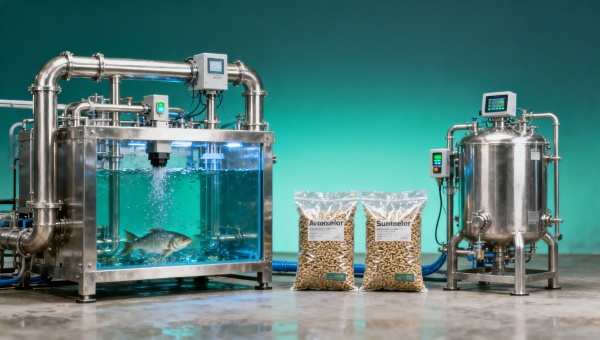
Choosing among Aquaculture Tech suppliers demands more than price checks. A rigorous Peer Analysis should compare aquaculture equipment, aquaculture products, aquaculture production capabilities, Feed Ingredients, and Bio Ingredients against FDA Standards, traceability, and operational fit. For buyers, operators, and project leaders, this article outlines how to benchmark vendors with the same discipline used in industrial milling and pharmaceutical processing.
In commercial aquaculture, a weak supplier decision can affect stocking density, feed conversion, water quality stability, harvest timing, and regulatory exposure for 3 to 10 years. That is why procurement teams increasingly treat supplier selection as a cross-functional review involving operations, quality, finance, engineering, and compliance rather than a simple RFQ exercise.
A practical peer analysis framework compares vendors on measurable criteria: system capacity, uptime assumptions, traceability depth, documentation quality, installation support, ingredient consistency, and after-sales responsiveness. For institutional buyers and industrial farming operators, the goal is not only to identify a technically capable supplier, but to find one whose production discipline and compliance posture match the risk profile of the project.
Build a Peer Analysis Framework Before You Compare Quotes
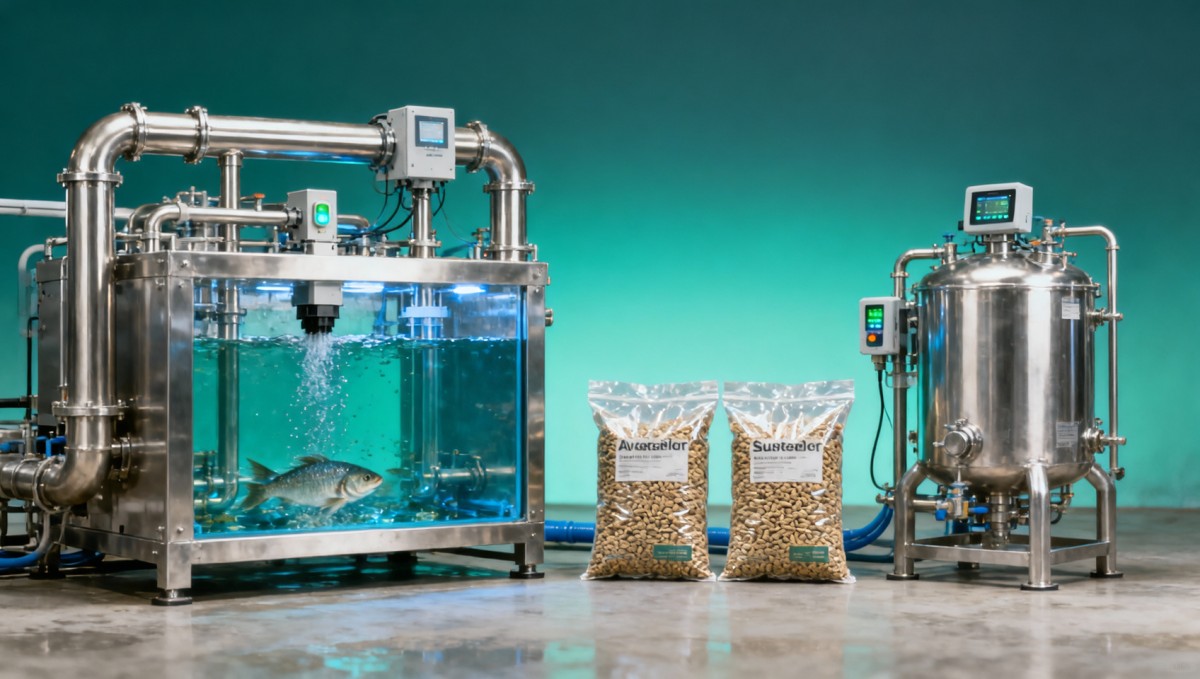
The most reliable supplier comparison starts with a structured framework. In aquaculture tech procurement, teams usually evaluate at least 5 dimensions: technical fit, production capability, compliance readiness, lifecycle cost, and service continuity. Without this structure, buyers often overweight initial price and underweight downtime risk, spare parts lead time, and process compatibility.
For recirculating aquaculture systems, feeding lines, aeration modules, water treatment units, dosing systems, and monitoring platforms, “fit” means more than nameplate capacity. A unit rated for 100 tons per year may still fail operationally if salinity, temperature range, solids load, or operator skill level differ from the supplier’s reference assumptions. The same logic applies to Feed Ingredients and Bio Ingredients, where formulation consistency and contamination control can materially alter growth and survival outcomes.
A peer analysis should also compare vendor maturity. Two suppliers may offer similar equipment layouts, but one may operate with 2-week documentation response times and limited batch traceability, while another can provide test records, materials certificates, sanitation procedures, and commissioning protocols within 48 to 72 hours. That difference matters when projects must pass internal audits or external inspections.
Core comparison dimensions
- Technical compatibility: flow rate, oxygen transfer, feed dosing accuracy, corrosion resistance, and automation logic.
- Production discipline: fabrication consistency, ingredient batch control, packaging integrity, and lead-time reliability.
- Compliance and traceability: supplier records, sanitation controls, source transparency, and regulatory support files.
- Operating economics: energy load, consumables usage, maintenance intervals, labor intensity, and failure recovery cost.
- Service resilience: spare parts availability, remote support windows, on-site commissioning, and training quality.
Minimum document set to request
At a minimum, ask each supplier for 8 categories of information: product datasheets, process flow descriptions, material specifications, quality records, standard operating procedures, traceability documents, packaging details, and service scope. For higher-risk projects, request maintenance schedules, validation support, and proof of previous installations in similar water conditions or stocking profiles.
The table below shows a practical scoring model that procurement and technical teams can adapt during vendor shortlisting. Using a 100-point matrix helps prevent one strong presentation from overshadowing hidden operational weaknesses.
This type of matrix helps decision-makers compare aquaculture equipment suppliers and ingredient vendors on equal terms. It also creates a defensible record for finance approvers and project managers who need to explain why the lowest quote was not automatically the best operational choice.
Compare Aquaculture Equipment and Ingredients as an Integrated System
Many procurement teams still evaluate equipment separately from feed and bio-input suppliers. In practice, those categories interact every day. Feed particle stability affects solids load. Bio Ingredients can influence water treatment demand. Sensor reliability affects feeding accuracy. A poor match between hardware and inputs can push labor, mortality risk, and maintenance frequency higher within the first 30 to 90 days of operation.
For example, an automatic feeding system may offer dosing accuracy within ±2% under standard conditions, but if feed density varies or ingredient flowability is inconsistent, actual delivery can drift. Similarly, oxygenation and filtration equipment sized for moderate biomass growth may become underspecified when higher-performance feed programs accelerate growth rates. This is why peer analysis should test compatibility across the full operating model, not only individual product specifications.
Buyers should compare aquaculture products using common operating scenarios: startup phase, normal production, peak biomass, and disruption recovery. A supplier that performs well only in ideal conditions may struggle during seasonal temperature shifts, ingredient substitution, or utility interruptions. Industrial buyers should request performance assumptions in writing, including ambient range, maintenance frequency, and recommended operating thresholds.
Key parameters to benchmark
- Water treatment units: solids handling load, pressure drop, cleaning cycle frequency, and replacement intervals.
- Feeding systems: dosing tolerance, hopper capacity, feed format compatibility, and calibration procedure length.
- Monitoring systems: sensor drift intervals, alarm response settings, data retention period, and remote access reliability.
- Feed Ingredients: moisture consistency, particle durability, storage life, and documented source traceability.
- Bio Ingredients: application rate range, handling controls, contamination safeguards, and batch release documentation.
The following comparison table is useful when reviewing integrated supplier proposals across hardware and input categories. It turns broad claims into operational checkpoints that engineers, operators, and quality teams can validate.
The key takeaway is simple: peer analysis is strongest when equipment, ingredients, and operating assumptions are reviewed as one production ecosystem. That integrated view reduces mismatch risk and improves the reliability of final supplier selection.
Check Compliance, Traceability, and Documentation Depth
In regulated supply chains, documentation quality is often the dividing line between a usable supplier and a high-risk one. Even when a project is not directly governed by pharmaceutical rules, buyers increasingly expect controls that resemble GMP-style discipline: documented sourcing, process consistency, sanitation controls, release checks, and a clear deviation pathway. When aquaculture systems intersect with feed handling, additives, water treatment media, or export-sensitive production, these controls become commercially important.
FDA Standards, EPA-related environmental expectations, and internal quality systems do not require every supplier to look identical, but they do require evidence. For equipment suppliers, this may include material contact declarations, welding and finishing records, electrical documentation, and cleaning instructions. For Feed Ingredients and Bio Ingredients, it may include lot coding, storage conditions, source identity, contaminant screening protocols, and handling instructions across a 6- to 24-month shelf-life window.
Traceability should be tested, not merely promised. A useful audit question is whether the vendor can trace one shipment backward to source inputs and forward to customer delivery records within 2 to 4 hours. Another is whether corrective actions are documented when specifications drift. If the answer is vague, the supplier may not be ready for scaled institutional business.
What quality and safety teams should verify
- Lot or batch identification system that remains readable through receiving, storage, and use.
- Clear document control, including revision dates and release authority.
- Defined nonconformance process with quarantine, review, and disposition steps.
- Storage and transportation controls for humidity, temperature, and contamination risk.
- Complaint handling process with response target, root-cause workflow, and closure timeline.
Red flags during vendor review
Warning signs include mixed document formats, missing revision history, inconsistent unit labeling, and unsupported claims about compliance. Another common issue is fragmented responsibility: sales can answer commercial questions in 24 hours, but technical or quality answers take 7 to 14 days. That lag often signals weak internal coordination and can slow future deviations, maintenance requests, or audit responses.
A disciplined peer analysis therefore assigns weight not only to product quality, but to evidence quality. The supplier that documents well usually installs, trains, and supports more reliably too.
Evaluate Production Capability, Delivery Risk, and Total Cost
A supplier may present strong engineering, but if production capacity is unstable, the project still carries risk. Buyers should ask how many parallel orders the supplier can manage, what percentage of key components are externally sourced, and what the normal lead-time range is during both stable demand and peak seasons. In many industrial procurement cycles, an estimated lead time of 6 weeks can become 10 to 14 weeks when fabrication slots or imported parts tighten.
Production capability also affects consistency. For aquaculture equipment, review fabrication repeatability, factory testing practice, packaging controls, and spare parts planning. For aquaculture products, Feed Ingredients, and Bio Ingredients, evaluate batch planning discipline, warehouse segregation, and release sequence. A vendor with limited planning control may quote attractively but create hidden costs through split shipments, emergency substitutions, or rushed packaging.
Total cost should be modeled over at least 12 to 36 months, not just at purchase. In many systems, energy demand, filter media consumption, replacement parts, cleaning downtime, and operator hours can exceed the savings from a lower upfront quote. Finance approvers often gain clearer visibility when suppliers are compared on annual operating cost bands rather than purchase price alone.
A practical TCO checklist
- Initial capital cost versus expected service life and replacement cycle.
- Maintenance labor hours per week or per production cycle.
- Critical spares lead time, ideally categorized as under 72 hours, 1 week, or over 2 weeks.
- Utility demand under nominal load and peak production load.
- Downtime exposure if one subsystem fails or an ingredient shipment is delayed.
The table below helps procurement teams compare cost and delivery exposure across shortlisted suppliers. It is especially useful in board-level approvals where commercial and technical risks must be summarized in one view.
When peer analysis includes production capability and TCO, supplier rankings often change. The best long-term partner is frequently the one with predictable delivery, disciplined documentation, and manageable operating cost rather than the lowest headline quote.
Validate Service, Implementation, and Operational Fit on Site
Even a strong paper review should end with implementation validation. Operational fit depends on utilities, site layout, staffing, maintenance skill, sanitation routines, and local environmental conditions. A supplier that performs well in a large automated facility may not fit a site that runs lean teams, limited instrumentation, or seasonal production cycles.
Project managers should confirm the implementation plan in 4 stages: pre-install review, delivery inspection, commissioning, and post-startup stabilization. Each stage should have named responsibilities, acceptance criteria, and a response path for deviations. In practical terms, this means confirming what the supplier will do, what the buyer must prepare, and how issues will be escalated during the first 30 days.
For operators, training is not a minor add-on. It should cover startup, routine operation, cleaning, alarm handling, shutdown, and restart. A useful benchmark is at least 1 structured training session for supervisors and 1 task-based session for shift personnel, each supported by written instructions. If training is rushed into a single handover meeting, the probability of misuse rises sharply.
Questions to ask during final validation
- What conditions must the site provide before delivery and startup?
- Which spare parts should be stocked on day 1, day 30, and day 180?
- How fast can remote support respond during alarms or process deviations?
- What operator tasks must be performed daily, weekly, and monthly?
- How are consumables, calibrations, and service records documented?
Common selection mistakes
A frequent mistake is to compare only brochure values without checking site assumptions. Another is to treat service access as secondary, even though a 48-hour delay for a failed controller, pump, or dosing component can disrupt feeding schedules and water stability. Teams also underestimate the value of clear manuals, maintenance schedules, and parts coding during the first 6 months of operation.
The most dependable supplier choice is therefore one that survives real-world validation: the vendor can document, deliver, train, support, and adapt to the site’s operational constraints without creating hidden burden for quality, engineering, or finance.
FAQ for Buyers, Operators, and Approval Teams
How many suppliers should be included in a peer analysis?
For most B2B aquaculture projects, 3 to 5 qualified suppliers is enough to create a meaningful comparison without slowing procurement. Fewer than 3 can weaken benchmarking, while more than 5 often increases review time without improving decision quality unless the project is unusually large or highly specialized.
What is the best way to compare traceability between suppliers?
Ask each supplier to demonstrate one backward-and-forward trace exercise using an actual lot, shipment, or equipment serial reference. Review how quickly the records can be retrieved, how complete they are, and whether source, release, packaging, and delivery details are linked. A practical benchmark is retrieval within 2 to 4 hours for core records.
How long does supplier evaluation usually take?
A focused comparison can take 2 to 6 weeks depending on scope, document availability, and the need for site visits or technical clarification. Integrated projects involving aquaculture equipment, Feed Ingredients, and Bio Ingredients often need more time because compatibility checks and quality reviews span multiple teams.
Should finance teams evaluate technical suppliers directly?
Yes, but through a structured lens. Finance approvers should focus on 12- to 36-month cost exposure, lead-time risk, service commitments, and downtime impact rather than detailed engineering alone. When technical and financial evaluation are combined, supplier choice is usually more robust and easier to defend internally.
A strong peer analysis for aquaculture tech suppliers connects engineering, quality, compliance, commercial risk, and implementation reality in one decision model. It compares aquaculture equipment, aquaculture products, production capability, Feed Ingredients, and Bio Ingredients with the same rigor used in other highly controlled industrial sectors.
For procurement teams, operators, quality managers, and project leaders, the advantage is clear: better supplier selection, fewer startup surprises, stronger traceability, and more predictable long-term operating cost. If you are benchmarking vendors for a new installation, upgrade, or regulated sourcing program, contact AgriChem Chronicle to discuss a tailored evaluation framework, request deeper market intelligence, or explore supplier positioning opportunities built for institutional buyers.
Related Intelligence
- RAS SystemsSASO Opens Fast VOC Channel for RAS Systems in Saudi ArabiaSASO RAS VOC fast track now live: Get Saudi VOC certification in 10 days with CNAS reports & ISO 22000 — accelerate exports of integrated aquaculture systems.
- RAS SystemsSASO Accelerates RAS Systems Local Certification for Chinese FirmsSASO accelerates RAS systems local certification for Chinese firms—leverage CNAS & ISO 22000 to skip retesting and get VOC in 7 days!
- RAS SystemsSASO Streamlines RAS Systems VOC for Chinese ExportersSASO Streamlines RAS Systems VOC for Chinese exporters: Get mandatory Saudi VOC in just 12 days with CNAS testing & ISO 22000 — faster clearance, smarter compliance.
The Morning Broadsheet
Daily chemical briefings, market shifts, and peer-reviewed summaries delivered to your terminal.
