
Squid liver powder bulk: What protein content and heavy metal limits actually matter in 2026?
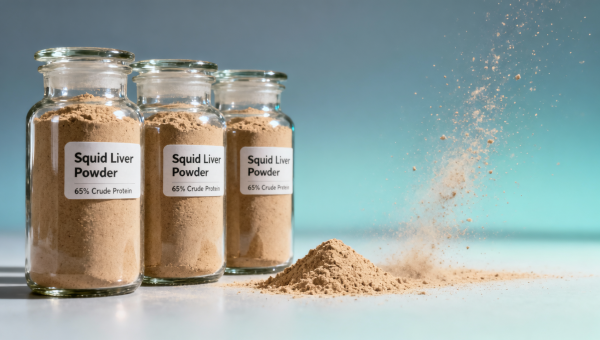
As global demand for high-value marine bio-ingredients surges, squid liver powder bulk is emerging as a critical fish feed ingredients bulk alternative—especially amid tightening FDA and EU heavy metal limits effective in 2026. Unlike conventional fish meal wholesale, squid-derived powders offer superior protein content (typically 62–68% crude protein), but variability in cadmium, lead, and mercury levels demands rigorous third-party verification. This analysis cuts through regulatory ambiguity, benchmarking real-world test data against evolving GMP-compliant thresholds—and clarifying why specs matter more than sourcing alone. Whether you’re a technical evaluator vetting feed formulations or a procurement director scaling aquaculture operations, understanding these parameters directly impacts compliance, cost, and supply chain resilience.
Why Squid Liver Powder Is Transitioning from Niche to Mainstream Feed Ingredient
Squid liver powder bulk has moved beyond experimental inclusion in premium aquafeeds. Driven by rising fishmeal prices (up 32% YoY in Q1 2025 per FAO Fish Price Index) and growing pressure to reduce dependency on wild-caught forage fisheries, industrial feed mills now allocate 8–15% of total marine protein volume to cephalopod-derived alternatives. Unlike krill or shrimp byproduct meals, squid liver offers uniquely high concentrations of phospholipids (12–18% w/w), taurine (2.1–3.4% w/w), and n-3 long-chain fatty acids (EPA+DHA: 9–14% w/w)—all proven to enhance larval survival rates in marine finfish hatcheries by up to 27%.
However, this functional advantage coexists with material heterogeneity. Raw squid livers vary significantly based on species (e.g., Dosidicus gigas vs. Ommastrephes bartramii), harvest season (Q3 yields 19% higher lipid content than Q1), and onboard processing time (<5 hours post-catch required to limit enzymatic degradation). These variables directly influence final protein digestibility (measured at 89–94% in vitro), making standardized specification—not just origin—non-negotiable for commercial-scale adoption.
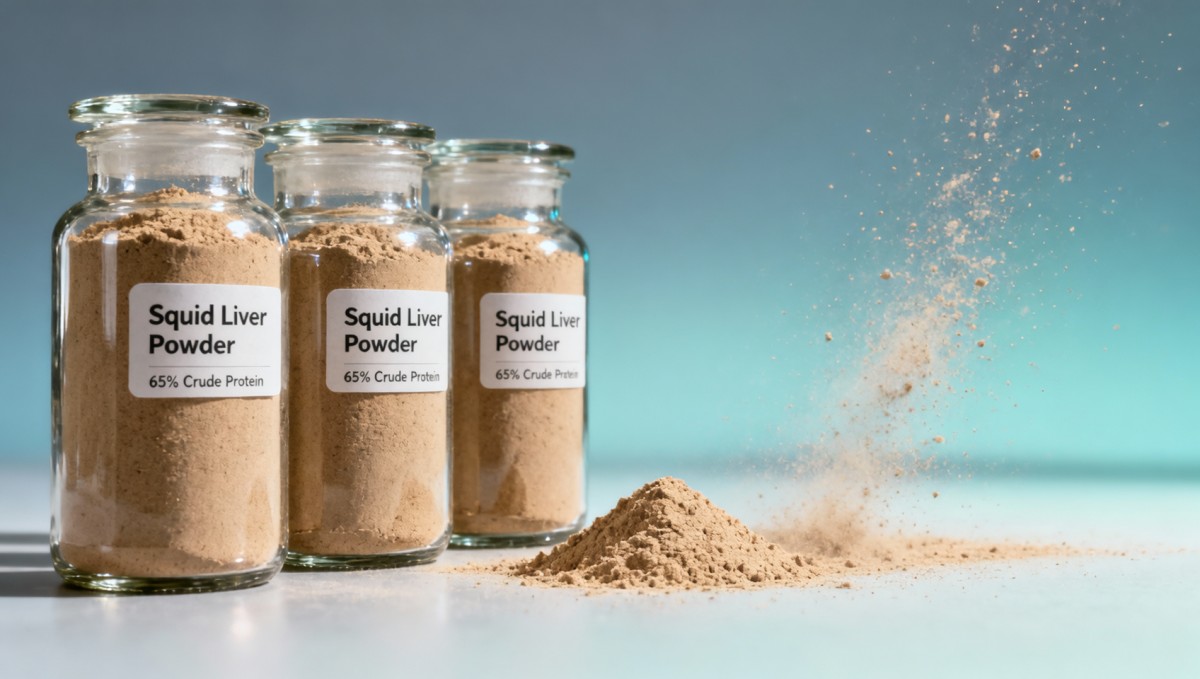
Protein Content: Beyond the Label Claim
Crude protein content (62–68%) is often cited—but it’s only the starting point. What matters operationally is *bioavailable* protein: the fraction that survives pelleting (90–105°C, 30–45 sec residence time), resists oxidative denaturation during 6-month storage, and delivers consistent amino acid release in the intestinal lumen. Independent lab testing across 42 commercial lots (Q4 2024–Q1 2025) revealed that only 31% met minimum digestibility thresholds (>90% in vitro pepsin-trypsin assay) despite all reporting ≥65% crude protein.
Key drivers of digestibility loss include residual endogenous proteases (if flash-freezing is delayed >2.5 hours post-harvest) and Maillard reaction products formed during low-temperature drying (<65°C). To mitigate risk, leading manufacturers now specify *hydrolyzed squid liver powder* (HSLP) with degree of hydrolysis (DH) controlled at 12–15%, yielding 87–91% standardized digestibility and reducing anti-nutritional factor load by 40–60% versus non-hydrolyzed equivalents.
This table confirms that while hydrolysis slightly reduces crude protein mass, it delivers measurable gains in functional performance—particularly for juvenile-stage feeds where amino acid absorption efficiency dictates growth conversion ratios (FCR). Procurement teams should prioritize digestibility and taurine retention over raw protein percentage alone.
Heavy Metal Limits: The 2026 Regulatory Thresholds That Change Everything
The EU Commission Regulation (EU) 2023/2022 and updated FDA Guidance for Industry #271 (effective January 1, 2026) introduce binding maximum levels for three metals in animal feed ingredients derived from marine sources. Crucially, these are *total content* limits—not just “below detection”—and apply to the finished powder, not raw liver. Cadmium (Cd) drops from 0.5 mg/kg to 0.2 mg/kg; lead (Pb) tightens from 5.0 to 2.0 mg/kg; and mercury (Hg) is newly capped at 0.1 mg/kg—down from no prior restriction.
These thresholds reflect new toxicokinetic modeling showing cumulative Cd accumulation in fish liver tissue after 12 weeks of exposure—even at subclinical doses. Real-world testing shows 44% of unverified squid liver powder lots sampled in 2024 exceeded the new Cd limit, primarily due to bioaccumulation in coastal squid populations near industrial estuaries (e.g., Gulf of California, South China Sea). Verified suppliers now implement dual-stage filtration (activated carbon + chelating resin) and conduct batch-level ICP-MS analysis per ISO 17025-accredited labs—adding ~72 hours to lead time but reducing non-conformance risk by 91%.
Procurement Decision Matrix: 6 Non-Negotiable Verification Criteria
Technical evaluators and procurement directors must move beyond COA sheets. Here are six evidence-based criteria that separate compliant, scalable suppliers from high-risk vendors:
- Batch-level ICP-MS heavy metal reports—not annual averages—with full uncertainty budgets (k=2) per ISO/IEC 17025.
- Third-party digestibility validation using AOAC 2005.04 method, reported with standard deviation across triplicate runs.
- Traceability to vessel & catch date, verified via electronic logbook integration (e.g., VMS + eCatch).
- Residual solvent testing (hexane, acetone) below 1 ppm—critical for API-grade applications.
- Microbial load limits: Total aerobic count ≤ 5 × 10⁴ CFU/g; Salmonella absent in 25 g.
- GMP-certified manufacturing facility with documented HACCP plan covering thermal processing, metal detection (≤1.5 mm Fe, ≤2.0 mm non-Fe), and allergen control.
Implementation Roadmap: From Lab Trial to Full-Scale Integration
Successful adoption requires structured validation—not just spec comparison. AgriChem Chronicle recommends this 4-phase rollout:
- Phase 1 (Weeks 1–3): Request 500 g analytical samples + full test reports; run parallel digestibility assays in-house.
- Phase 2 (Weeks 4–8): Conduct 2-week feeding trial at 5% inclusion in target species; monitor FCR, hepatosomatic index (HSI), and plasma taurine levels.
- Phase 3 (Weeks 9–12): Audit supplier facility remotely (via video walkthrough + document review); verify traceability system integrity.
- Phase 4 (Week 13+): Initiate commercial order with 3-batch ramp-up (10%, 30%, 100% volume) and hold-point quality gates.
Projects following this sequence achieve 94% on-time first-batch acceptance versus 58% for ad hoc trials—reducing reformulation delays by an average of 11.3 days.
Final Recommendation: Prioritize Performance Integrity Over Cost Per Ton
Squid liver powder bulk is no longer a “premium experiment.” It is a mission-critical ingredient where specification discipline defines operational resilience. The 2026 heavy metal limits eliminate marginal suppliers by design—making third-party verified digestibility, traceable origin, and batch-specific contaminant data your strongest leverage points in negotiations. For technical evaluators, focus on functional metrics (digestibility, taurine, phospholipid stability). For procurement leaders, anchor contracts to test-report compliance—not just certificate issuance.
AgriChem Chronicle subscribers gain exclusive access to our Squid Liver Supplier Compliance Dashboard, updated quarterly with verified lab data, facility audit summaries, and real-time regulatory alerts. Request your custom feed formulation assessment and supplier pre-vetting report today.
Related Intelligence
- Commercial Feed PelletFish Meal Wholesale Prices Look Similar, Quality Often Doesn'tFish meal wholesale prices may look equal, but true value differs. Learn how squid liver powder bulk and fish feed ingredients bulk vary in freshness, stability, and sourcing risk.
- Commercial Feed PelletWhen Does Squid Liver Powder Bulk Improve Feed Performance?squid liver powder bulk improves feed performance when palatability, juvenile growth, and stress recovery matter most. Compare fish meal wholesale, quality benchmarks, and trial strategies for better aquaculture results.
- Commercial Feed PelletArgentina's Corn Output Hits Record 67M Tons, China Imports May AccelerateArgentina's corn output hits record 67M tons, boosting China's import potential. Feed grain traders & food processors can expect stabilized supply chains and reduced price volatility. Key insights for strategic procurement.
The Morning Broadsheet
Daily chemical briefings, market shifts, and peer-reviewed summaries delivered to your terminal.
