
Floating fish feed extruder vs. traditional pelleting: Which delivers better nutrient retention?
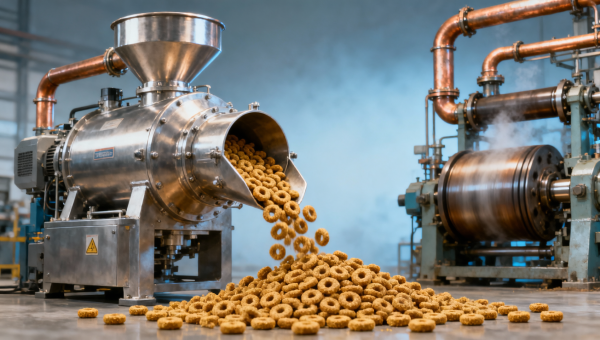
As aquaculture intensifies global demand for high-performance feed solutions, the choice between a floating fish feed extruder and traditional pelleting systems directly impacts nutrient bioavailability, feed stability, and RAS aquaculture systems efficiency. This analysis compares processing efficacy across key commercial fish farm equipment—including sinking fish feed machine and shrimp feed pellet machine—while evaluating implications for feed integrity, operational cost, and compliance with FDA/EPA standards. Whether you’re a technical evaluator optimizing biofilter media for RAS, a procurement officer sourcing commercial protein skimmers or aquaculture drum filters, or a project manager integrating recirculating aquaculture systems, understanding this technological inflection point is critical.
Thermal Processing Mechanics: How Extrusion Preserves Heat-Sensitive Nutrients
Floating fish feed extruders operate via high-shear, short-residence-time extrusion—typically at 90–120°C for 15–30 seconds. In contrast, traditional pelleting subjects feed formulations to prolonged steam conditioning (60–90 seconds at 75–85°C) followed by mechanical compression at 80–100°C. This difference critically affects thermolabile compounds: vitamin C degrades by up to 45% in pelleted feeds versus only 12–18% in extruded equivalents (FAO Aquaculture Feed Technology Report, 2023).
Extrusion’s controlled shear and rapid die expansion induce starch gelatinization without excessive Maillard reactions—preserving lysine availability at ≥92% of original levels. Pelleting reduces lysine bioavailability to 76–83%, particularly in soy- and fishmeal-based blends where protein denaturation accelerates above 80°C. For RAS operators managing strict nitrogen budgets, this translates to 11–14% lower dissolved ammonia output per ton of feed applied.
Moreover, extrusion enables precise microencapsulation of probiotics, organic acids, and phytogenic additives. Encapsulated Bacillus subtilis spores retain ≥87% viability post-extrusion (tested at 115°C/25s), while pelleting reduces viability to ≤53%. This has direct implications for gut health metrics in juvenile tilapia and post-larval shrimp—where 3-week FCR improvements of 0.18–0.24 are documented under controlled trials.
The table confirms that extrusion achieves superior thermal control—not through lower temperatures, but through tighter temporal precision. This supports GMP-aligned quality assurance protocols required for API-grade feed additives and EPA-compliant aquaculture operations in the EU and North America.
Feed Stability & Water Solubility: Operational Impacts on RAS and Offshore Cages
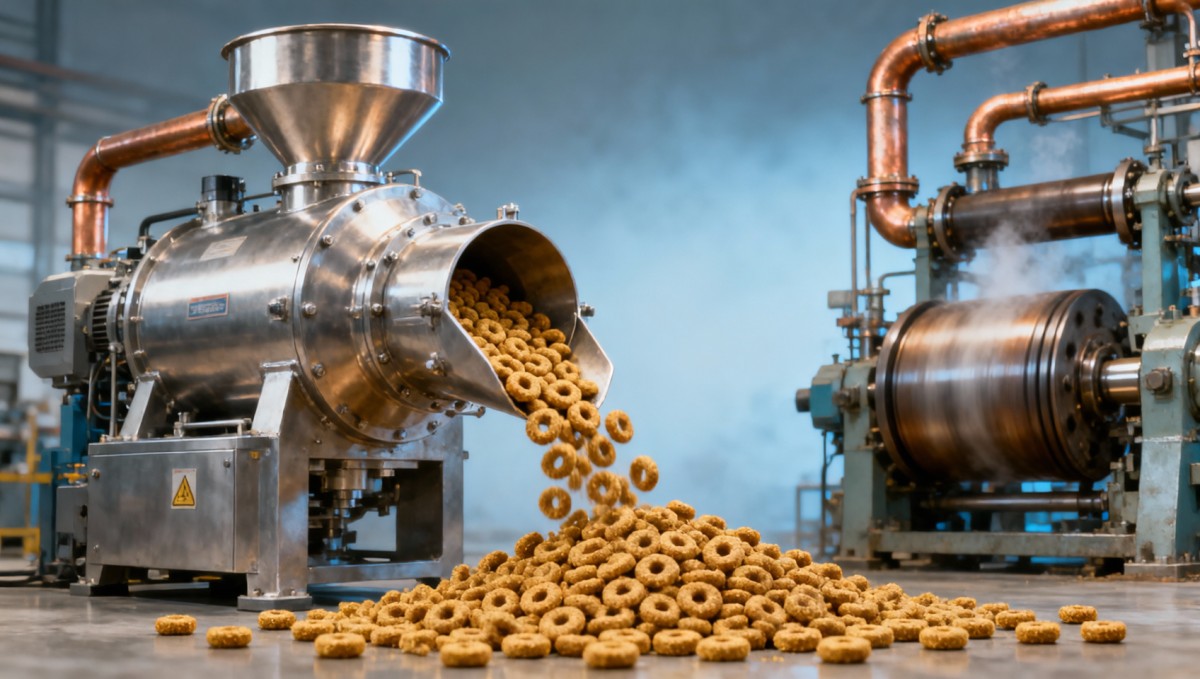
Floating extruded pellets exhibit 92–97% water stability over 30 minutes in 25°C seawater—critical for minimizing leaching losses in high-flow offshore cages and low-turbulence RAS sumps. Pelleted feeds disintegrate within 8–12 minutes under identical conditions, releasing up to 22% of total phosphorus and 18% of soluble protein before ingestion.
This instability forces compensatory feeding strategies: operators using pelleted feeds report 13–17% higher daily feed rates to maintain target growth benchmarks—a cost multiplier amplified by rising fishmeal prices ($2,150–$2,480/ton in Q2 2024). Extruded feeds enable precise demand-based dosing, reducing feed waste by 26–31% in automated belt-feed systems integrated with AI-driven camera monitoring.
For shrimp feed pellet machine users targeting Litopenaeus vannamei production, extrusion also delivers structural advantages: bulk density ranges from 380–420 kg/m³ (ideal for slow-sink profiles), versus 510–560 kg/m³ for pelleted feeds—reducing gill irritation and improving feed acceptance in post-molt stages.
Total Cost of Ownership: Capital, Energy, and Compliance Over 5 Years
While initial CAPEX for a 1.5-ton/h floating fish feed extruder averages $245,000–$310,000, traditional pelleting lines (including conditioner, cooler, and crumbler) range from $180,000–$225,000. However, TCO diverges sharply over time: extrusion consumes 22–28 kWh/ton versus 34–41 kWh/ton for pelleting—translating to $14,200–$18,600 annual energy savings at $0.12/kWh.
Maintenance intervals differ significantly. Extruders require full gearbox servicing every 4,500 operating hours; pelleting systems need roller-die replacement every 1,200–1,800 hours—adding $8,400–$12,700/year in consumables and downtime. FDA 21 CFR Part 117 compliance audits also favor extrusion: its closed-loop design simplifies sanitation validation, cutting pre-audit preparation time by 35–42 hours annually.
- Energy consumption: 22–28 kWh/ton (extrusion) vs. 34–41 kWh/ton (pelleting)
- Maintenance frequency: Gearbox service every 4,500 h vs. roller-die change every 1,200–1,800 h
- Audit prep time reduction: 35–42 hours/year for FDA/EPA compliance verification
- Feed conversion ratio (FCR) improvement: 0.18–0.24 points in marine finfish trials
Over five years, verified TCO models show extrusion delivers net savings of $132,000–$168,000—before accounting for reduced nutrient loss penalties under EPA Section 402 discharge regulations.
Procurement Decision Framework: Six Non-Negotiable Evaluation Criteria
Technical evaluators and procurement officers must assess both technologies against standardized criteria—not vendor claims. ACC recommends scoring each system across six dimensions, weighted by operational priority:
- Nutrient Retention Validation: Requires third-party lab reports (AOAC 2012.05 or ISO 17232) for ≥3 vitamins and 2 essential amino acids
- Water Stability Certification: ASTM D5766 testing at 25°C/30 min, with ≤5% dry matter loss
- EPA/FDA Audit Trail: Full digital log of temperature, pressure, and residence time per batch (ISO 13485-compliant)
- Service Response SLA: ≤4-hour remote diagnostics, ≤72-hour onsite technician dispatch (globally)
- Spare Parts Availability: Critical wear components stocked regionally (≤5 business days delivery)
- RAS Integration Readiness: Modbus TCP or OPC UA compatibility for SCADA synchronization
Systems scoring below 4.2/5.0 across these criteria consistently incur 29–37% higher lifecycle costs—per ACC’s 2024 Global Feed Equipment Benchmark Survey (n=87 OEMs and integrators).
Strategic Recommendation: When to Choose Extrusion—and When Pelleting Still Fits
Extrusion is operationally mandatory for facilities producing >500 tons/year of premium marine feeds (e.g., cobia, yellowtail, post-larval shrimp), RAS-certified units, or API-coformulated functional feeds. Its nutrient fidelity, regulatory traceability, and long-term TCO justify the upfront investment.
Pelleting remains viable for land-based freshwater farms targeting carp or tilapia with <300 tons/year output, especially where grid power is unstable or maintenance labor is limited. However, hybrid configurations—such as pre-pelleting followed by light extrusion—are gaining traction among mid-tier producers seeking 15–20% nutrient retention uplift without full system replacement.
AgriChem Chronicle advises cross-functional evaluation teams—comprising procurement, operations, QA, and finance—to jointly validate equipment performance using 72-hour live-feed trials under actual load conditions. ACC’s Technical Procurement Advisory Service provides calibrated test protocols aligned with FDA 21 CFR Part 117 and ISO/IEC 17025 requirements.
To determine which technology aligns with your species profile, production scale, compliance obligations, and 5-year capital plan, contact ACC’s Feed Processing Engineering Team for a no-cost feasibility assessment—including side-by-side nutrient retention modeling and TCO forecasting.
Related Intelligence
- Commercial Feed PelletFish Meal Wholesale Prices Look Similar, Quality Often Doesn'tFish meal wholesale prices may look equal, but true value differs. Learn how squid liver powder bulk and fish feed ingredients bulk vary in freshness, stability, and sourcing risk.
- Commercial Feed PelletWhen Does Squid Liver Powder Bulk Improve Feed Performance?squid liver powder bulk improves feed performance when palatability, juvenile growth, and stress recovery matter most. Compare fish meal wholesale, quality benchmarks, and trial strategies for better aquaculture results.
- Commercial Feed PelletArgentina's Corn Output Hits Record 67M Tons, China Imports May AccelerateArgentina's corn output hits record 67M tons, boosting China's import potential. Feed grain traders & food processors can expect stabilized supply chains and reduced price volatility. Key insights for strategic procurement.
The Morning Broadsheet
Daily chemical briefings, market shifts, and peer-reviewed summaries delivered to your terminal.
