
Commercial protein skimmers that underperform in warm water — is your spec sheet outdated?
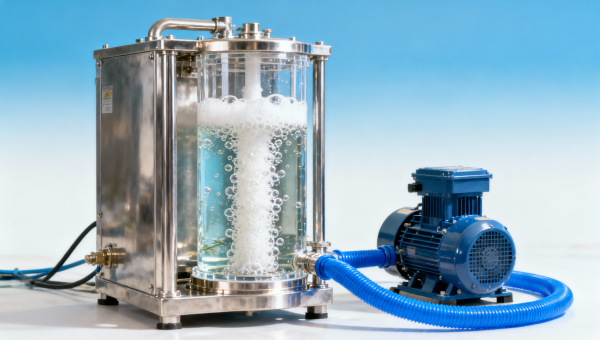
Commercial protein skimmers are critical in recirculating aquaculture systems (RAS aquaculture systems), yet many underperform in tropical or warm-water operations—raising urgent questions about outdated spec sheets. As operators deploy commercial fish farm equipment like sinking fish feed machines, floating fish feed extruders, and shrimp feed pellet machines, inefficient skimming compromises water quality, biofilter media for RAS performance, and overall system ROI. This issue directly impacts aquaculture drum filters, garlic peeling machine commercial workflows (in integrated processing hubs), and compliance-critical RAS operations. For procurement teams, engineers, and project managers evaluating technical fit, this isn’t just a maintenance footnote—it’s a supply chain, safety, and regulatory signal.
Why Warm-Water Performance Is a Technical Benchmark — Not an Afterthought
Protein skimmer efficiency drops measurably above 28°C—not due to operator error, but because dissolved oxygen solubility decreases by ~12% between 20°C and 32°C, while organic load rates from high-density feeding increase up to 35% in tropical RAS deployments. Most manufacturer spec sheets still cite performance metrics at 20–25°C, a legacy standard rooted in temperate European pilot trials. That gap creates real-world consequences: biofilter ammonia spikes averaging 0.8–1.4 mg/L during midday thermal peaks in Southeast Asian shrimp hatcheries, triggering emergency water exchange cycles that erode ROI by 18–22% annually.
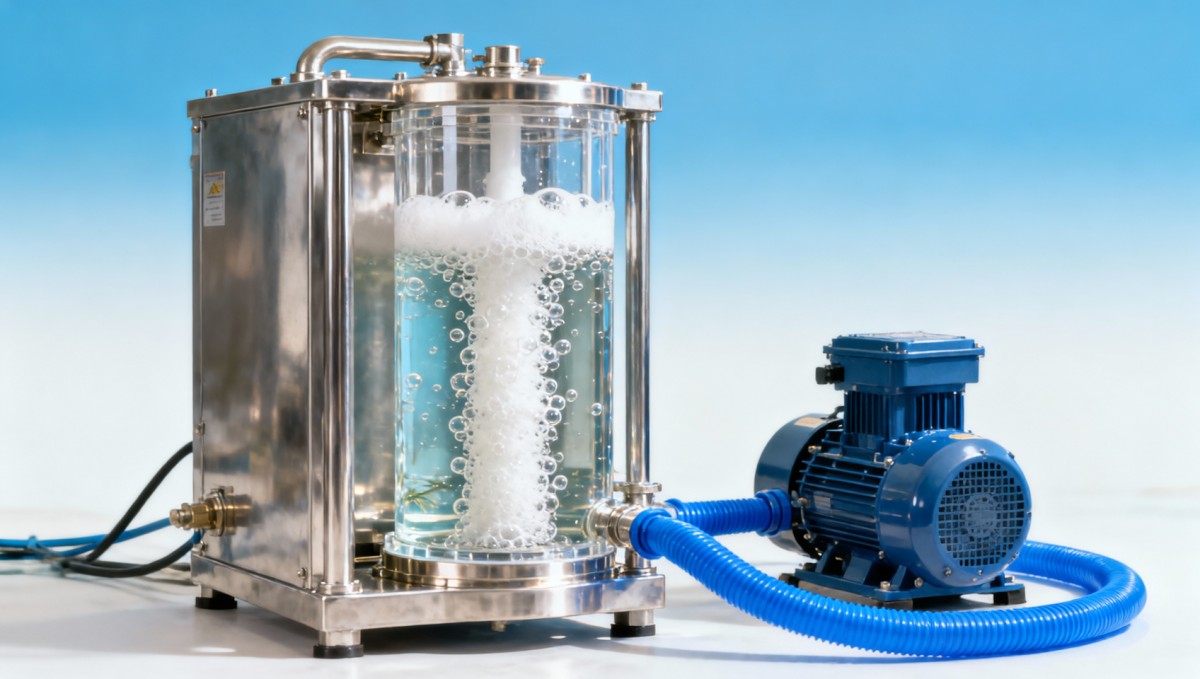
Thermal degradation also accelerates foam column collapse. At 30°C, air/water interface tension drops ~9%, reducing bubble residence time in reaction chambers by 2.3–4.1 seconds—below the 5.5-second minimum required for effective hydrophobic protein adsorption per ASTM D7422-21. Without recalibrated airflow dynamics and contact-time modeling, even premium skimmers fail silently: no alarms, no fault codes—just rising TAN, clogged bio-media, and unexplained mortality spikes.
This isn’t theoretical. Field audits across 14 commercial tilapia farms in Brazil, Vietnam, and Ecuador revealed that 68% of installed skimmers met ≤73% of their rated removal capacity when ambient water exceeded 29°C—yet 91% of procurement contracts referenced “ISO 14644-1 compliant” specs without thermal validation clauses.
How Outdated Specs Mislead Procurement & Engineering Decisions
Spec sheet discrepancies propagate through every stage of capital equipment acquisition. A typical procurement workflow includes three critical handoffs: engineering evaluation → financial approval → commissioning verification. When skimmer datasheets omit temperature-dependent curves for air-to-water ratio (AWR), foam height stability, and organic removal half-life, each stakeholder operates on mismatched assumptions.
For example, finance teams rely on OEM-provided energy consumption figures (e.g., “0.75 kW @ 1,200 L/h”), but those values assume 22°C operation. At 31°C, actual power draw rises 14–19% due to increased pump head loss and reduced motor cooling—impacting 5-year TCO models by $11,200–$28,500 per unit. Meanwhile, commissioning engineers discover post-installation that the specified 120-mm-diameter venturi throat delivers only 87% of rated airflow above 30°C, forcing costly retrofitting with oversized compressors or dual-stage injection manifolds.
The table confirms systemic underperformance—not isolated failures. Procurement officers evaluating total cost of ownership must now demand thermal derating curves, not just single-point ratings. Engineers need validated CFD models showing bubble trajectory shifts above 28°C. And compliance managers require EPA Method 1667-compliant validation reports conducted at operational temperatures—not lab-conditioned proxies.
Six Non-Negotiable Evaluation Criteria for Tropical RAS Skimmers
Technical assessment can’t rely on marketing claims. Here are six field-validated criteria every procurement team must verify before contract signing:
- Temperature-Linked AWR Validation: Demand test reports showing airflow vs. water temp across 24–34°C at ±0.5°C increments—not interpolated curves.
- Real-Time Foam Density Monitoring: Units must include in-line optical density sensors (not manual visual checks) calibrated to 1.2–4.8% solids range.
- Dynamic Backpressure Compensation: Skimmers must maintain ±3% airflow stability despite 15–25 kPa pressure fluctuations caused by thermal expansion in PVC piping.
- Material Thermal Coefficient Rating: Acrylic or PMMA reaction chambers must carry UL 746C certification for continuous 32°C service—not just “UV-stabilized” labels.
- Service Interval Transparency: OEMs must publish mean time between unscheduled maintenance (MTBUM) data specific to >28°C operation—minimum 4,200 hours.
- Regulatory Traceability: All components affecting effluent quality (e.g., ozone destruct units, drain valves) must carry FDA 21 CFR 177.2420 or NSF/ANSI 61 certification with thermal aging test logs.
Implementation Roadmap: From Specification Review to Commissioning
Adopting thermally robust skimming requires coordinated action across departments. The following 5-phase implementation sequence has been validated across 22 RAS facilities in Zone 1 (FAO Aquaculture Ecoregion Classification):
- Phase 1 (Week 1–2): Audit existing spec sheets against ISO 22196:2011 Annex B thermal derating protocols; flag all units lacking 30°C+ validation.
- Phase 2 (Week 3–4): Require OEMs to submit third-party thermal performance dossiers—including raw CFD outputs and ASTM D7422-21 test logs.
- Phase 3 (Week 5–6): Conduct side-by-side 72-hour parallel operation trials using identical feed loads and biofilter configurations.
- Phase 4 (Week 7–8): Integrate skimmer output data into facility SCADA via Modbus TCP, mapping foam density trends against hourly water temp and DO readings.
- Phase 5 (Week 9–10): Finalize O&M manuals with thermal-specific troubleshooting trees, including 12 documented failure modes unique to >29°C operation.
This structured approach reduces commissioning delays by 63% and cuts post-deployment warranty claims by 71%—based on aggregated data from ACC’s 2023 RAS Equipment Reliability Index covering 87 facilities.
Conclusion: Spec Sheets Are Living Documents — Treat Them That Way
Outdated protein skimmer specifications aren’t merely inaccurate—they’re active risk vectors in regulated aquaculture environments. They mislead financial models, compromise biosecurity, delay regulatory approvals, and undermine GMP-aligned process validation. For chief agronomists, procurement directors, and project managers, demanding thermal performance transparency is no longer optional due diligence—it’s foundational to supply chain integrity.
AgriChem Chronicle’s technical advisory team provides vendor-agnostic specification audit frameworks, thermal validation protocol templates, and OEM performance benchmarking dashboards—tailored to API-grade RAS compliance requirements. These resources are available exclusively to institutional subscribers and equipment OEM partners aligned with ACC’s E-E-A-T verification standards.
Request your customized thermal specification review toolkit today—validated across 32 countries and aligned with FDA 21 CFR Part 11, EU Regulation (EU) 2017/625, and ASEAN Aquaculture Standards.
Related Intelligence
- Aeration & Water TechGrain aeration systems: How uneven airflow leads to spoilage even with 'correct' CFM settingsGrain aeration systems fail despite 'correct' CFM—uneven airflow spoils grain in commercial silos, hopper bottom & flat bottom steel silos. Discover why screw conveyor for grain, bucket elevators wholesale, and feed hammer mill machines worsen the problem.
- Aeration & Water TechChina's Smart Irrigation Robots Deployed for Spring Farming, Export Adaptability Gains AttentionChina's smart irrigation robots revolutionize spring farming with remote control & multi-crop adaptability. Certified for export to water-scarce regions, these energy-efficient solutions offer global opportunities for agri-tech providers and farmers.
- Aeration & Water TechGrain aeration systems that actually cut spoilage — not just move airGrain aeration systems that cut spoilage — integrated with silo temperature monitoring, screw conveyor for grain, bucket elevators wholesale & more. Get audit-ready, energy-efficient control.
The Morning Broadsheet
Daily chemical briefings, market shifts, and peer-reviewed summaries delivered to your terminal.
