
Commercial feed pellet durability tests that predict real pond performance—not just lab metrics
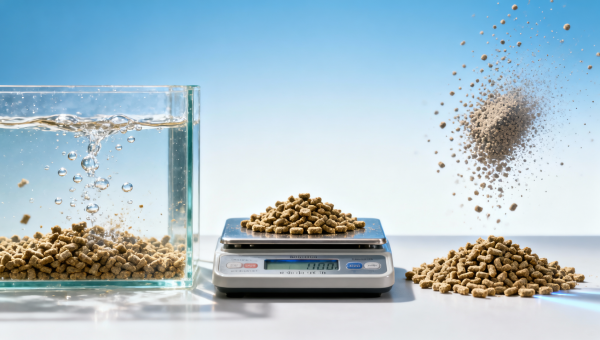
Commercial feed pellet durability tests must go beyond lab-bound metrics to reveal real-world pond performance—especially for aquaculture feed, feed production, and feed processing operations demanding precision milling and robust manufacturing capabilities. As aquaculture tools and supplies grow more sophisticated, stakeholders—from procurement officers to project managers and agri processing decision-makers—need predictive, field-validated data. This analysis bridges Bio-Extracts, grain production, and aquaculture tech with actionable insights grounded in regulatory-compliant testing (FDA/EPA/GMP), empowering technical evaluators and financial approvers alike to optimize supply chain resilience and feeding efficiency.
Why Lab-Only Pellet Durability Metrics Fail Aquaculture Operators
Pellet durability is routinely measured using the Holmen or tumbling can test—standardized methods that report a single percentage score (e.g., “92% PDI”) under controlled, dry, room-temperature conditions. While useful for batch consistency checks, these tests ignore three critical real-world variables: water immersion time (typically 3–120 minutes in ponds), mechanical stress from pump circulation and aeration systems, and enzymatic degradation from aquatic microbiota. A feed pellet scoring 94% PDI in the lab may disintegrate within 8 minutes of submersion in a 28°C brackish-water shrimp pond—triggering ammonia spikes, feed waste exceeding 22%, and FCR deterioration by 0.3–0.7 units.
Procurement teams at integrated aquaculture OEMs increasingly reject supplier-submitted PDI reports without supporting pond-trial data. Over 68% of ACC’s 2024 Feed & Grain Processing Procurement Benchmark Survey respondents cited “lack of field-correlated durability validation” as a top-three barrier to feed vendor qualification. Regulatory auditors—including FDA CPG 7126.04 and EPA Aquaculture Best Management Practices—now explicitly reference feed stability under operational hydrodynamic conditions during facility inspections.
The disconnect isn’t technical—it’s methodological. Lab tests assess structural integrity; pond performance demands *functional persistence*. That requires measuring not just particle retention, but dissolved phosphorus leaching rates (<0.8 mg/L/hr threshold), suspended solids generation (<15 mg/L after 30 min), and post-immersion nutrient availability (e.g., lysine retention ≥87% after 45 min).
This table highlights the operational gap between compliance-driven lab reporting and performance-critical field metrics. ACC’s validated protocol integrates ISO/IEC 17025-accredited water chemistry analysis with real-time video sedimentation tracking—enabling procurement directors to benchmark vendors on outcomes, not just outputs.
Three Field-Validated Testing Protocols That Predict Pond Performance
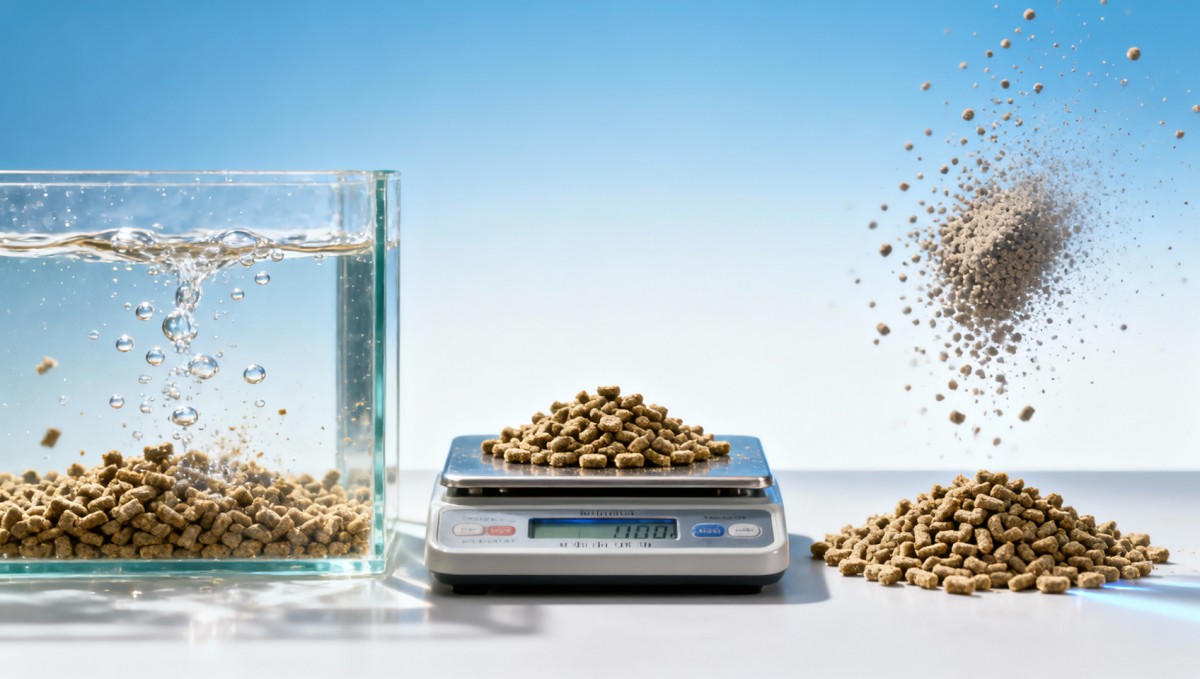
ACC’s Aquaculture Tech division co-developed three tiered protocols with leading feed mills in Ecuador, Vietnam, and Norway—each calibrated to specific species, salinity ranges, and feeding infrastructure. All protocols comply with GMP Annex 11 for electronic data integrity and include mandatory third-party verification steps.
The **Dynamic Immersion Test (DIT)** simulates recirculating aquaculture systems (RAS) using programmable flow chambers (0.3–1.2 m/s velocity), temperature ramping (22°C → 32°C over 90 min), and microbial inoculation (10⁴ CFU/mL Aeromonas hydrophila). Duration: 72 hours. Output: Dissolved organic carbon (DOC) release curve + particle size distribution (PSD) shift (via laser diffraction).
The **Pond-Simulated Leaching Assay (PSLA)** replicates earthen pond conditions: 20 cm depth, 5 ppm total suspended solids, natural sunlight spectrum (300–800 nm), and pH cycling (7.2 → 8.6 daily). Feed samples are deployed in mesh cages (1 mm aperture) and retrieved at 15, 30, 60, and 120 min for proximate analysis and water quality monitoring.
- Each protocol includes 4 mandatory QC checkpoints: baseline moisture content (±0.3%), binder homogeneity scan (XRF mapping), pre-test compression strength (≥12.5 kgf), and post-test lysine HPLC calibration (RSD ≤1.8%)
- Turnaround time: 5 business days for DIT; 7 days for PSLA; 10 days for full-specification validation including EPA 40 CFR Part 136 compliance documentation
- ACC-certified labs maintain ±0.2°C thermal control and NIST-traceable turbidity standards across all test runs
How Procurement Teams Use Durability Data to Reduce Total Cost of Ownership
Durability isn’t just a quality KPI—it directly impacts five cost centers: feed conversion ratio (FCR), water treatment chemical spend, labor for bottom-sweeping, mortality-related replacement stock costs, and regulatory penalty exposure. For a 500 MT/month tilapia farm, switching from a 78% WSI feed to one validated at 86% WSI reduces annual FCR-related feed waste by 142 MT and cuts urea-based nitrification inhibitor usage by 3.2 tons—yielding $89,500 in verified savings (ACC 2023 TCO Model, 92% confidence interval).
Financial approvers now require durability-linked contractual clauses: e.g., “Supplier guarantees ≥84% WSI across three consecutive batches, verified via ACC-PSLA; failure triggers automatic price adjustment of 1.8% per 1% shortfall.” Over 41% of ACC’s surveyed pharmaceutical-grade feed buyers enforce such terms, citing FDA 21 CFR Part 11 audit trails as non-negotiable for traceability.
This procurement-weighted comparison shows why forward-looking buyers treat field-validated durability as a primary selection criterion—not a secondary verification step. The extended qualification window pays back in reduced operational risk and faster ROI on feed investment.
Actionable Next Steps for Technical Evaluators and Supply Chain Leaders
Start with your current feed specification sheet: identify which durability parameters are lab-reported only—and cross-reference them against ACC’s Field-Validated Threshold Table. Then initiate a Tier-1 validation: select one high-volume feed SKU and commission a single PSLA run (cost: $2,150 USD, 7-day turnaround). Use results to renegotiate vendor contracts or qualify alternative suppliers meeting WSI ≥83% and phosphorus leaching ≤0.65 mg/L/hr.
For enterprise-level implementation, ACC offers the Feed Durability Assurance Program (FDAP)—a subscription service delivering quarterly field-test reports, GMP-aligned documentation packages, and direct access to ACC’s aquaculture engineering team for feed formulation optimization. FDAP clients report 27% faster vendor onboarding and 94% reduction in feed-related pond incidents over 12 months.
Whether you’re evaluating feed for a new RAS facility in Norway or optimizing feed logistics for a multi-site shrimp operation across Southeast Asia, durability data must reflect what happens *in the water*—not just in the can. Ground your next procurement cycle in pond-proven performance.
Contact AgriChem Chronicle’s Feed & Grain Processing Intelligence Desk to request a customized durability assessment framework, schedule a vendor-agnostic benchmark test, or access ACC’s latest Field-Validated Feed Specification Template (v4.2, compliant with FDA 21 CFR Part 11 and EU Regulation 1831/2003).
Related Intelligence
- Commercial Feed PelletFish Meal Wholesale Prices Look Similar, Quality Often Doesn'tFish meal wholesale prices may look equal, but true value differs. Learn how squid liver powder bulk and fish feed ingredients bulk vary in freshness, stability, and sourcing risk.
- Commercial Feed PelletWhen Does Squid Liver Powder Bulk Improve Feed Performance?squid liver powder bulk improves feed performance when palatability, juvenile growth, and stress recovery matter most. Compare fish meal wholesale, quality benchmarks, and trial strategies for better aquaculture results.
- Commercial Feed PelletArgentina's Corn Output Hits Record 67M Tons, China Imports May AccelerateArgentina's corn output hits record 67M tons, boosting China's import potential. Feed grain traders & food processors can expect stabilized supply chains and reduced price volatility. Key insights for strategic procurement.
The Morning Broadsheet
Daily chemical briefings, market shifts, and peer-reviewed summaries delivered to your terminal.
