
The Authority in Global Agricultural Chemistry & Bio-Resources
China’s 2026 Mandatory Feed Pellet Standard Adds Heavy Metal Migration Limits
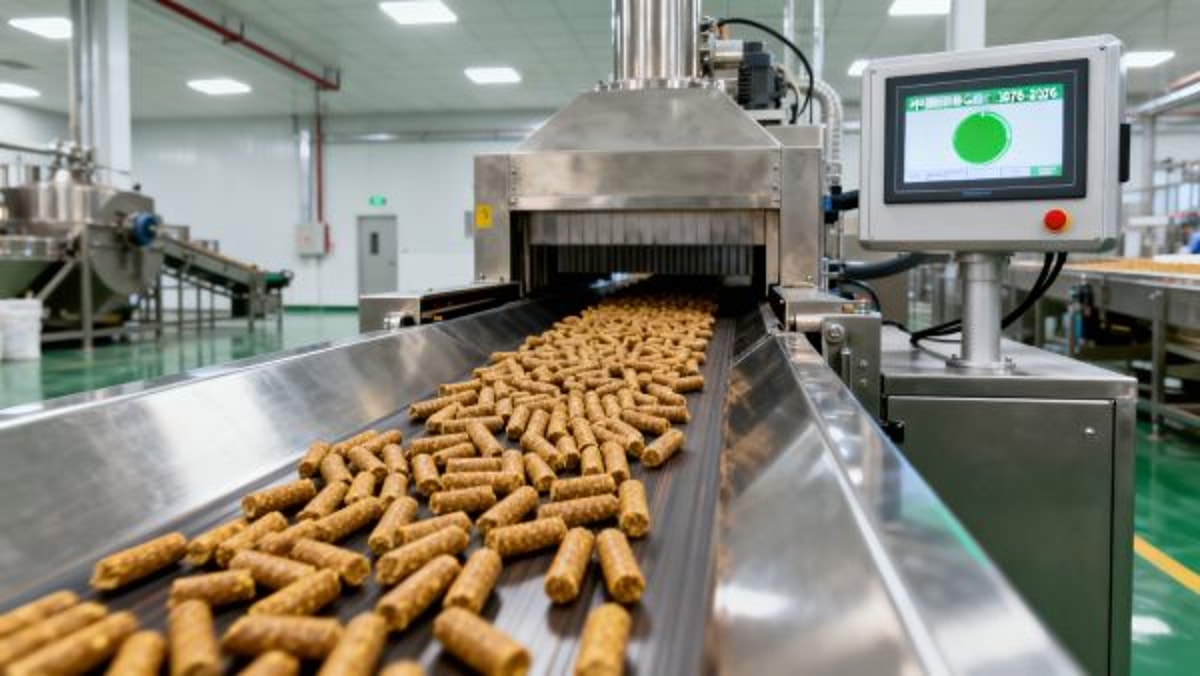
On May 3, 2026, China’s State Administration for Market Regulation (SAMR) released the 2026 Action List for Mandatory National Standard Revision, upgrading GB 13078—Commercial Feed Pellet—to GB 13078-2026. The revised standard introduces migration limits for lead, cadmium, and arsenic under high-temperature and high-humidity storage conditions (≤0.05 mg/kg), effective October 1, 2026. Export-oriented feed pellet manufacturers targeting the EU, South Korea, and Saudi Arabia—markets with stringent feed safety requirements—must now reassess compliance strategies.
Event Overview
On May 3, 2026, SAMR published the 2026 Action List for Mandatory National Standard Revision. It explicitly lists GB 13078—Commercial Feed Pellet—as one of the first standards to be upgraded to GB 13078-2026. The revision adds mandatory limits on the migration of lead, cadmium, and arsenic from feed pellets when stored under high-temperature and high-humidity conditions (≤0.05 mg/kg). The standard becomes compulsory on October 1, 2026.
Industries Affected
Direct Exporters of Feed Pellets
Exporters supplying commercial feed pellets to the EU, South Korea, and Saudi Arabia will face immediate compliance pressure. These markets already impose strict controls on heavy metal contamination in animal feed; the new migration limit aligns—and may exceed—certain existing import requirements. Non-compliance could trigger shipment rejections, customs delays, or loss of market access.
Feed Pellet Manufacturers (Domestic & Export-Oriented)
Manufacturers must revise production protocols, including raw material screening, binder selection, pelleting temperature control, and post-processing storage conditions. The migration limit applies specifically to high-temperature/humidity scenarios—meaning storage environment monitoring and documentation become newly critical verification points during audits.
Raw Material Suppliers (e.g., mineral premix, soybean meal, fishmeal providers)
Suppliers of ingredients contributing to background heavy metal content—including trace minerals, phosphates, and protein concentrates—may face stricter contractual specifications and increased testing demands from pellet producers. Their product declarations and batch-level migration test reports may now be required upstream.
Third-Party Testing & Certification Providers
Laboratories accredited for feed safety testing must validate and implement methods for measuring heavy metal migration under defined accelerated storage conditions (e.g., 40°C/75% RH for specified durations). Capacity for standardized migration testing is expected to see rising demand ahead of the October 2026 enforcement date.
What Enterprises and Practitioners Should Focus On Now
Monitor official technical guidance and implementation notices
SAMR and the Standardization Administration of China (SAC) have not yet published the full text of GB 13078-2026 or detailed test protocols for migration assessment. Stakeholders should track upcoming announcements—especially regarding test duration, conditioning parameters, and sampling rules—before finalizing internal procedures.
Identify high-risk product categories and export destinations
Not all feed pellet formulations carry equal migration risk. Products with high mineral supplementation, organic acid additives, or low-pH binders may require priority evaluation. Exporters should cross-reference the new limit against current regulatory expectations in the EU (EC No 1831/2003), South Korea (MFDS Feed Safety Act), and Saudi Arabia (SFDA Feed Regulations) to assess relative stringency and readiness gaps.
Distinguish between policy signal and operational readiness
The May 3 listing signals intent and timeline—but does not yet confirm test methodology or enforcement interpretation. Companies should avoid premature capital expenditure (e.g., new storage infrastructure) until technical details are public. Instead, prioritize internal gap assessments using existing migration testing frameworks where feasible.
Prepare supply chain communication and documentation protocols
Manufacturers should begin updating supplier questionnaires and quality agreements to include migration-related clauses. Internal records—including storage condition logs, batch-specific migration test summaries (if conducted), and raw material certificates of analysis—will need systematic capture and retention starting well before October 2026.
Editorial Perspective / Industry Observation
Observably, this update reflects a broader regulatory shift—from controlling static heavy metal content in feed ingredients to regulating dynamic migration behavior under real-world storage stressors. Analysis shows that the inclusion of migration limits suggests SAMR is moving toward lifecycle-based food and feed safety governance, mirroring trends seen in EU packaging regulations. This is less an isolated amendment and more a signal of evolving risk assessment paradigms in Chinese feed regulation. From an industry perspective, it marks the beginning of a new layer of technical due diligence—not just for exporters, but across domestic supply chains serving regulated markets.
Current understanding better frames this as a policy signal with binding timelines, rather than a fully implemented operational regime. While the October 1, 2026 deadline is fixed, key implementation variables—including test method validation, reference materials, and inspection protocols—remain pending. Industry stakeholders should treat this as a time-bound preparation milestone, not a finalized compliance endpoint.
Conclusion: The GB 13078-2026 upgrade signifies a measurable tightening of feed safety accountability in China, particularly for export-facing operations. Its practical impact hinges less on the numerical limit itself (0.05 mg/kg) and more on the introduction of migration as a regulated parameter—requiring new measurement capabilities, storage controls, and supply chain transparency. For now, it is best understood as a structured, deadline-driven transition phase—not an immediate operational shock, but a clearly defined inflection point in feed quality management.
Source: State Administration for Market Regulation (SAMR), 2026 Action List for Mandatory National Standard Revision, issued May 3, 2026. Note: Full standard text, test methodology, and enforcement guidance remain pending publication and are subject to ongoing observation.
Related Intelligence
- Commercial Feed PelletChina’s 2026 Mandatory Feed Pellet Standard Adds Heavy Metal Migration LimitsChina’s new GB 13078-2026 feed pellet standard mandates heavy metal migration limits (Pb, Cd, As ≤0.05 mg/kg) — critical for EU, Korea & KSA exporters. Act now!
- Commercial Feed PelletIndia Launches Sunset Review on Chinese Commercial Feed PelletsIndia launches sunset review on Chinese commercial feed pellets—key implications for exporters, feed producers & agri-input suppliers. Act now.
- Commercial Feed PelletIndia Launches Sunset Review on Anti-Dumping Duty for Chinese Feed PelletsIndia's sunset review of anti-dumping duty on Chinese feed pellets begins April 2026—key for exporters, importers & feed mills. Act now.
The Morning Broadsheet
Daily chemical briefings, market shifts, and peer-reviewed summaries delivered to your terminal.
