
Wholesale collagen peptides: fish or bovine?
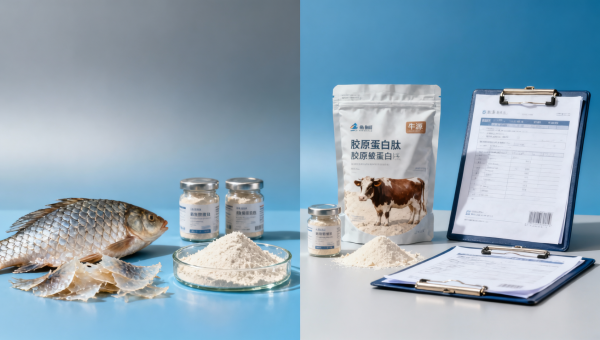
In the global market for wholesale collagen peptides, the fish-versus-bovine choice affects purity, sourcing transparency, formulation performance, and regulatory fit. For buyers comparing protein and functional ingredient portfolios—from rice protein powder organic and pea protein isolate powder to whey protein concentrate wholesale and isolated soy protein bulk—understanding collagen origin is essential for cost control, compliance, and end-use positioning.
Why does collagen source matter so much in wholesale procurement?
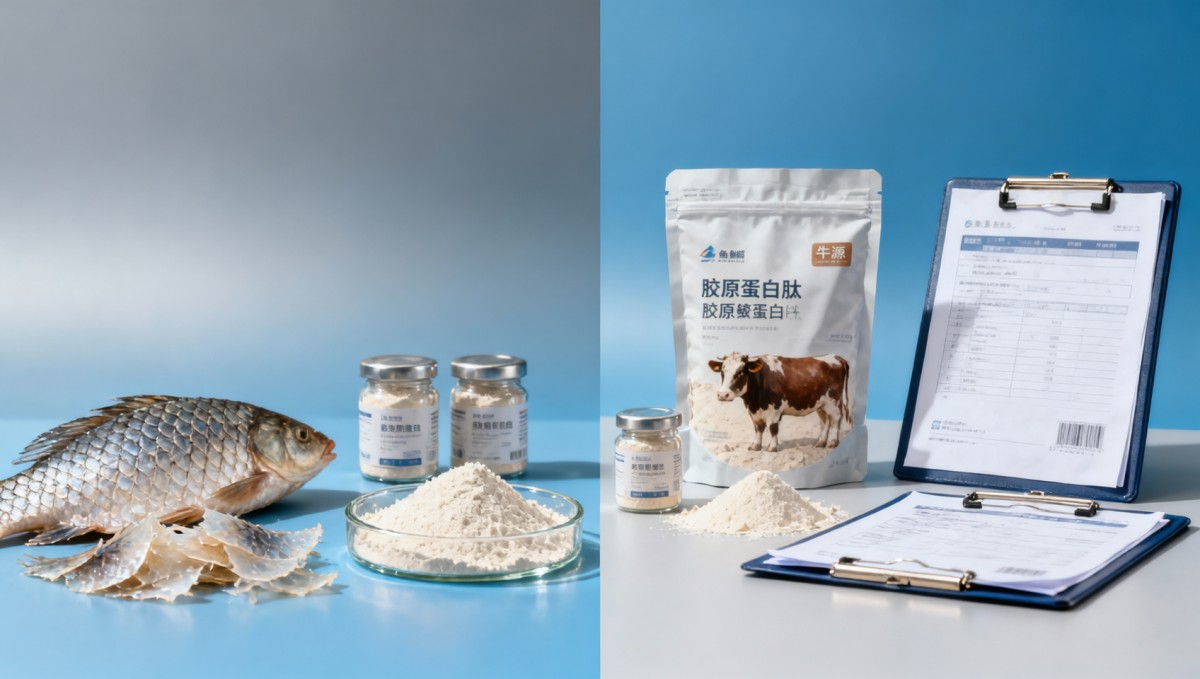
For B2B buyers, fish collagen peptides and bovine collagen peptides are not interchangeable line items. They differ in raw material origin, amino acid profile emphasis, odor management, labeling implications, and market acceptance across supplements, food systems, cosmetics, and nutraceutical blends. In procurement reviews, source choice often shapes 3 core outcomes: commercial positioning, quality risk exposure, and downstream formulation stability.
Information researchers usually begin with broad comparisons, but purchasing teams must move quickly into technical detail. A decision that looks simple at first can affect 4 to 6 operational checkpoints, including specification approval, supplier audit preparation, packaging claim review, and regional compliance screening. This is especially important when collagen is sold beside other proteins, because buyers often need a portfolio logic rather than a single-ingredient answer.
Fish collagen peptides are commonly selected when marine sourcing, lower molecular weight positioning, or pescatarian-friendly claims are commercially useful. Bovine collagen peptides are often preferred where cost efficiency, broad availability, and stronger familiarity in large-volume contracts matter more. Neither source is automatically better. The right option depends on intended application, target market, batch consistency expectations, and the documentation depth available from the supplier.
How different stakeholders evaluate the same ingredient
Operators focus on dispersibility, dusting behavior, odor, and mixing sequence. Quality and safety managers focus on traceability, microbiological controls, and heavy metal screening. Procurement teams compare minimum order quantities, lead times that may range from 2 to 6 weeks, and certificate completeness. Financial approvers often look at landed cost per kilogram and how collagen pricing compares with adjacent proteins in the same formulation budget.
- Research teams ask whether fish or bovine collagen peptides better match the target claim, such as marine-derived, grass-fed, or neutral-taste formulation support.
- Project managers check whether qualification can be completed in 3 stages: document review, pilot trial, and commercial batch approval.
- Distributors assess channel demand by region, since some markets respond more strongly to marine origin while others prioritize price stability and volume assurance.
This is where AgriChem Chronicle adds value. ACC’s coverage of bio-extracts, ingredients, trade compliance, and industrial sourcing helps readers compare collagen not as an isolated health ingredient, but as part of a larger procurement strategy shaped by supply chain transparency, regulatory expectations, and product line economics.
Fish collagen peptides vs bovine collagen peptides: what are the practical differences?
The most useful comparison is not marketing language but procurement-relevant detail. Buyers need to know which source aligns with application temperature, sensory tolerance, origin restrictions, and target customer preferences. In many projects, 5 factors determine shortlisting speed: source, solubility behavior, molecular weight range, flavor impact, and documentation reliability.
Fish collagen peptides are typically associated with marine raw materials such as skin or scales from fish processing streams. Bovine collagen peptides generally come from hides or bones under controlled rendering and hydrolysis systems. Both are hydrolyzed proteins, yet supply narratives differ sharply. This matters when end users request sustainability context, by-product utilization explanations, or species-specific declarations during vendor qualification.
The table below summarizes decision-relevant differences for wholesale collagen peptides in commercial procurement and formulation screening.
This comparison shows why source selection cannot be reduced to price alone. Fish collagen peptides may unlock a stronger premium narrative, while bovine collagen peptides may support easier scale-up when annual demand moves from pilot volumes to multi-container procurement. Buyers should map source differences against actual sales channels and formulation conditions before requesting final quotations.
Where source affects performance in real formulations
In beverage powders, ready-to-mix sachets, and protein blends, collagen source may influence hydration rate and taste perception during the first 5 to 15 minutes after mixing. In tablets and capsules, source may matter less from a sensory perspective, but traceability and regulatory statements become more critical. In beauty-from-within products, marine origin often carries stronger market appeal, even when technical functionality overlaps with bovine options.
Short decision rule
If your priority is premium marine positioning, shortlist fish collagen peptides first. If your priority is high-volume efficiency and broad market familiarity, bovine collagen peptides often deserve first review. Then verify with pilot samples, sensory checks, and documentation screening rather than assumptions.
Which technical and compliance checks should buyers prioritize?
For quality control teams and safety managers, the right question is not simply fish or bovine. It is whether the offered wholesale collagen peptides meet the technical profile required for the target product and the regulatory pathway of the destination market. In practice, supplier review should cover at least 5 key checkpoints before commercial approval.
Five core checks before approving a supplier
- Specification completeness: confirm protein content basis, moisture limit, ash, pH range, particle characteristics, and declared solubility conditions.
- Microbiological control: review total plate count, yeast and mold, and pathogen screening according to the intended food, nutraceutical, or cosmetic use.
- Contaminant risk: check heavy metals and any source-relevant contaminants, especially for marine materials where origin transparency is essential.
- Traceability package: verify batch coding, raw material source declarations, and retention sample procedures for at least one defined period in the supplier system.
- Regulatory documentation: request the exact certificates and statements required for your market, not a generic document bundle.
The procurement and compliance burden grows when collagen sits inside a broader protein and functional ingredient portfolio. A buyer may evaluate rice protein powder organic, pea protein isolate powder, whey protein concentrate wholesale, isolated soy protein bulk, and collagen peptides in a single sourcing cycle. In those cases, standardized vendor comparison templates save time, but only if they include collagen-specific risk items rather than generic protein questions.
The following table can be used as a practical screening framework during supplier onboarding, internal audit, or pre-shipment document review.
A disciplined review process reduces costly surprises after purchase order release. For example, a collagen peptide that passes laboratory checks may still fail a commercial launch if odor, pack stability, or regional labeling suitability was not reviewed early. ACC’s editorial perspective is especially relevant here because it connects ingredient intelligence with compliance, sourcing, and industrial execution rather than treating them as separate topics.
Standards and compliance context
Depending on product category and destination market, buyers may need to align documentation with food safety systems, GMP-aligned manufacturing expectations, or import review requirements. The exact certification set varies, but the principle is constant: ask for destination-specific evidence before final approval, not after shipment is booked.
How should procurement teams compare cost, alternatives, and supply risk?
Price per kilogram is only the starting point in wholesale collagen peptides sourcing. A better commercial method is total procurement value analysis. This means weighing ingredient cost against sensory correction costs, sampling rounds, approval delays, origin-based marketing value, and supply continuity. A lower unit price can become the more expensive option if it triggers two extra trial cycles or a delayed launch window.
Bovine collagen peptides often perform well in cost-sensitive programs where container-scale planning, broader supplier pools, and mainstream channel acceptance are priorities. Fish collagen peptides may command a premium, yet they can deliver stronger positioning in marine beauty, active nutrition, and specialized health products. For finance teams, the question is whether the premium creates usable margin or simply increases ingredient spend.
Comparing collagen with adjacent protein alternatives
Many buyers review collagen alongside other proteins such as pea protein isolate powder, rice protein powder organic, whey protein concentrate wholesale, or isolated soy protein bulk. These ingredients are not direct equivalents, but they often compete for formulation space, procurement budget, and warehouse capacity. The right decision depends on whether the project needs structural protein contribution, amino acid positioning, clean-label compatibility, or premium functional storytelling.
- Use collagen when the commercial need centers on collagen-specific positioning, hydrolyzed peptide narratives, or beauty and joint-support product architecture.
- Use plant proteins when vegan positioning, allergen strategy, or protein-fortification economics are the primary drivers.
- Use whey when dairy acceptance, fast-dissolving sports nutrition systems, and established mainstream performance demand are stronger than collagen story value.
From a supply risk perspective, buyers should review 4 recurring variables: raw material seasonality, geographic source concentration, freight sensitivity, and substitution feasibility. If lead times extend from 2 weeks to 8 weeks during peak demand or origin disruptions, teams need a contingency plan. That may include dual qualification, alternate pack sizes, or a second source with matching specification ranges.
Practical budget advice
When budgets are tight, request a side-by-side quote structure that separates ingredient price, sample cost, documentation support, and shipping assumptions. This gives financial approvers a clearer view of the real landed cost and prevents cross-supplier comparisons from becoming distorted by hidden service differences.
What mistakes do buyers make when choosing fish or bovine collagen peptides?
The most common error is choosing by trend instead of by application fit. Marine collagen may be popular in one category, but that does not mean it is the right answer for every tablet, beverage, or bulk powder line. Another frequent mistake is assuming that all bovine collagen peptides are alike. In reality, processing quality, odor control, solubility behavior, and specification discipline can differ substantially between suppliers.
A second mistake is underestimating documentation requirements. Teams often review a sample batch first and regulatory paperwork later. That sequence is risky. If market access depends on origin statements, safety documents, or customer-specific declarations, the document check should happen in parallel with sample evaluation during the first 7 to 10 working days of supplier engagement.
FAQ for wholesale collagen peptides buyers
How do I choose between fish and bovine collagen peptides for a new product?
Start with 3 filters: target customer, regulatory market, and formulation format. If the product needs marine positioning or pescatarian-friendly messaging, fish collagen peptides are often screened first. If the priority is supply scale, mainstream acceptance, and cost efficiency, bovine collagen peptides may be the more practical first option. Then confirm with pilot testing and full document review.
Which source is usually easier for large-volume wholesale supply?
In many industrial purchasing programs, bovine collagen peptides are often considered easier to scale because supply networks can be broader. However, availability still depends on region, processor capacity, and specification strictness. Fish collagen peptides can also be supplied at scale, but buyers should pay close attention to source transparency, seasonality, and species declarations.
What should quality teams ask for before approving a batch?
At minimum, ask for the batch COA, full product specification, microbiological data, contaminant screening relevant to the source, packaging details, and storage conditions. If the ingredient is intended for regulated or export-sensitive applications, request country-specific supporting documents before shipment release.
How long does qualification usually take?
A practical range is 2 to 4 weeks for basic commercial review if documents and samples arrive promptly. More complex programs involving multiple departments, regional compliance checks, or customer approval may take 4 to 8 weeks. Delays often come from incomplete source declarations or repeated sensory testing, not from pricing alone.
Why work with AgriChem Chronicle when evaluating collagen sourcing options?
For institutional buyers and industrial decision-makers, reliable ingredient intelligence must connect technical detail with market reality. AgriChem Chronicle does exactly that. ACC covers fine chemicals, bio-extracts, aquaculture and fishery technology, and primary processing with an editorial method built for complex global supply chains. That perspective is highly relevant when comparing fish collagen peptides and bovine collagen peptides across sourcing, compliance, and application strategy.
Instead of offering generic commentary, ACC helps procurement teams structure decisions around verifiable manufacturing capability, documentation expectations, and realistic supply-chain risk. This is valuable for purchasers handling mixed portfolios that may include collagen, whey, soy, pea, and rice proteins at the same time. Cross-category comparison becomes faster when the evaluation framework is technically grounded and commercially practical.
What you can discuss with us
- Source selection support for fish collagen peptides versus bovine collagen peptides based on application, target market, and purchasing volume.
- Specification review covering technical parameters, contaminant risk questions, and document completeness for supplier comparison.
- Lead-time and supply planning discussions, including MOQ logic, trial scheduling, and multi-stage approval sequencing.
- Portfolio comparison for adjacent ingredients such as pea protein isolate powder, rice protein powder organic, whey protein concentrate wholesale, and isolated soy protein bulk.
- Quotation preparation inputs, sample request coordination, and compliance-oriented question lists for vendor engagement.
If your team is balancing cost control, quality assurance, timeline pressure, and end-market positioning, ACC can help turn a broad ingredient comparison into a structured buying decision. Reach out when you need support with parameter confirmation, source evaluation, sample planning, documentation review, delivery timing, or a more defensible shortlist for wholesale collagen peptides.
Related Intelligence
- Natural IngredientsIndonesia BPOM Updates Label Rules for Natural Ingredients ImportsIndonesia BPOM updates label rules for natural ingredients imports: New pH ≤4.6 & 60°C/30min tolerance statement required by Aug 1, 2026 — act now to avoid customs rejection.
- Natural IngredientsIndonesia BPOM Updates Natural Ingredients Import LabelingIndonesia BPOM Updates Natural Ingredients Import Labeling: New 'Microbial Resistance Profile' required for cosmetics, supplements & personal care imports—act now to avoid customs delays.
- Natural IngredientsWholesale inulin powder vs FOS: which fits better?Wholesale inulin powder vs fructooligosaccharides FOS wholesale: compare chicory root fiber bulk benefits, solubility, texture, tolerance, and B2B application fit to choose smarter.
The Morning Broadsheet
Daily chemical briefings, market shifts, and peer-reviewed summaries delivered to your terminal.
