
Whey protein concentrate wholesale buying mistakes
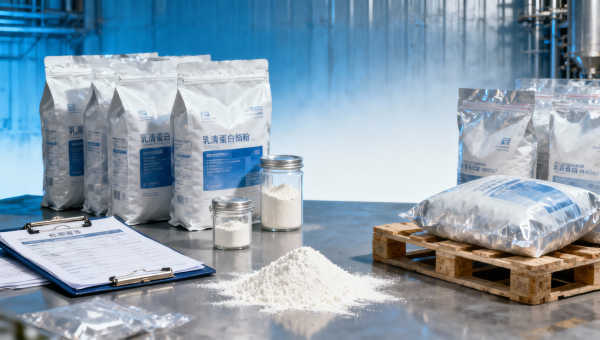
Avoid costly sourcing errors when evaluating whey protein concentrate wholesale options. For buyers comparing wholesale collagen peptides, rice protein powder organic, pea protein isolate powder, and isolated soy protein bulk, small specification gaps can trigger major quality, compliance, and margin risks. This guide highlights the most common wholesale buying mistakes and shows procurement teams, QA managers, and decision-makers how to verify suppliers, documentation, and performance before committing to volume contracts.
In bulk ingredient procurement, a low quoted price rarely tells the full story. Whey protein concentrate wholesale purchasing often involves hidden variables such as protein percentage, moisture range, microbiological limits, origin traceability, and packaging conditions. For distributors, contract manufacturers, nutrition brands, and food processing buyers, missing even 1 or 2 specification details can lead to rejected lots, reformulation costs, delayed launches, or reduced shelf stability.
This topic matters across the broader protein ingredient market because the same sourcing mistakes appear when comparing whey protein concentrate with collagen peptides, organic rice protein, pea protein isolate, and isolated soy protein in bulk. The procurement challenge is not only selecting a supplier, but building a verifiable supply framework that protects quality, compliance, margin, and delivery continuity over 3 months, 6 months, or annual contracts.
Why whey protein concentrate wholesale purchases go wrong
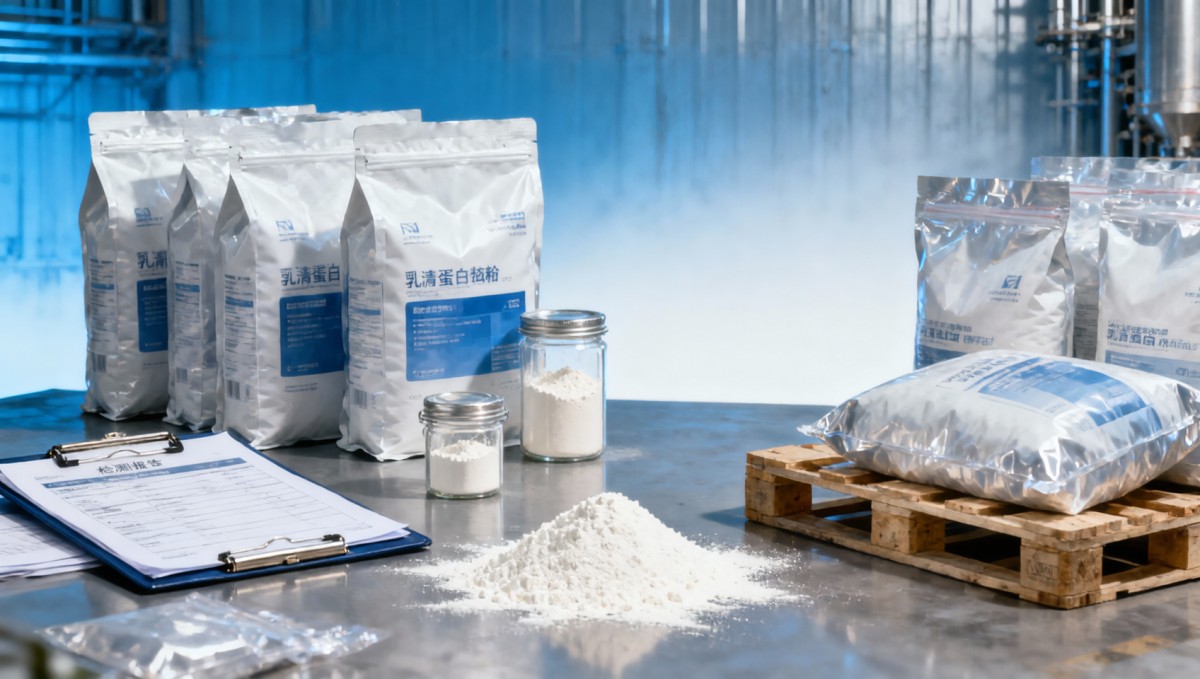
A common mistake in whey protein concentrate wholesale buying is assuming that all WPC grades perform the same if the product name looks similar. In practice, WPC 34, WPC 80, and custom blended grades can differ significantly in protein content, lactose level, dispersibility, flavor impact, and application fit. A powder intended for sports nutrition may not behave well in dairy beverages, bakery systems, or meal replacement formulas.
Another failure point is buying from a trader or intermediary without confirming the actual manufacturing source. Many procurement teams receive a certificate of analysis and a commercial quotation, but do not verify whether the batch came from the same plant used during sampling. In volatile markets, a supplier may switch origin, drying method, or raw milk region, creating inconsistency between a 5 kg sample and a 5-ton shipment.
Documentation is also misunderstood. A specification sheet is not enough by itself. Buyers should review at least 6 categories of documents before approving a wholesale order: product specification, certificate of analysis, allergen statement, microbiological limits, heavy metal statement, and traceability or origin declaration. Depending on destination market and end use, additional checks may include GMO status, antibiotic residue controls, and packaging compliance.
Commercial teams sometimes focus on landed price per metric ton while ignoring process yield. A whey protein concentrate priced 4% lower may create 6% to 10% higher losses if it has poor solubility, inconsistent particle size, higher flavor load, or unstable color. For manufacturers, the true benchmark is cost-in-use, not simply invoice cost.
The most frequent sourcing assumptions
- Assuming protein percentage alone determines quality.
- Accepting broad moisture or ash ranges without defining maximum thresholds.
- Approving samples without matching them to production lot controls.
- Evaluating only price per kg instead of yield, rework risk, and complaint risk.
- Skipping warehouse and transport condition checks for 20 kg or 25 kg bags.
Typical specification gaps that create downstream risk
In many contracts, protein and moisture are defined, but dispersibility, sedimentation behavior, flavor profile, and microbiological release timing are not. That omission becomes costly when the material is used in RTM powders, protein bars, dairy beverages, or blended nutrition systems that require consistent flow and hydration within 30 to 90 seconds.
The table below shows how apparently minor differences can affect commercial outcomes when comparing bulk protein ingredients in a wholesale sourcing process.
The main lesson is simple: whey protein concentrate wholesale decisions fail when buyers reduce a technical ingredient to a commodity line item. Successful procurement requires batch-level verification, use-case testing, and contract language aligned with operational reality.
How to evaluate specifications beyond price and protein percentage
A stronger buying process starts with a use-case-first specification review. Before requesting quotations, buyers should define 4 to 7 critical performance criteria based on the end product. For example, a sports nutrition powder may prioritize protein assay, instantization, flavor neutrality, and low microbiological count. A beverage line may prioritize heat stability, sediment control, and hydration speed. Without that application context, specification comparisons remain superficial.
Protein percentage alone is an incomplete metric. Buyers should review moisture, fat, lactose, ash, pH, bulk density, particle size, and microbiological limits. In many supply agreements, acceptable moisture might sit within a 3% to 6% range, while total plate count, yeast, mold, and coliform limits are defined according to end-market requirements. If the ingredient is exported across regions, documentation format and test methodology should be aligned before contract signature, not after shipment.
Cross-comparison with wholesale collagen peptides, rice protein powder organic, pea protein isolate powder, and isolated soy protein bulk is useful because it exposes different risk profiles. Collagen may raise molecular weight and solubility questions. Organic rice protein adds certification and pesticide residue review. Pea and soy introduce different allergen, flavor, or texture concerns. The discipline is the same: compare functionality and compliance, not label language alone.
Where possible, request retained sample matching and pilot-scale testing. A 1 kg bench sample is helpful, but a 10 kg to 25 kg production-trial sample often reveals hydration, dusting, foaming, and filling behavior that a small test misses. This is especially important when procurement teams approve annual volumes above 5 metric tons or when the product feeds multiple SKUs.
Key specification checks before approving a bulk protein supplier
- Confirm the exact grade, target protein percentage, and assay method.
- Define microbiological limits and release documentation timing for each batch.
- Review packaging format, liner type, pallet condition, and lot coding practice.
- Match the specification to your end application, not just to generic category norms.
- Require a change-notification procedure for origin, process, or raw material shifts.
Example of a practical comparison framework
The following table can help procurement, QA, and finance teams evaluate multiple protein ingredients using the same decision logic. It is not a universal standard, but it supports disciplined comparison across wholesale protein categories.
This comparison model helps stakeholders move from a “price-first” decision to a “risk-adjusted suitability” decision. It also gives finance approvers a clearer basis for understanding why the cheapest quote may not be the lowest total-cost option over a 12-month period.
Supplier verification mistakes that expose procurement and QA teams
One of the most expensive whey protein concentrate wholesale mistakes is relying on sales claims without verifying the supply chain structure. Buyers should ask whether the supplier is the manufacturer, an exclusive distributor, or a broker sourcing from multiple facilities. Each model can be workable, but the risk profile changes. If there are 2 or 3 supply handoffs between plant and buyer, traceability, claims response time, and batch consistency become harder to control.
A strong supplier qualification process usually includes document review, sample review, commercial review, and operational review. Operational review often gets neglected. That includes understanding standard lead time, typical lot size, inventory strategy, export readiness, and deviation handling. If a supplier quotes a 2-week lead time but only manufactures once every 6 to 8 weeks, your continuity risk is much higher than the quotation suggests.
Quality teams should also verify whether the supplier can support complaint investigation within defined timelines. A practical benchmark may include initial response within 24 to 48 hours, root cause update within 5 business days, and corrective action closure within 10 to 20 business days depending on severity. Without these expectations written into supply agreements, disputes often become commercial arguments instead of evidence-based quality reviews.
For multinational buyers, destination-specific compliance matters. An ingredient accepted in one market may need different declarations, language support, test methods, or regulatory review in another. Procurement, legal, and QA teams should align on market-entry documentation before placing the first container order, especially for contracts above 1 full container load or recurring monthly shipments.
A practical supplier due diligence checklist
- Confirm manufacturing site identity and whether alternate plants may be used.
- Review lot traceability from raw material intake to finished goods release.
- Check standard production lead time, average safety stock, and peak-season constraints.
- Define complaint response timeline and non-conformance escalation route.
- Request packaging and labeling samples for warehouse and customs review.
- Clarify Incoterms, insurance responsibility, and temperature or humidity limits in transit.
Where finance and project teams should pay attention
Finance approvers often focus on unit cost, payment term, and currency exposure. Those are essential, but project managers should add supply continuity and approval-cycle risk. If the ingredient requires 3 internal approval stages and 2 external document reviews, a delayed or incomplete supplier pack can push project launch back by 2 to 4 weeks. That time loss may outweigh any 1% to 3% purchase discount.
The strongest wholesale buying teams create a cross-functional approval gate involving procurement, QA, operations, and finance. That reduces the chance that a supplier looks acceptable from one department’s perspective but fails under real production conditions.
Contract, logistics, and storage errors that reduce margins
Even when the ingredient itself is acceptable, poor commercial and logistics planning can erode margin. Whey protein concentrate wholesale contracts should define not only price, MOQ, and lead time, but also batch acceptance rules, claim windows, packaging details, and change-control obligations. If these points are vague, the buyer may have limited leverage when a shipment arrives with damaged bags, incomplete documents, or out-of-spec physical properties.
Storage conditions matter more than many first-time buyers expect. Protein powders commonly require clean, dry storage with controlled humidity exposure. If product is stored in high-humidity conditions for several days during inland transfer or port delay, caking and reduced flowability can appear even when the COA is acceptable at release. Warehouse teams should confirm pallet wrapping, liner integrity, and first-in-first-out procedures, especially for shelf-life windows of 12 to 24 months.
Freight planning is another overlooked area. Buyers comparing 500 kg trial orders with 10-ton or 20-ton wholesale orders should recalculate total landed cost, customs handling risk, and receiving capacity. In some cases, splitting deliveries into 2 shipments over 30 to 45 days improves warehouse control and working capital management, even if freight per unit is slightly higher.
Contract language should also define what happens if there is a specification drift after commercial approval. If a supplier changes source milk profile, processing conditions, anti-caking practice, or packaging material, the buyer should receive prior notice and retain the right to re-qualify. Without that clause, “equivalent” substitutions can enter the chain unnoticed.
Commercial points that should not be left ambiguous
- MOQ and permitted volume variance by lot or shipment.
- Lead time measured from PO date, payment date, or release approval date.
- Claim window after receipt, often 7 to 15 days for visible issues and longer for lab-confirmed issues.
- Responsibility for replacement, credit, or disposal of non-conforming stock.
- Advance notice requirement for formulation or plant changes.
Margin protection starts after the purchase order
Many margin losses happen after ordering, not before. Repacking, reinspection, delayed release, and line stoppage costs can convert a favorable purchase deal into a weak operating result. For that reason, wholesale protein procurement should be measured across at least 5 dimensions: ingredient compliance, process performance, logistics reliability, claims handling, and inventory efficiency.
Operations teams benefit from receiving a standard inbound inspection checklist before the first bulk delivery. That checklist should cover packaging integrity, lot coding, odor, color, clumping, documentation match, and sample retention procedure. In practice, a 15-minute receiving protocol can prevent weeks of downstream disruption.
A better wholesale buying workflow for repeatable results
The most reliable way to avoid whey protein concentrate wholesale buying mistakes is to use a staged qualification workflow instead of jumping from quotation to volume commitment. A practical model has 5 steps: define application requirements, screen suppliers, test samples, validate documents and logistics, then sign a controlled supply agreement. This process is applicable not only to whey proteins, but also to collagen, rice, pea, and soy proteins purchased in bulk.
In the first step, procurement and technical teams should define critical-to-quality criteria. In the second, suppliers are screened for origin transparency, documentation discipline, and export readiness. In the third, bench and pilot tests are run. In the fourth, logistics, claims process, and warehouse handling are reviewed. Only in the fifth step should buyers commit to quarterly or annual supply volumes.
For enterprises managing multiple stakeholders, this workflow improves internal alignment. Procurement gains stronger negotiation leverage. QA receives clearer release criteria. Finance gets a more realistic landed cost model. Project leaders gain better launch predictability. Distributors and agents reduce the chance of market complaints tied to preventable sourcing decisions.
The same approach is valuable when comparing alternative proteins to whey protein concentrate. If market conditions shift and teams explore pea, soy, collagen, or organic rice protein, a structured qualification framework helps maintain consistency in decision-making while recognizing each ingredient’s unique technical and regulatory profile.
Recommended 5-step qualification workflow
This workflow reduces avoidable risk without slowing procurement unnecessarily. In many cases, it shortens downstream issue resolution by creating clearer expectations at the start. For buyers managing six-figure annual ingredient spend, that discipline can protect both operational continuity and margin quality.
FAQ for procurement and quality teams
How many samples should be tested before a wholesale contract is approved?
At minimum, teams should review 1 documentation set and 1 application sample, but a better practice is to test at least 2 stages: a small lab sample and a pilot-scale sample of 10 kg to 25 kg when feasible. That gives a better view of process behavior and batch consistency.
What is the biggest mistake in whey protein concentrate wholesale buying?
The biggest mistake is treating whey protein concentrate as interchangeable across suppliers. Similar labels do not guarantee the same hydration, taste, microbiological profile, or production performance. Batch consistency and application fit matter as much as nominal protein content.
How long should lead time planning cover for bulk protein ingredients?
A practical planning window is 8 to 12 weeks, especially when imports, seasonal supply pressure, or regulatory review are involved. Buyers with recurring monthly demand may also want a safety stock strategy covering 2 to 4 weeks of average usage, depending on storage capacity and shelf-life constraints.
Avoiding wholesale buying mistakes is not about adding bureaucracy. It is about building enough technical, commercial, and operational control to make repeat purchases reliable. When whey protein concentrate wholesale procurement is handled with clear specifications, verified supplier pathways, and disciplined receiving procedures, buyers reduce quality claims, project delays, and margin leakage.
For organizations evaluating whey protein concentrate alongside collagen peptides, organic rice protein, pea protein isolate, or isolated soy protein in bulk, the same principle applies: compare real performance, compliance readiness, and supply continuity rather than headline price alone. To discuss sourcing criteria, supplier evaluation frameworks, or market-focused procurement insights, contact us to get a tailored solution and explore more informed bulk ingredient buying strategies.
Related Intelligence
- Natural IngredientsIndonesia BPOM Updates Label Rules for Natural Ingredients ImportsIndonesia BPOM updates label rules for natural ingredients imports: New pH ≤4.6 & 60°C/30min tolerance statement required by Aug 1, 2026 — act now to avoid customs rejection.
- Natural IngredientsIndonesia BPOM Updates Natural Ingredients Import LabelingIndonesia BPOM Updates Natural Ingredients Import Labeling: New 'Microbial Resistance Profile' required for cosmetics, supplements & personal care imports—act now to avoid customs delays.
- Natural IngredientsXylitol sweetener wholesale for gum or tablets?Xylitol sweetener wholesale for gum or tablets? Compare grades, sourcing, and compliance, plus fructooligosaccharides fos wholesale, wholesale inulin powder, and monk fruit extract mogroside.
The Morning Broadsheet
Daily chemical briefings, market shifts, and peer-reviewed summaries delivered to your terminal.
