
Why pea protein isolate powder clumps in storage
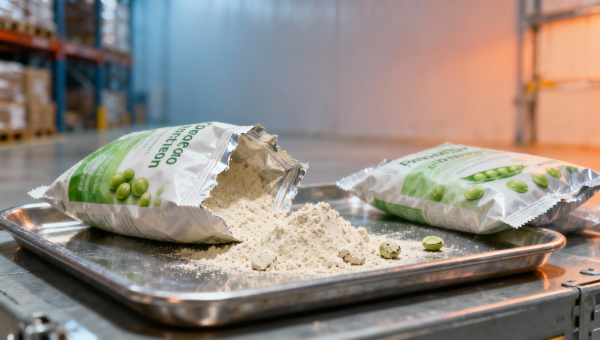
Pea protein isolate powder can clump in storage when moisture uptake, temperature swings, particle size distribution, or packaging barriers are not properly controlled. For buyers comparing pea protein isolate powder with rice protein powder organic, isolated soy protein bulk, or whey protein concentrate wholesale, understanding these storage risks is essential for quality assurance, handling efficiency, and procurement decisions.
In B2B ingredient supply chains, clumping is not only a visual defect. It can affect flowability, dosing accuracy, pneumatic conveying, blending uniformity, and even downstream customer acceptance. For procurement teams, QA managers, plant operators, and distributors, storage stability directly influences reject rates, warehouse handling time, and total landed cost.
This article explains why pea protein isolate powder clumps in storage, how the issue differs from normal caking, what technical factors should be reviewed before purchase, and which control measures matter most in commercial storage, repacking, and industrial use.
What causes pea protein isolate powder to clump during storage
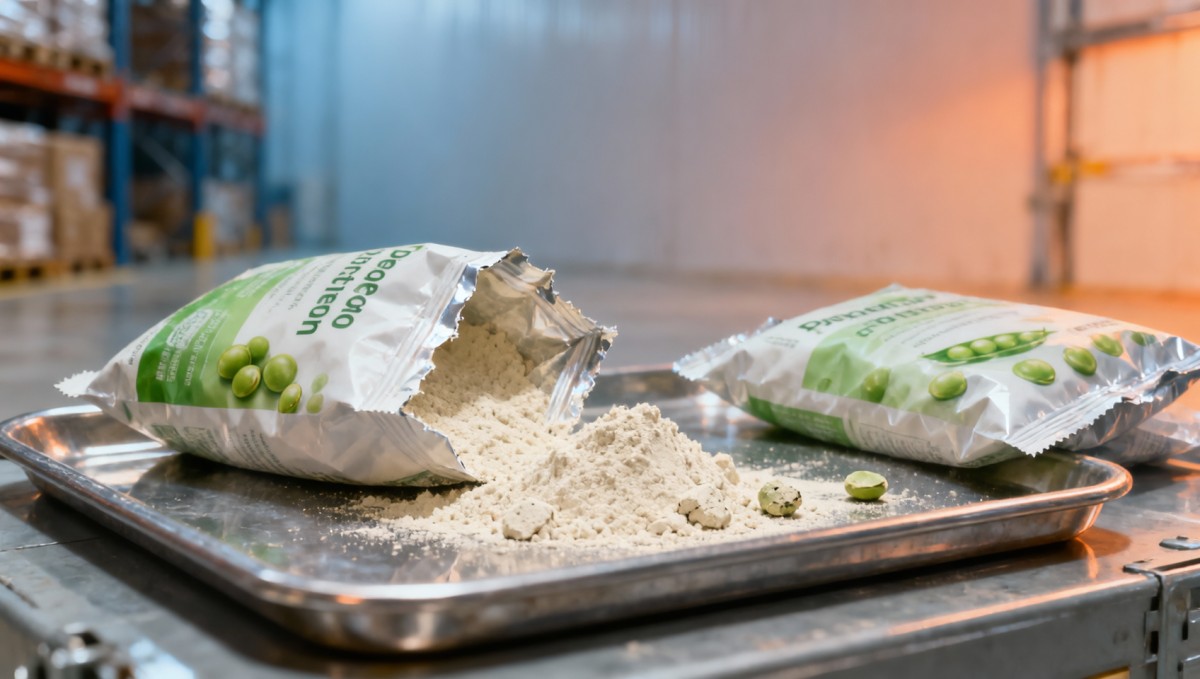
Pea protein isolate powder is hygroscopic to a practical extent, which means it can absorb moisture from the surrounding air when packaging is opened, poorly sealed, or stored in humid environments. Once surface moisture rises beyond a manageable level, particles begin to bridge together. In many warehouses, relative humidity above 55%–65% already increases the risk of caking, especially during seasonal weather shifts.
Temperature fluctuation is another major trigger. A product stored at 18°C–22°C may remain free-flowing, but repeated movement between cool storage and warm loading docks can create condensation inside bags or liners. Even a small amount of internal moisture migration can turn fine particles into compacted lumps over 2–6 weeks.
Particle size distribution also matters. Powders with a high fraction of fines generally present more surface area, making them more sensitive to moisture adsorption and compression. If the material has inconsistent agglomeration or broad particle distribution, the finer portion often fills the voids between larger particles, which promotes tighter packing and harder clumps during stacking.
Mechanical pressure is frequently overlooked. Multi-layer pallet stacking, long sea freight, and warehouse dwell times of 30–90 days can compress protein powder enough to form dense cakes, even when the moisture problem is moderate rather than severe. This is particularly relevant for importers and distributors handling containerized shipments across multiple climate zones.
Finally, packaging barrier quality determines how much external humidity reaches the product. A standard paper bag may be adequate for short domestic transit, but it performs very differently from a PE-lined sack, aluminum-laminated bag, or sealed fiber drum when storage extends beyond 60 days.
Primary technical drivers
- Moisture uptake from ambient air during storage, repacking, or partial use.
- Temperature cycling that causes condensation inside bags or containers.
- High fines content and poor particle size control.
- Compression from pallet stacking, freight vibration, and long dwell time.
- Insufficient packaging barrier against water vapor and oxygen ingress.
Clumping versus unacceptable spoilage
Not every lump indicates product spoilage. Some pea protein isolate powder can be lightly compacted but still remain acceptable if color, odor, microbiological status, and functional performance stay within specification. However, hard clumps that do not break under normal sieving or blending usually point to poor moisture control, prolonged pressure exposure, or inadequate packaging.
How storage conditions influence handling, quality, and procurement risk
For operators, clumping slows unloading and increases manual intervention. A powder that should flow smoothly through a hopper may instead bridge at the outlet, forcing line stoppages or additional sieving. In facilities using screw feeders or vacuum transfer, inconsistent bulk density can create unstable feed rates and dosing errors.
For quality teams, the main concern is whether clumping has altered functional properties. Depending on the formulation, poorly stored pea protein isolate powder may show weaker dispersibility, slower hydration, and reduced blending uniformity. In beverage, nutrition, feed, and dry-mix applications, these changes can affect process time and customer perception.
For procurement and finance stakeholders, the issue is broader than replacement cost. A low-priced lot may become expensive if 2%–5% of material must be screened out, if labor hours rise, or if product flow issues reduce production efficiency. This is why storage robustness should be evaluated alongside protein content, microbiological limits, and price per metric ton.
The table below summarizes how different storage variables affect commercial performance and risk assessment in B2B buying decisions.
The key takeaway is that clumping is usually multi-factorial. Buyers who only ask for a certificate of analysis but ignore packing format, warehouse humidity, and transit profile may still face avoidable handling losses after receipt.
Why this matters across comparison products
When teams compare pea protein isolate powder with rice protein powder organic, isolated soy protein bulk, or whey protein concentrate wholesale, they often focus on nutrition, allergen profile, and price. Yet storage behavior can materially differ. Rice protein may handle humidity differently, soy isolate may vary in particle engineering, and whey concentrates may respond differently to temperature and compaction.
That makes storage stability a valid purchasing parameter, especially for distributors serving multiple customers from opened or split lots over 4–12 weeks.
Four procurement questions to ask suppliers
- What is the recommended storage humidity and temperature range?
- What packaging barrier is used for export, domestic, and partial-use scenarios?
- What is the typical particle size distribution or mesh specification?
- How long can the product remain stable after opening if resealed correctly?
Key specifications and packaging details buyers should review
Many clumping complaints begin upstream, at the specification review stage. A buyer may approve protein percentage and microbiological limits but omit practical storage indicators. For industrial applications, the purchasing specification should include moisture target, packaging type, bag net weight, storage instructions, shelf-life conditions, and whether anti-caking processing is used.
Moisture content is not the only useful number, but it is a critical one. In commercial practice, a lower starting moisture level generally gives more safety margin during transit. Even so, two lots with similar moisture can behave differently if one has finer particles, weaker packaging, or longer exposure to humid ports.
The table below provides a practical review framework for procurement, QA, and project teams assessing pea protein isolate powder for medium- and large-volume storage.
For many buyers, the packaging barrier is where the largest practical difference appears. A lower-cost bag may be acceptable for fast local turnover in 2–3 weeks, but less suitable for export routes lasting 30–45 days plus storage at destination. Matching pack format to logistics duration is often more effective than addressing clumping after arrival.
Useful specification add-ons for contracts
- Defined storage condition, for example cool, dry warehouse below a stated humidity range.
- Requirement for sealed inner liner and documented packaging integrity at dispatch.
- Lot-level confirmation of manufacturing date and remaining shelf life on shipment.
- Procedure for partial bag use, resealing, and short-term in-plant holding.
A common commercial mistake
One frequent error is buying by protein assay alone while ignoring warehouse reality. If a site runs at 60%–75% relative humidity for several months, packaging and handling specifications should be tightened before the first purchase order is placed.
Practical storage and handling controls for plants, warehouses, and distributors
The most effective prevention strategy combines environment control, packaging discipline, and stock rotation. For most commercial users, a stable warehouse range around 15°C–25°C with controlled humidity provides a practical target. Exact limits vary by supplier recommendation, but reducing temperature swings is often as important as reducing average humidity.
Once a bag is opened, the exposure clock starts immediately. Operators should avoid leaving partially used pea protein isolate powder open on the floor or near loading doors. Resealing within the same shift, preferably within 30–60 minutes after use, greatly reduces atmospheric moisture uptake in humid climates.
Pallet management also matters. Keeping bags off direct floor contact, avoiding overstacking, and using first-in-first-out rotation can reduce compaction and aged inventory. In high-throughput facilities, even simple controls such as recording open date and remaining balance per bag improve consistency across shifts.
For importers and distributors, receiving inspection should include visual lump assessment, pack integrity review, and a quick flowability check where relevant. This does not replace full QA testing, but it helps separate transit-related caking from broader quality issues before material enters production or resale channels.
Five-step storage control routine
- Inspect all incoming bags for punctures, weak seals, moisture marks, and pallet compression damage.
- Store in a dry zone with monitored temperature and humidity, reviewed at least once per shift.
- Use FIFO rotation and avoid long dwell times beyond internal target, such as 45–60 days after receipt.
- Reseal opened packs immediately using compatible closure and secondary barrier protection.
- Pre-screen or break soft lumps before critical batching if the process requires precise flowability.
When clumping can still be manageable
Soft, friable lumps that disperse under normal blending are operationally different from hard, moisture-driven cakes. Plants should define an internal acceptance standard based on sieve behavior, dispersibility, and application fit. For example, dry blend systems may tolerate minor soft clumping, while automated micro-dosing lines may not.
Risk points during transport
- Port dwell time of 7–14 days in humid coastal conditions.
- Container unloading into warmer ambient air, causing condensation.
- Cross-docking and repalletizing that weaken bags or liners.
FAQ for buyers, QA teams, and processing managers
The questions below address the most common commercial and technical concerns raised when pea protein isolate powder arrives with some degree of lumping or when long-term storage is planned.
How can buyers tell whether clumping is a packaging problem or a product problem?
Start with the distribution of lumps. If caking is concentrated near seams, bag bottoms, or puncture points, packaging failure or compression is a likely cause. If the whole bag shows uniform dense caking, review moisture content, warehouse humidity, transit exposure, and particle size profile together. A 3-part inspection covering pack integrity, lump hardness, and odor/color usually provides the first diagnosis.
Is pea protein isolate powder more sensitive than other protein powders?
Sensitivity varies by process design, moisture target, and packaging system, so there is no single universal ranking. However, buyers comparing pea protein isolate powder with rice protein powder organic, isolated soy protein bulk, and whey protein concentrate wholesale should treat storage testing as product-specific. Even within the same category, two suppliers may perform differently over 30, 60, or 90 days.
What should be included in a warehouse SOP?
At minimum, include 6 control points: receiving inspection, humidity monitoring, temperature recording, pallet stacking limit, partial-bag resealing procedure, and FIFO release. Many sites also add a visual lump grading scale from light, moderate, to severe, which helps operations and QA make faster decisions.
Can clumped powder still be used?
That depends on the severity and the application. If lumps are soft and break apart under normal handling, the product may still be usable after QA review. If clumps are hard, wet-feeling, discolored, or accompanied by odor change, the lot should be quarantined for further evaluation. Functional testing is especially important for beverage, high-shear blending, and automated feeding systems.
Pea protein isolate powder clumps in storage for understandable physical reasons: moisture pickup, temperature cycling, particle fines, compression, and weak packaging barriers. For B2B buyers and plant teams, the most practical response is to control the full chain rather than focusing on a single variable.
A sound specification should cover not only composition, but also pack format, storage conditions, logistics duration, and handling after opening. That approach reduces waste, protects flowability, and improves procurement outcomes across manufacturing, distribution, and industrial end use.
If your team is evaluating pea protein isolate powder for export, repacking, or long-cycle inventory, now is the right time to review storage assumptions with your supplier and QA stakeholders. Contact us to discuss product details, packaging options, and fit-for-purpose storage guidance for your procurement plan.
Related Intelligence
- Natural IngredientsIndonesia BPOM Updates Label Rules for Natural Ingredients ImportsIndonesia BPOM updates label rules for natural ingredients imports: New pH ≤4.6 & 60°C/30min tolerance statement required by Aug 1, 2026 — act now to avoid customs rejection.
- Natural IngredientsIndonesia BPOM Updates Natural Ingredients Import LabelingIndonesia BPOM Updates Natural Ingredients Import Labeling: New 'Microbial Resistance Profile' required for cosmetics, supplements & personal care imports—act now to avoid customs delays.
- Natural IngredientsXylitol sweetener wholesale for gum or tablets?Xylitol sweetener wholesale for gum or tablets? Compare grades, sourcing, and compliance, plus fructooligosaccharides fos wholesale, wholesale inulin powder, and monk fruit extract mogroside.
The Morning Broadsheet
Daily chemical briefings, market shifts, and peer-reviewed summaries delivered to your terminal.
