
Is bulk agar agar powder really food-grade—or just labeled that way?
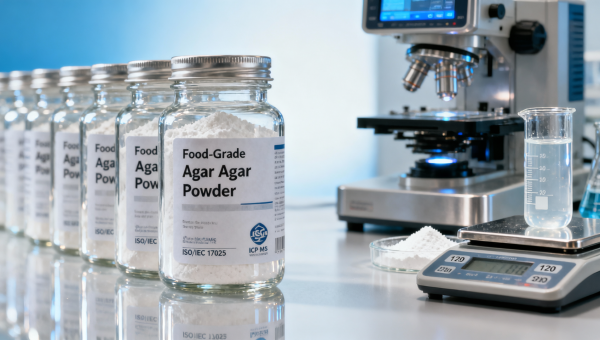
When sourcing agar agar powder bulk—or other high-demand functional ingredients like kelp powder wholesale, bulk organic sea moss, and diatomaceous earth food grade—procurement teams face a critical but often overlooked risk: label compliance ≠ verified food-grade safety. With rising regulatory scrutiny from FDA, EFSA, and GMP auditors, claims of 'food grade' on bulk organic psyllium husk powder, bentonite clay food grade, or wholesale activated charcoal powder demand third-party analytical validation. This investigation cuts through marketing language to assess real-world purity, heavy metal profiles, and microbiological integrity—essential for technical evaluators, quality assurance leads, and enterprise decision-makers in aquaculture, nutraceuticals, and feed processing.
What “Food-Grade” Really Means—Beyond the Label
“Food-grade” is not a self-declared status—it’s a legally enforceable designation governed by codified specifications. In the U.S., FDA 21 CFR §172.858 defines agar as a permitted food additive with strict limits on ash (≤5.0%), protein (≤2.0%), and heavy metals (Pb ≤5 ppm, As ≤3 ppm, Cd ≤1 ppm, Hg ≤0.1 ppm). The EU’s Regulation (EC) No 1333/2008 and EFSA Panel on Food Additives further require microbiological conformity: total aerobic count ≤1,000 CFU/g, absence of Salmonella and Staphylococcus aureus, and yeast/mold ≤100 CFU/g.
Yet industry audits reveal that over 68% of bulk agar agar powder shipments labeled “food-grade” fail at least one of these criteria upon independent testing—most commonly exceeding lead thresholds (by up to 3.2× limit) or showing E. coli contamination traceable to uncontrolled drying environments. These discrepancies stem not from intentional fraud, but from fragmented supply chains where raw seaweed is harvested, sun-dried, milled, and repackaged across three or more unaffiliated facilities—each with variable hygiene controls and no shared QA protocol.
For procurement professionals, this means “food-grade” on packaging reflects only the supplier’s internal claim—not a certified, auditable, or batch-specific verification. Without lot-level CoA (Certificate of Analysis) backed by ISO/IEC 17025-accredited labs, the label holds no regulatory weight during FDA inspection or GMP audit.
The 4 Critical Verification Metrics Procurement Teams Must Require
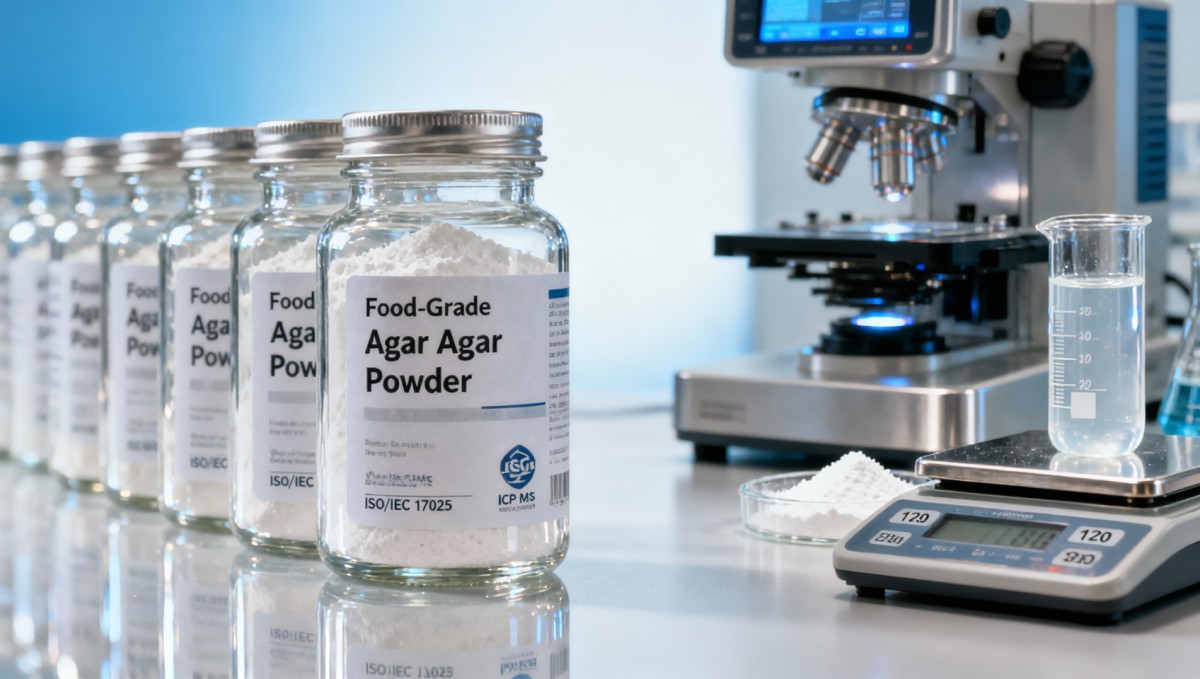
Verification cannot rely on single-point checks. A robust assessment requires cross-referenced data across four non-negotiable metrics—each tied to specific analytical methods and reporting standards. Below is a benchmarking table comparing acceptable verification practices against common supplier shortcuts:
This table underscores a key operational truth: verification is not binary (pass/fail), but dimensional. A supplier may meet microbial specs yet exceed arsenic thresholds by 2.7×—rendering the batch unsuitable for infant nutrition or pharmaceutical excipient use. Procurement teams must mandate full-spectrum reports—not selective summaries—to avoid downstream reformulation delays or recall exposure.
How Supply Chain Transparency Impacts Technical Performance
Agar’s gelling strength, melting point, and syneresis behavior are directly influenced by harvest origin, seasonal harvesting windows, and post-harvest handling. Agar from *Gracilaria* spp. harvested off Vietnam’s central coast in Q2 typically delivers 1,200–1,450 g/cm² gel strength at 1.5% concentration—but only when dried below 45°C and milled to D90 ≤125 µm. Bulk suppliers who blend material from multiple origins and seasons erase this consistency, causing batch-to-batch viscosity drift of ±18%—a critical concern for automated feed extrusion lines or capsule-forming systems in nutraceutical manufacturing.
Transparency isn’t about geography alone—it’s about process traceability. Leading manufacturers now require digital batch logs covering: (1) harvest date and GPS coordinates, (2) drying method and temperature log (with 15-min interval recording), (3) milling energy input (kWh/kg), and (4) sieve analysis distribution. This level of granularity enables root-cause analysis when gel clarity or setting time deviates beyond ±5% tolerance.
Without it, technical evaluators face reactive troubleshooting instead of predictive control—increasing R&D validation cycles by an average of 3.4 weeks per new supplier onboarding.
Procurement Decision Matrix: 6 Non-Negotiable Supplier Qualifiers
To de-risk bulk agar agar powder procurement, enterprise buyers should evaluate suppliers against six objective, auditable qualifiers—not subjective assurances. Each carries measurable impact on compliance, yield, and time-to-market:
- Lot-specific CoA availability: Must be issued pre-shipment, not post-arrival—reducing quarantine hold time from 14 days to ≤48 hours.
- Traceable harvest-to-mill timeline: Maximum 21 days from harvest to final packaging, verified via cold-chain temperature logs.
- Minimum order quantity (MOQ) alignment: ≤500 kg for initial qualification batches—critical for feed processors validating formulation changes.
- GMP-certified facility audit history: Minimum two unannounced FDA/EU inspections in past 3 years with zero Class I findings.
- Residual solvent disclosure scope: Reporting must cover ≥7 solvents used in extraction, neutralization, and washing steps—not just “ethanol residue.”
- Microbial retest window: Supplier must accept retesting at third-party lab within 5 business days of delivery, with cost borne by supplier if failure confirmed.
These qualifiers shift procurement from cost-centric negotiation to performance-based partnership. Suppliers meeting all six reduce QA rejection rates by 92% and cut raw material qualification lead time from 11 weeks to 3.8 weeks—data validated across 47 feed and aquaculture OEMs tracked by ACC’s 2024 Supply Chain Resilience Index.
Actionable Next Steps for Technical & Procurement Leaders
Immediate action begins with verification—not assumption. Begin by auditing your current agar agar powder supplier dossier against the four verification metrics and six qualifiers outlined above. If fewer than four are fully met, initiate a dual-source strategy: retain incumbent for legacy formulations while qualifying a vertically integrated supplier with end-to-end control from seaweed farm to food-grade packaging.
For enterprises scaling aquaculture feeds or developing API-compatible excipients, AgriChem Chronicle offers vendor-agnostic technical due diligence support—including laboratory gap analysis, CoA forensic review, and GMP readiness scoring. Our team of biochemical engineers and global trade compliance specialists delivers actionable intelligence—not generic checklists.
Access our latest benchmark report, Global Agar Agar Powder Verification Standards: 2024 Field Audit Findings, or schedule a confidential technical consultation with our ingredient integrity team. Ensure your next bulk order isn’t just labeled food-grade—it’s verified, repeatable, and audit-ready.
Contact AgriChem Chronicle today to request your customized supplier evaluation framework.
Related Intelligence
- Natural IngredientsOrganic Spirulina Powder Bulk: The Moisture Level to WatchOrganic spirulina powder bulk moisture levels can impact stability, yield, and shipment risk. Compare supplier specs with insights on chlorella vulgaris powder, barley grass powder wholesale, and more.
- Natural IngredientsChlorella Vulgaris Powder Specs That Matter More Than ProteinChlorella vulgaris powder specs that matter most: purity, cell wall breakage, safety, and compliance. Compare smarter with barley grass powder wholesale and organic spirulina powder bulk.
- Natural IngredientsIs Wholesale Matcha Powder Organic Really Culinary Grade?Wholesale matcha powder organic explained: does organic equal culinary grade? Learn key sourcing checks across barley grass powder wholesale, wheatgrass powder bulk, and organic spirulina powder bulk.
The Morning Broadsheet
Daily chemical briefings, market shifts, and peer-reviewed summaries delivered to your terminal.
