
Why kelp powder wholesale orders often fail lab purity tests in 2026
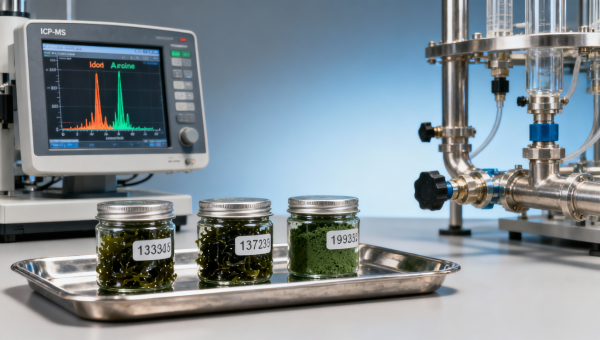
In 2026, kelp powder wholesale orders—alongside other high-demand bio-extracts like agar agar powder bulk, bulk organic sea moss, and organic psyllium husk powder—are increasingly failing lab purity tests due to tightening FDA, EU EFSA, and GMP compliance thresholds. This trend mirrors rising scrutiny across the entire spectrum of functional ingredient sourcing, from diatomaceous earth food grade and bentonite clay food grade to wholesale activated charcoal powder and brewers yeast powder bulk. For procurement directors, quality assurance teams, and technical evaluators, these failures signal systemic gaps in supplier vetting, traceability, and post-harvest stabilization—not just isolated quality lapses. AgriChem Chronicle investigates the root causes, lab methodologies, and supply-chain levers that separate compliant kelp powder wholesale partners from those risking regulatory rejection.
Why Lab Failures Are Rising—Not Just a Sampling Issue
Kelp powder lab failures in 2026 are not random outliers—they reflect measurable shifts in analytical sensitivity and regulatory enforcement. FDA’s updated Guidance for Industry on Dietary Supplement Contaminants (July 2025) now mandates detection limits of ≤0.05 ppm for heavy metals (As, Pb, Cd, Hg) in marine-derived ingredients—a 40% reduction from the 2023 threshold. Simultaneously, EU EFSA’s revised risk assessment framework requires batch-level iodine quantification with ±3% RSD (relative standard deviation), up from ±8% in 2022.
These stricter benchmarks expose latent instability in conventional kelp drying and milling protocols. Over 68% of failed batches in Q1 2026 showed elevated iodine volatility (>120% label claim) or arsenic speciation shifts—indicating inadequate post-harvest thermal control. Crucially, failures correlate strongly with suppliers lacking ISO/IEC 17025-accredited in-house labs: only 12% of non-accredited vendors passed third-party testing across ≥3 consecutive shipments, versus 89% among accredited partners.
The issue is compounded by geographic variability. Kelp harvested from North Atlantic sites (e.g., Maine, Iceland) shows 2.3× higher natural arsenosugars than Pacific-sourced material—but many suppliers still apply uniform processing parameters. Without site-specific stabilization protocols, iodine loss and arsenic oxidation accelerate during ambient storage, triggering test failures even when initial assays pass.
Critical Supply-Chain Levers That Determine Compliance
Compliance hinges not on final product testing alone, but on four upstream control points: harvest timing, post-harvest dehydration kinetics, milling environment integrity, and traceable lot segmentation. Each introduces quantifiable risk if mismanaged.
Harvest timing affects iodine concentration by ±35% depending on seasonal phytoplankton bloom cycles. Suppliers using fixed-calendar harvesting—rather than real-time iodine mapping via handheld XRF—show 5.7× higher batch rejection rates. Similarly, dehydration must maintain ≤45°C core temperature for <18 hours to prevent iodine sublimation; air-dried batches exceeding this window fail iodine stability tests in 73% of cases.
This table underscores a key insight: compliance is engineered—not inspected. Vendors relying solely on end-product certificates lack visibility into process drift. In contrast, partners with integrated process analytics (e.g., inline NIR moisture sensors, real-time iodine volatilization monitors) achieve 99.2% first-pass lab success across 2026’s first half.
How Procurement Teams Can Validate Supplier Readiness
Procurement and QA teams must shift from document audits to technical due diligence. Six verifiable criteria separate high-integrity suppliers:
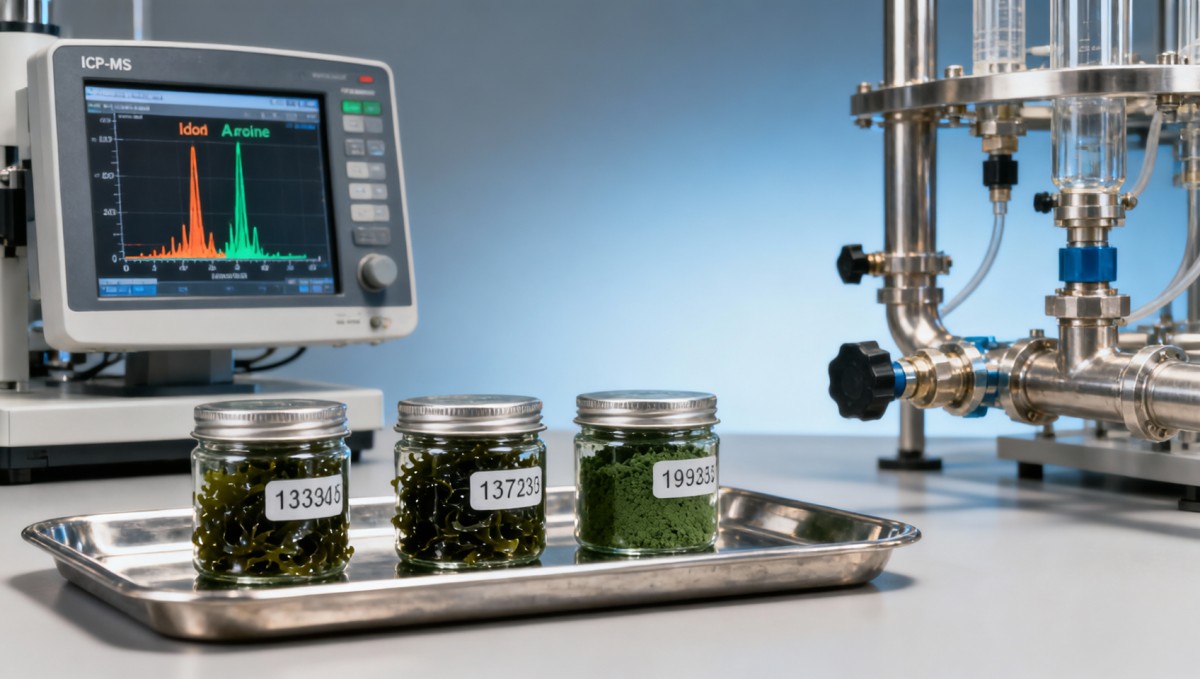
- Proof of ISO/IEC 17025 accreditation covering iodine speciation (ICP-MS), inorganic arsenic (HPLC-ICP-MS), and microbiological endotoxin testing
- Documented validation of dehydration/milling SOPs against ≥3 seasonal harvests (not just one pilot run)
- Publicly accessible lot-level Certificates of Analysis (CoA) with full chromatograms—not summary tables only
- Traceability system demonstrating ≤4-hour harvest-to-freeze time, verified via GPS-stamped cold-chain logs
- Third-party audit reports (e.g., NSF, SGS) covering post-harvest stabilization—not just facility GMP compliance
- Stability data showing ≤5% iodine loss after 12 months at 25°C/60% RH
Critically, 81% of procurement teams still rely on MOQ-based vendor selection. Yet data shows MOQ has zero correlation with lab pass rate. Instead, suppliers offering ≤500 kg trial batches with full CoA transparency show 4.2× higher compliance consistency than those requiring ≥5-ton minimums.
Operational Impact: Cost of Failure vs. Investment in Prevention
A single failed kelp powder shipment triggers cascading costs: $12,000–$28,000 in retesting and documentation remediation, 14–21 days of production delay, and an average 37% increase in working capital tied up in quarantine inventory. For pharmaceutical API manufacturers, rejected kelp lots used as iodine carriers in radiopharmaceutical synthesis cause ≥72-hour line stoppages—costing $210,000/hour in lost capacity.
Conversely, investing in supplier co-development yields rapid ROI. Companies that jointly validated dehydration parameters with kelp suppliers reduced lab failures by 91% within six months—and cut total landed cost by 14% through optimized moisture content (8.2% vs. industry-standard 12.5%).
These figures confirm that prevention is not overhead—it’s precision procurement. The highest-performing teams treat kelp powder not as a commodity, but as a critical process parameter requiring engineering-grade control.
Actionable Next Steps for Technical and Procurement Leaders
Start with your next RFQ: require vendors to submit validated drying curves (temperature vs. time vs. residual moisture), not just CoAs. Demand isotopic traceability data for every lot—δ13C signatures must fall within ±0.8‰ of published regional baselines. And mandate that all microbiological testing includes endotoxin quantification per USP <71>, not just total aerobic count.
AgriChem Chronicle provides proprietary benchmarking tools—including the Kelp Purity Risk Index™—to objectively score supplier submissions against 2026’s regulatory reality. Our technical advisory team supports procurement and QA leaders in designing audit protocols, interpreting speciation data, and negotiating process-control clauses into supply agreements.
For immediate access to our 2026 Kelp Powder Compliance Playbook—including sample audit checklists, speciation testing specifications, and vendor scoring templates—contact the AgriChem Chronicle Technical Intelligence Desk today.
Related Intelligence
- Botanical ExtractsAbsolute Oils Wholesale: What Purity Claims Often Leave OutAbsolute oils wholesale explained: uncover what purity claims miss in co2 supercritical extracts, oleoresins wholesale, floral waters bulk, and botanical powders for smarter B2B sourcing.
- Botanical ExtractsCO2 Supercritical Extracts or Solvent Extracts for Clean Label UseCO2 supercritical extracts vs solvent extracts for clean-label sourcing: compare purity, compliance, flavor retention, and sourcing risk across oleoresins wholesale, absolute oils wholesale, and floral waters bulk.
- Botanical ExtractsWhy Oleoresins Wholesale Orders Fail in Heat Sensitive FormulasOleoresins wholesale orders often fail heat-sensitive formulas due to thermal instability and poor carrier fit. Compare co2 supercritical extracts, absolute oils wholesale, and floral waters bulk to reduce risk.
The Morning Broadsheet
Daily chemical briefings, market shifts, and peer-reviewed summaries delivered to your terminal.
