

The Authority in Global Agricultural Chemistry & Bio-Resources
Bulk citric acid anhydrous: why caking risk matters in storage
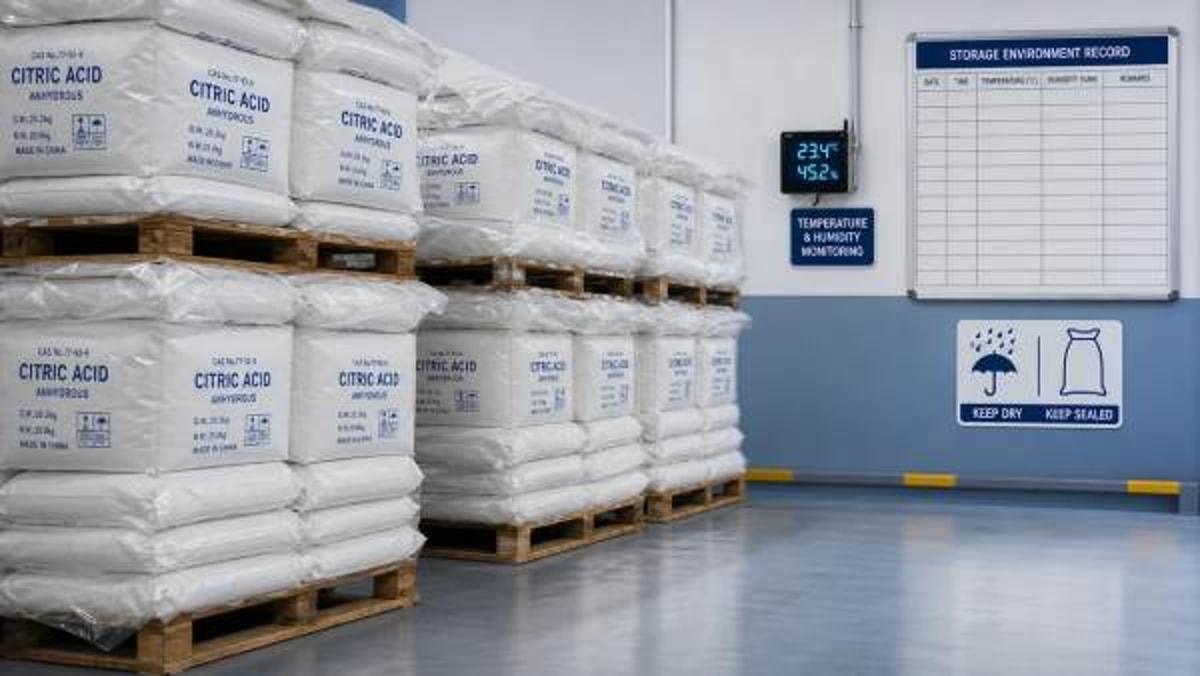
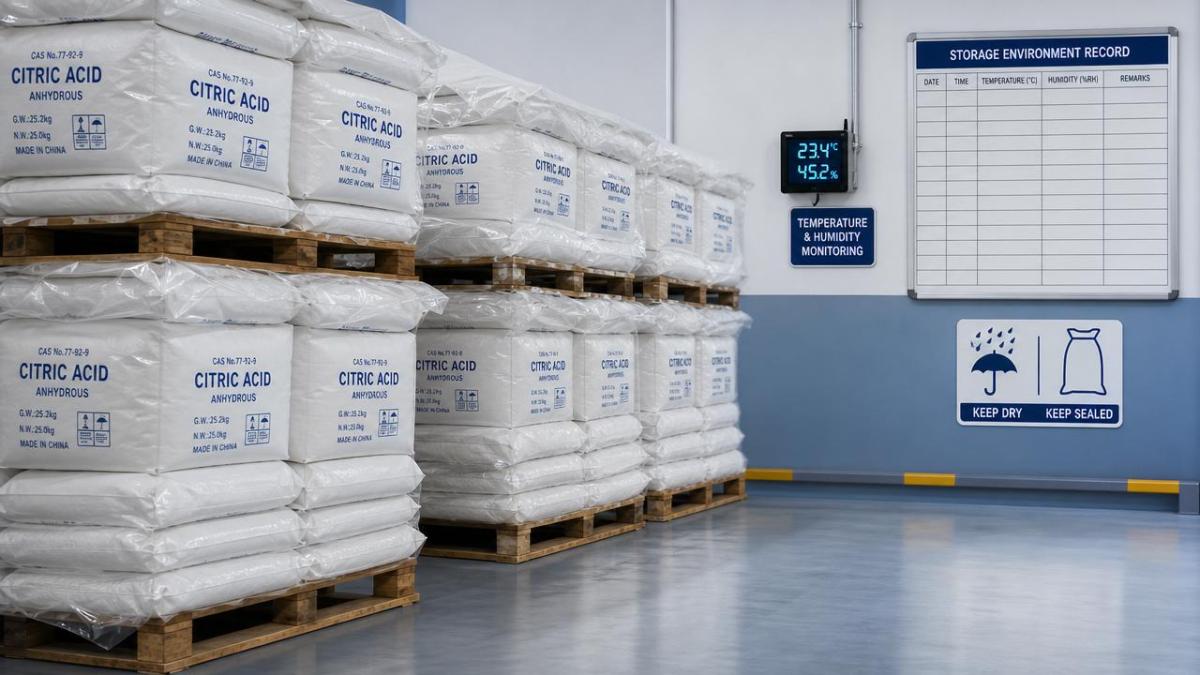
For warehouse maintenance teams handling bulk citric acid anhydrous, caking is more than a minor storage issue—it can disrupt flowability, compromise packaging efficiency, and increase material loss. Understanding why caking risk develops during storage is essential for maintaining product integrity, improving handling performance, and reducing operational downtime in regulated industrial supply chains.
Why a checklist approach works best for bulk storage decisions
When bulk citric acid anhydrous begins to cake, the problem is rarely caused by one factor alone. In most warehouses, caking develops from a combination of moisture exposure, pressure load, temperature change, packaging weakness, and slow stock rotation. That is why maintenance personnel should not treat it as a simple housekeeping issue. A checklist-based review helps teams identify the highest-risk variables first, assign corrective actions faster, and prevent repeated handling losses.
For industrial users, especially those serving food, feed, chemical, and pharmaceutical-adjacent supply chains, bulk citric acid anhydrous must remain free-flowing and consistent. Once lumps form, discharge efficiency drops, dust levels can rise during forced breaking, and packaging lines may face stoppages. A practical storage checklist allows warehouse teams to move from reactive cleanup to controlled prevention.
First checks: the key factors that most often trigger caking
Before reviewing advanced corrective measures, maintenance staff should confirm the most critical risk points. These are the conditions most likely to affect bulk citric acid anhydrous during routine storage and internal transfer.
- Ambient humidity: Even when product is shipped dry, moisture uptake from air remains a primary cause of surface softening and particle bridging. Relative humidity excursions near loading docks, bagging areas, or poorly sealed rooms are major warning signals.
- Temperature fluctuation: Rapid day-night changes can create condensation risks on packaging surfaces or nearby structures. The issue is not only heat, but thermal cycling that changes local moisture behavior.
- Storage duration: The longer bulk citric acid anhydrous stays under compression, the greater the chance that fine particles compact and bind. Dwell time matters as much as starting quality.
- Stacking pressure: Overstacked pallets, oversized super sacks, or uneven floor loads increase consolidation and hardening at lower layers. Caking often begins where static pressure is highest.
- Packaging integrity: Small punctures, weak seams, failed liners, or incomplete sealing allow vapor ingress. In many cases, product quality complaints trace back to packaging damage rather than formulation issues.
- Particle distribution: Excess fines increase contact area and can intensify agglomeration. If repeated transfers generate attrition, the caking tendency can rise during storage.
- Warehouse hygiene: Wet floors, condensate from overhead structures, and poor separation from water-based cleaning zones all create avoidable exposure pathways.
Use this practical inspection checklist before caking becomes visible
A useful rule for warehouse maintenance teams is simple: if caking is already visible, the control window has already narrowed. The better approach is to inspect risk indicators on schedule. The following checklist can be used during receiving, storage, and pre-dispatch review for bulk citric acid anhydrous.
- Confirm receiving condition. Check whether bags, jumbo bags, liners, or bulk containers arrive dry, undamaged, and properly sealed. Record any soft corners, compressed layers, or signs of water contact.
- Measure storage climate. Do not rely on one warehouse average. Verify humidity and temperature at floor level, mid-rack height, near doors, and in corners with low airflow.
- Inspect pallet condition. Broken boards, damp wood, or unstable load distribution can intensify pressure points and increase localized compaction.
- Review stacking pattern. Ensure stack height matches packaging strength and product dwell time. High stacks that are acceptable for short-term holding may fail under long-term storage.
- Check liner and closure performance. Verify that inner bags remain intact after forklift handling, not just at initial receipt.
- Track lot age and turnover. Apply strict FIFO or FEFO logic where required by customer specifications. Older stock should be flagged for additional free-flow checks.
- Watch for condensation sources. Pipes, roofs, vents, and wall interfaces can create localized microclimates that do not show up in general warehouse readings.
- Assess discharge readiness. Before product moves to packing or production, test whether material still flows without mechanical force beyond normal handling limits.
These inspection points are especially valuable for operations handling bulk citric acid anhydrous in mixed-use facilities, where products with different moisture sensitivities share common warehouse infrastructure.
Quick judgment table: how to prioritize the main risk signals
To help maintenance teams act faster, the table below organizes common caking indicators by what they usually mean and what to do next.
Storage scenario differences that change the caking risk profile
Not every warehouse handles bulk citric acid anhydrous in the same way. Maintenance teams should adjust inspection frequency and control priorities based on packaging format, turnover speed, and environmental exposure.
Bagged product in palletized storage
This is often the most common setup and also one of the easiest to underestimate. Palletized bags can look stable from the outside while lower layers gradually compact. The main checks should focus on pallet dryness, stacking height, shrink wrap breathability, and proximity to walls or dock traffic.
Jumbo bags or FIBCs
With larger units, pressure concentration becomes more serious. If bulk citric acid anhydrous is held too long in FIBCs, discharge problems may appear even when moisture has been controlled. Hopper geometry, unloading aids, and bag fill consistency matter more in this scenario.
High-turnover production warehouses
Fast-moving stock reduces dwell-related caking, but transfer frequency can create other risks. Forklift impacts, temporary staging in uncontrolled areas, and open exposure during line feeding may damage packaging or introduce humidity.
Seasonally variable or coastal locations
In these environments, daily conditions can shift enough to change storage behavior even without process changes. Bulk citric acid anhydrous may perform well for months and then start caking during humid season transitions. Maintenance schedules should be adjusted before seasonal peaks, not after complaints appear.
Commonly overlooked issues that make caking worse
Some of the biggest losses come from small oversights rather than major failures. These are the items warehouse teams most often miss when reviewing bulk citric acid anhydrous storage conditions.
- Door management: Frequent opening during humid weather can expose nearby stock repeatedly, even if the overall warehouse is climate controlled.
- Cleaning practices: Wet cleaning near storage zones, or mopping during active air circulation, can increase local moisture unexpectedly.
- Rework handling: Product transferred from damaged bags into new packaging may already contain fines or early agglomerates that increase future caking risk.
- Mixed storage zoning: Locating dry acids near hygroscopic or water-associated materials can complicate environmental control priorities.
- Instrumentation gaps: One sensor in a central aisle cannot represent all storage microclimates. Localized hotspots often go unmeasured.
Execution advice: what maintenance teams should do next
If your site is seeing repeated flow issues with bulk citric acid anhydrous, the most effective response is a structured control plan rather than one-off interventions. Start by documenting where caking first appears, which lots are affected, how long they were stored, and what the environmental readings were at that location. That baseline helps separate packaging weakness from warehouse climate exposure and from load pressure effects.
Next, create tiered inspection frequency. High-risk zones such as dock-adjacent lanes, long-stay inventory rows, and FIBC holding areas should be checked more often than fast-rotation interior positions. It is also wise to include a pre-use flowability verification step for older lots so that production or packing teams are not surprised at the point of discharge.
Where caking persists, review whether current packaging and storage duration are compatible. In some operations, better sealing, stronger liners, improved palletization, or lower stack height can reduce losses more effectively than aggressive climate control alone. For regulated supply chains, keeping written evidence of these controls also supports product quality assurance and supplier-customer communication.
FAQ for warehouse maintenance personnel
Does caking always mean the product is unusable?
Not always, but it does mean handling performance has changed. For bulk citric acid anhydrous, usability depends on customer specification, process sensitivity, contamination risk, and whether lumps can be managed without harming quality or safety.
Is moisture the only cause of caking?
No. Moisture is a major factor, but pressure, storage time, temperature cycling, and particle fines can all contribute. In many warehouses, caking is caused by these factors acting together.
What should be checked first after a caking complaint?
Start with lot age, packaging condition, stack height, and the environmental history of the exact storage location. Those four checks usually identify the most likely cause faster than broad warehouse averages.
Final action checklist for better storage control
For sites storing bulk citric acid anhydrous, caking risk matters because it directly affects flowability, labor efficiency, packaging throughput, and inventory reliability. The most practical strategy is to control the basics consistently: keep packaging intact, reduce humidity exposure, manage stack pressure, shorten unnecessary dwell time, and monitor location-specific conditions rather than relying on assumptions.
If your operation needs to improve storage performance, the priority discussion points should include packaging format, expected storage duration, local humidity profile, pallet and stack design, discharge method, and lot rotation rules. Bringing these details together early will make it easier to confirm fit-for-use handling conditions, reduce caking-related downtime, and support more dependable bulk citric acid anhydrous storage across the supply chain.
Related Intelligence
- Natural IngredientsIndonesia BPOM Updates Natural Ingredients Labeling RulesIndonesia BPOM Updates Natural Ingredients Labeling Rules: New microbial stability claims in Bahasa Indonesia required for imports—act now to avoid delays.
- Natural IngredientsBulk ascorbic acid sourcing: why appearance checks are not enoughBulk ascorbic acid sourcing needs more than a white appearance check. Learn how assay, particle size, impurities, and compliance data help buyers avoid risk and choose reliable suppliers.
- Natural IngredientsXanthan gum food grade: what changes texture in actual formulationsXanthan gum food grade performance depends on more than dosage. Explore how pH, salts, shear, sugar, and ingredient interactions shape texture, stability, and scale-up success.
The Morning Broadsheet
Daily chemical briefings, market shifts, and peer-reviewed summaries delivered to your terminal.
