

The Authority in Global Agricultural Chemistry & Bio-Resources
Indonesia BPOM Updates Natural Ingredients Labeling Rules
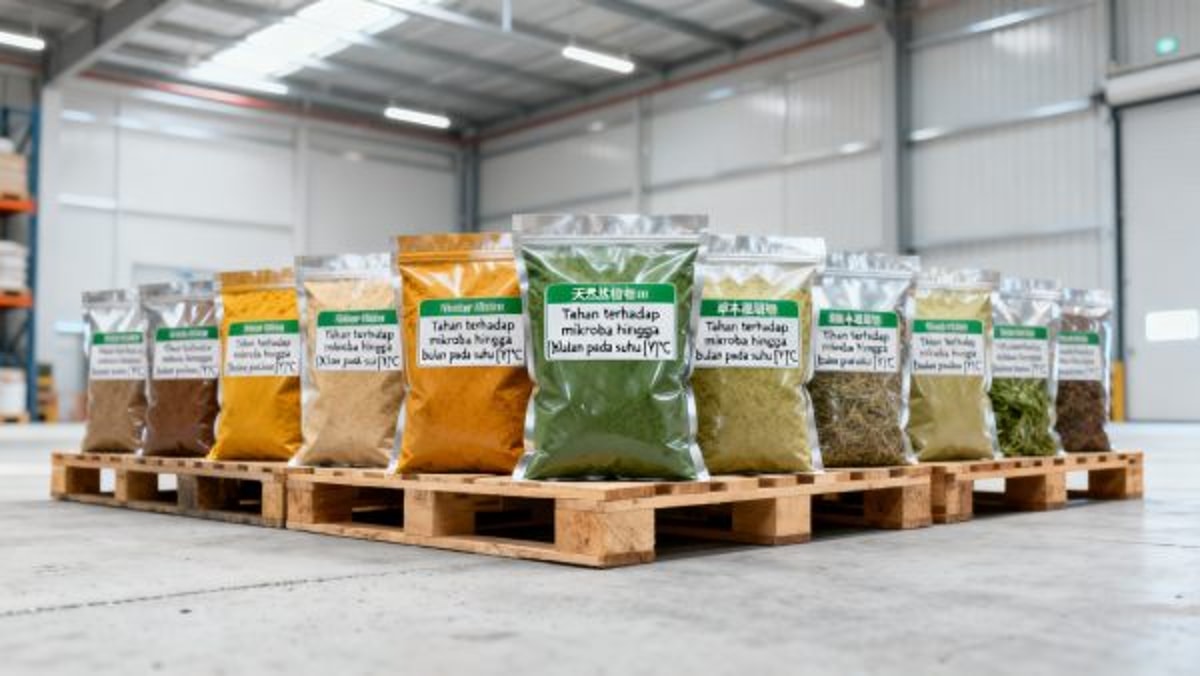
On May 1, 2026, Indonesia’s National Agency of Drug and Food Control (BPOM) implemented Regulation No. 27/2026, mandating new microbial stability declarations on labels of imported natural ingredients. This update directly affects exporters and importers in the dietary supplement, functional food, cosmetic raw material, and herbal product sectors — particularly those shipping plant powders, botanical extracts, and unprocessed natural actives to Indonesia.
Event Overview
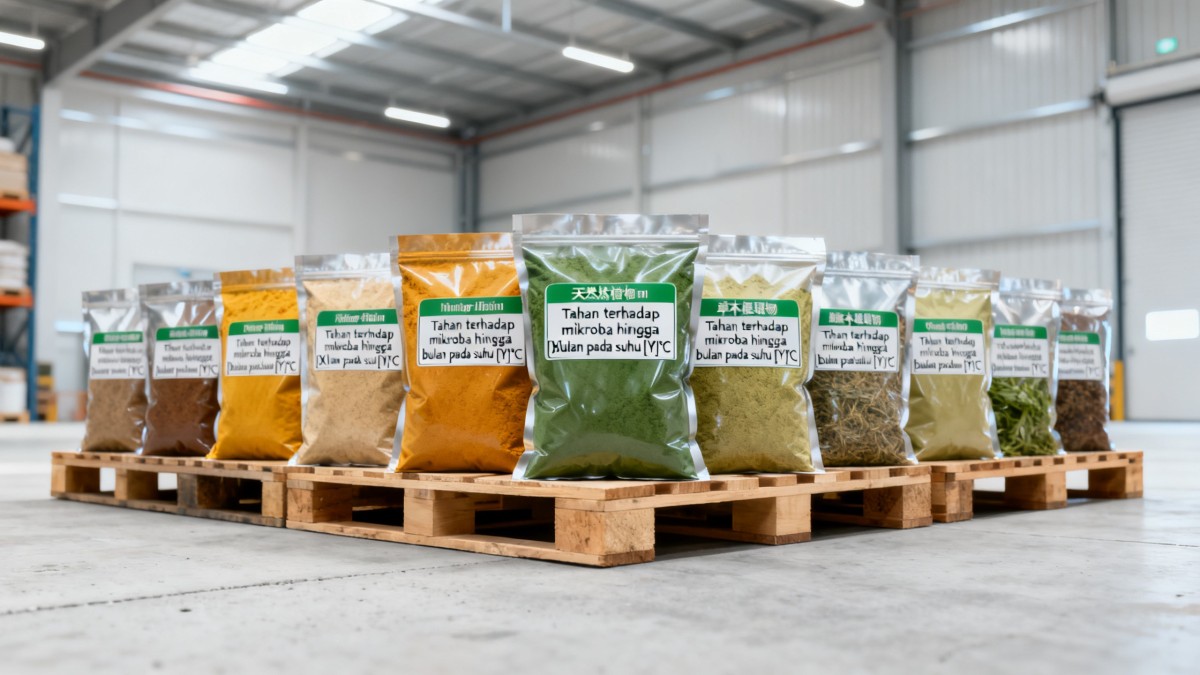
Effective May 1, 2026, BPOM Regulation No. 27/2026 requires all imported natural ingredients to display, in Bahasa Indonesia, the statement: ‘Tahan terhadap mikroba hingga [X] bulan pada suhu [Y]°C’ (‘Resistant to microbial growth for up to [X] months at [Y]°C’). The declaration must be based on third-party laboratory testing reports — specifically accelerated aging combined with challenge testing — conducted by accredited providers such as SGS or Intertek. Certification lead times have increased to 6–8 weeks on average, and some plant powder shipments have experienced customs clearance delays.
Which Subsectors Are Affected
Direct Trading Enterprises
Exporters and importers handling natural ingredient shipments into Indonesia are directly responsible for label compliance. Non-compliant labels trigger rejection or hold at Indonesian ports. Since the declaration is product-specific and temperature-conditional, each SKU may require individual test validation — increasing documentation burden and shipment lead time variability.
Raw Material Sourcing Companies
Firms procuring natural ingredients from upstream suppliers (e.g., Chinese or Southeast Asian farms, processors) must now verify whether their suppliers can support or co-fund required stability testing. Where suppliers lack test capacity or certification history, sourcing teams face longer qualification cycles and potential substitution pressure.
Manufacturers & Formulators
Companies blending or processing natural ingredients into finished products (e.g., capsules, powders, topical bases) must ensure incoming raw materials carry valid BPOM-compliant labeling documentation. Delayed clearance of key raw materials risks production scheduling, inventory turnover, and order fulfillment — especially for time-sensitive seasonal or contract-manufactured batches.
Supply Chain & Compliance Service Providers
Logistics partners, customs brokers, and regulatory consultants supporting Indonesia-bound natural ingredient trade now need updated verification protocols for label content, test report validity, and storage condition alignment (e.g., confirming claimed [Y]°C matches actual transport/storage history). Their service scope must explicitly cover BPOM’s new microbiological claim validation step.
What Relevant Enterprises or Practitioners Should Focus On and How to Respond
Confirm test report scope and accreditation status before submission
Not all third-party lab reports meet BPOM’s technical requirements. Verify that the report includes both accelerated aging (e.g., 40°C/75% RH for defined duration) and microbial challenge testing (e.g., inoculation with Aspergillus niger, Escherichia coli, Staphylococcus aureus) — and that the lab is listed on BPOM’s recognized accreditation registry.
Prioritize high-risk SKUs for immediate re-labeling and re-testing
Plant-based powders — especially those with high moisture content or no preservative system — are already experiencing clearance delays. Identify SKUs with pending shipments, short shelf life, or prior BPOM scrutiny, and allocate testing resources accordingly. Avoid blanket re-testing; instead, group by formulation similarity and storage profile.
Align internal labeling templates with BPOM’s bilingual and structural requirements
The regulation mandates Bahasa Indonesia only — English-only or dual-language labels are non-compliant. Ensure print-ready label files include the exact phrasing format, correct spacing, font size minimums (as per BPOM’s Annex I), and placement on primary packaging. Do not rely on sticker overlays unless pre-approved by BPOM-accredited local representatives.
Assign a dedicated BPOM liaison for ongoing updates and exception handling
Regulation No. 27/2026 includes provisions for exemption requests under specific conditions (e.g., sterile manufacturing environment, nitrogen-flushed packaging). These require formal application via BPOM’s e-registration portal. A designated internal or external contact should track policy FAQs, official clarifications, and enforcement trends — especially as BPOM begins publishing inspection findings later in 2026.
Editorial Perspective / Industry Observation
Observably, this regulation signals a shift from general safety oversight to active, claim-based quality control for natural ingredients entering Indonesia. It is not merely a labeling update but a de facto requirement for microbiological predictability — effectively raising the bar for supply chain transparency and data integrity. Analysis shows BPOM is aligning its approach with ASEAN Common Technical Dossier standards, suggesting similar expectations may extend to other ASEAN markets in coming years. From an industry perspective, this is less a one-time compliance hurdle and more an early indicator of how regulatory agencies increasingly treat ‘natural’ as a functional category requiring empirical substantiation — not just origin or processing method.
Current enforcement appears focused on high-volume and historically problematic categories (e.g., turmeric, ginger, spirulina powders), meaning broader application may evolve gradually. That said, the 6–8 week testing delay and documented clearance holds confirm operational impact is already material — not hypothetical.
Consequently, this update is best understood not as an isolated administrative change, but as a structural recalibration of import readiness for natural-ingredient-dependent businesses targeting Indonesia.
Conclusion
This regulation marks a measurable tightening of market access conditions for natural ingredients in Indonesia. Its significance lies not in novelty alone, but in its enforceable linkage between label claims, laboratory evidence, and real-world logistics. For affected enterprises, the priority is pragmatic adaptation: validating test pathways, triaging SKUs, updating labeling workflows, and assigning accountability — rather than waiting for broader policy interpretation or appeals. As of May 2026, compliance is operational, not optional.
Information Sources
• BPOM Regulation No. 27/2026 (Official Gazette, effective May 1, 2026)
• Official BPOM guidance documents referenced in Annex I and Annex II of Regulation No. 27/2026
• Verified feedback from Chinese export enterprises reported through BPOM-registered Indonesian import agents (as of Q2 2026)
Note: Ongoing monitoring is recommended for BPOM’s upcoming enforcement bulletins and exemption application guidelines — these remain under development and are not yet publicly available.
Related Intelligence
- Natural IngredientsIndonesia BPOM Updates Natural Ingredients Labeling RulesIndonesia BPOM Updates Natural Ingredients Labeling Rules: New microbial stability claims in Bahasa Indonesia required for imports—act now to avoid delays.
- Natural IngredientsBulk ascorbic acid sourcing: why appearance checks are not enoughBulk ascorbic acid sourcing needs more than a white appearance check. Learn how assay, particle size, impurities, and compliance data help buyers avoid risk and choose reliable suppliers.
- Natural IngredientsXanthan gum food grade: what changes texture in actual formulationsXanthan gum food grade performance depends on more than dosage. Explore how pH, salts, shear, sugar, and ingredient interactions shape texture, stability, and scale-up success.
The Morning Broadsheet
Daily chemical briefings, market shifts, and peer-reviewed summaries delivered to your terminal.
