

The Authority in Global Agricultural Chemistry & Bio-Resources
Bulk Beeswax Pellets or Blocks: Which Fits Faster Production
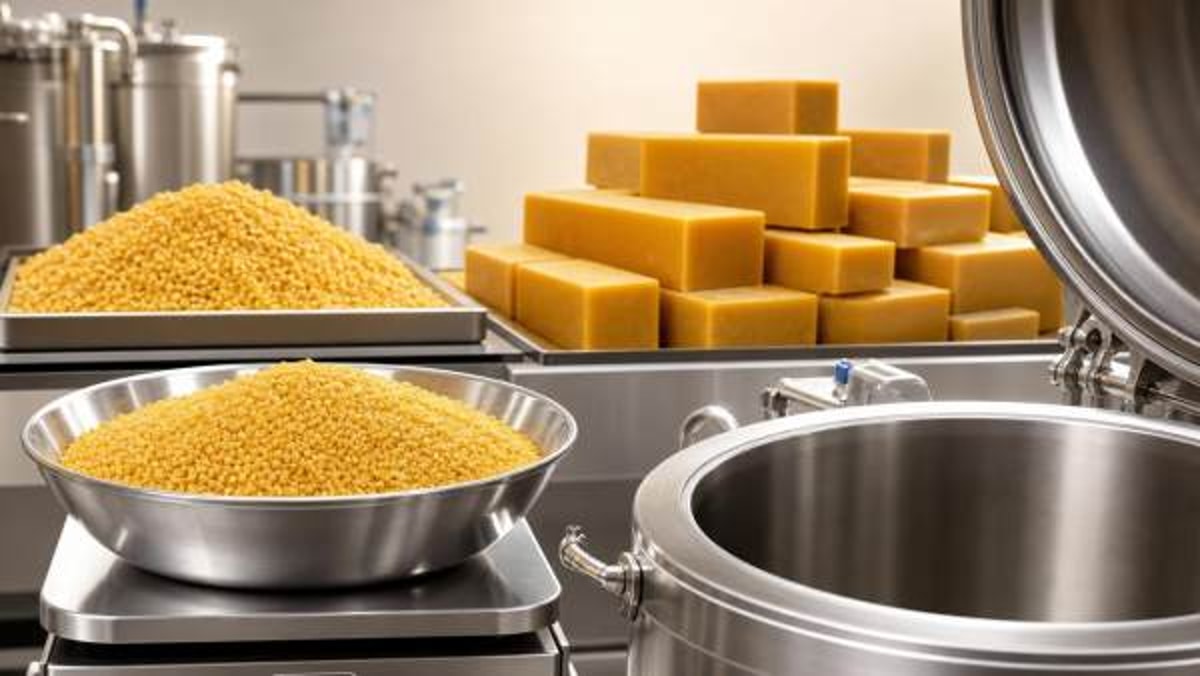
When production speed, melt consistency, and handling efficiency matter, choosing between blocks and bulk beeswax pellets can directly affect workflow on the shop floor. For operators and plant users, this comparison goes beyond form factor—it influences dosing accuracy, heating time, storage convenience, and batch reliability. This guide examines which format better supports faster, smoother large-scale processing.
For most operations that value faster charging, easier portioning, and more predictable melting, bulk beeswax pellets are the better fit for production efficiency. Blocks still have a place, especially when purchase price, reduced dust, or simple long-run melt tanks matter more than handling speed. But on busy production lines where operators need shorter prep time and tighter control, pellets usually outperform blocks in day-to-day use.
Which format is usually faster in real production?
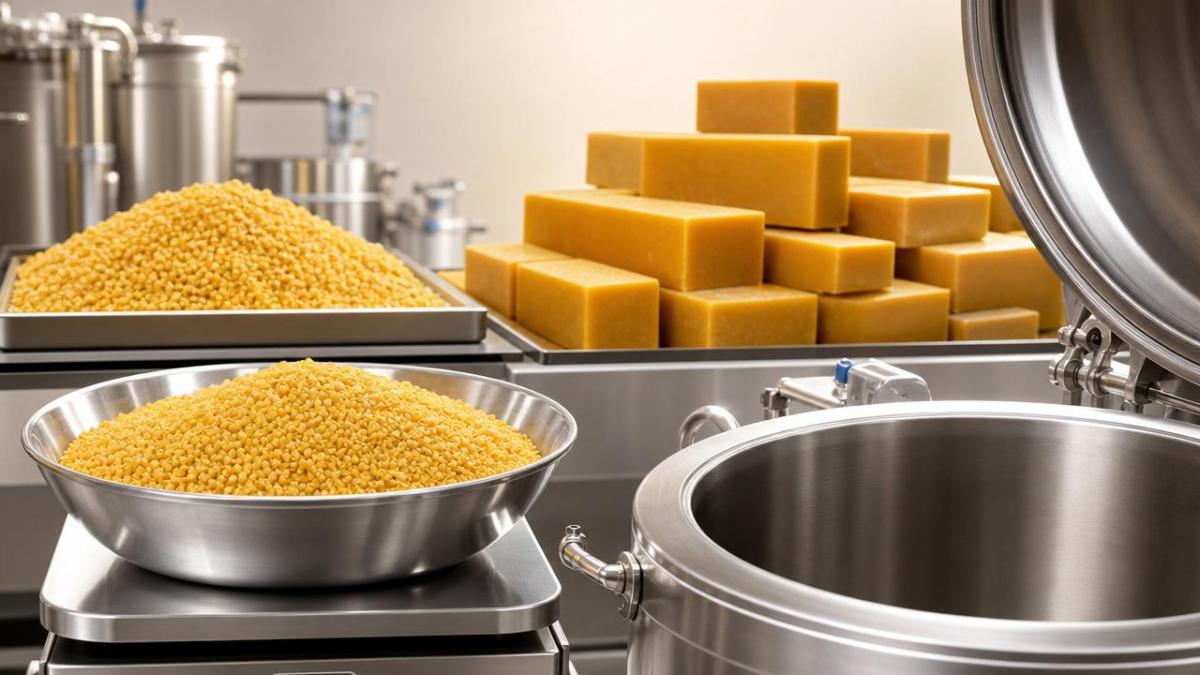
The short answer is that pellets are usually faster at the operator level. They are easier to scoop, weigh, transfer, and feed into kettles, jacketed tanks, or heated blending vessels. That means less manual cutting, less waiting before melt-down begins, and less variation from batch to batch.
Blocks, by contrast, often slow the line before heating even starts. If the block size is large, operators may need to cut or break material into smaller pieces before charging the tank. That adds labor, introduces safety concerns, and creates delays that are not always obvious when purchasing decisions are based only on unit price per kilogram.
In plants where beeswax is used in cosmetics, polishes, candles, coatings, food-contact formulations, or specialty compounds, the handling stage matters almost as much as the melt stage. A material that is technically identical in chemistry can behave very differently in production depending on how it enters the process. That is why the debate between blocks and bulk beeswax pellets is really a workflow question, not just a packaging question.
If your team is asking which format fits faster production, start with the actual bottleneck. If the problem is slow material prep, uneven loading, frequent small batches, or operator fatigue, pellets usually provide the clearest improvement. If the process runs long, heated continuously, and uses large single charges with minimal intervention, blocks may still be acceptable.
Why operators often prefer bulk beeswax pellets
Operators usually judge material format by one simple standard: how easy it is to move from storage into the vessel without slowing the shift. In that environment, bulk beeswax pellets offer several practical advantages that become clear very quickly on the floor.
First, pellets improve dosing speed. Instead of trimming pieces off a solid block, operators can pour or scoop the required amount into a scale bin. This is especially useful when formulas change often or when batches are not large enough to justify melting an entire block at once.
Second, pellets support better consistency in charging. Smaller pieces spread across the heated surface more evenly, which typically helps the wax begin softening and melting sooner. That does not always mean dramatically faster total melt time in every system, but it often reduces the lag phase at the start of heating.
Third, pellets reduce physical effort. Large wax blocks can be awkward to lift, rotate, cut, and control. In contrast, pellets are easier to handle with standard production tools. This can lower strain on workers and improve speed during repetitive tasks, especially across multiple batches in one day.
Fourth, pellets improve partial-use efficiency. If a process only needs 12 kilograms from a 25-kilogram shipment unit, pellets allow that amount to be portioned with less waste and less mess. Blocks often force operators into inefficient workarounds, such as shaving off chunks or pre-melting excess material that then must be held or re-solidified.
These benefits matter most in facilities where beeswax is one ingredient among many, and where the line depends on accurate sequence timing. In those settings, the handling flexibility of bulk beeswax pellets can produce meaningful gains even if the raw wax cost is slightly higher than block format.
Where blocks still make sense
Blocks are not obsolete, and they should not be dismissed automatically. In some operations, they remain a practical format. The question is whether their advantages align with your production setup.
The biggest advantage of blocks is often purchasing efficiency. Blocks may be cheaper to produce, package, and ship in some supply chains. If your operation buys large volumes and already has a method for introducing solid wax into a melt tank, the lower unit cost may offset slower handling.
Blocks can also work well in systems with dedicated melting rooms or large heated vessels that are loaded infrequently. If the process is built around long dwell times and continuous downstream use, the delay caused by slower initial melting may not affect throughput significantly.
Another benefit is reduced loose-particle handling. Pellets can occasionally generate fines or small fragments during transport, depending on hardness, temperature, and packaging. Blocks generally avoid that issue, which may matter in plants with strict housekeeping concerns or highly controlled material presentation requirements.
There is also a storage argument for blocks in certain warehouses. Large blocks can be stable, stackable, and straightforward to count in inventory systems. If the material is used in full-unit increments and not split often, blocks may actually simplify stock control.
Still, these advantages only hold when the rest of the workflow supports them. If operators must manually cut blocks every day, any savings on purchase price may disappear in labor time, slower turnover, and avoidable production interruptions.
How format affects melt time and batch consistency
Many buyers assume the comparison is simple: smaller pieces melt faster. In general, that is true, but production reality is more nuanced. The shape and size of the wax influence surface area, heat transfer, and charging behavior, but the equipment design has a major role as well.
Bulk beeswax pellets usually present more exposed surface area than a solid block of equal weight. This gives heat more access points, helping the material soften and collapse into the melt sooner. In practical terms, operators often see a smoother start to the batch, especially in moderate-size kettles or vessels without aggressive agitation.
Blocks can be slower because only the outer surface is exposed initially. If a large piece sits at the bottom of the vessel, the wax may soften unevenly, sticking or slumping in ways that slow homogenization. In some systems, this can also create hot spots where the vessel wall overheats a localized area before the full mass melts evenly.
Batch consistency is another concern. Pellets are easier to weigh accurately and add incrementally. That matters when beeswax contributes to hardness, viscosity, gloss, barrier performance, or texture. If an operator cannot dose the wax precisely, the final product may vary more than expected.
For plants working with sensitive recipes, such as emulsions, balms, molded products, or wax blends, the ability to add wax in measured portions can improve process control. Pellets make it easier to stage additions and fine-tune timing. Blocks are less flexible unless they are pre-cut into standard sizes before reaching the line.
That said, pellets are not a cure-all. If the vessel has poor heat distribution or insufficient agitation, even pellets may melt inconsistently. The format can improve the start of the process, but it cannot compensate for weak equipment design or poor temperature discipline.
Handling, safety, and housekeeping on the shop floor
For operators, speed is only one part of the decision. Safe handling and clean operation are just as important. This is where the practical differences between blocks and pellets become very clear.
Blocks create a manual-handling problem. Their size and weight can increase the risk of drops, awkward lifts, and cutting injuries if tools are used to break them down. When shifts are busy, that extra manual step can become a predictable source of delay and strain.
Bulk beeswax pellets reduce the need for cutting tools and improvised breakdown methods. Operators can transfer the material with scoops, bins, or vacuum conveying systems, depending on plant layout. That often improves ergonomics and lowers the chance of contamination from uncontrolled handling.
Housekeeping, however, requires some attention with pellets. Spills can scatter, and small wax particles on floors can create slip hazards if not managed quickly. Good container design, transfer discipline, and regular cleanup procedures are important. In other words, pellets are easier to handle, but they demand cleaner bulk-material practices.
Packaging quality matters here too. If pellets are supplied in weak bags or poorly sealed liners, breakage and fines can increase. Operators may then face dust-like residue, sticky surfaces in warm environments, or material loss during transfer. A reliable supplier should provide packaging that matches the realities of industrial handling.
The best format is the one that fits both your productivity goals and your safety system. In many facilities, pellets come out ahead because they remove the hazardous step of cutting solid wax, even if they introduce a small increase in loose-material cleanup.
Storage, inventory control, and production planning
Material format also influences how efficiently a plant stores, counts, and schedules wax usage. This is often overlooked during procurement, yet it can affect production speed as much as melt behavior.
Bulk beeswax pellets are well suited to operations that consume variable amounts across multiple SKUs. They allow smaller withdrawals from inventory and make it easier to issue exact quantities to each batch ticket. This helps reduce overuse, partial leftovers, and undocumented material movement.
For planning teams, pellets also improve responsiveness. If a rush order requires a smaller or modified batch, operators can draw the exact amount needed without opening a block and deciding what to do with the remainder. That flexibility can support faster changeovers and fewer material-related delays.
Blocks may be easier to count by unit, but they can be less precise in usage tracking once partially consumed. A half-used block often sits in a staging area, and unless systems are tight, that can complicate stock accuracy. In regulated or quality-sensitive environments, this matters more than many teams expect.
Storage conditions are similar for both forms: cool, dry, protected from contamination, and away from excessive heat. But pellets often require more attention to container closure after opening, since they are a free-flowing solid. If exposed carelessly, they can pick up debris or moisture more easily than intact blocks.
From a planning perspective, pellets favor agility, while blocks favor simplicity in high-volume, repetitive use. The better choice depends on whether your production model values exact issue control or bulk steady-state melting.
Cost per kilogram is not the same as cost per batch
One of the most common purchasing mistakes is comparing blocks and pellets only by material price. That is too narrow for a production-driven decision. The true question is total processing cost per usable batch.
If blocks are 3 to 8 percent cheaper per kilogram, that may look attractive on paper. But if operators spend extra time cutting, weighing, waiting for melt initiation, and cleaning up awkward leftovers, the savings can disappear quickly. Labor cost, equipment occupancy, and delay risk all belong in the calculation.
Bulk beeswax pellets may cost more upfront, yet they can reduce hidden costs. Faster charging can shorten non-productive time. Better dosing can lower formulation variance. Easier handling can cut fatigue and reduce minor incidents. In some plants, these operational gains more than offset the purchase premium.
A useful comparison method is to measure four factors over several batches: average prep time, time to full melt, labor touches per charge, and off-spec or rework events linked to wax addition. This creates a more realistic picture than a price sheet alone.
You should also examine equipment utilization. If a slower-loading wax format causes the vessel to remain occupied longer, the impact can spread downstream. Even a modest delay at the melt stage may limit the number of batches completed per shift. That can be more expensive than any packaging-related price difference.
For users and operators, the most practical conclusion is simple: judge wax format by throughput and repeatability, not just by invoice cost.
How to choose the right format for your process
If you are deciding between blocks and bulk beeswax pellets, begin with your actual use pattern rather than supplier preference. A few operational questions will usually point to the right answer.
Choose pellets if you run frequent batches, need exact weighing, want quicker charging, or struggle with manual handling of solid wax. Pellets are also a strong choice when recipes change often, when beeswax is added in controlled increments, or when production interruptions carry high cost.
Choose blocks if you melt large amounts at once, have dedicated equipment designed for solid charging, buy in high volume with stable formulations, and do not need frequent partial-unit usage. Blocks can also be acceptable when labor is already structured around pre-breakdown handling and the process is not time-sensitive.
If the choice is not obvious, run a controlled plant trial. Compare both formats under the same vessel conditions, same target batch size, and same operator team. Record loading time, melt profile, cleanup requirements, and any safety observations. A short trial often reveals more than long theoretical debates.
Also review supplier consistency. Pellet size uniformity, cleanliness, and packaging durability matter. So do block dimensions, hardness, and ease of separation. A good format supplied poorly will still cause line problems. Procurement and operations should evaluate the supplier as carefully as the form factor itself.
Finally, think beyond today’s production rate. If your line is expected to scale, automate, or diversify, pellets often offer better compatibility with future process improvements. They are generally easier to integrate into semi-automated dosing and controlled material-feed systems than large wax blocks.
Final verdict for faster production
For most production environments focused on speed, flexibility, and operator efficiency, bulk beeswax pellets are the stronger choice. They simplify handling, support more accurate dosing, and usually help the melting process start faster and more evenly. Those benefits are especially valuable in multi-batch operations and formula-driven manufacturing.
Blocks still have a role in large, stable, bulk-melt systems where the process can absorb slower handling and where purchase price is the main priority. But in many real-world facilities, the operational burden of cutting, portioning, and waiting offsets that advantage.
If your goal is faster production on the shop floor, not just lower nominal material cost, pellets are usually the better fit. The best decision comes from matching wax format to vessel design, batch frequency, labor conditions, and control requirements. When those factors are measured honestly, the answer is often clear.
Related Intelligence
- Natural IngredientsCosmetic Grade Mica Powder: Natural Look or Better Coverage?Cosmetic grade mica powder explained: discover whether it creates a natural glow or supports better coverage, with skin-type tips and smart makeup-buying guidance.
- Natural IngredientsHow Bulk Carrier Oils Change Texture, Absorption, and CostBulk carrier oils shape texture, absorption, stability, and price across skincare, supplements, and food. Discover how to choose smarter, compare value, and avoid costly formulation mistakes.
- Natural IngredientsBulk Beeswax Pellets or Blocks: Which Fits Faster ProductionBulk beeswax pellets usually fit faster production with easier dosing, quicker charging, and more consistent melting. Compare pellets vs blocks to choose the most efficient format.
The Morning Broadsheet
Daily chemical briefings, market shifts, and peer-reviewed summaries delivered to your terminal.
